


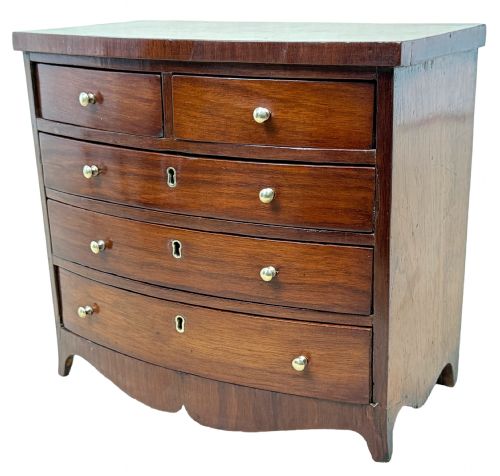


19th Century Apprentice Piece
A 19th century apprentice piece brings scaled-down cabinet-making skill into the room.
19th Century Apprentice Piece
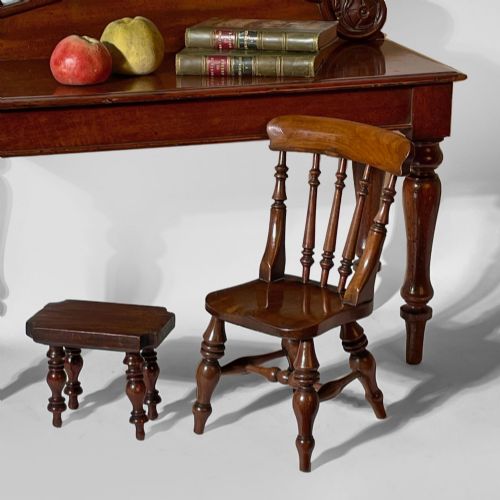
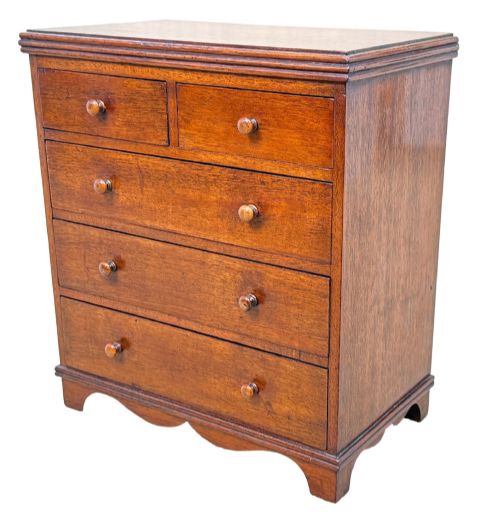
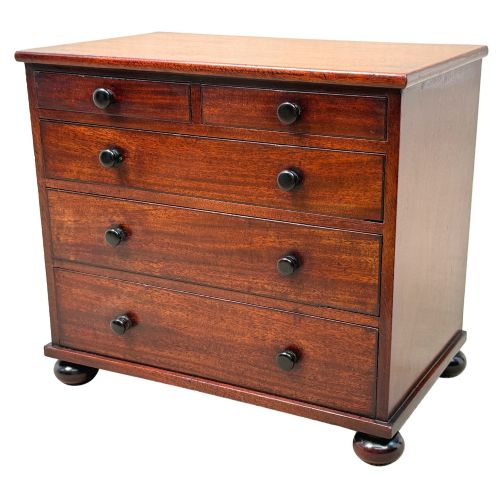
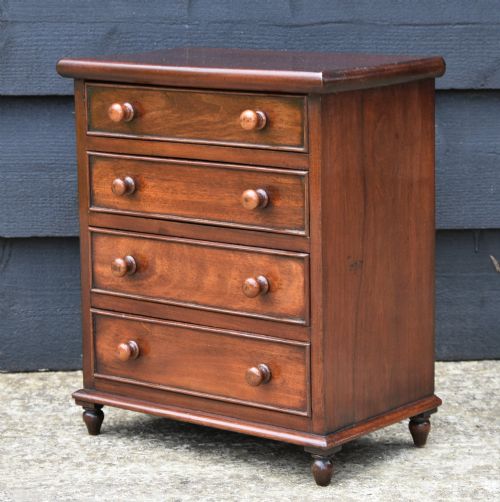
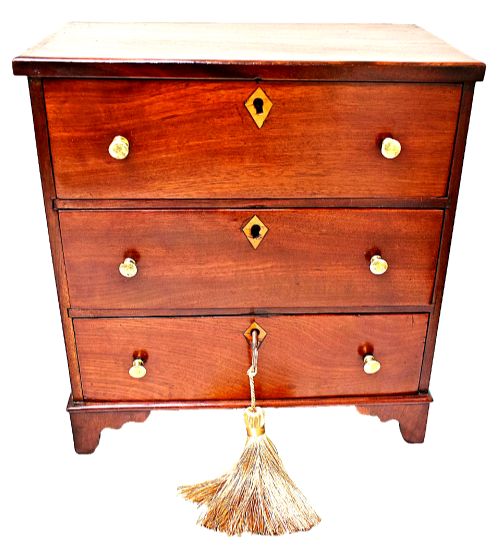
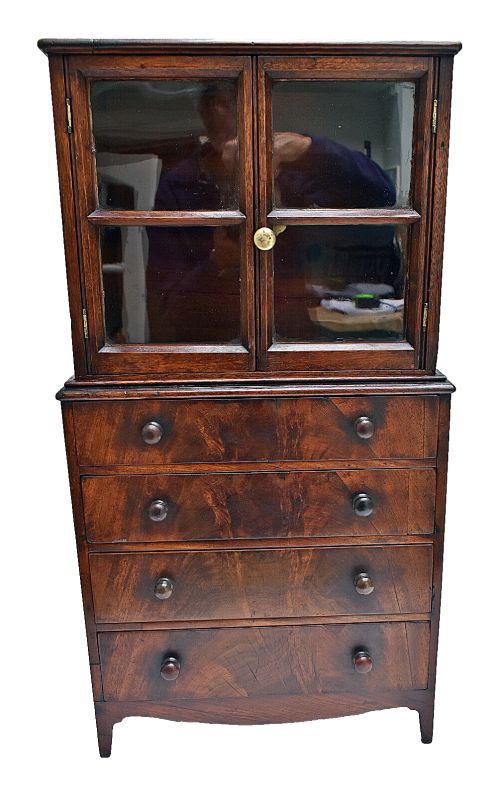
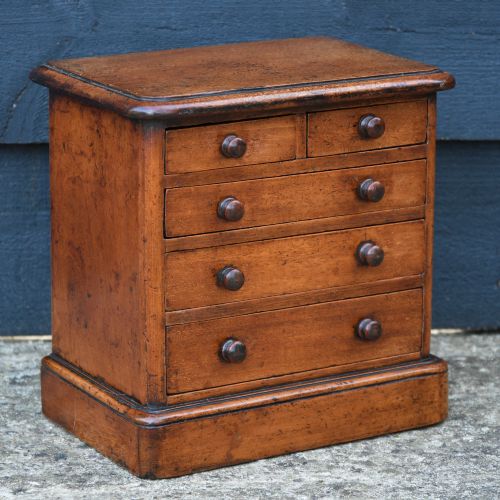
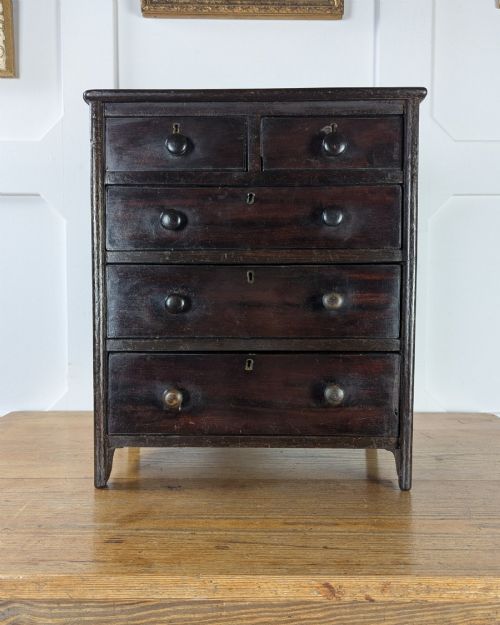
A 19th century apprentice piece is a scaled-down item made to demonstrate a maker's proficiency to a guild or master. These items take the form of miniature furniture, including miniature chests of drawers, tables, dressers, cabinets, and tea caddies.
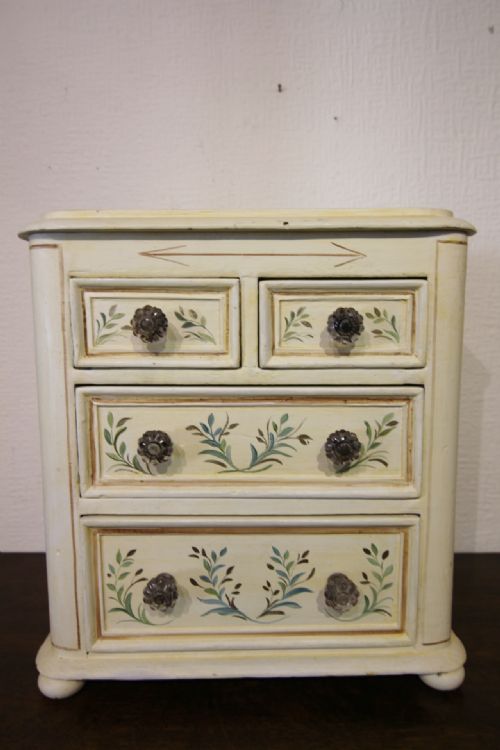
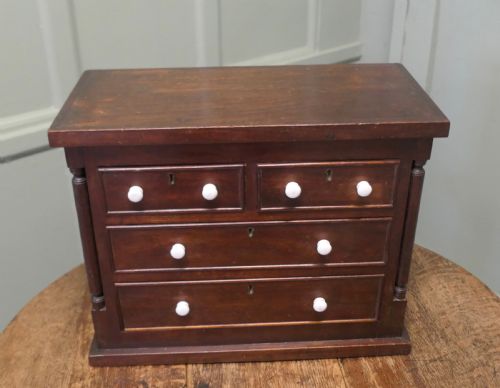
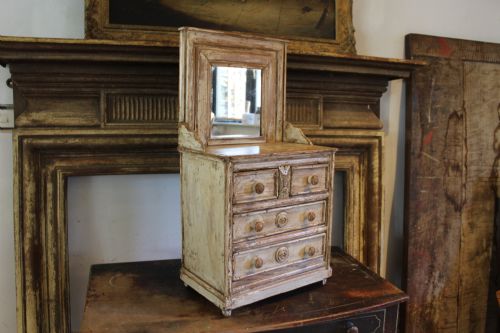
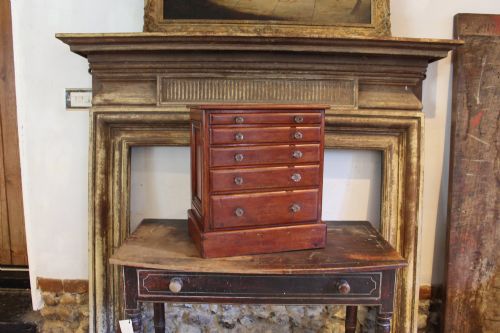
The version most commonly met on this page is the miniature chest of drawers in mahogany, though variations span pine, walnut, and painted finishes. Pieces originate from diverse regional traditions, from Scottish and Welsh workshops to French provincial makers.
Makers also produced miniature bookcases, sideboards, and commodes, reflecting full-scale domestic furniture of the Georgian, Regency, and Victorian eras. Each piece serves as a compact example of period joinery.
Materials and construction
Makers relied primarily on timbers such as mahogany, pine, and walnut, often embellished with brass, bone, mother of pearl, or paint. Regional pieces utilise local woods like burr yew or kingwood to showcase decorative grain.
Joinery techniques mirror those used in full-sized furniture, demanding precise dovetailing for miniature drawers and accurate proportions for carcases. Surface treatments range from polished wood patinas to painted finishes.
Inlaid details and applied mouldings require delicate hand tool work, matching the complexity of standard cabinet-making on a reduced scale.
19th Century Apprentice Piece Retail Price Guide 2026
Typical asking prices for 19th century apprentice piece among the pieces listed under this phrase on Sellingantiques today, from the lower quarter to the upper quarter. They describe what is for sale here now, not the wider market.
Listings show items spanning Georgian, Regency, and Victorian periods, constructed from mahogany, pine, walnut, and painted wood.
Standards of craftsmanship
Quality rests in the fidelity of the proportions and the precision of the miniature joinery. A superior piece exhibits tight drawer tolerances and clean internal construction rather than rough assembly.
Material selection divides standard work from the exceptional, with choice timbers, careful grain matching, and refined inlay setting objects apart. Surface finish and natural patina also indicate the level of care taken by the maker.
The 19th Century Apprentice Piece Glossary
- Apprentice piece
- A scaled-down model created by a woodworker in training to prove mastery of a trade. These objects replicate full-sized domestic furniture.
- Bowfront
- A convex curving cabinet front popular during the Regency and Victorian periods. This shape appears frequently on miniature chests.
- Dovetail
- An interlocking joint used in drawer construction. Fine examples show tight, numerous pins cut by hand.
- Patina
- The surface sheen and colour developed by wood over decades of handling and ageing. A desirable quality reflects natural age.
- Secretaire
- A cabinet or chest featuring a pull-down writing drawer fitted with small compartments. Miniature versions duplicate this complex interior arrangement.
19th Century Apprentice Piece: Frequently Asked Questions
What is an apprentice piece?
An apprentice piece is a miniature furniture item made by a woodworker learning a trade. These objects served as proof of skill to a guild or master.
Makers scaled down full-sized forms like chests of drawers and cabinets to demonstrate precise joinery on a small scale.
How were these miniature items used?
Woodworkers created them as demonstration pieces rather than toys. Later, owners utilised them for storage, such as jewellery boxes or desktop organizers.
Their compact size allowed them to sit on tables and dressers in period homes.
How do I identify a 19th century piece?
Dating relies on timber choices, construction methods, and stylistic cues from the Georgian, Regency, and Victorian eras. Mahogany and pine construction combined with hand-cut dovetails point to 19th century manufacturing.
Regional variations, such as Scottish or French provincial styles, also help place the origin.
What woods were commonly used?
Mahogany is the most frequent timber seen across these listings. Makers also worked in pine, walnut, burr yew, and kingwood.
Some examples feature painted pine or decorative inlay work using bone and mother of pearl.