


Victorian Apprentice Chest
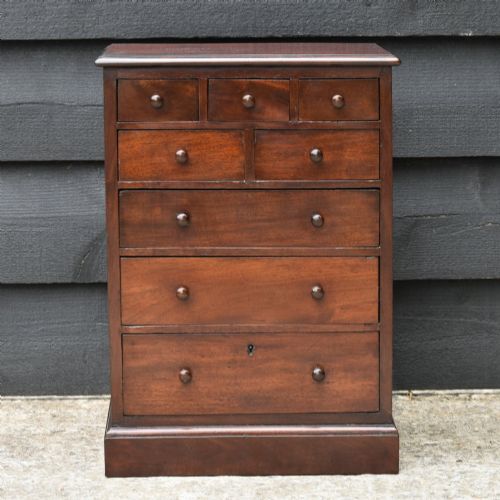
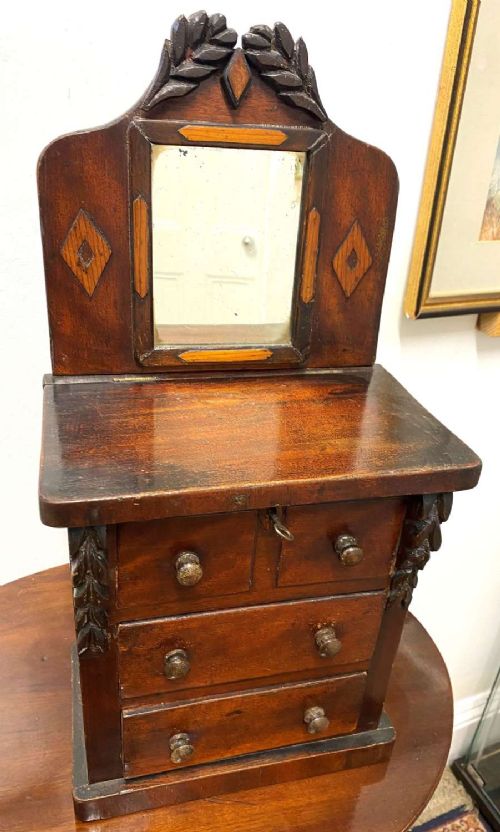
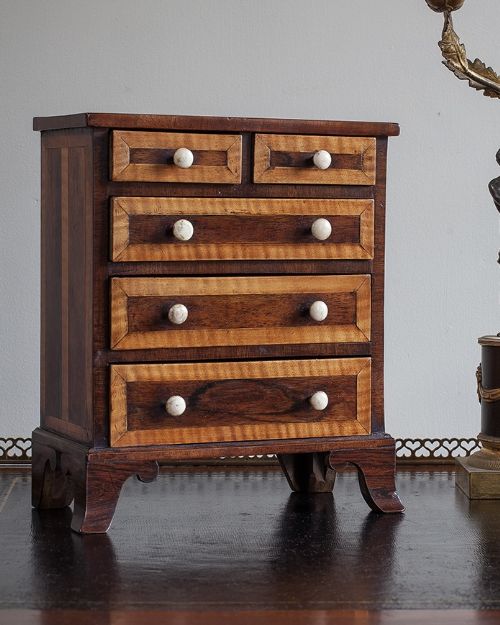
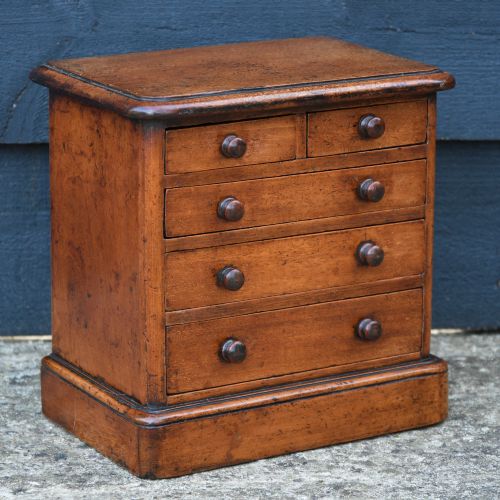
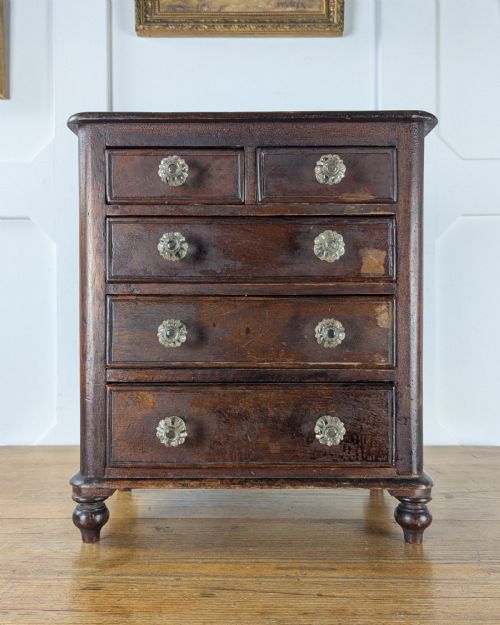
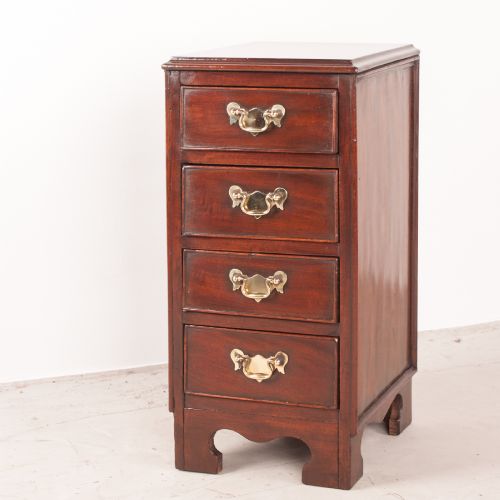
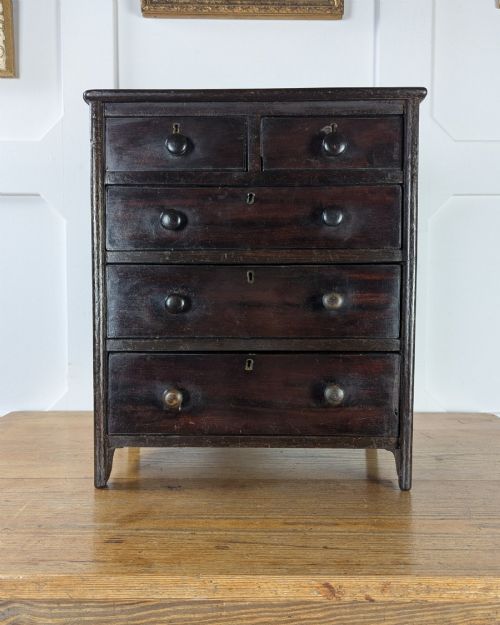
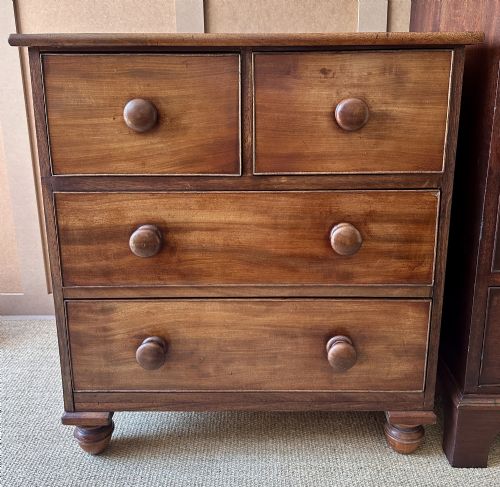
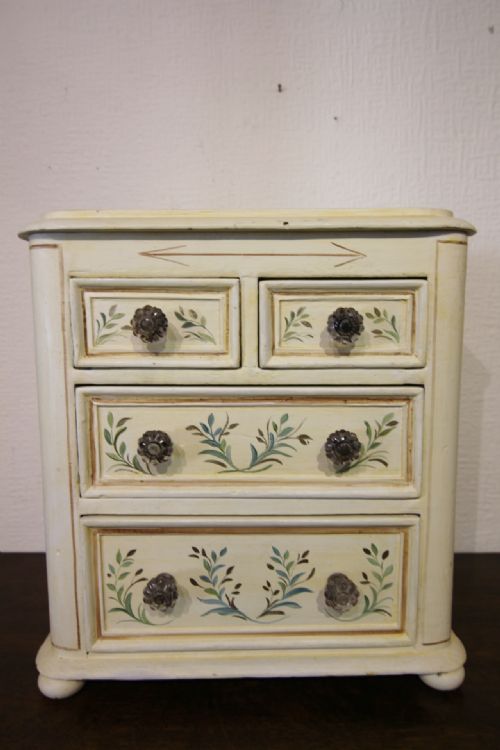
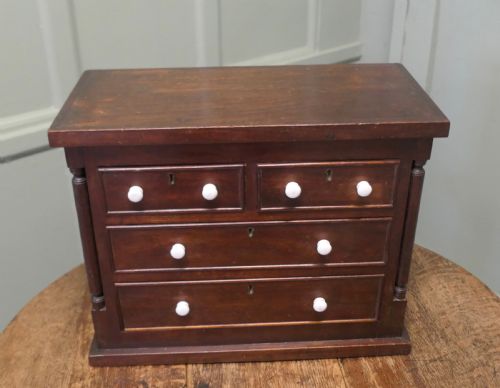
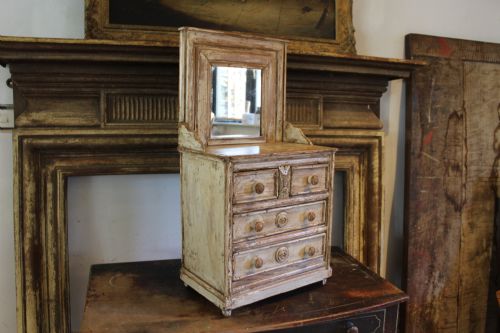
A victorian apprentice chest packs the proportions and joinery of a full-size case into a cabinetmaker's tabletop scale.
Victorian Apprentice Chest
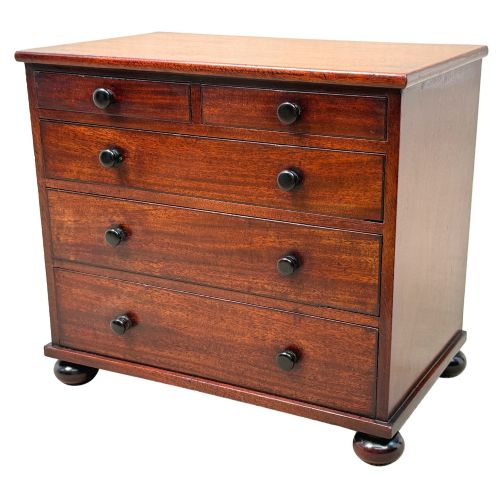
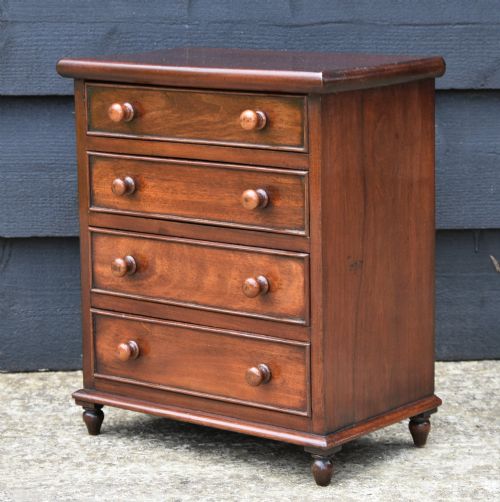
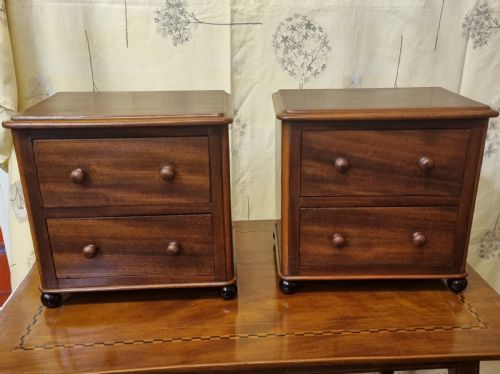
A victorian apprentice chest typically takes the form of a miniature chest of drawers, scaling down domestic case furniture for display or testing. The evidence shows these pieces span the nineteenth century, with mahogany and walnut most frequently meeting the eye alongside pine and oak.
Makers produced variants ranging from straight-fronted prototypes to bowfronts, Wellington chests, and Scottish designs. Tabletop cabinets and specimen cases frequently share this category, serving collectors who prize compact scale alongside traditional craftsmanship.
Materials and Construction
Cabinetmakers utilised dense hardwoods like mahogany, walnut, and rosewood, often pairing drawer fronts of figured veneer with secondary softwoods like pine for internal framing. Selected examples incorporate brass pulls, mother of pearl inlay, or bone escutcheons to finish the miniature facade.
Joinery mirrored full-scale workshop standards, employing hand-cut dovetails for drawer construction and turned wooden feet to elevate the base. Surface treatments relied on traditional polishing techniques that built a deep patina over the timber grain across decades of handling.
Victorian Apprentice Chest Retail Price Guide 2026
Typical asking prices for victorian apprentice chest among the pieces listed under this phrase on Sellingantiques today, from the lower quarter to the upper quarter. They describe what is for sale here now, not the wider market.
Listings demonstrate that mahogany and walnut remain the most prevalent timbers, accompanied by occasional examples in pine, oak, and rosewood.
Scale and Joinery
Quality rests in the fidelity of the miniature joinery and the selection of timber veneers. Superior examples display tight dovetailing on the drawer boxes and uniform grain patterns across the primary surfaces without clumsy timber patches.
Proportion separates standard workshop pieces from exceptional creations. The best-executed miniature chests maintain correct architectural balance in their mouldings, drawer depths, and turned feet, reflecting the rigorous standards of nineteenth-century cabinetmaking.
Maple and Co
The Victorian Apprentice Chest Glossary
- Apprentice piece
- A miniature furniture item created by a trainee woodworker to demonstrate mastery of joinery to a guild or master. These objects mirror standard domestic furniture in every detail except scale.
- Bowfront
- A curved cabinet front that swells outward in a convex arc. This shape requires advanced woodworking skill to fit drawers accurately.
- Wellington chest
- A tall, narrow chest of drawers secured by a hinged vertical locking side bar. This locking stile fastens with a key to secure all drawers simultaneously.
- Specimen cabinet
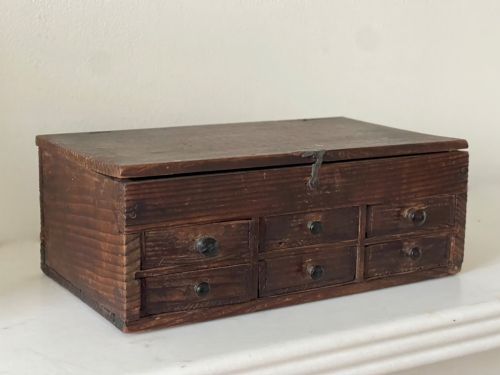
- A small multi-drawer case designed to hold natural history collections like fossils, shells, or coins. These cabinets feature shallow drawers built for orderly sorting.
- Patina
- The surface sheen and mellow colour developed by wood over years of ageing and polishing. Collectors value this natural indicator of age and handling.
Victorian Apprentice Chest: Frequently Asked Questions
What were apprentice chests used for?
Cabinetmakers created these small chests as qualification pieces to demonstrate mastery of woodworking joints to guild masters.
Over time, many functioned as tabletop storage for jewellery, trinkets, or collectors' specimens in Victorian homes.
How do you date a miniature chest?
Dating relies on examining the timber species, secondary woods inside the drawers, and the style of the feet and handles.
Nineteenth-century pieces typically feature hand-cut dovetails and vernacular finishes that shift from early mahogany to later walnut and pine variants.
Are all miniature chests apprentice pieces?
Not every small chest served as a trainee's project, as many were produced commercially as salesman samples or luxury jewellery boxes.
Contemporary makers and retailers offered these tabletop items for domestic use alongside formal apprentice works.
Where should I place one at home?
These compact chests sit comfortably on top of sideboards, desks, or chests of drawers without requiring floor space.
Their shallow drawers make them practical for organising small personal items while adding period character to a room.