

Mahogany Apprentice Piece
These mahogany apprentice piece examples are miniature furnishings scaled down by makers to demonstrate mastery, offering compact charm for modern interiors.
Mahogany Apprentice Piece
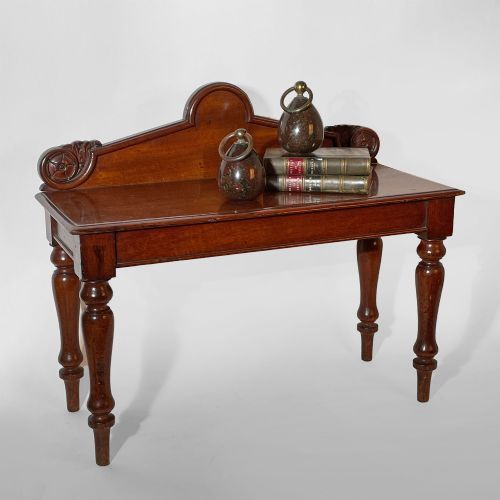
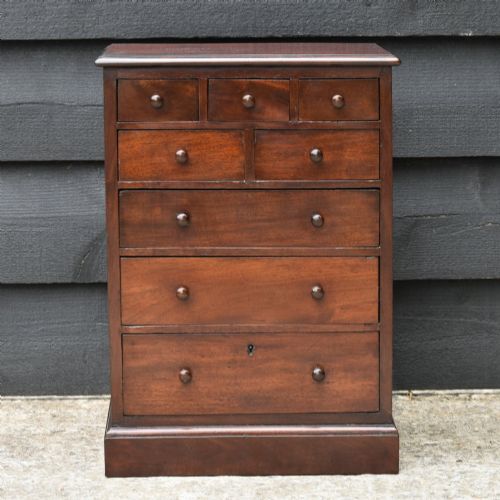
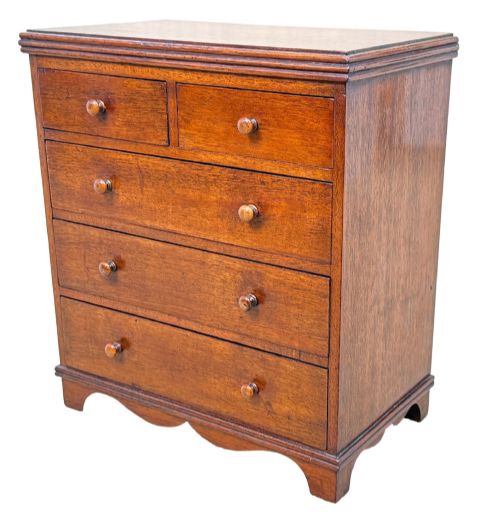
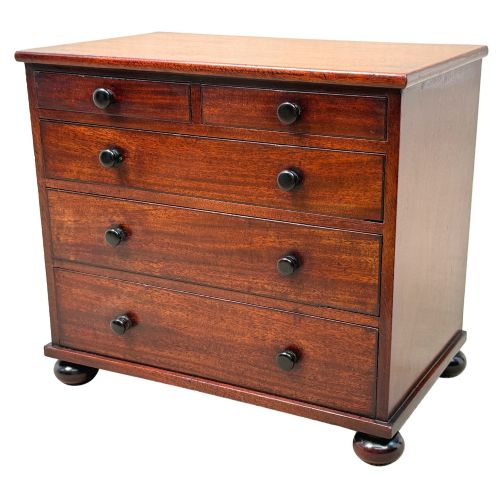
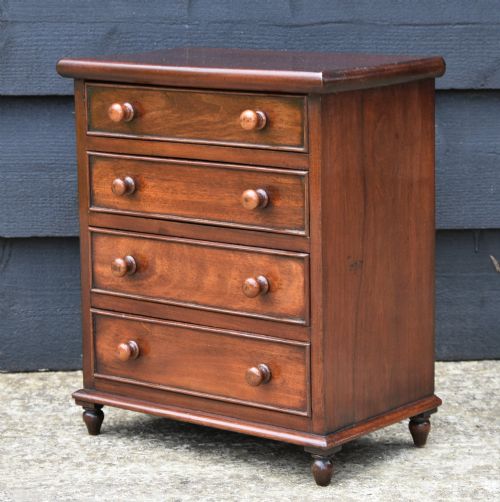
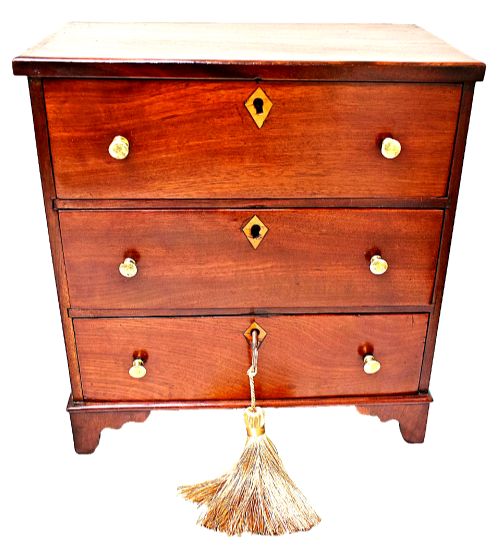
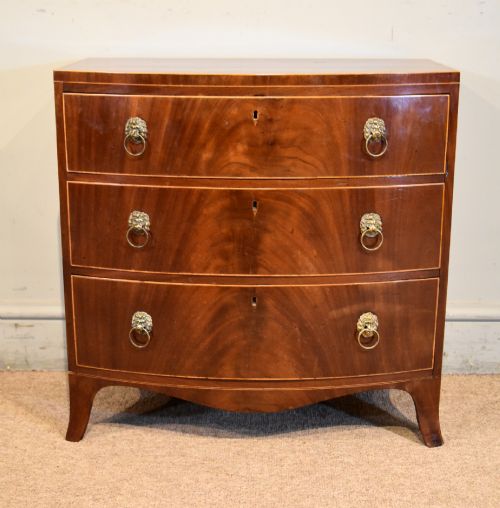
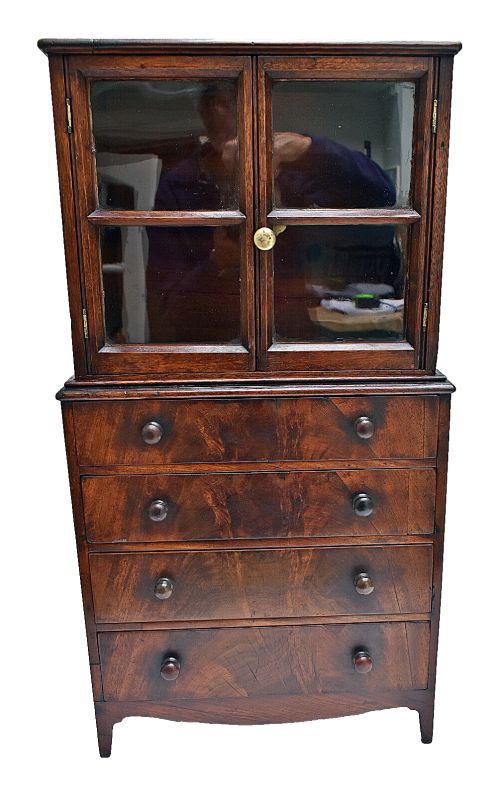
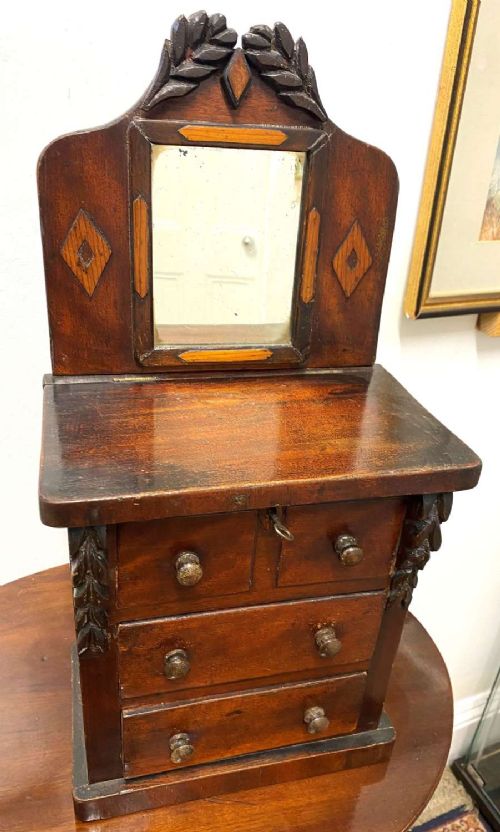
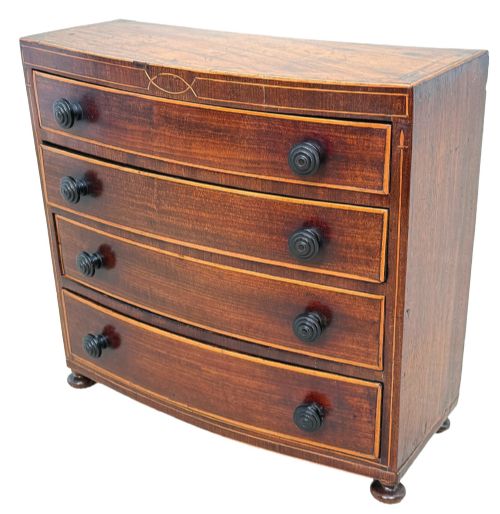
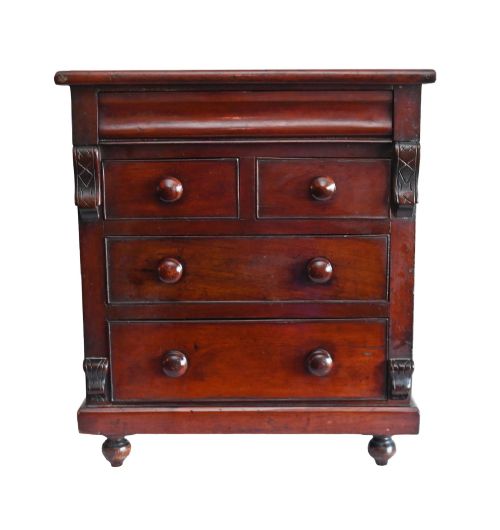
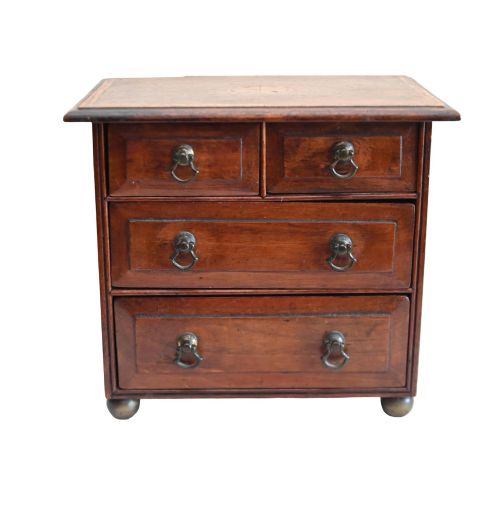
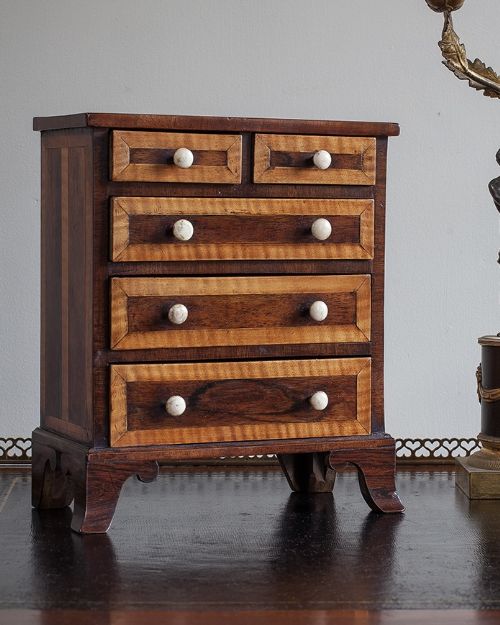
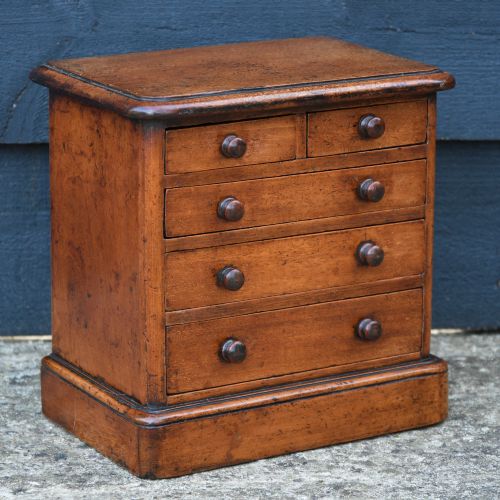
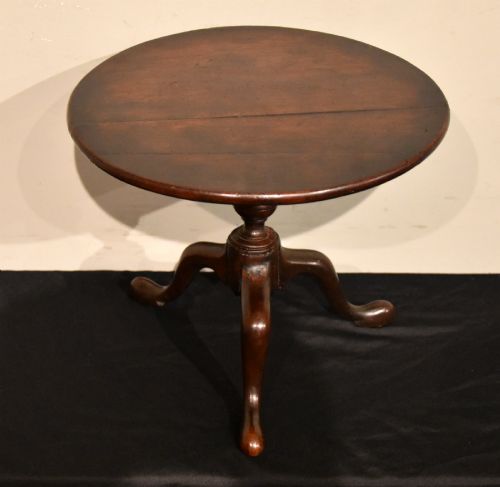
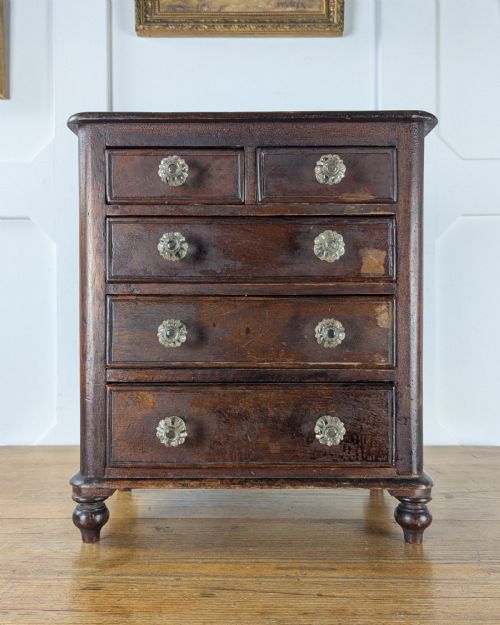
A mahogany apprentice piece represents a small-scale model of a full-size furniture form, created by craftsmen to prove skill during training or to serve as a travelling salesman sample. The selection centres heavily on miniature chests of drawers, alongside bureau bookcases, side tables, breakfast tables, desks, corner cupboards and washstands.
The material palette is anchored by solid and veneered mahogany, frequently accented with brass handles, glass doors, bone escutcheons and pine secondary woods. Pieces emerge across the Georgian, Regency and Victorian periods, spanning the eighteenth and nineteenth centuries up to the early twentieth century.
Most items take the form of miniature chests of drawers or small tables designed to sit upon larger surfaces, occasionally doubling as jewellery boxes or doll furniture. Buyers encounter Georgian chest forms with shell inlay alongside later Victorian veneered examples and reduced-scale French polished bureau bookcases.
How They Were Made
Cabinetmakers utilised dense mahogany timber, employing solid construction methods and fine wood veneers applied over secondary woods like pine. Details such as miniature drawers incorporate traditional joinery, while surfaces receive French polish or wax finishes to highlight the grain.
Fittings include small brass drawer pulls, glass panels for miniature cabinets, and delicate bone escutcheons inset around keyholes. Inlaid shell motifs appear on select Georgian specimens, requiring precise hand-cutting and fitting into the mahogany ground.
Mahogany Apprentice Piece Retail Price Guide 2026
Typical asking prices for mahogany apprentice piece among the pieces listed under this phrase on Sellingantiques today, from the lower quarter to the upper quarter. They describe what is for sale here now, not the wider market.
Secondary materials recorded in these miniature forms include brass, glass, bone and pine.
What Varies in Quality
Proportion and scale distinguish the finest works from rougher samples, as true mastery lies in maintaining the exact architectural ratios of a full-sized bureau or chest. Superior pieces display meticulous dovetailing and grain alignment even on unseen secondary surfaces.
The refinement of miniature hardware and secondary materials separates standard items from exceptional ones. Finely cast brass handles, well-fitted glass panes and crisp shell inlay elevate an object, whereas clumsy joints and crude secondary woods indicate a lower tier of craftsmanship.
The Mahogany Apprentice Piece Glossary
- Apprentice piece
- A miniature furniture item made by a trainee craftsman to demonstrate skill to a guild or master, or used commercially as a salesman sample.
- French polish
- A shellac finish applied in numerous thin coats with a rubber pad to produce a high-gloss surface on mahogany.
- Escutcheon
- A small protective plate of bone or brass surrounding a keyhole on a drawer or door front.
- Secondary wood
- A less costly timber, such as pine, utilised for concealed parts like drawer linings and backboards.
- Veneer
- A thin slice of figured mahogany bonded to a stable wood base to create decorative exterior surfaces.
Mahogany Apprentice Piece: Frequently Asked Questions
What is an apprentice piece?
An apprentice piece is a scaled-down model of furniture created by a craftsman in training to prove technical skill.
These items allowed makers to demonstrate proficiency in joinery, turning and finishing before qualifying as master cabinetmakers.
Were these made for children?
While some smaller items functioned as doll furniture or children's chairs, most apprentice pieces served a professional purpose.
They acted as practical tests of ability or portable samples for salesmen to demonstrate furniture designs to clients.
Where should I display them?
Miniature chests and tables suit placement on sideboards, desks or dedicated shelves where their fine scale can be appreciated.
Their compact dimensions allow them to sit comfortably in smaller rooms while adding historical character to a surface.