

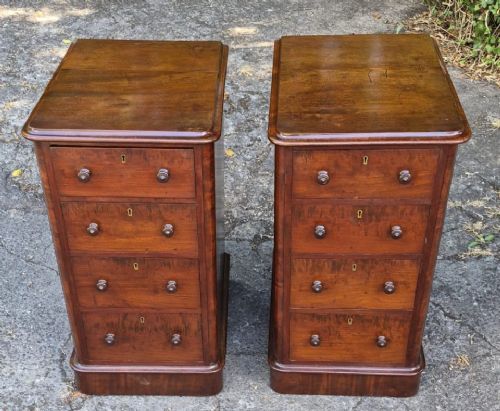
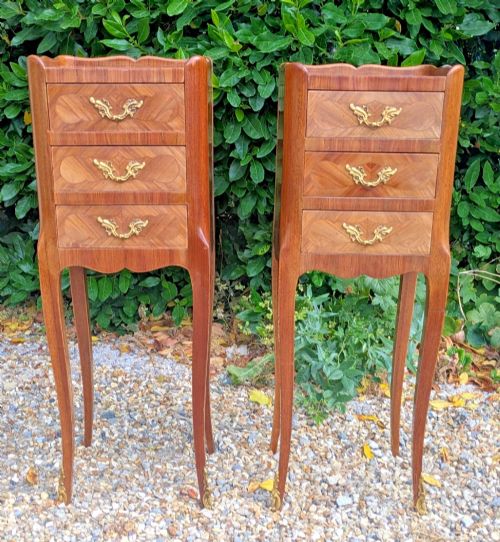
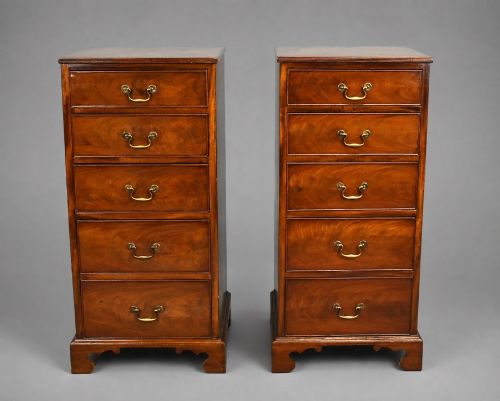
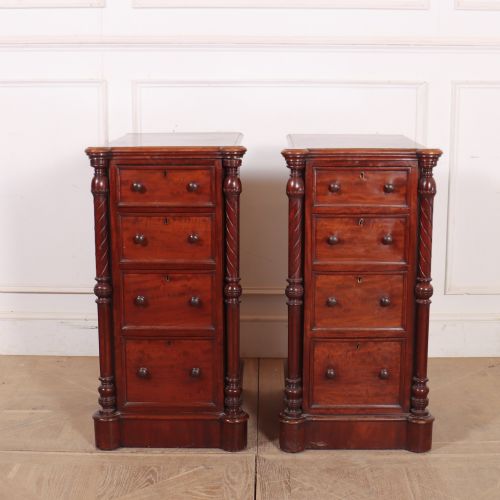
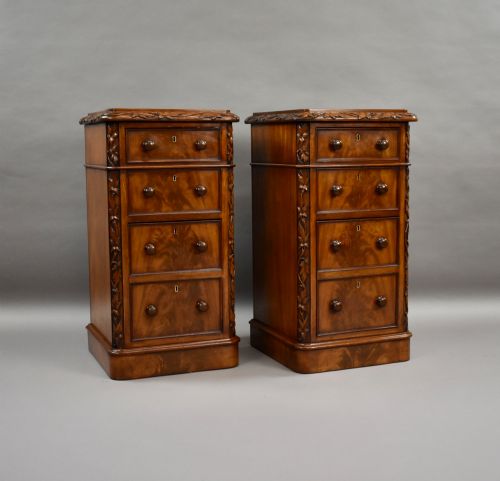
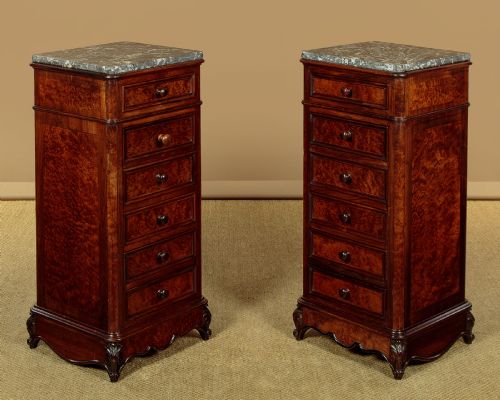

Narrow Bedside Cabinets
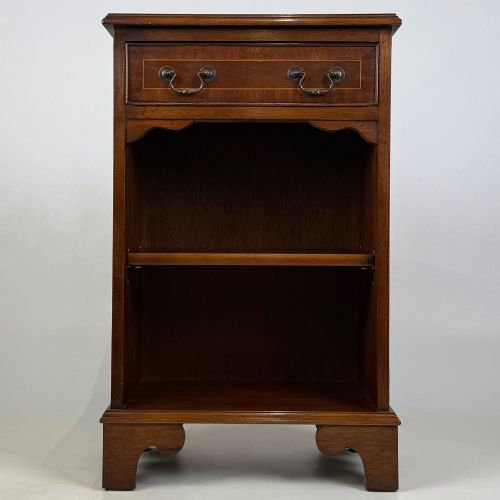
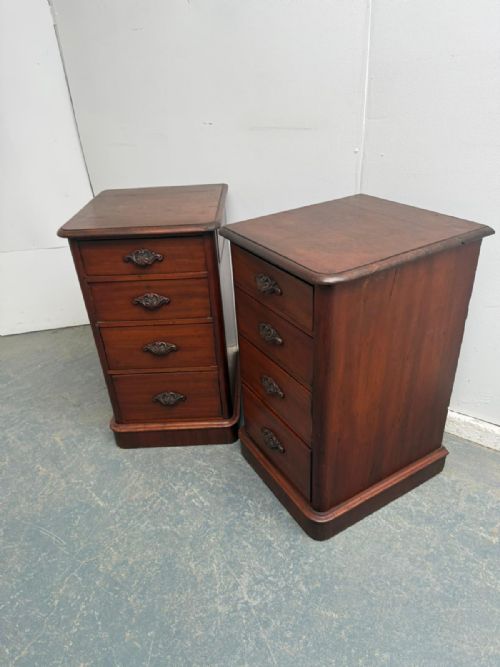
These narrow bedside cabinets offer compact storage alongside the bed, combining period timber work with neat proportions.
Narrow Bedside Cabinets
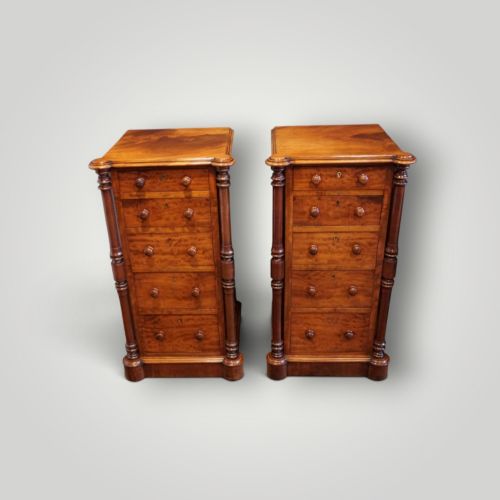
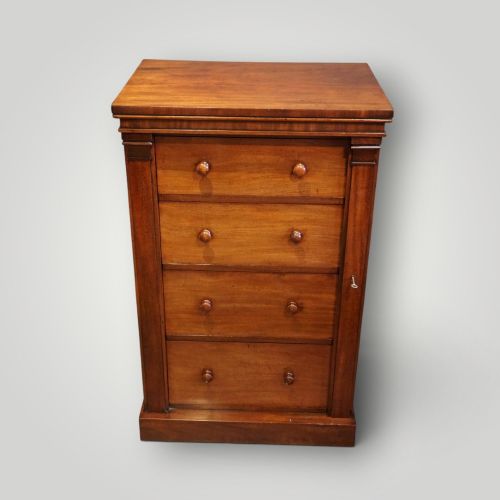
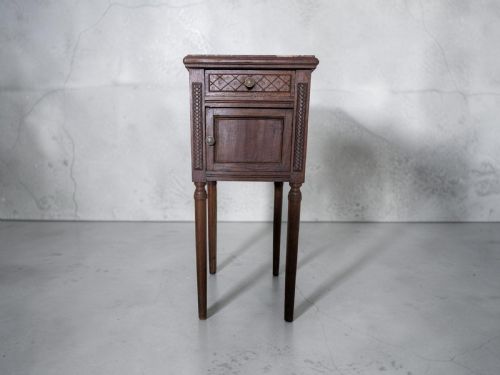
When searching for narrow bedside cabinets, a buyer examines small storage furniture designed to fit beside a bed without crowding the room. These pieces frequently appear as diminutive chests of drawers, pot cupboards, and pedestal cabinets built with slender footprints.
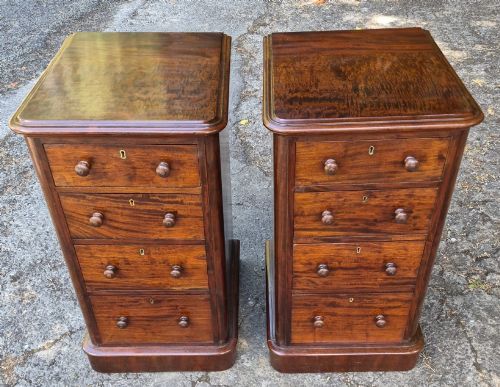
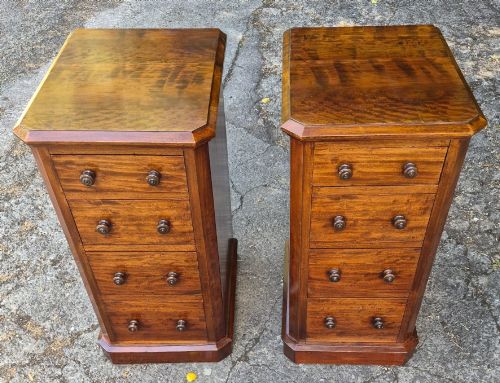
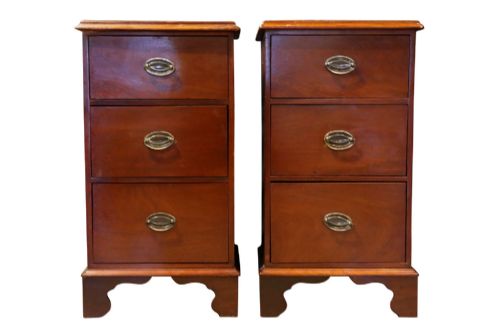
The options span several decades, with Victorian, Edwardian, and Art Deco examples appearing frequently. Many are encountered in matched pairs, offering symmetry across twin beds or a principal bed frame.
Timber selection defines much of the visual character within this group. Mahogany, walnut, and pine predominate, occasionally enriched with marquetry inlay or parquetry veneer.
Materials and construction
Cabinet makers utilised solid hardwoods like mahogany, walnut, and oak alongside softer woods such as pine to build these compact carcasses. Grain selection mattered greatly, with figured veneers and burr walnut applied to visible surfaces for decorative depth.
Joinery techniques relied on traditional methods, including dovetailed drawer construction and mortise and tenon framing, ensuring durability in daily use. Brass hardware, from drop handles to campaign-style fittings, provided functional closure and contrast against the dark woods.
Materials recorded across the inventory include mahogany, walnut, oak, pine, rosewood, brass, and marble.
Evaluating the standard
Quality rests in the crispness of the timber selection and the precision of the cabinet work. Superior examples display carefully matched grain patterns across drawer fronts, tight joinery, and original brass fittings.
Proportion and scale also separate standard utility pieces from finer commissions. Pieces that maintain slender widths while retaining functional depth without awkward modifications represent the higher tier of the selection.
Warings Liverpool
The Narrow Bedside Cabinets Glossary
- Parquetry
- Geometric wood mosaic work used for floors and furniture surfaces. It creates a striking tiled pattern on select Edwardian nightstands.
- Wellington chest
- A tall, narrow chest of drawers secured by a hinged locking side bar. These sturdy pieces provide ample vertical storage in limited floor spaces.
- Campaign furniture
- Portable pieces designed for military officers, fitted with recessed brass handles and corner brackets for travel. These items offer robust construction and distinctive hardware.
- Pot cupboard
- A small bedside cabinet originally designed to house a chamber pot. These practical forms often combine a single door with an internal shelf.
Narrow Bedside Cabinets: Frequently Asked Questions
Are these cabinets sold individually?
Many of these pieces are offered as matched pairs, though single cabinets appear frequently.
Buyers often select pairs to create symmetry on either side of a bed.
What woods were used for these cabinets?
Cabinet makers utilised mahogany, walnut, oak, rosewood, and pine across the various periods.
Finer examples incorporate burr walnut veneers or decorative marquetry inlay.
How do I date a bedside cabinet?
Stylistic details such as Art Deco geometric lines, Victorian turned handles, or Georgian proportions help establish the period.
Construction methods inside the drawers also indicate the era of manufacture.
What dimensions are typical for these pieces?
These items are built with narrow widths and compact depths to suit small spaces beside a bed.
Certain variations include tall chests with multiple drawers while maintaining a slender footprint.