



Art Deco Bedside Drawers
Art deco bedside drawers bring striking geometric lines and rich timber grains beside a bed, offering practical storage with distinct period character.
Art Deco Bedside Drawers
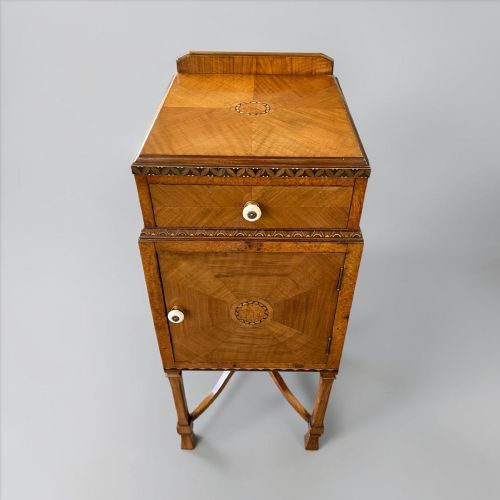
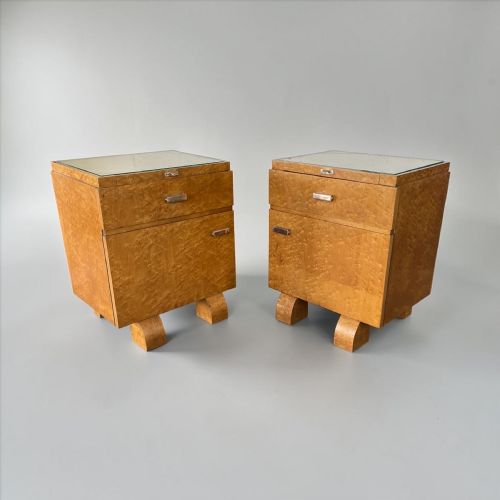
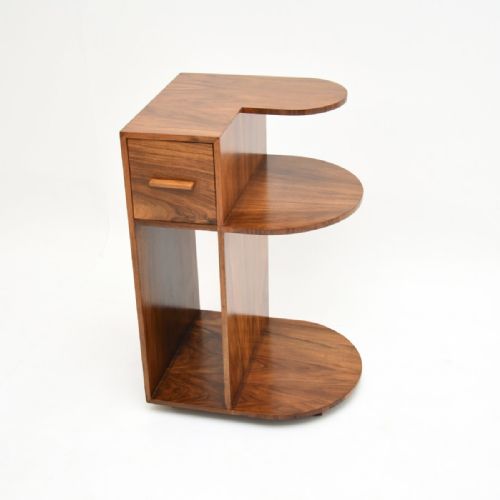
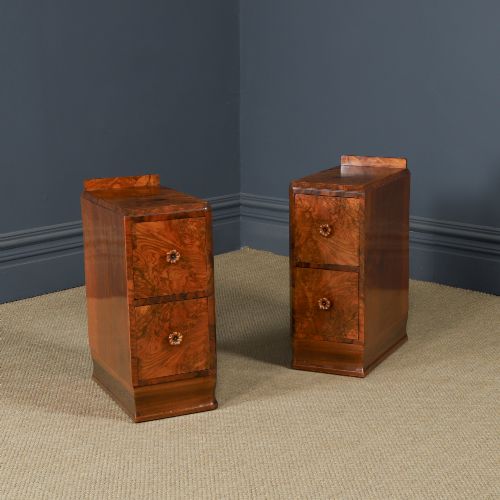
Art deco bedside drawers encompass compact chests, lamp tables, and bedside cabinets produced primarily during the 1920s, 1930s, and 1940s. These pieces frequently appear in matched pairs, offering symmetric storage for the bedroom with small drawer counts and enclosed cabinet spaces.
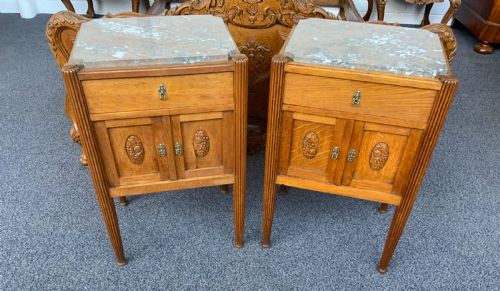
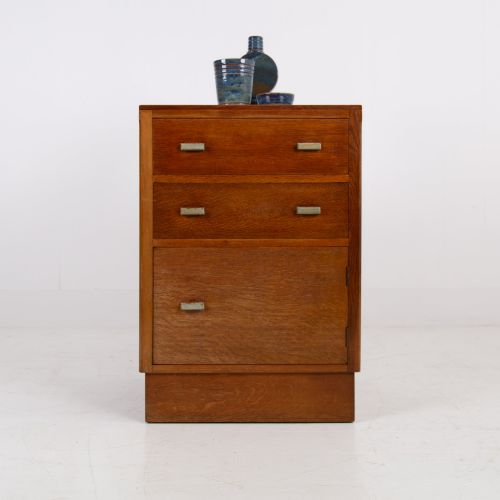
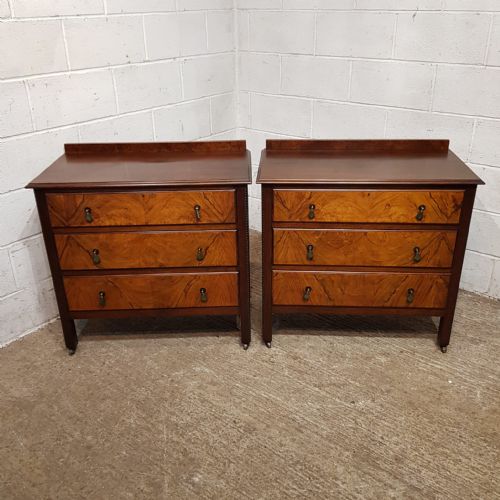
The objects take several forms, including traditional bedside tables with a single drawer, two-drawer nightstands, and small chests. Designs span British, French, and Italian origins, ranging from streamlined modernist interpretations to heavier revival styles.
How they were made
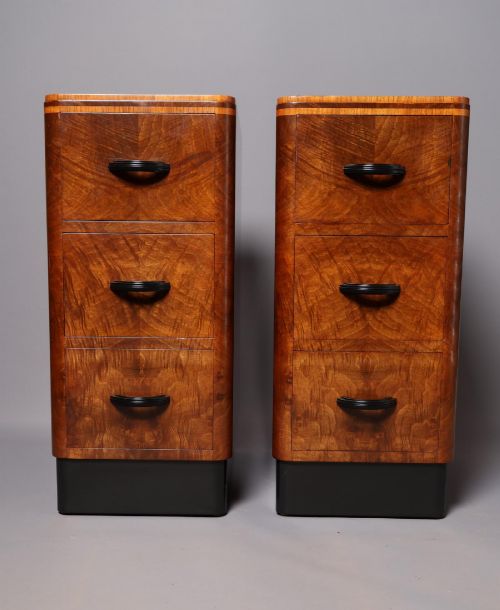
Cabinet makers utilised solid woods like oak, mahogany, and ebonised timber as structural bases, applying decorative veneers over larger surfaces. Burr walnut and figured walnut appear frequently, selected for their dramatic grain patterns.
Metal accents in brass and chrome provide contrast to the warm timber tones, often forming handles, sabots, or trim. Glass surfaces sometimes top the tables to protect the polished wood underneath.
Walnut and burr walnut dominate the surviving wood selections, outnumbering oak, mahogany, and satinwood across the recorded inventory.
What varies in quality
The choice of veneer defines much of the visual standard, with matched burr walnut and Macassar ebony representing the upper tiers of cabinet work. Lesser pieces rely on plain timber or straightforward oak without decorative grain alignment.
Construction details such as drawer linings, tight joints, and original hardware elevate certain items above standard production pieces. The presence of matching pairs rather than single items also shapes the appeal.
Gomme·Ruhlmann
The Art Deco Bedside Drawers Glossary
- Burr walnut
- A veneer taken from the burl growth of a walnut tree, showing swirling, highly decorative grain patterns. It forms the primary decorative surface on many upper-tier pieces.
- Macassar ebony
- A dense, exotic timber featuring dark brown and black stripes, used for striking contrast in high-end modernist designs. It appears on select cabinets alongside figured walnut.
- Nightstand
- An alternative term for a bedside table or cabinet, providing a surface for a lamp and small enclosed storage. These units typically feature one or two drawers.
- Modernist
- A style emphasising clean lines, functional forms, and minimal ornamentation, diverging from traditional revival designs. It defines the more progressive pieces from this era.
Art Deco Bedside Drawers: Frequently Asked Questions
Are art deco bedside drawers usually sold in pairs?
Many examples survive as matched pairs, particularly French and English walnut cabinets designed to flank a double bed.
Single items also appear frequently, often functioning as lamp tables or small side chests rather than matched bedroom sets.
What woods were used for art deco bedside cabinets?
Makers relied heavily on walnut, burr walnut, oak, and mahogany for the main carcase and drawer construction.
More exotic timbers like Macassar ebony and satinwood appear as contrasting veneers on select modernist pieces.
How do I identify a 1930s bedside chest?
Look for characteristic geometric forms, stepped outlines, and figured wood veneers rather than ornate carving.
Hardware in brass or chrome often complements the linear design, alongside clean rectangular or curved drawer fronts.
Can these fit in a modern bedroom?
Their compact dimensions make them suitable as bedside tables alongside contemporary or period beds.
The warm wood tones and restrained proportions allow them to integrate easily into various interior schemes.