




Satinwood Bedside Cabinets
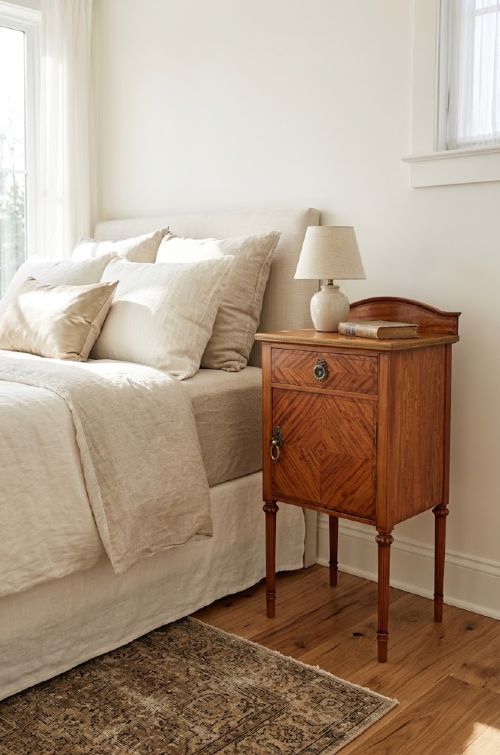
Satinwood bedside cabinets bring bright timber grain and refined proportions beside the bed.

The Form and Period of Satinwood Bedside Cabinets
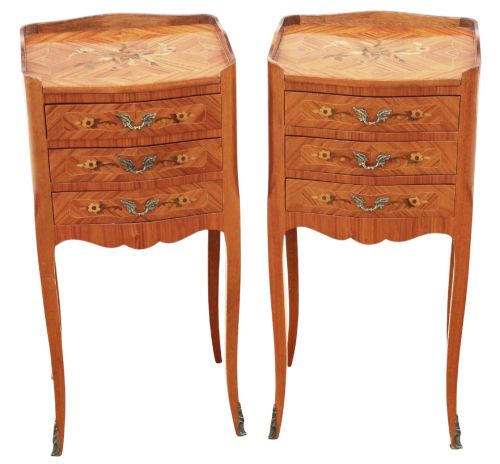
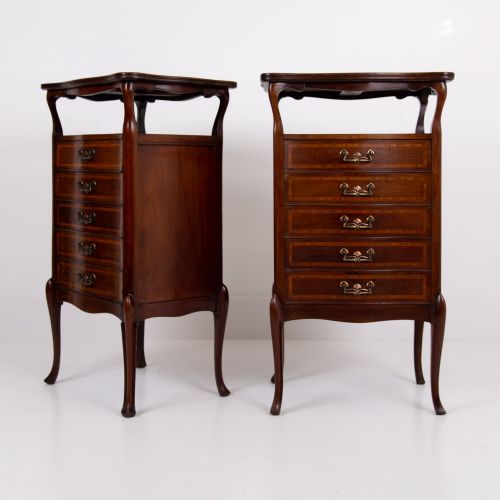
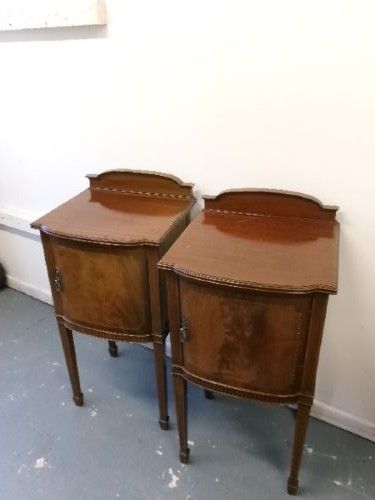
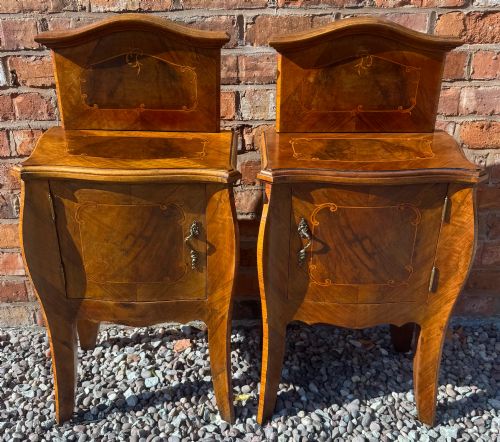
Satinwood bedside cabinets comprise enclosed cupboards and open-top pedestals designed to hold nighttime essentials. You find them most frequently as matched pairs dating from the Victorian and Edwardian eras, as well as the later Art Deco period.
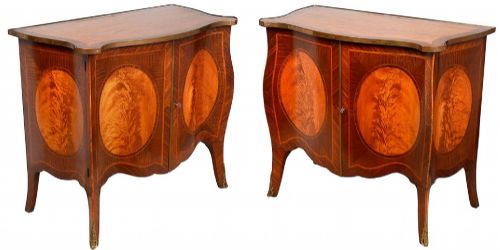
The selection ranges from Sheraton Revival marquetry pieces to streamlined 1930s designs combining satinwood with contrasting walnut. Cabinet heights vary to suit different mattress levels from the nineteenth and early twentieth centuries.
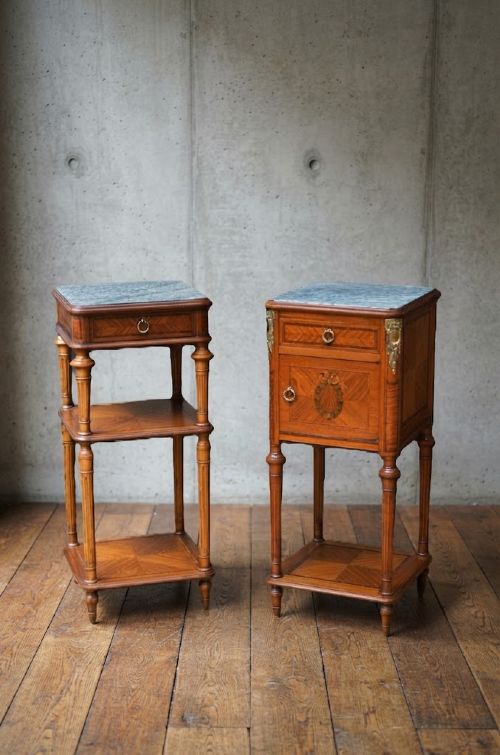
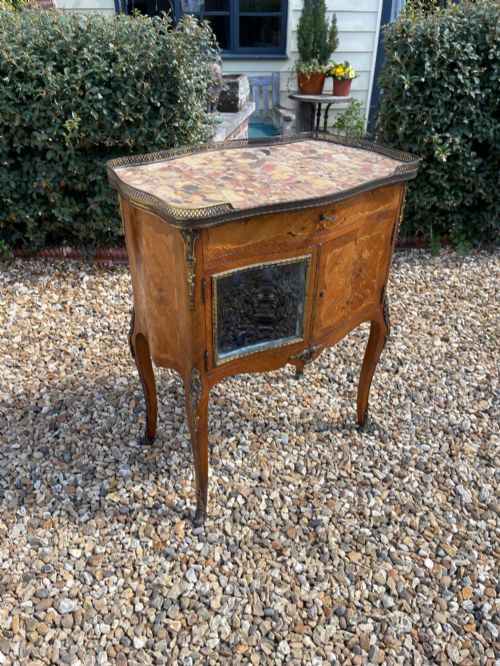
French interpretations appear alongside English workshops, often incorporating marble tops and fine brass mounts. These variations reflect the changing interior fashions across the decades represented in the archive.
Materials and Construction Techniques
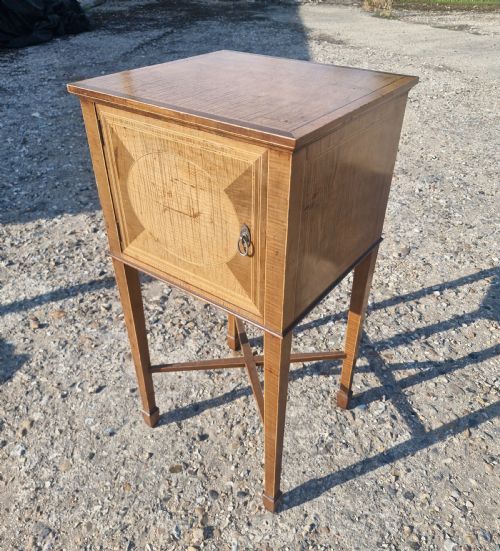
Cabinet makers utilised dense hardwood carcasses overlaid with figured satinwood veneers to create a shimmering, reflective surface. Boxwood stringing and contrasting crossbanding in walnut, mahogany, or pollard oak define the edges and panel borders.
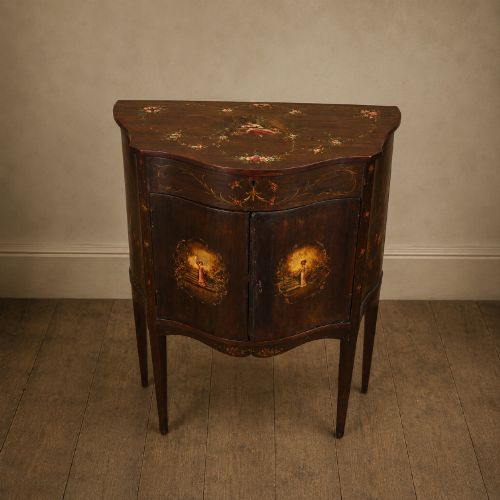
Internal construction relies on traditional dovetail joints for drawers and panelled backs for cupboards. Surface decoration includes hand-painted floral detailing, marquetry inlay, and contrasting birch or maple veneers.
Hardware consists of brass handles, drop pulls, and occasionally chrome or bakelite accents on twentieth-century examples. Marble tops provide a durable, polished upper surface on selected Victorian and Edwardian cabinets.
Retail Price Guide 2026
Typical UK retail prices for satinwood bedside cabinets, calculated from the Sellingantiques database of over a million retail prices indexed since 2003. This retail price guide relies exclusively on Sellingantiques data; no external sources or auction records are used, so the figures do not describe the wider market.
Makers occasionally added marble tops to bedside cabinets so owners could safely set down a steaming cup of tea without marking the wood.
Judging the Quality of Construction and Finish
The choice of veneer determines the visual impact, with deeply figured satinwood commanding greater appreciation than plain timber. Precision in the boxwood stringing and the crispness of marquetry inlay separate standard production from master craftsmanship.
Structural integrity depends on the stability of the carcass and the smooth operation of drawers and cupboard doors. Original marble slabs, intact brass hardware, and well-preserved hand-painted details elevate the standing of a piece.
Waring & Gillows·M. Woodburn·Maple & Co
The Satinwood Bedside Cabinets Glossary
- Satinwood
- A lustrous tropical hardwood known for its golden colour and reflective, satiny grain. It serves as both a solid timber and a decorative veneer.
- Crossbanding
- A narrow strip of veneer laid around the border of a panel with the grain running perpendicular to the centre. This technique frames the primary wood.
- Marquetry
- The art of applying pieces of veneer to a structure to form decorative patterns and pictures. Craftsmen cut different timbers to fit together precisely.
- Stringing
- Thin inlay lines of contrasting wood used to outline drawers, panels, and tabletops. Boxwood is frequently utilised for this purpose.
- Biedermeier
- A Central European style from the first half of the nineteenth century emphasising clean lines and utilitarian comfort. It often highlights the natural grain of light timbers.
Frequently Asked Questions
How do I care for satinwood surfaces?
Dust regularly with a soft, dry cloth and avoid placing wooden cabinets in direct sunlight or near heat sources. Excessive light alters the golden tone of the timber over time.
Apply a traditional wax polish sparingly to maintain the sheen and protect the veneer from atmospheric moisture. Avoid silicone-based sprays that damage historic finishes.
Are these cabinets sold as singles?
The majority of pieces survive and sell as matched pairs intended to flank a bed symmetrically. Single pedestals do appear occasionally from smaller bedroom suites.
Pairs offer greater decorative balance in a bedroom scheme, though individual pieces function well as lamp tables in other rooms.
What is the difference between a cabinet and a commode?
In this context, cabinets feature enclosed cupboard doors concealing a shelf or open storage space. Commodes historically housed chamber pots, though nineteenth-century variants often transitioned into general bedside storage chests.
Both forms serve identical practical purposes beside a bed today, regardless of their historical classification.
How do I distinguish Edwardian from Victorian pieces?
Victorian cabinets generally display heavier proportions, darker secondary timbers, and occasionally white marble tops. The carving and ornamentation follow more robust nineteenth-century traditions.
Edwardian and Sheraton Revival examples tend to be lighter, brighter, and more delicate, frequently incorporating painted floral swags or subtle boxwood stringing.