

Marquetry Bedside Tables
Marquetry bedside tables bring intricate wood-inlaid patterns and continental elegance to the bedroom through compact nineteenth and early twentieth-century forms.
Marquetry Bedside Tables
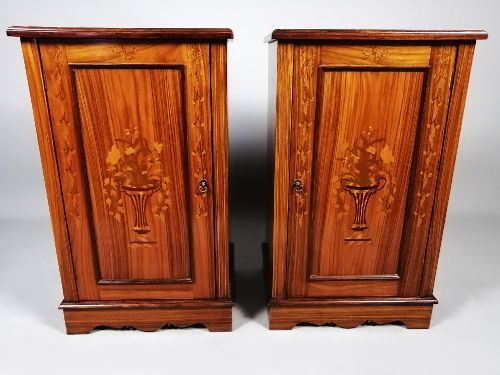
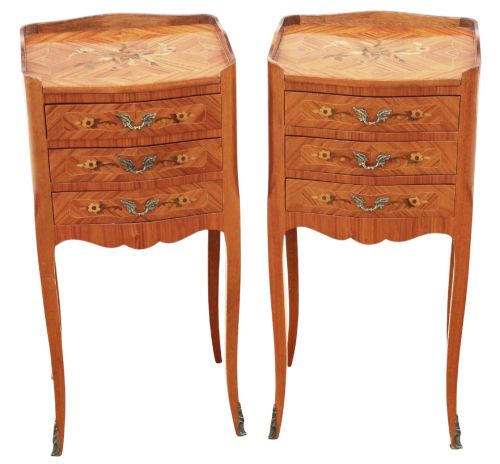
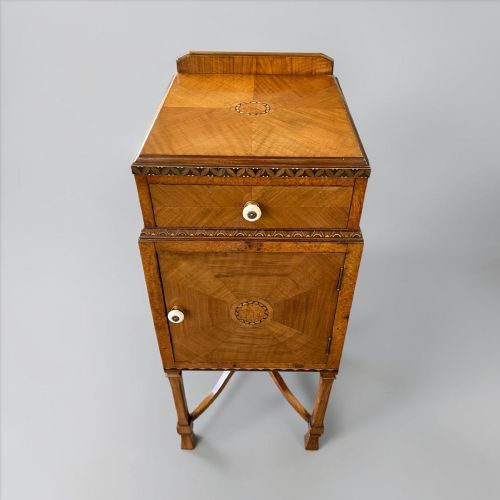
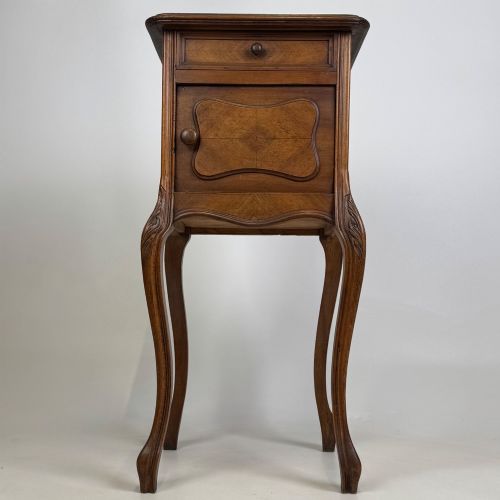
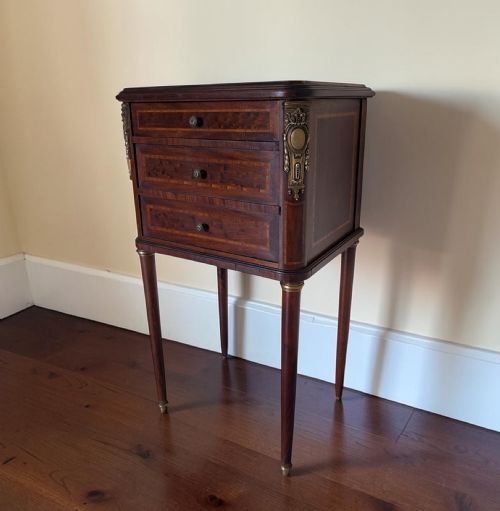
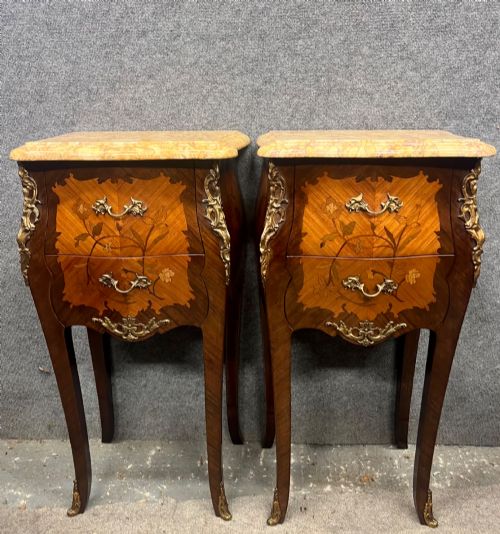
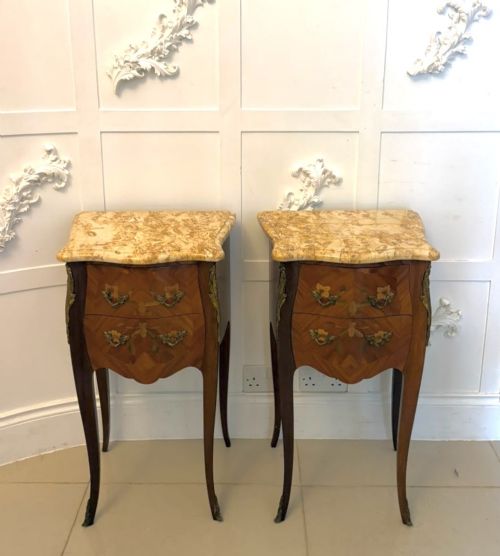
When searching for marquetry bedside tables, buyers encounter compact cabinets, small chests of drawers, and lamp tables decorated with detailed wood veneers. These pieces draw heavily on French design traditions, particularly Louis XV and Louis XVI revivals, alongside Victorian and Edwardian interpretations.
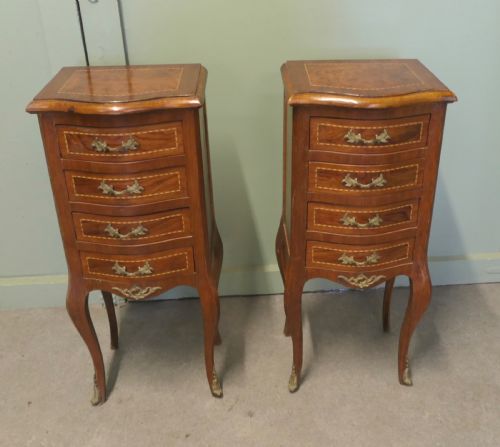
The versions most commonly met on this page date from the late nineteenth century through to the 1930s. They frequently appear in pairs, designed to flank a bed with matched floral, pictorial, or geometric wood patterns.
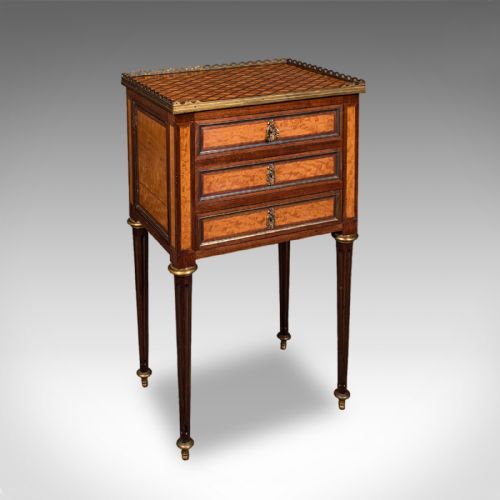
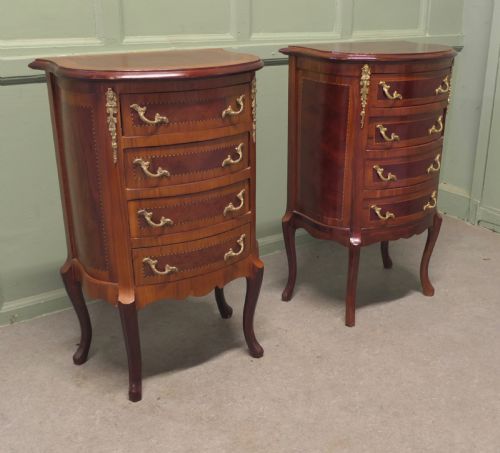
Forms range from serpentine and bombe bedside chests to freestanding lamp tables and pot cupboards. Walnut, kingwood, and mahogany provide the primary carcases for these decorative surfaces.

How They Were Made
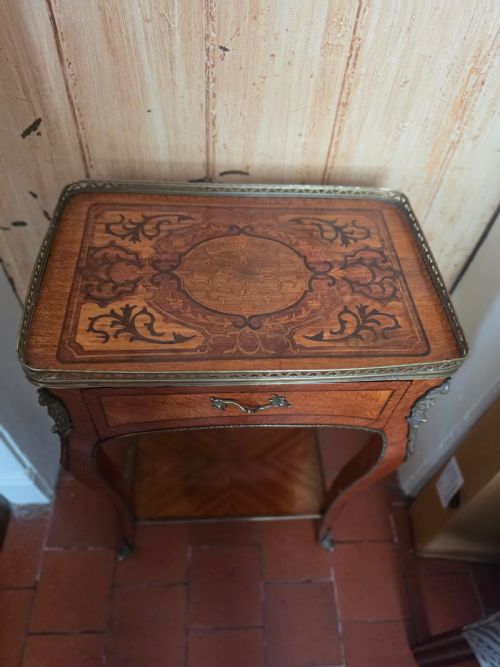
Cabinet makers utilised contrasting wood veneers such as rosewood, satinwood, and walnut, cutting them into precise pictorial or geometric motifs. These delicate inlays were glued to solid carcases and smoothed flush before polishing.
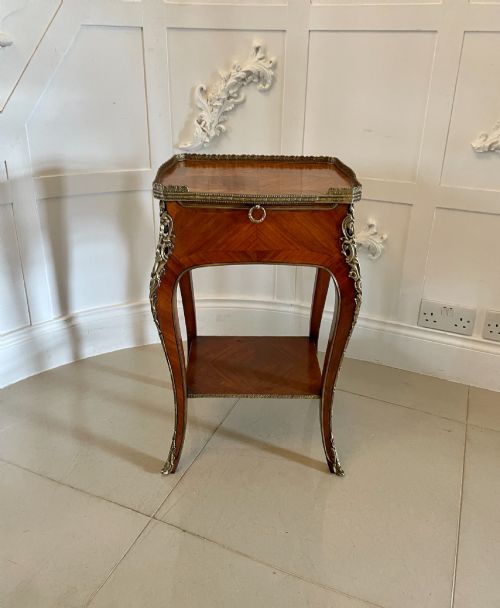
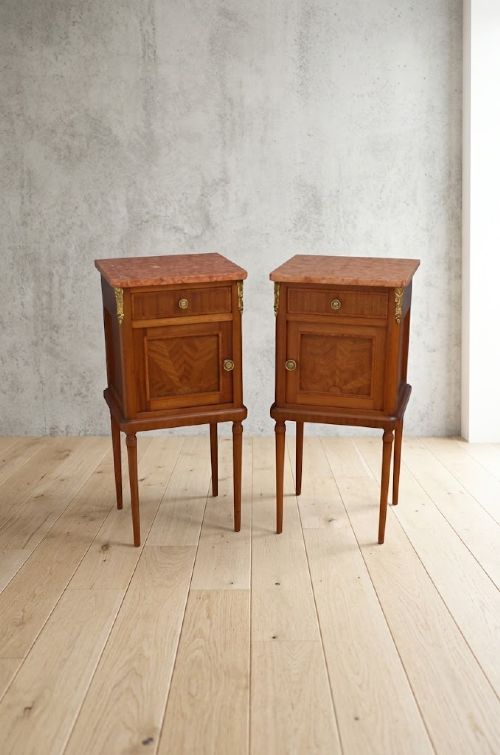
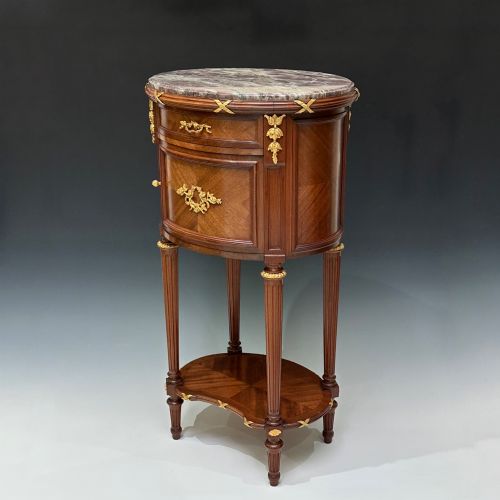
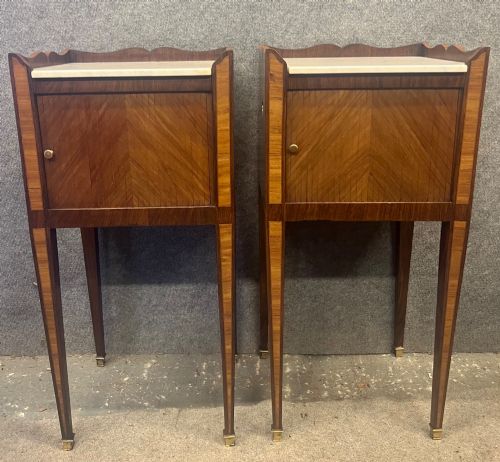
Many examples incorporate cast brass and ormolu mounts, which protect corners, frame drawers, and accentuate curved legs. Marble tops, often in shades of white or sienna, frequently finish the upper surfaces of French bedside cabinets.
Marquetry Bedside Tables Retail Price Guide 2026
Typical asking prices for marquetry bedside tables among the pieces listed under this phrase on Sellingantiques today, from the lower quarter to the upper quarter. They describe what is for sale here now, not the wider market.
Some nineteenth-century French bedside cabinets conceal internal pull-out shelves designed specifically for holding a chamber pot.
What Varies in Quality
Quality rests primarily in the precision of the veneer work and the crispness of the timber selection. Finer examples display intricate, tightly fitted multi-wood marquetry without visible gaps or excessive filler.
The choice of secondary materials marks the tier of a piece, separating standard production items from workshop creations that feature heavy cast bronze mounts, substantial marble slabs, and finely dovetailed drawer construction.
François Linke·Sormani
The Marquetry Bedside Tables Glossary
- Marquetry
- The art of applying decorative pieces of veneer to a structure to form intricate designs or pictures. Makers select contrasting timbers to achieve tonal depth and natural shading.
- Ormolu
- Gilded bronze mounts applied to furniture for decorative and protective purposes. These cast metal elements define many continental revival styles.
- Bombé
- A swelling, outward-curving shape characteristic of continental case furniture. This curved profile demands skilled veneer work to follow the contour.
- Parquetry
- Geometric wood inlay forming repeating patterns such as cubes or chevrons. It differs from pictorial marquetry through its strict reliance on repeating angles.
- Vernis Martin
- A type of simulated Japanese lacquer developed in eighteenth-century France and replicated in later revival pieces. It provides a glossy, translucent finish over decorated surfaces.
Marquetry Bedside Tables: Frequently Asked Questions
Are marquetry bedside tables usually found in pairs?
Many surviving examples appear as matched pairs because bedrooms traditionally required symmetrical furnishings on either side of the bed. Single pieces also occur frequently, often originating from sets that were split up over time.
Pairs command particular attention from collectors seeking symmetrical arrangements for period interiors. Finding a truly matching pair with uniform fading and wear remains a key consideration.
What wood types are used in these tables?
Workshops relied on a foundation of solid woods like mahogany or walnut while applying decorative veneers to the exterior surfaces. Kingwood, rosewood, and satinwood provided the contrasting colours essential for detailed patterns.
Lighter satinwood sections created highlights and background contrast, while darker rosewood and walnut formed borders and shadows. This variety of native and exotic timbers gives each piece its distinct visual depth.
How do I identify the period of a bedside cabinet?
Dating relies on combining the construction methods, the hardware, and the overarching stylistic revival period. Pieces from the Victorian and Edwardian eras often show heavier internal framing, while 1930s examples lean towards streamlined forms or simpler geometric inlays.
Continental pieces frequently incorporate marble tops and cast brass mounts that reflect specific French design reigns. Examining drawer dovetails and timber thickness helps confirm the manufacturing era.
How do I care for marble top bedside tables?
Marble surfaces require gentle cleaning with mild, pH-neutral soap and warm water to protect the stone from acidic staining. Avoid harsh chemical cleaners and abrasive cloths that can dull the polished finish.
Coasters and protective pads prevent rings from glasses or damp items placed on the bedside surface. Regular dusting keeps the porous stone and surrounding wood veneer in stable condition.