

French Chevet Tables
French chevet tables are compact bedside pieces offering discrete storage, prized for bringing Continental elegance and utility to a bedroom scheme.
French Chevet Tables
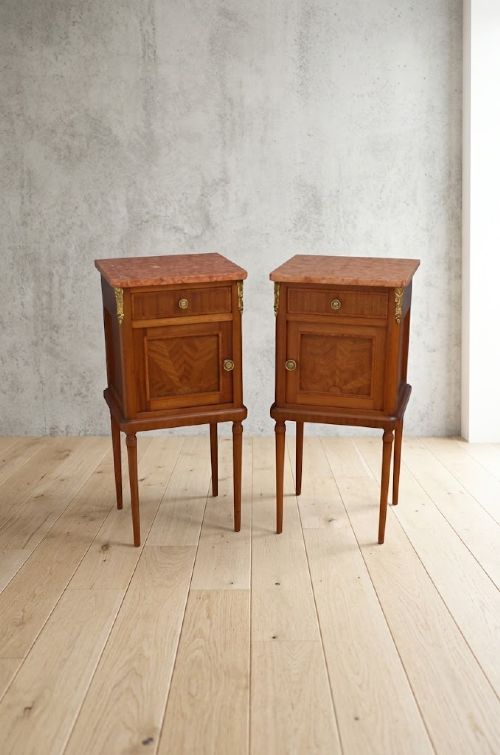
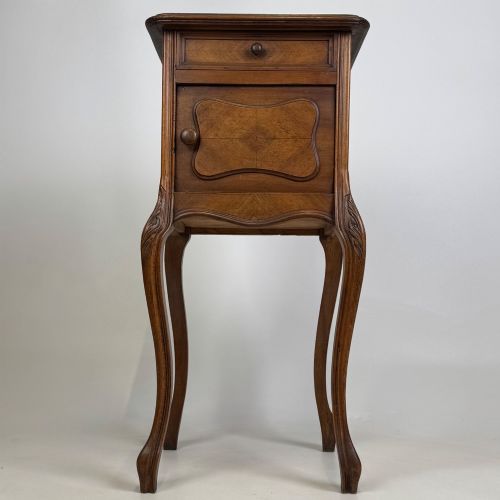
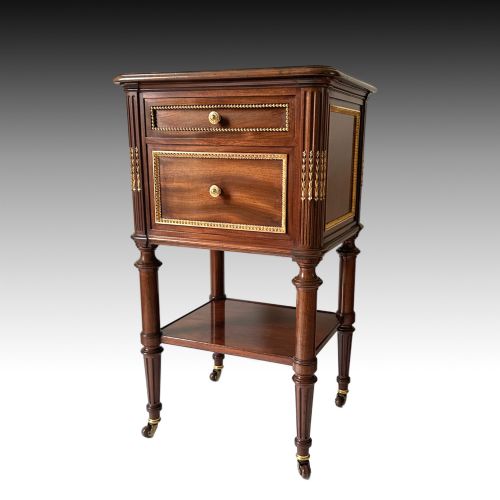
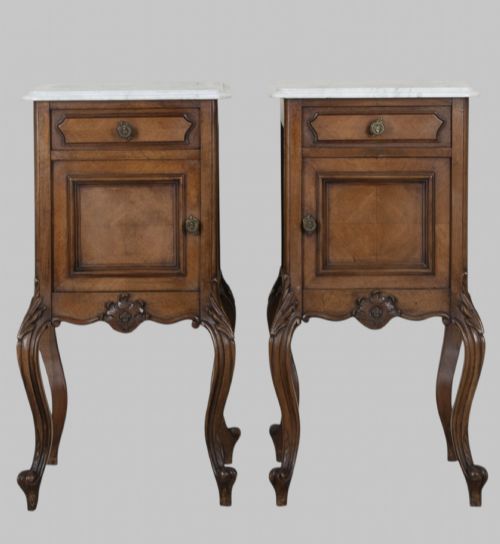
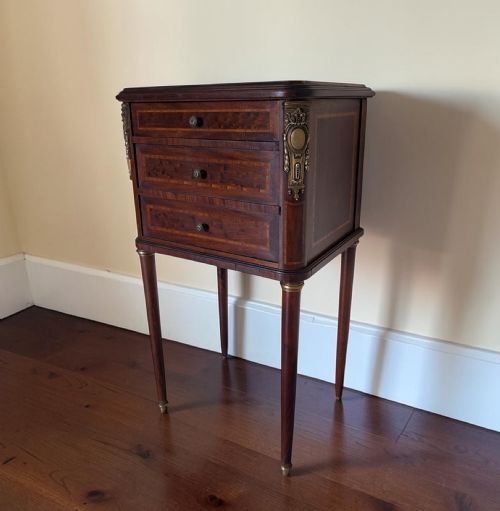
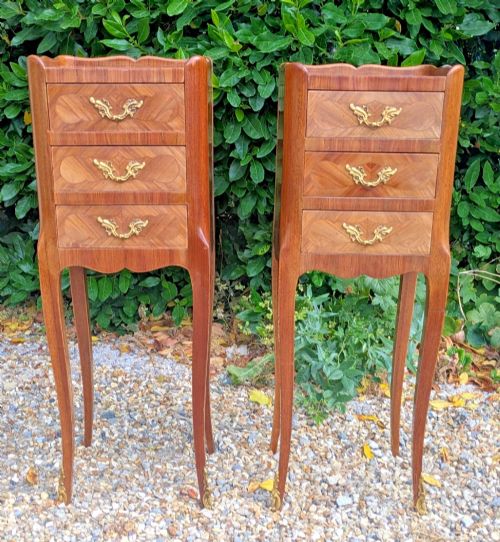
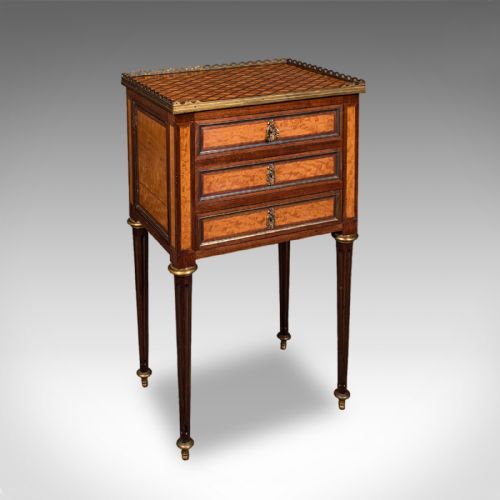
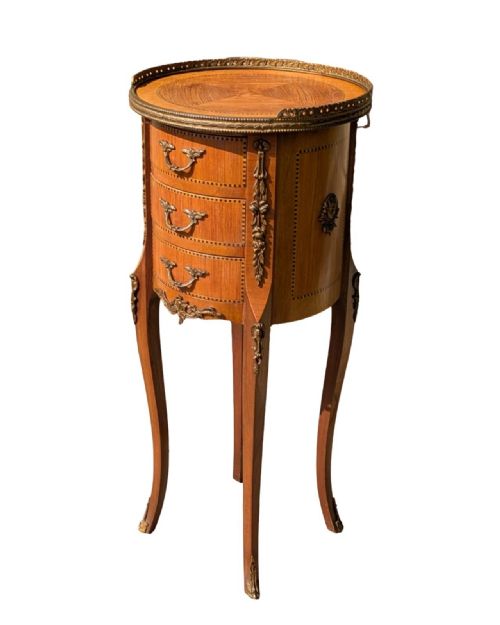
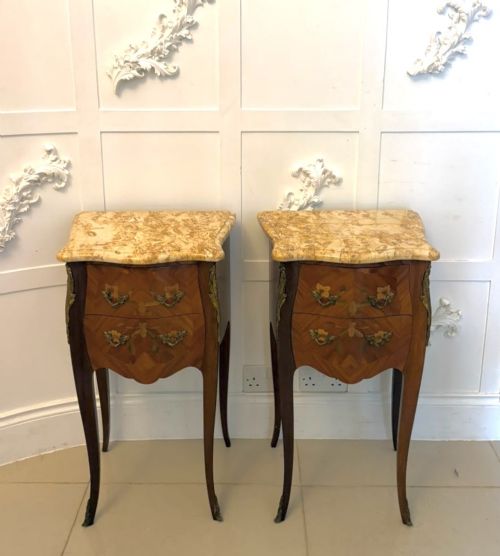
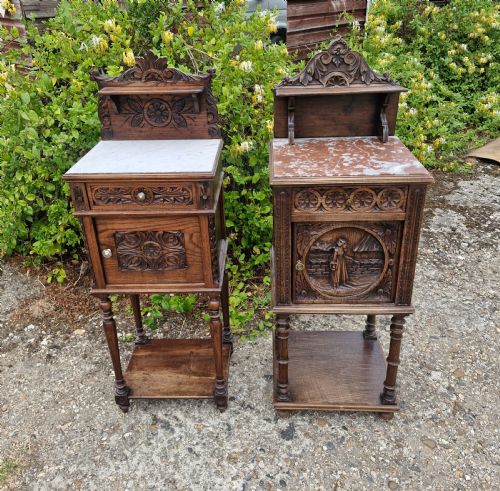
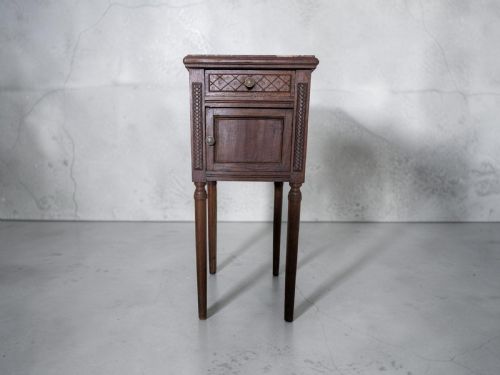
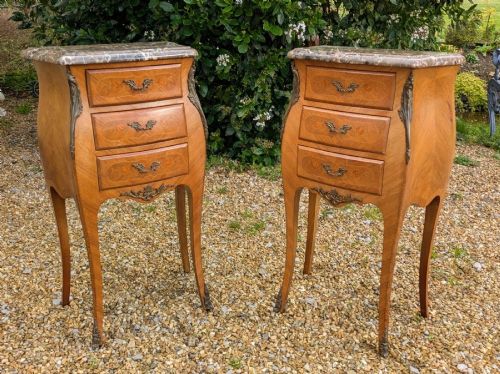
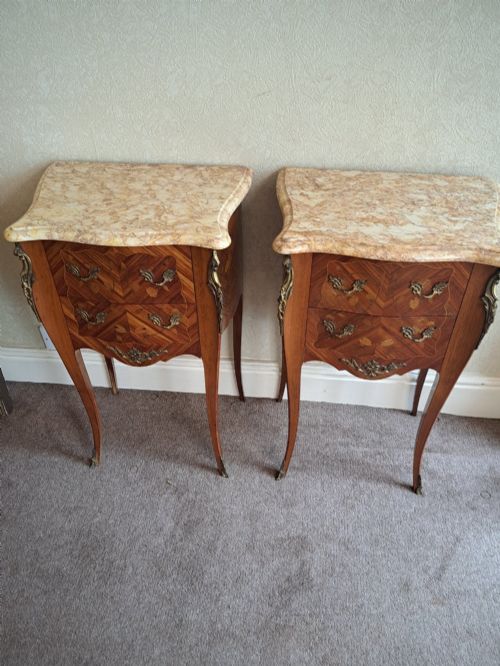
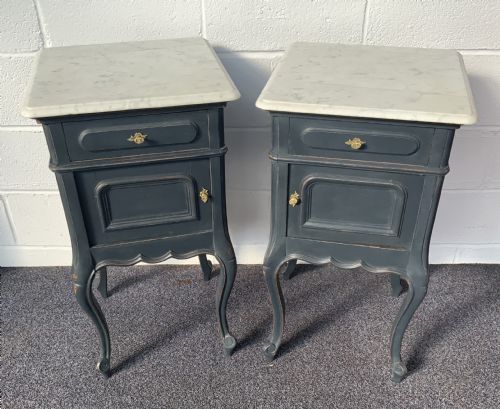
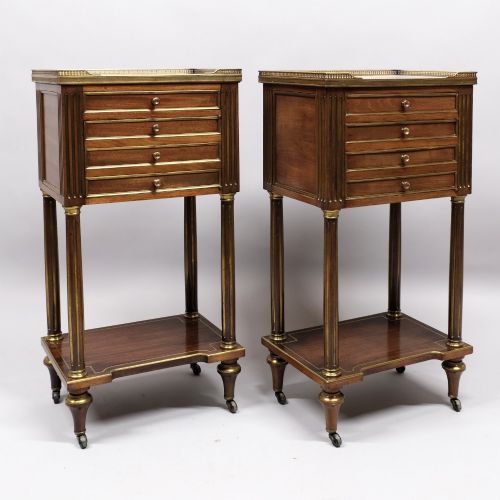
French chevet tables appear primarily as bedside cabinets, bedside tables, side cabinets, and occasional tables designed for compact placement beside a bed. The selection includes single items alongside matched pairs spanning the nineteenth century through the 1930s.
The aesthetic draws heavily on traditional Continental design vocabulary, incorporating styles from Louis XV and Louis XVI revivals to French provincial and chateau influences. Makers adapted these historical idioms into functional furniture suited to changing domestic requirements across various decades.
Materials and Construction
Cabinetmakers utilised dense timbers such as walnut, mahogany, oak, rosewood, kingwood, and cherry, frequently employing marquetry and parquetry patterns for surface decoration. Many examples incorporate contrasting veneer work alongside satinwood details to create visual depth on tops and drawer fronts.
Structural enrichment relies on polished marble tops, often in white or Belgian Sainte-Anne varieties, complemented by cast or chased ormolu mounts and delicate brass detailing. These hardware elements anchor the timber frames and provide functional edges for everyday use.
French Chevet Tables Retail Price Guide 2026
Typical asking prices for french chevet tables among the pieces listed under this phrase on Sellingantiques today, from the lower quarter to the upper quarter. They describe what is for sale here now, not the wider market.
Current listings feature items spanning the Victorian era through the 1930s, constructed from walnut, mahogany, oak, and kingwood with marble and brass elements.
Craftsmanship and Proportion
Distinction across the range rests on the precision of the timber matching and the intricacy of inlay work, where superior examples exhibit seamless grain continuity and detailed marquetry. The crispness of carved wooden elements and the weight of cast ormolu mounts further differentiate standard production from finer output.
Proportion and scale dictate the visual success of each piece, with better iterations maintaining balanced heights and neat footprints that integrate harmoniously into a room. The quality of fitted marble slabs and the smooth operation of internal drawers and cupboards indicate the underlying standard of construction.
The French Chevet Tables Glossary
- Chevet
- A French term for a bedside table or cabinet. These small pieces typically feature storage compartments or drawers positioned beneath a top surface.
- Ormolu
- Gilded bronze mounts applied to furniture for decorative enrichment. This technique gained prominence in French cabinetmaking during the eighteenth century and inspired later revival pieces.
- Marquetry
- The art of applying pieces of veneer to a structure to form decorative patterns and pictorial designs. Cabinetmakers used contrasting timbers to achieve tonal variation.
- Parquetry
- Geometric mosaic woodwork used for repeating patterns on tabletops and cabinet fronts. It relies on precise angular cutting of wood blocks.
- Sainte-Anne marble
- A distinctive dark grey or black limestone with white fossil inclusions quarried in Belgium. It appears frequently on the tops of nineteenth-century bedside cabinets.
French Chevet Tables: Frequently Asked Questions
What is a French chevet?
A French chevet is a bedside table or small cabinet designed to hold nighttime essentials. These pieces often incorporate a combination of drawers, cupboards, and open tiers.
They serve primarily in bedrooms flanking a bed, though their compact size allows them to function as occasional tables in other living spaces.
How do I identify a Louis XV style chevet?
Louis XV style pieces are characterised by curved lines, cabriole legs, and asymmetrical floral or rococo details. The overall silhouette prioritises organic movement over strict symmetry.
These designs frequently utilise marquetry veneers and delicate ormolu mounts to soften the structural corners.
How do I care for a antique kingwood table?
Maintenance requires keeping timber furniture away from direct heat sources and fluctuating humidity to prevent veneer lifting. Regular dusting with a soft, dry cloth preserves the polished surface.
Application of microcrystalline wax periodically helps nourish the wood and protect the finish without building up heavy residues.