
Marble Top Bedside Cabinets
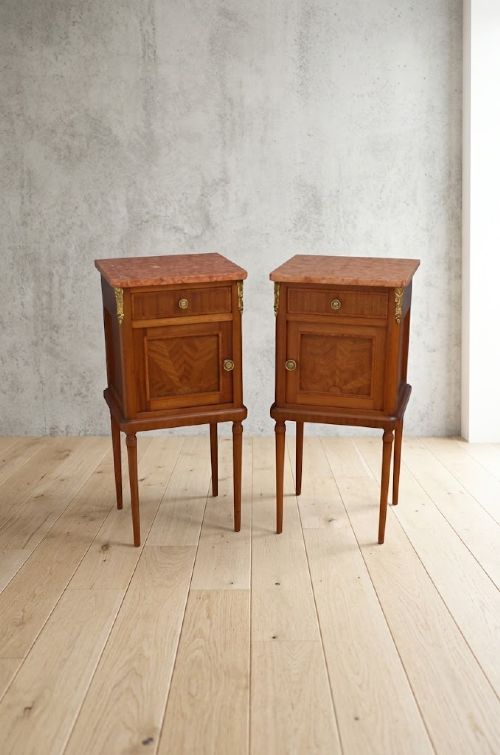
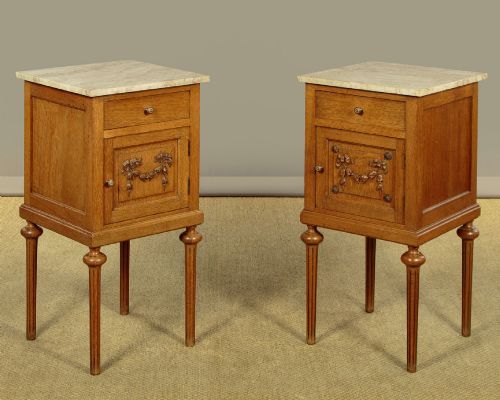
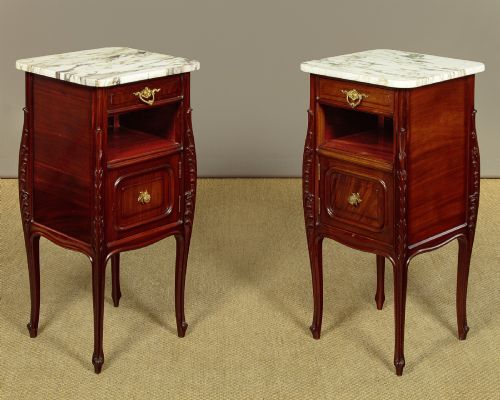
Marble top bedside cabinets combine functional bedside storage with a durable stone surface, appearing frequently as matching pairs in French and Swedish designs.
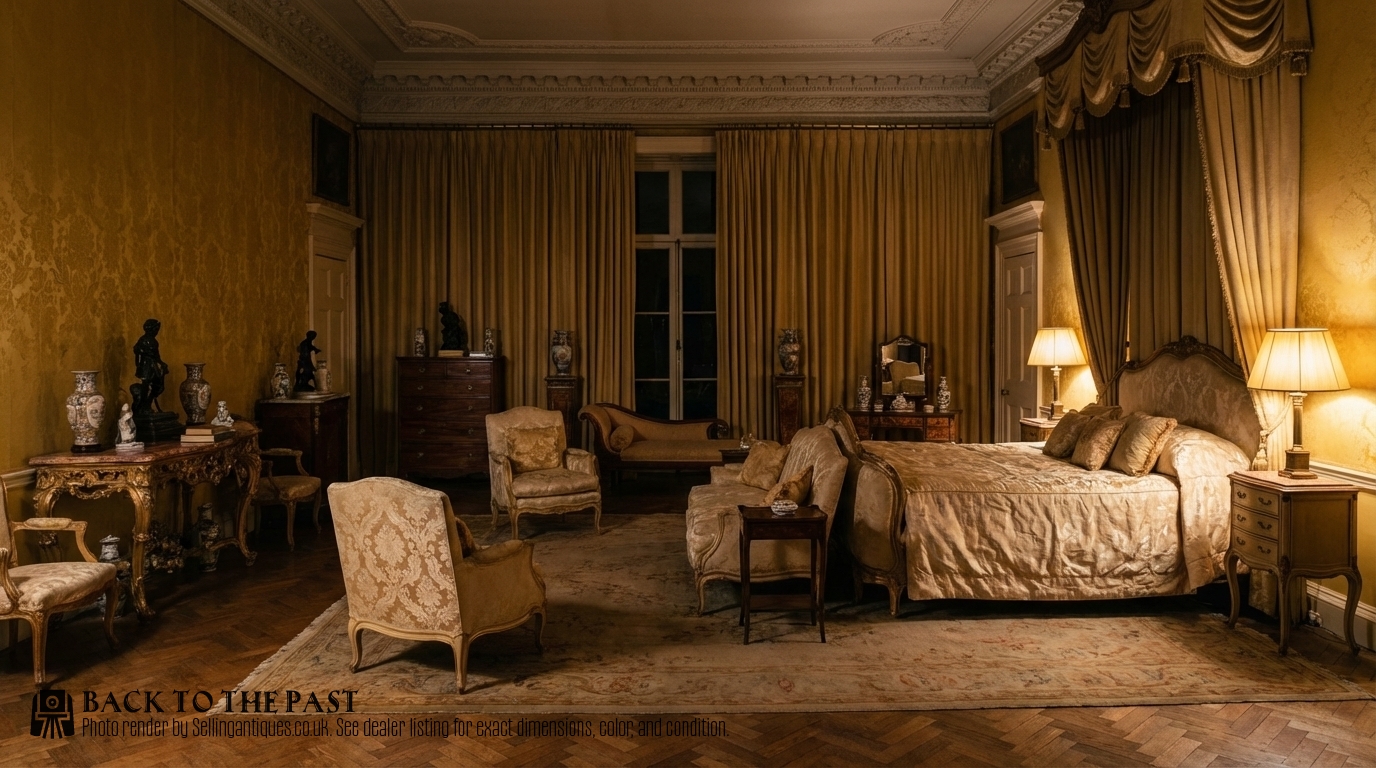
The Form and Origins
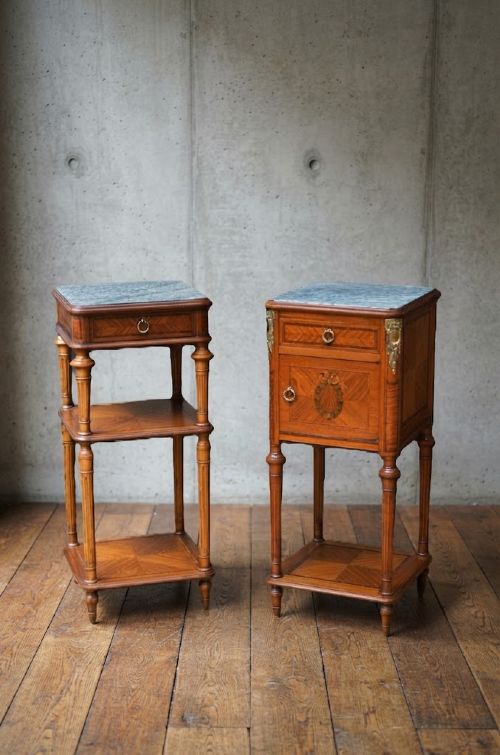
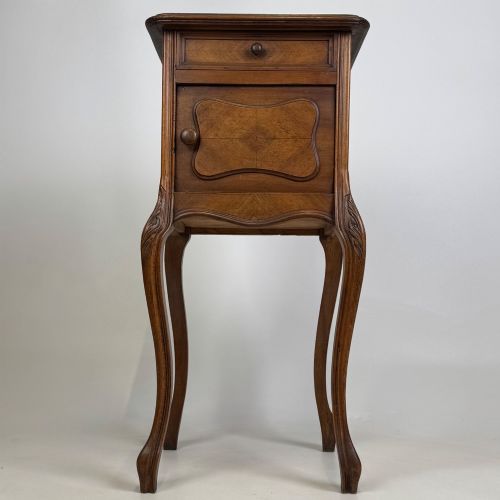
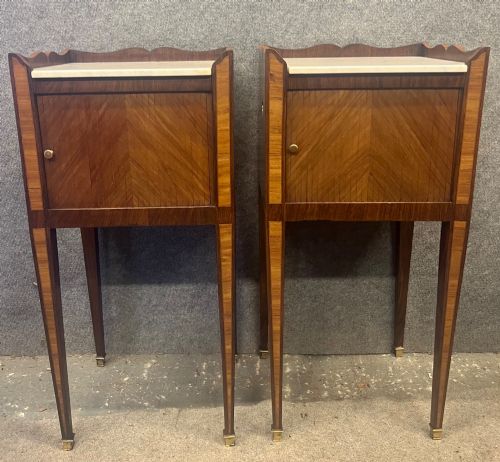
Marble top bedside cabinets provide enclosed bedside storage beneath a smooth stone slab, serving as practical bedroom furniture throughout the late nineteenth and early twentieth centuries. These pieces emerge predominantly in continental European workshops, with French and Swedish examples appearing regularly in the selection.
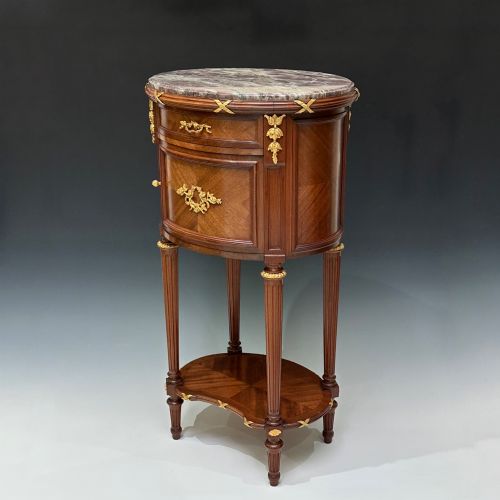
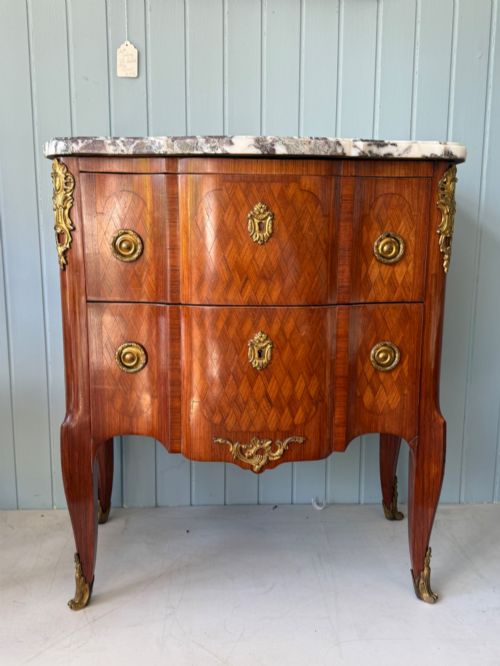
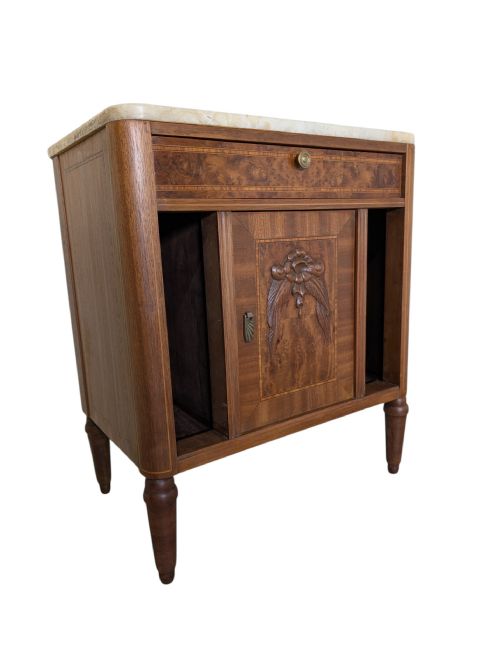
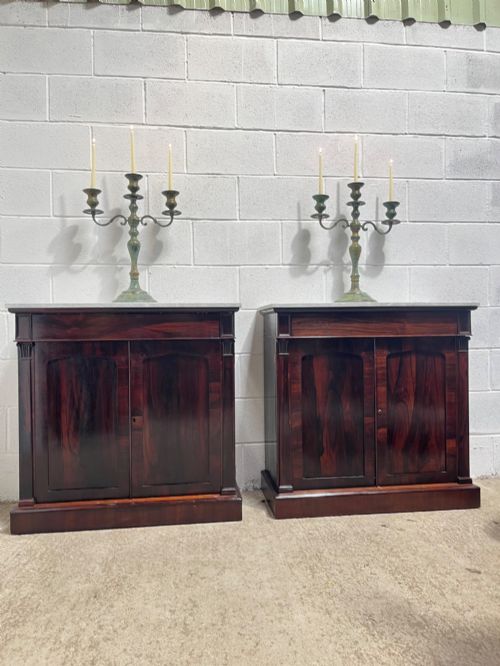
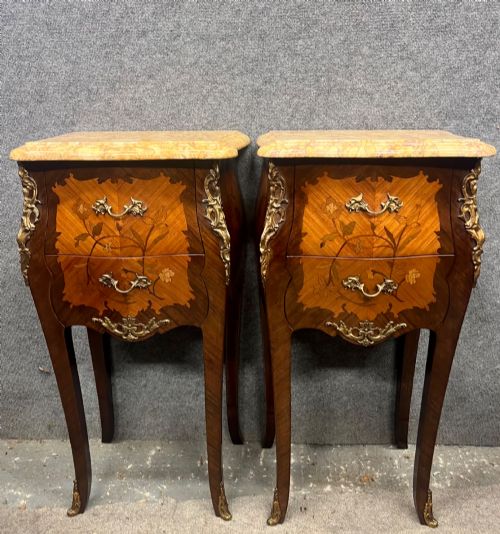
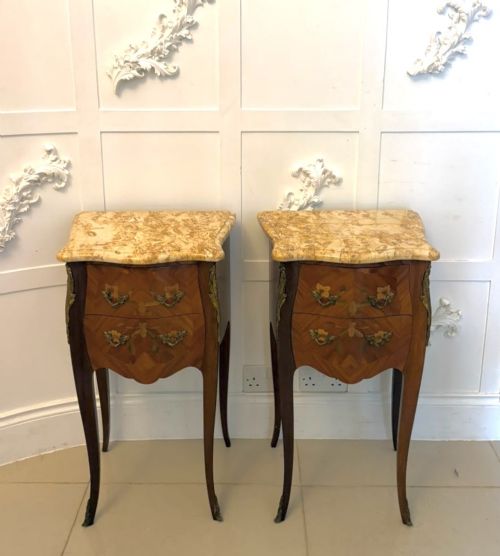
Makers construct these cabinets in diverse forms, including rectangular cupboards and curved kidney bean tables. Oak, walnut, kingwood, and satin birch provide the primary wooden structures, often enhanced by marquetry inlay or painted finishes.
Materials and Construction
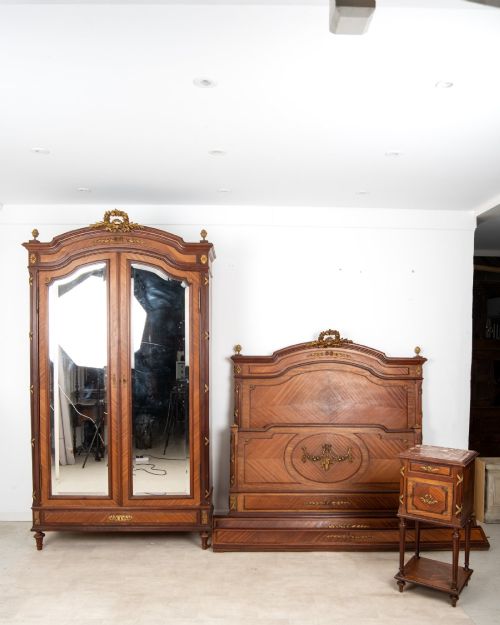
Cabinet makers combine native and exotic timbers such as oak, mahogany, walnut, and kingwood, occasionally applying veneer and marquetry patterns across the doors and sides. Brass mounts and handles accent the timber frames, while fitted marble slabs form the functional upper surfaces.
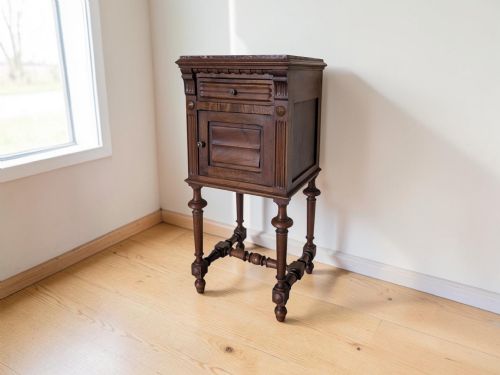
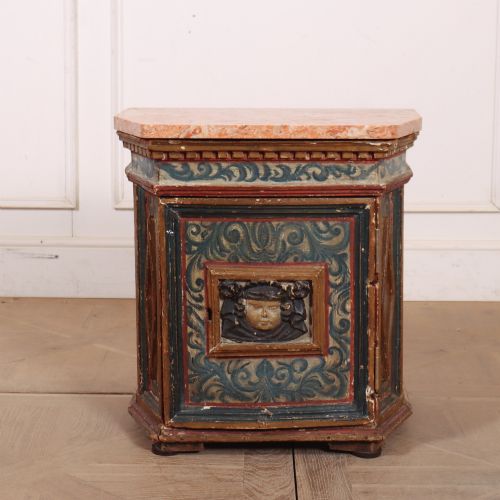
Carpenters construct the internal compartments using traditional joinery methods, housing single drawers above enclosed cupboards. Selected pieces incorporate painted and gilded surfaces alongside ebonised wood details.
Retail Price Guide 2026
Typical UK retail prices for marble top bedside cabinets, calculated from the Sellingantiques database of over a million retail prices indexed since 2003. This retail price guide relies exclusively on Sellingantiques data; no external sources or auction records are used, so the figures do not describe the wider market.
Listings feature oak, satin birch, walnut, kingwood, mahogany, and ebonised wood alongside brass and bronze hardware.
Factors of Quality
The sophistication of the timber work and inlay distinguishes the grade of a piece, with detailed marquetry and matched wood grains marking finer execution. The thickness, veining, and polish of the marble slab further indicate the standard of manufacture.
The integration of original brass mounts and the precision of the drawer and cupboard construction define the durability and finish of the cabinet. Matching pairs demonstrate consistent grain alignment and proportional balance across both units.
The Marble Top Bedside Cabinets Glossary
- Marquetry
- Decorative veneer work arranged in geometric or pictorial patterns across wooden surfaces. Craftsmen cut thin slices of various timbers to create intricate designs on cabinet doors.
- Kingwood
- A dense, richly figured tropical timber prized for furniture making. This material displays dark brown and violet tones.
- Satin Birch
- A pale, lustrous wood utilised extensively in Scandinavian furniture. The grain produces a characteristic reflective quality under light.
- Kidney Bean
- A curved desk or table top shape resembling the outline of a kidney. This form appears in specific continental bedside table designs.
Frequently Asked Questions
How are marble top bedside cabinets cleaned?
Clean the stone surface using a damp cloth and mild soap, avoiding acidic solutions that etch polished marble. Wipe the wooden elements with a dry cloth to preserve the finish.
Prevent moisture accumulation around the edges where the stone meets the timber frame to protect the surrounding wood joints.
Do these cabinets usually come in pairs?
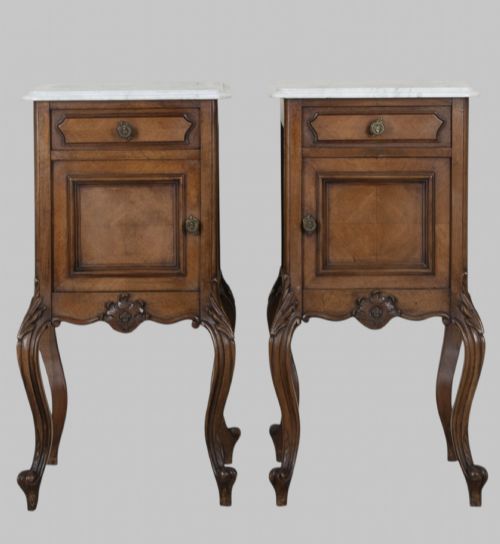
Many surviving examples survive as matching pairs intended to flank a bed. Single cabinets also appear within the selection.
Matching pairs exhibit similar timber grain patterns and stone colouration, though slight natural variations remain typical in antique pieces.
What periods do these cabinets represent?
The available pieces date primarily from the late nineteenth century through the early twentieth century, spanning art deco and revival styles. Specific decades include eighteen eighty, eighteen ninety, nineteen ten, nineteen twenty, and nineteen thirty.
Stylistic indicators such as marquetry patterns and structural silhouettes help attribute pieces to specific European design movements.
Can the marble tops be removed?
Most marble slabs rest loose upon the wooden base or secure with simple fixings to allow for transport and cleaning. Lifting the stone requires care due to its weight.
Inspect the underside and edges of the slab to understand how it sits within the wooden frame before attempting removal.