
Marquetry Bedside Cabinets
Marquetry bedside cabinets bring patterned wood veneers and practical bedside storage into the bedroom, usually found in matched pairs.

Forms and Origins
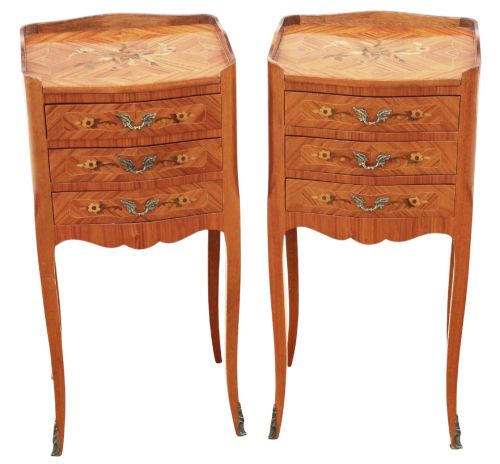
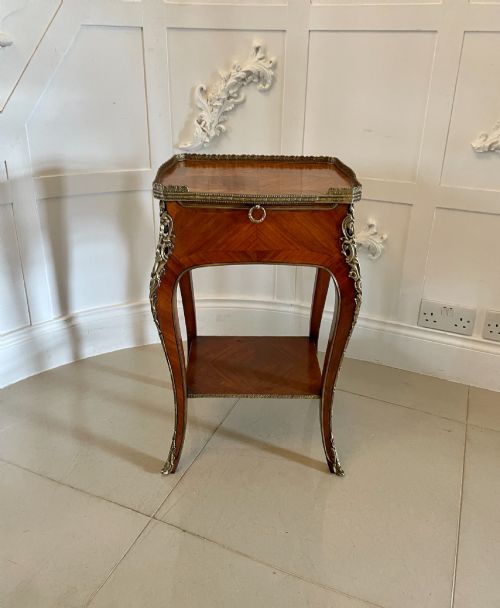
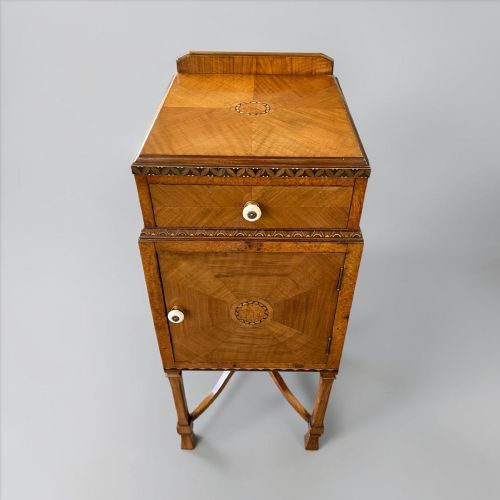
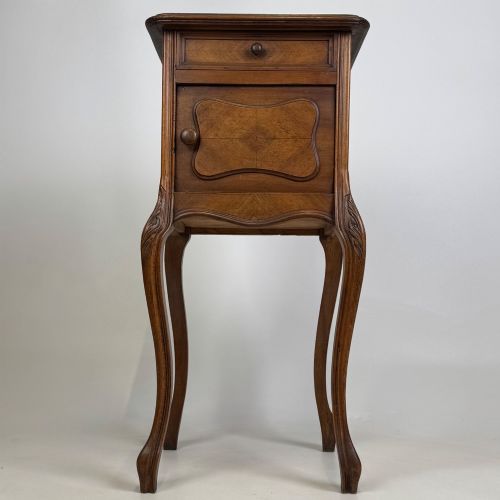
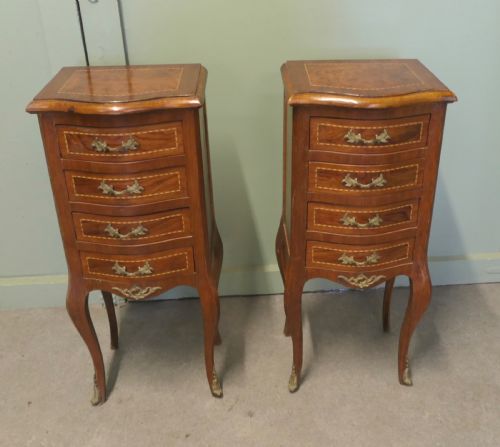
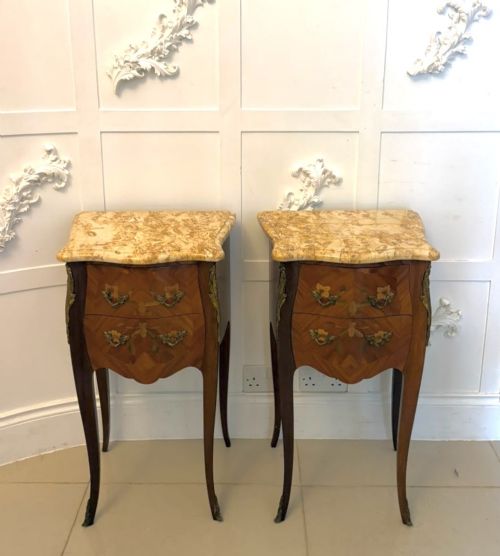
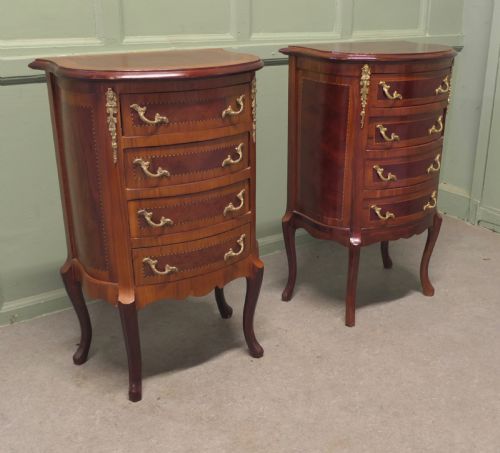
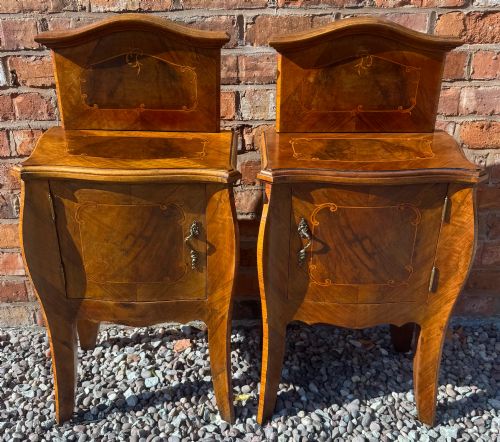
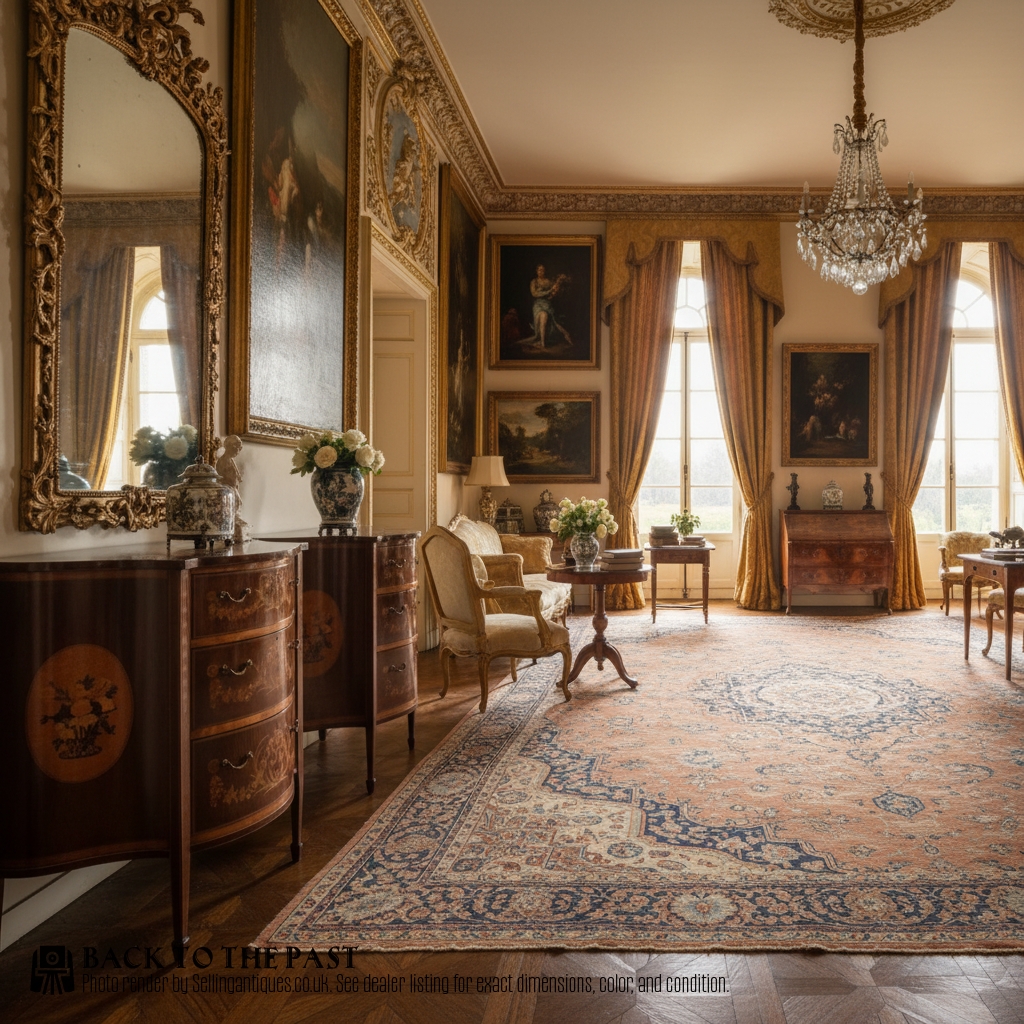
Marquetry bedside cabinets are small bedside tables and chests featuring decorative wood veneer patterns, frequently taking French Louis XV style, Louis XV Revival, or Edwardian forms. These pieces often appear as matched pairs, functioning as nightstands or lamp tables alongside a bed.
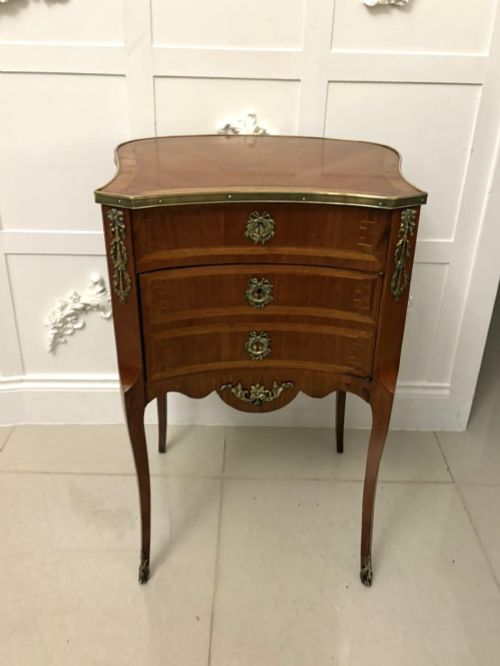
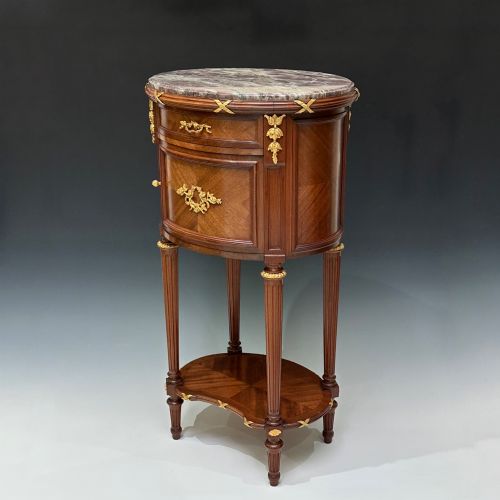
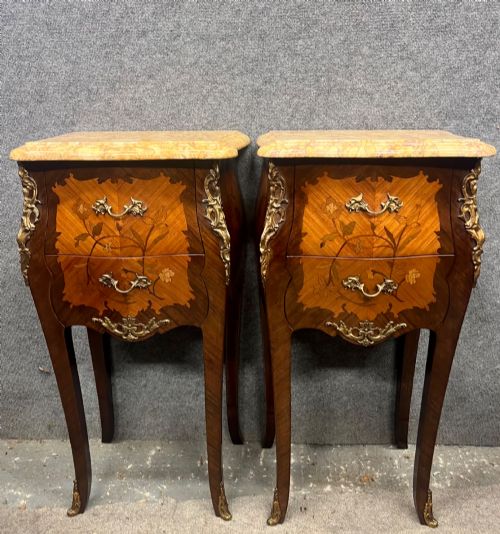
The selection ranges from nineteenth century examples to items from nineteen hundred, nineteen twenty, and nineteen thirty. Form variations include kidney shapes, bow fronts, serpentine fronts, and bombe profiles, alongside standard bedside chests of drawers and cupboards.
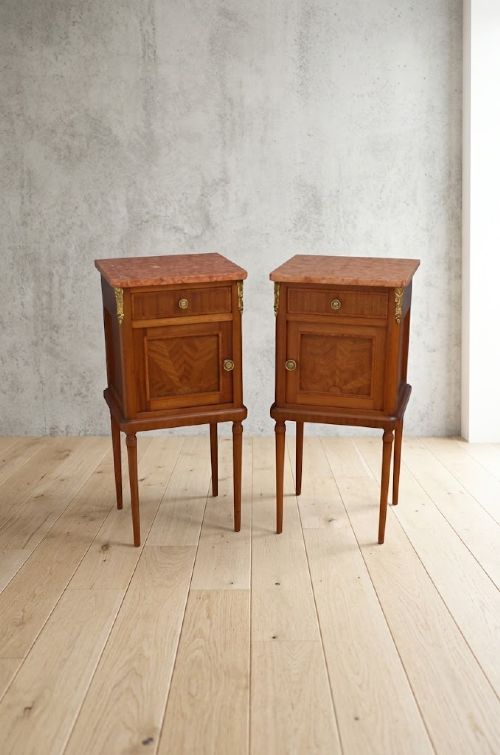
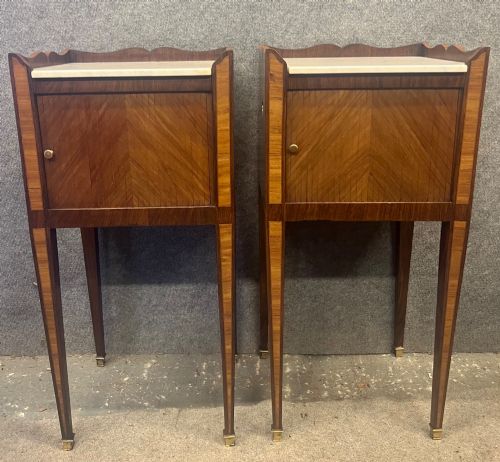
Origin points visible in the records point heavily towards French Chateau designs and Sheraton Revival influences. Buyers encounter forms that incorporate marble tops alongside enclosed cabinet spaces or drawers.
Materials and Construction
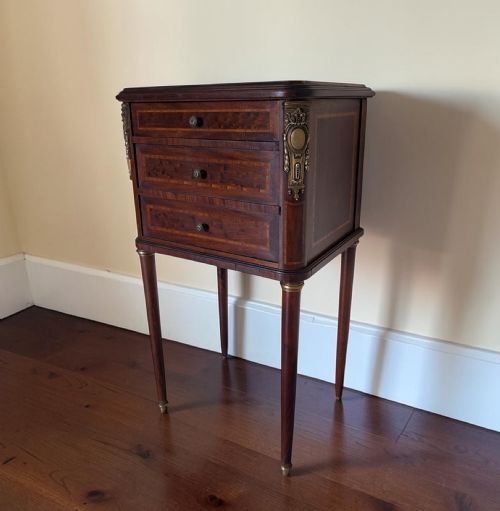
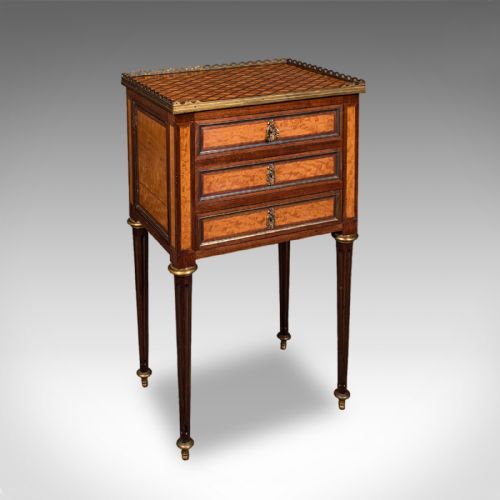
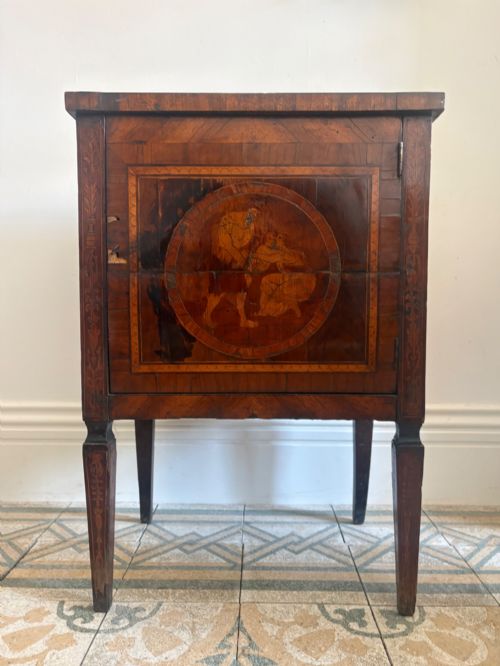
Cabinet makers apply fine wood veneers including satinwood, walnut, mahogany, kingwood, tulipwood, and fruitwood onto a foundational carcase. The patterned marquetry design is formed by fitting different wood veneers together to create pictorial or geometric motifs.
Many examples incorporate mounts and fittings in brass and ormolu to highlight the structural contours and drawer edges. Marble tops feature on numerous pieces, resting directly on the wooden cabinetry.
Retail Price Guide 2026
Typical UK retail prices for marquetry bedside cabinets, calculated from the Sellingantiques database of over a million retail prices indexed since 2003. This retail price guide relies exclusively on Sellingantiques data; no external sources or auction records are used, so the figures do not describe the wider market.
Listings feature four distinct centuries and periods, spanning the nineteenth century through to nineteen thirty.
Judging Quality
Quality rests on the precision of the veneer cutting and the subtlety of the wood types chosen for contrast. The refinement of the cast brass or ormolu mounts and the integrity of the underlying carcase construction separate standard examples from finer work.
The harmony of matched pairs and the crispness of serpentine or bombe shaping dictate the visual weight of the piece. Superior cabinets maintain flush veneer surfaces without lifting and retain their original marble tops where specified by the design.
Edwards and Roberts
The Marquetry Bedside Cabinets Glossary
- Marquetry
- The art of applying pieces of veneer to a structure to form decorative patterns and pictures. It differs from inlay by assembling the entire design on a backing before gluing it to the carcase.
- Kingwood
- A dense, hard wood with distinctive dark violet-brown colouring and lighter streaks used frequently in fine cabinet making. It provides strong visual contrast in patterned veneers.
- Bombe
- A swollen, convex shape characteristic of continental furniture styles. This curved profile requires skilled carpentry to apply veneer smoothly across sweeping surfaces.
- Ormolu
- Gilded bronze used for decorative mounts, feet, and handles on furniture. It adds metallic accentuation to the wooden contours.
- Serpentine
- A furniture front or top curving inward centrally and outward at the sides. This contoured shape demands precise carpentry during construction.
Frequently Asked Questions
What is the difference between a bedside table and a cabinet?
Bedside tables generally provide open surface space or a single shelf, whereas bedside cabinets feature enclosed storage with doors or drawers to keep items hidden.
Cabinets offer a more substantial profile beside the bed and frequently incorporate marble tops or decorative veneer fronts.
Are marquetry bedside cabinets usually sold as pairs?
Many examples survive and sell as matched pairs to flank a bed symmetrically. Single pieces also appear depending on historical survival.
Pairs maintain matching wood grains, veneer patterns, and mount styles from the original workshop production.
How do I identify French style influence?
French style influence appears through curved cabriole legs, serpentine outlines, bombe profiles, and the use of kingwood or tulipwood veneers. Ormolu mounts often accentuate these characteristic shapes.
Edwardian and Sheraton Revival pieces show softer English interpretations with satinwood and mahogany.
What materials are used for the tops?
Many examples feature fitted marble tops in shades that contrast with the surrounding wood veneers. Others utilise polished timber tops matching the primary cabinet woods like mahogany or satinwood.
Marble surfaces provided a durable, wipe-clean shelf for bedside lamps and water jugs.