
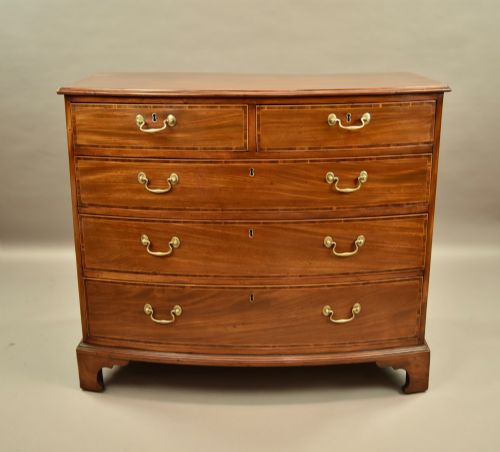
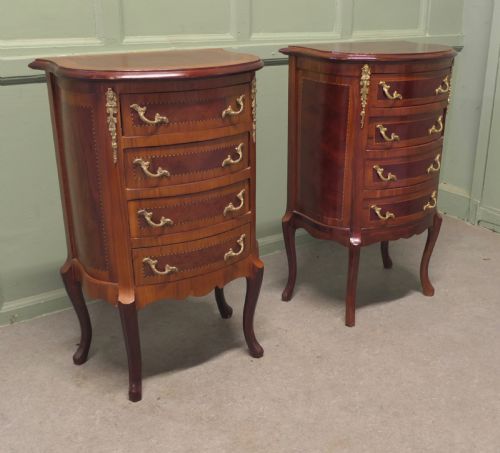
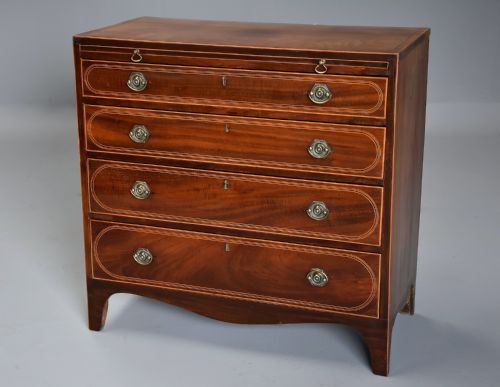
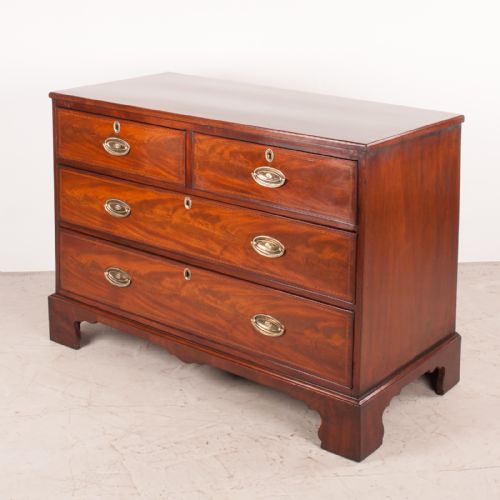
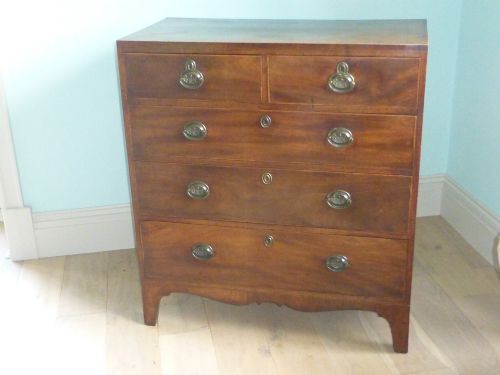
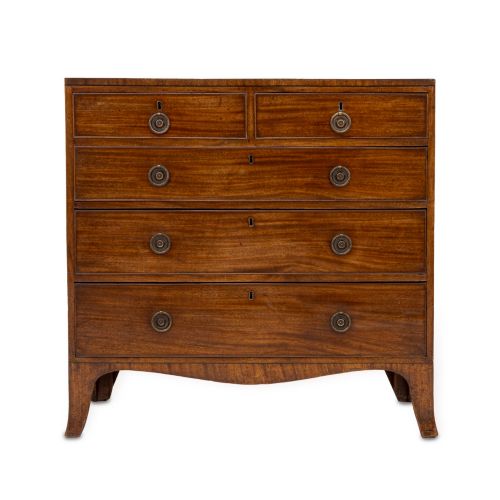
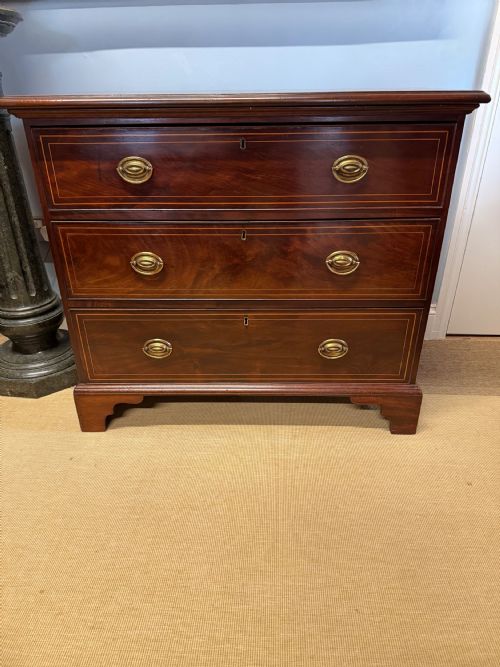

Inlaid Mahogany Commode
An inlaid mahogany commode brings sophisticated timber grain and delicate contrast stringing into a room.
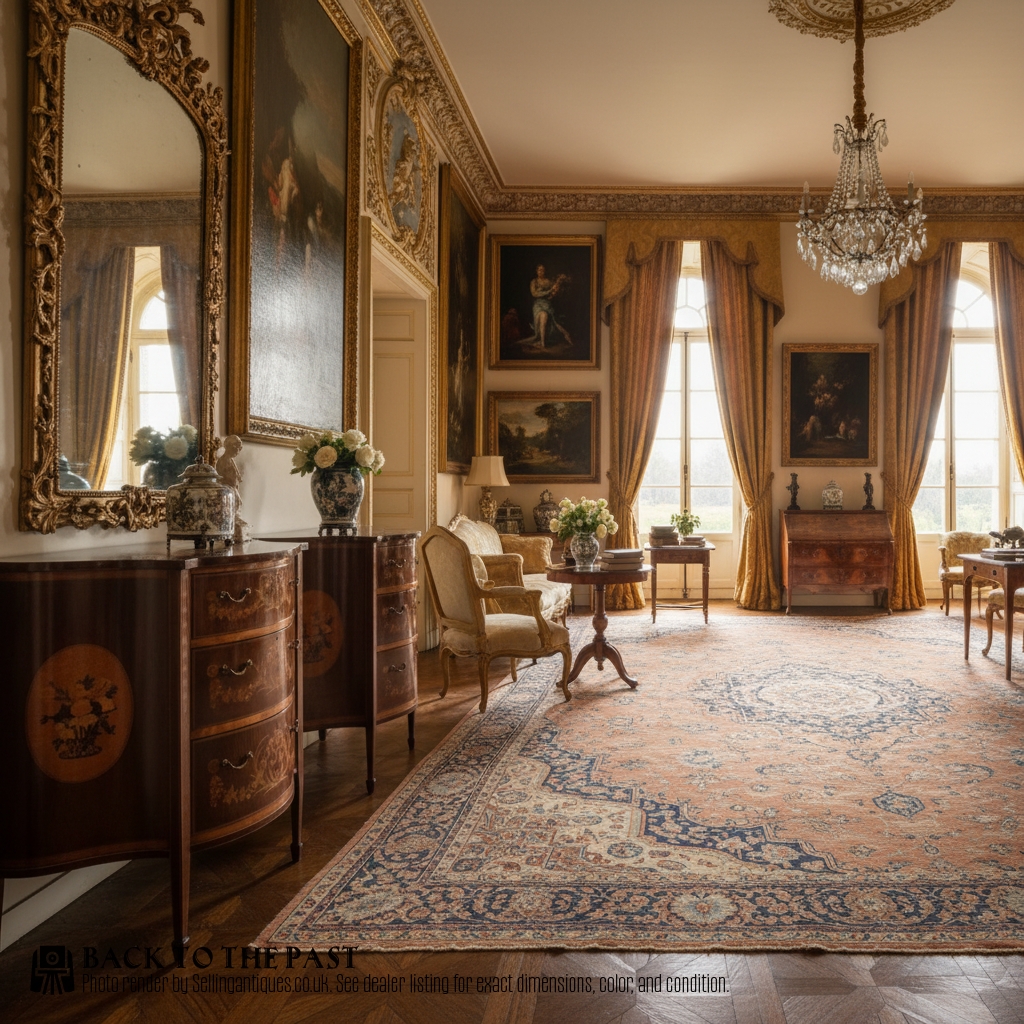
Inlaid Mahogany Commode
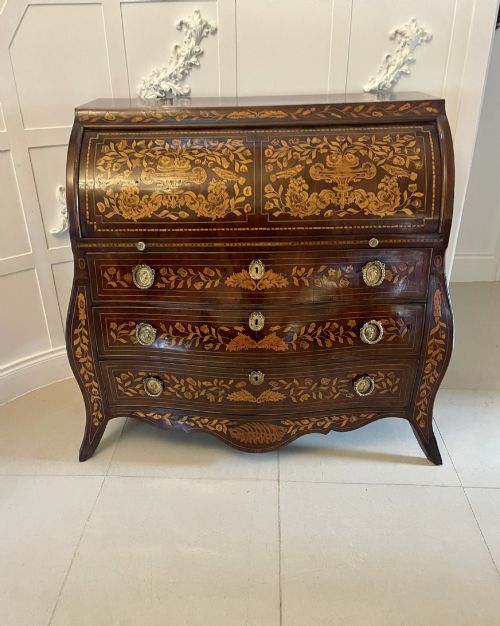
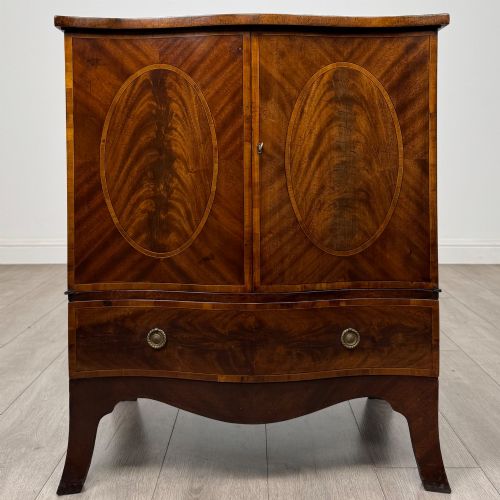
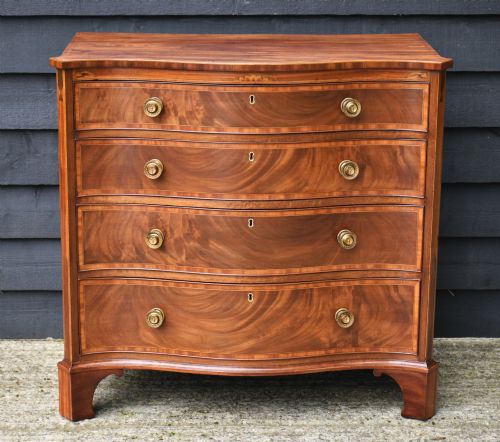
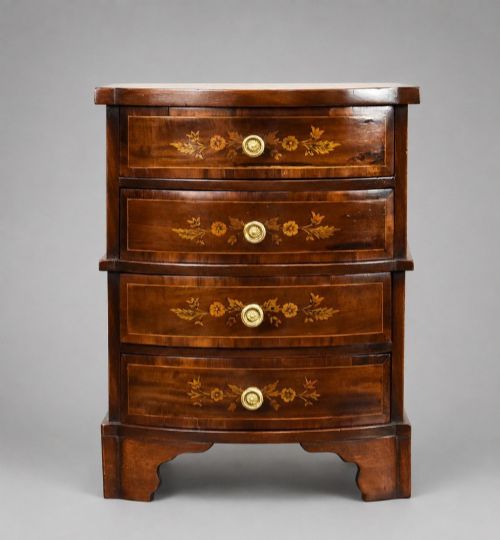
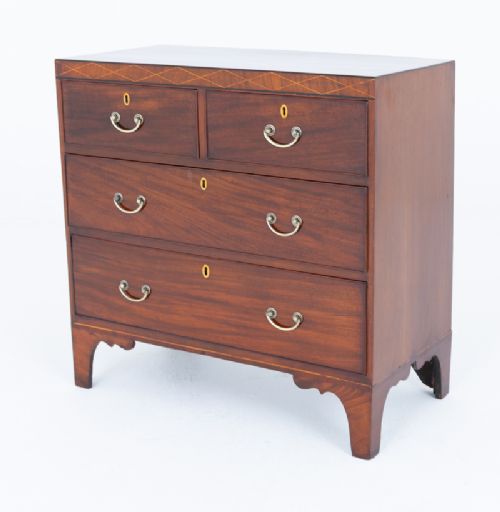
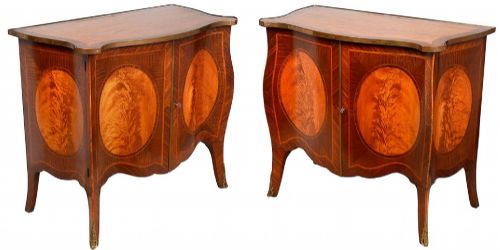
An inlaid mahogany commode is a low storage cabinet or chest of drawers constructed primarily from dense tropical timber and enriched with contrasting decorative veneers. Buyers seeking this phrase encounter Georgian originals, Regency iterations, and later revival pieces featuring flat, bow-front, or serpentine profiles.
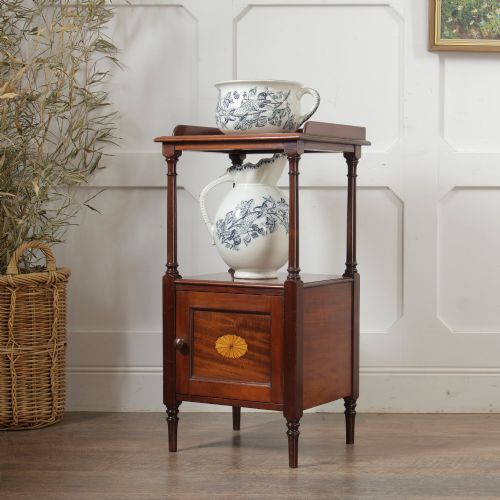
The form encompasses dedicated bedside night stands, tall chests with graduated drawers, and French-influenced marble-topped commodes. Many examples integrate satinwood, boxwood, or brass details into the primary mahogany carcase to define borders and drawer fronts.
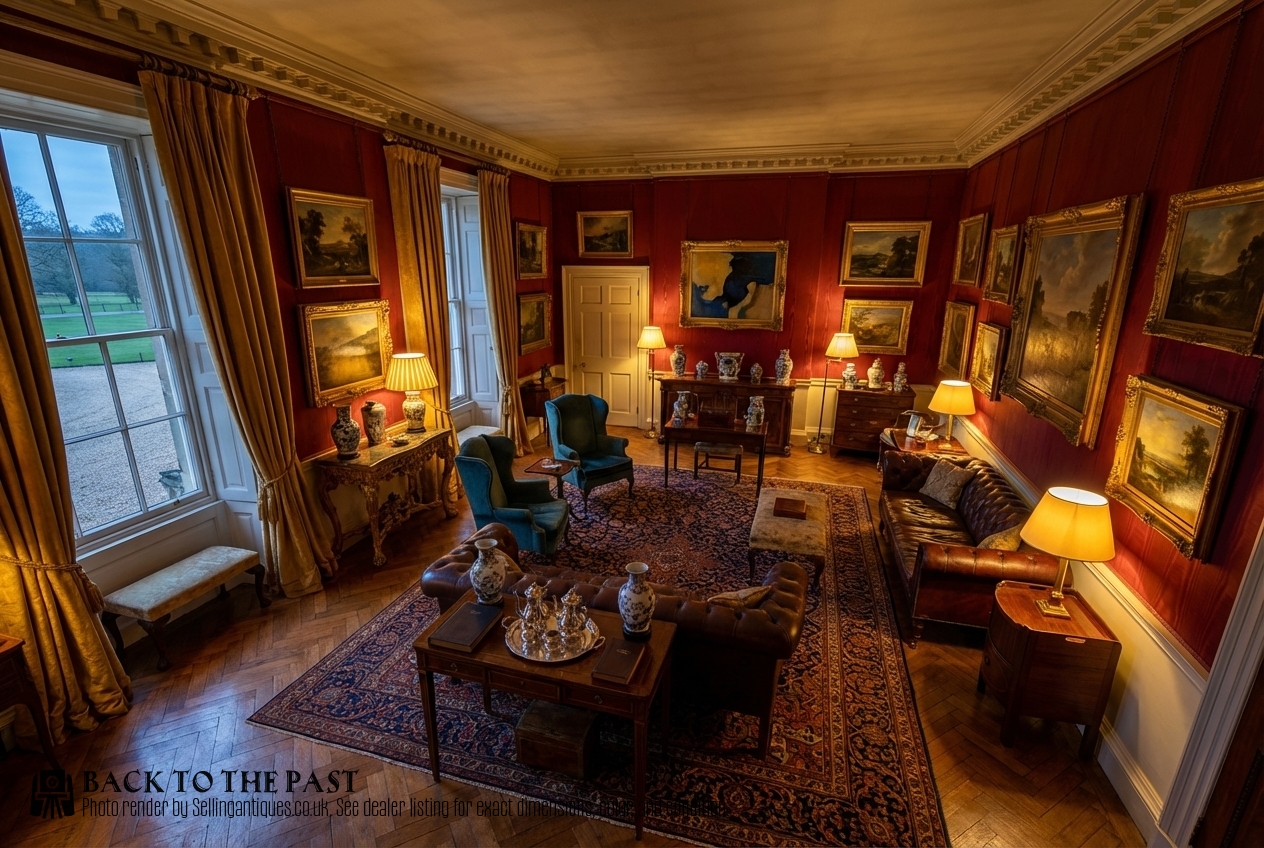
Materials and Construction
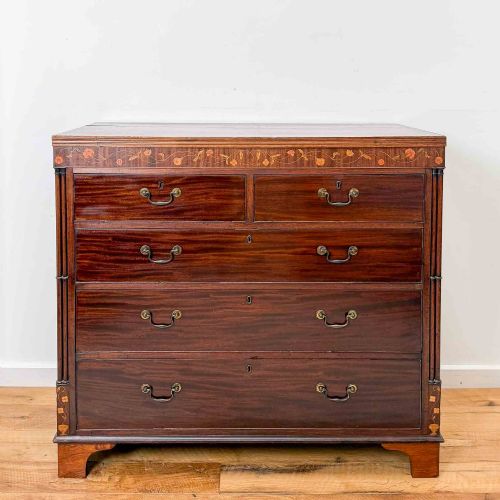
Cabinetmakers built these carcases using solid mahogany and figured veneers, often selecting fiddleback grain for visual depth on drawer fronts. Artisans then recessed contrasting strips of satinwood and boxwood into channels carved directly into the timber.
Marquetry panels incorporated floral and geometric motifs executed in various lighter woods, whilst brass hardware provided structural handles and escutcheons. Later Victorian and Edwardian interpretations maintained similar timber selections while adapting internal framing methods.
Inlaid Mahogany Commode Retail Price Guide 2026
Typical asking prices for inlaid mahogany commode among the pieces listed under this phrase on Sellingantiques today, from the lower quarter to the upper quarter. They describe what is for sale here now, not the wider market.
Listings feature pieces spanning the Georgian, Regency, Victorian, and Edwardian eras, incorporating satinwood, boxwood, and marble.
Assessing Quality and Execution
The standard of an inlaid mahogany commode depends heavily on the precision of the timber matching and the crispness of the inlay work. Finer pieces display seamless integration of boxwood and satinwood lines without gaps or heavy filler around the joints.
Proportion and serpentine curve execution dictate the visual success of the piece, alongside the retention of original brass hardware and stable drawer linings. Superior examples exhibit considered grain selection across all visible surfaces rather than random board pairing.
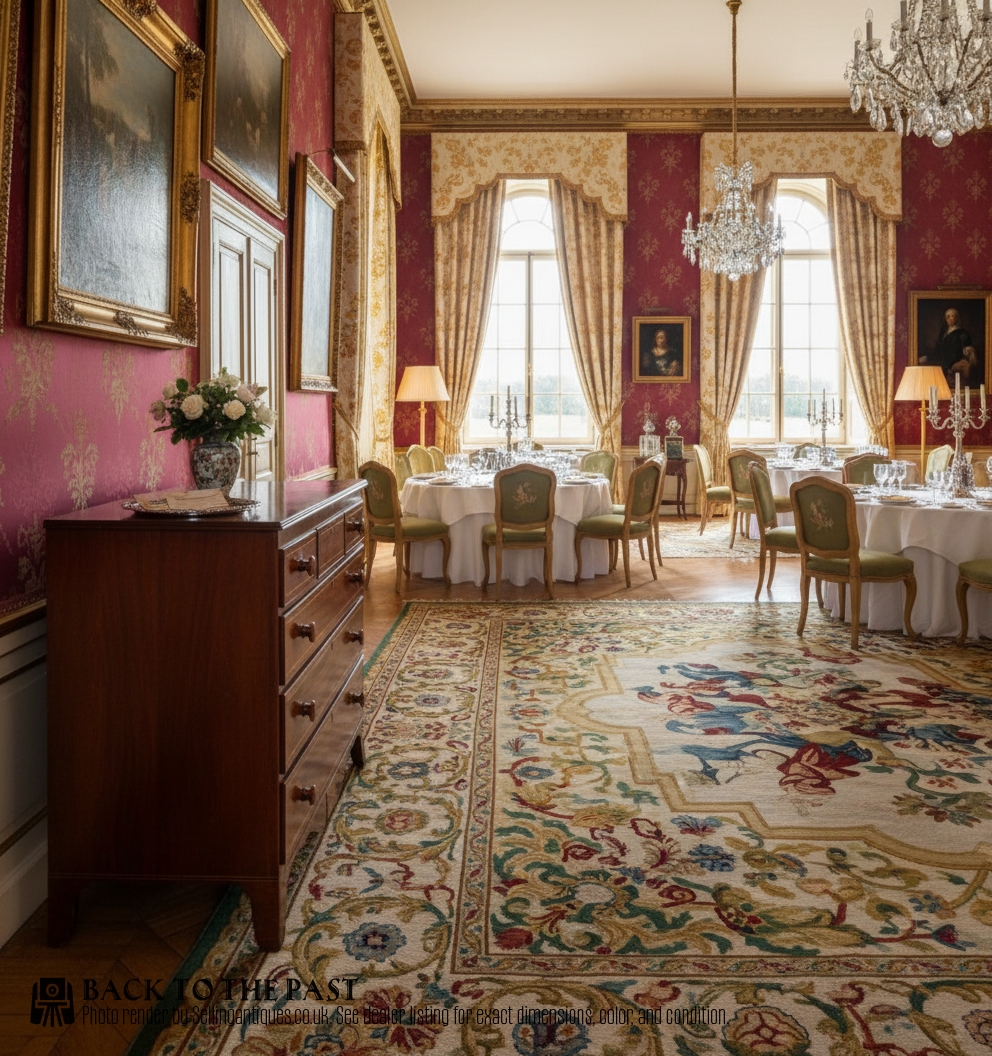
Druce & Co·Edwards & Roberts·Maple & Co·Mawer & Stephenson
The Inlaid Mahogany Commode Glossary
- Serpentine
- A curved front profile that sweeps outward at the centre and inwards at the sides, or vice versa. This shape demands high carpentry skill to execute successfully in solid timber.
- Marquetry
- The art of forming decorative patterns using thin veneers of different woods applied to a carcase. Floral motifs and urns frequently appear on eighteenth-century surfaces.
- Satinwood
- A pale, durable exotic timber utilised extensively for contrasting inlay and crossbanding against darker mahogany carcases. It provides a bright golden reflection when polished.
- Crossbanding
- A border veneer technique where the wood grain runs perpendicular to the main panel edge. This frames the primary drawer face or top surface.
- Commode
- Originally a low French cabinet or chest of drawers on legs, the term later applied broadly to fine bedside and reception room storage units in Britain.
Inlaid Mahogany Commode: Frequently Asked Questions
What is an inlaid mahogany commode?
An inlaid mahogany commode is a decorative cabinet, chest, or bedside table constructed from dark hardwood and detailed with contrasting wood veneers. These pieces range from compact night stands to grand serpentine drawer units.
Craftsmen utilised boxwood, satinwood, and marquetry to create intricate borders and pictorial panels across the exterior surfaces.
Where were commodes used?
These versatile cabinets served primarily in bedrooms as night stands, washing units, or clothes storage chests. Later Victorian and Edwardian examples also found places in drawing rooms and hallways as decorative side tables.
Their enclosed storage protected personal items whilst providing a flat display surface for lamps and decorative objects.
How do I date an inlaid commode?
Dating relies on observing structural characteristics, timber choices, and inlay styles across different periods. Georgian and Regency pieces typically show hand-cut dovetails and restrained brass work, whereas Victorian and Edwardian items often incorporate machine-sawn elements and revival marquetry.
The presence of specific secondary woods inside the drawers also helps establish the era of manufacture.
How do I care for antique mahogany?
Maintain antique mahogany surfaces by keeping them away from direct sunlight and steady heat sources that dry out the timber. Regular dusting with a dry, soft cloth preserves the wax finish without building up heavy residue.
Avoid commercial silicone sprays and moisture, which can penetrate aged veneer joints and lift delicate boxwood inlay.