


Splayed Feet Chest
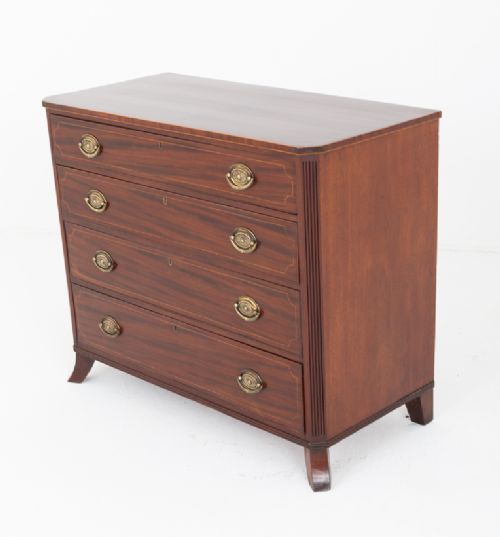
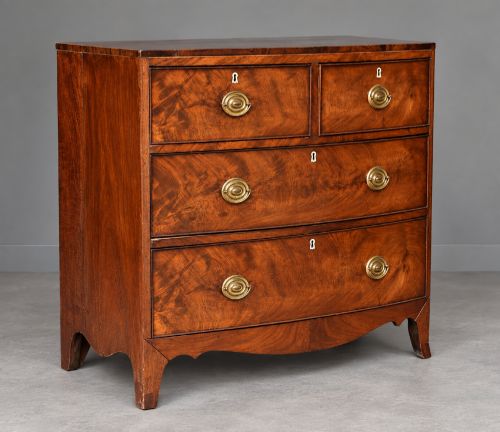
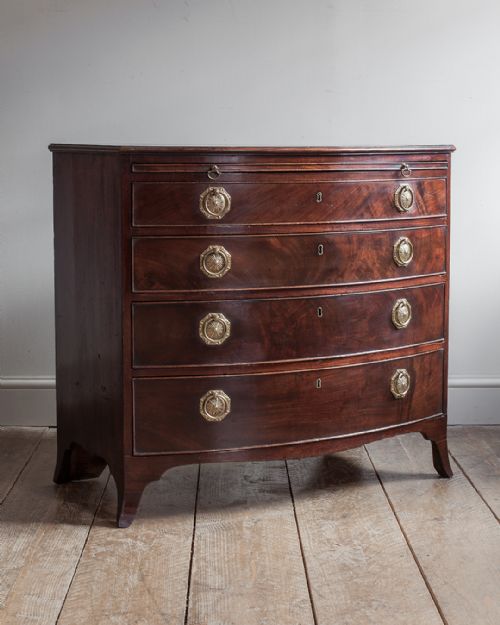
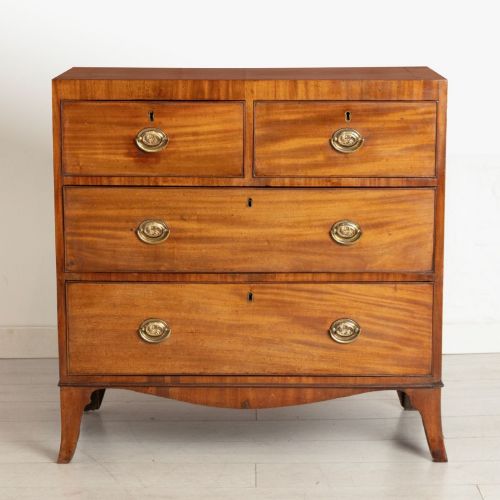
A splayed feet chest brings genuine Georgian and Regency character to a bedroom through tapered bracket supports and rich timber grain.
Splayed Feet Chest
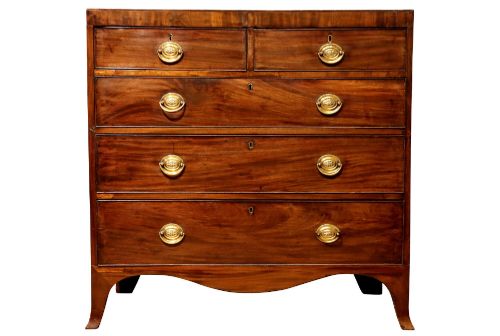
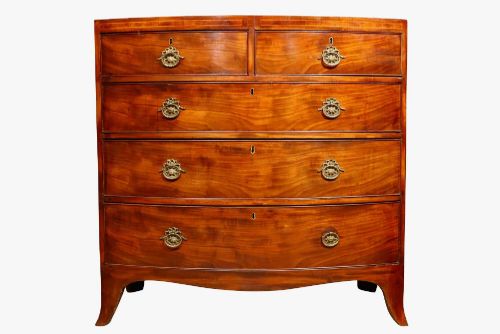
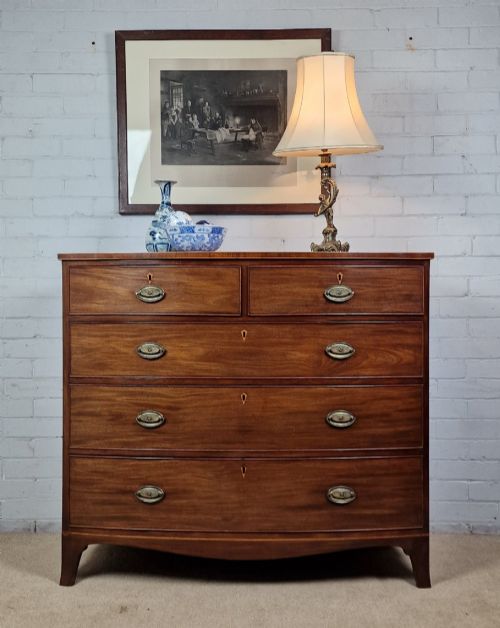
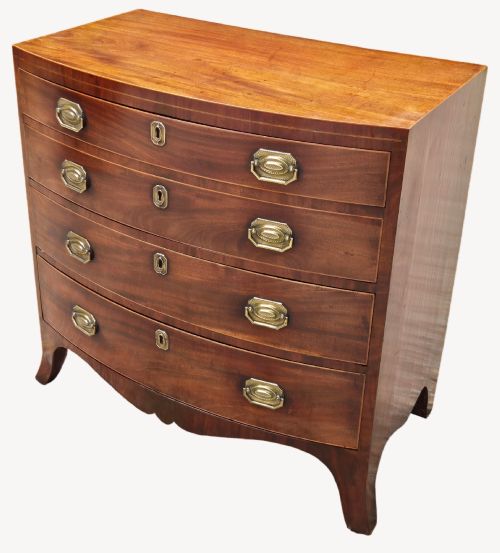
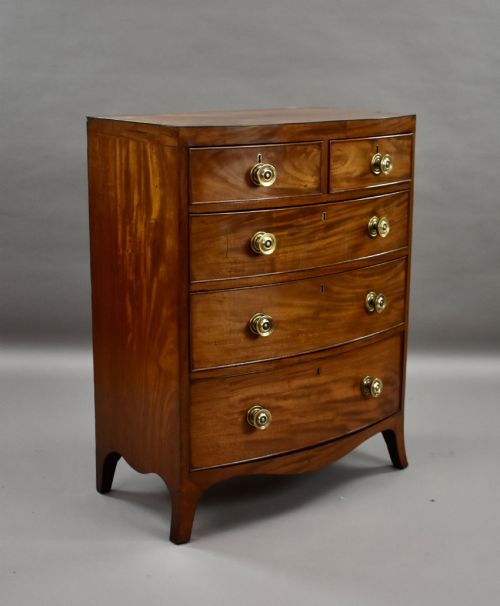
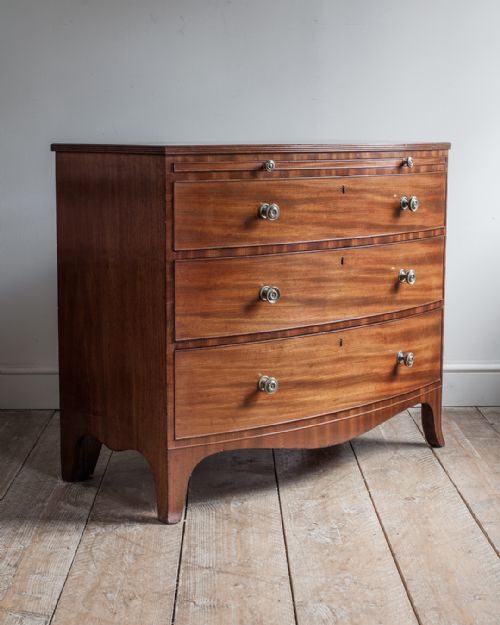
A splayed feet chest is a form of drawer storage defined by its distinctive outward-slanting bracket supports beneath the main carcase. These pieces originate predominantly from the Georgian, Regency, and early nineteenth-century periods, capturing the refined cabinet-making standards of those eras.
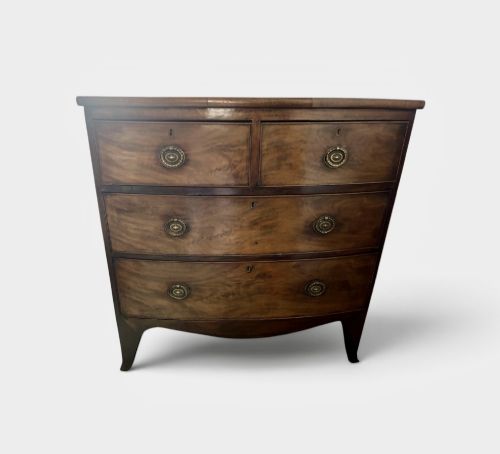
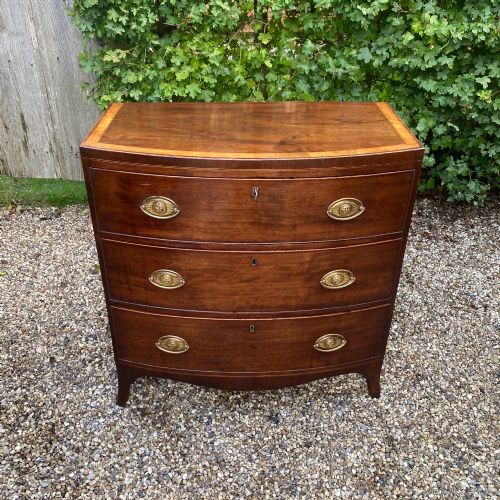
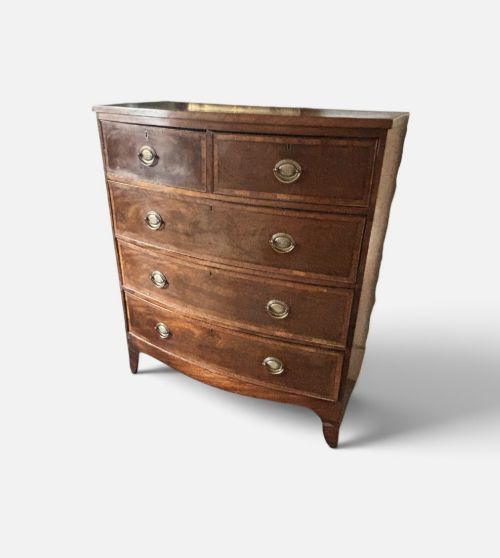
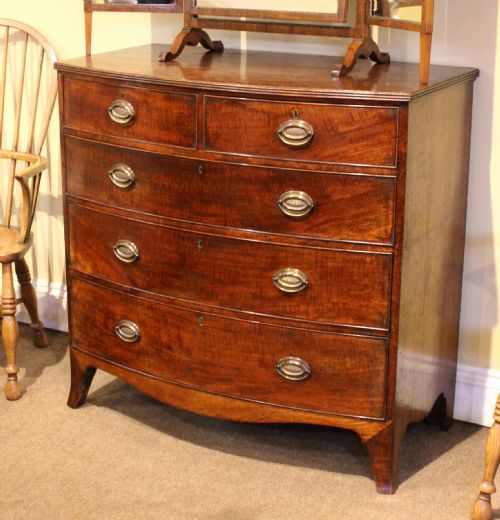
The version most commonly encountered on this page is the bow-fronted chest in mahogany, often featuring small proportions designed for intimate chambers. Tallboys, serpentine commodes, and bachelors chests with brushing slides also appear, demonstrating the wide variety of drawer configurations produced by period makers.
Materials and construction
Timbers such as solid and figured mahogany form the primary structure, complemented by secondary woods and decorative details in satinwood, boxwood inlay, and brass hardware. Cabinet-makers selected flame mahogany for drawer fronts to create striking visual movement across the facade.
Joinery relies on traditional methods including hand-cut dovetails for the drawer construction and sturdy framing to support the characteristic splayed feet. Crossbanding and stringing provide subtle contrast, reflecting the aesthetic preferences of Hepplewhite and Sheraton influences.
Splayed Feet Chest Retail Price Guide 2026
Typical asking prices for splayed feet chest among the pieces listed under this phrase on Sellingantiques today, from the lower quarter to the upper quarter. They describe what is for sale here now, not the wider market.
Listings feature mahogany as the predominant timber, complemented by satinwood, oak, and boxwood inlay across Georgian and Regency periods.
Distinctions in quality
The standard of a splayed feet chest rests upon the choice of timber veneer, the crispness of any inlay work, and the original proportions of the carcase. Superior pieces display carefully matched grain patterns across the drawer fronts and finely integrated bracket feet that balance the visual weight of the chest.
Integrity of construction and the retention of original brass handles or backplates further distinguish finer examples from standard utility items. The subtlety of the splay on the feet and the neatness of the dovetailing reveal the competence of the workshop behind the piece.
The Splayed Feet Chest Glossary
- Splayed feet
- Outward-slanting bracket supports that lift the carcase off the floor. This form provides a lighter visual silhouette than standard straight bracket feet.
- Bow front
- A convexly curved chest facade that swells outward in the centre. This shape became particularly popular during the late eighteenth and early nineteenth centuries.
- Crossbanding
- A narrow strip of veneer applied to the border of a drawer front or top with the grain running at right angles to the main surface. It frames the primary timber.
- Brushing slide
- A pull-out shelf located just beneath the top board of the chest. It served as a temporary surface for grooming or folding garments.
- Tallboy
- A tall chest of drawers made in two stacked sections, often combining a chest on chest configuration. This form maximises vertical storage space in smaller rooms.
Splayed Feet Chest: Frequently Asked Questions
Where should I place a splayed feet chest?
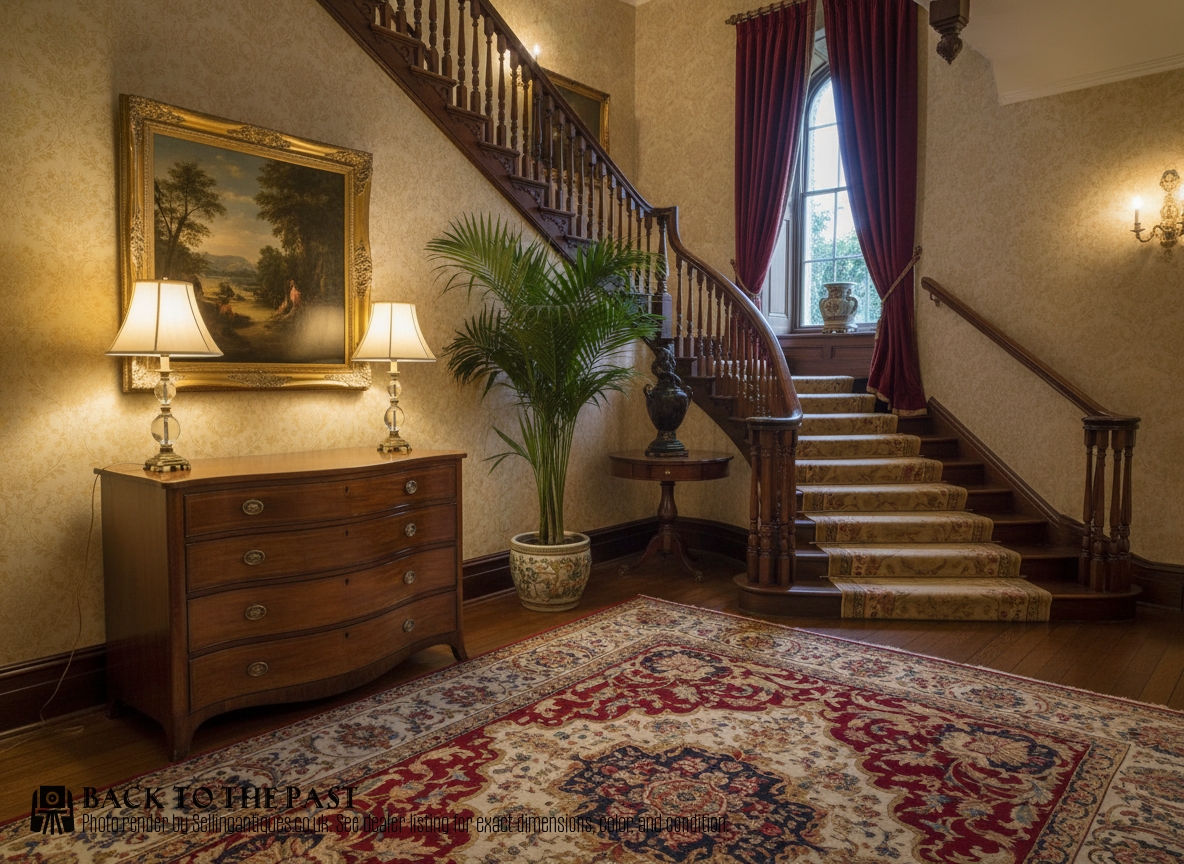
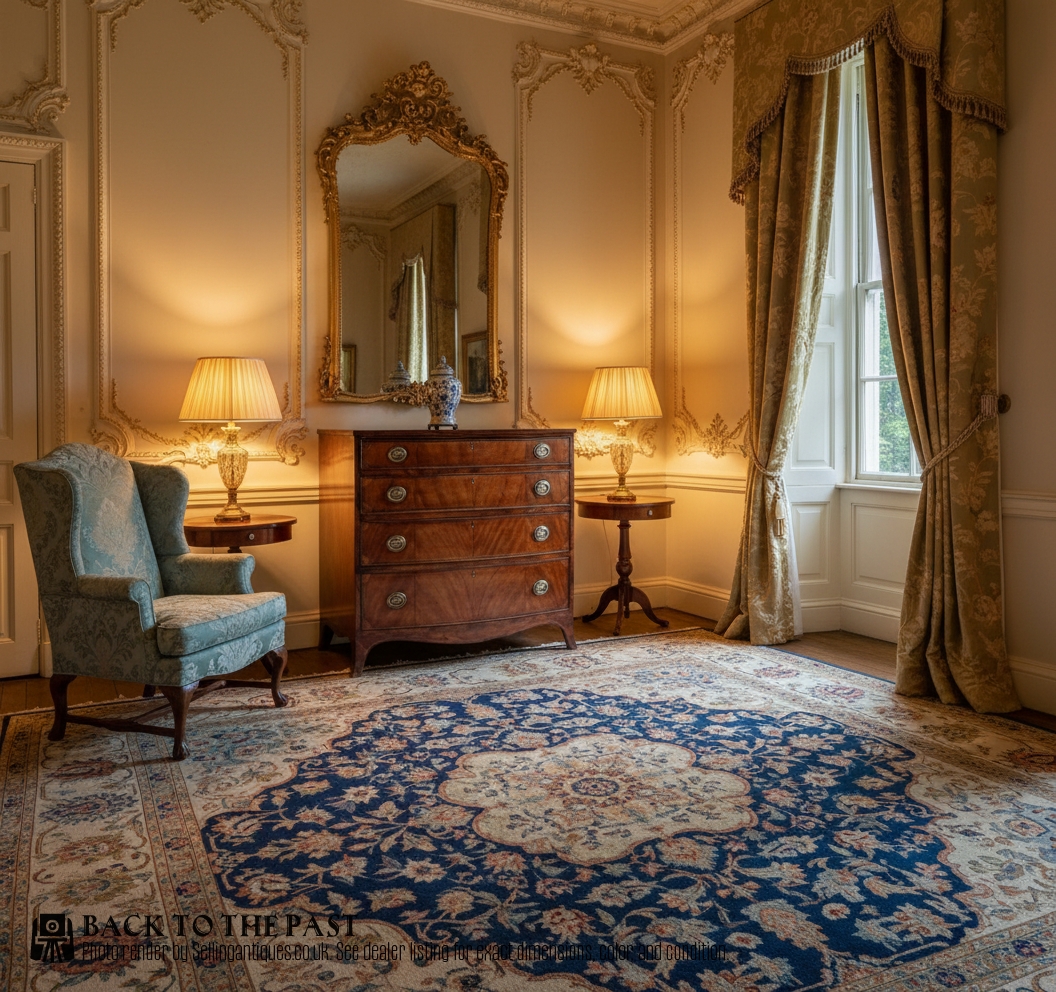
These chests suit bedrooms, hallways, or living spaces where their compact proportions and warm timber tones can be appreciated. Their finished backs and refined silhouettes allow them to stand against walls without overwhelming the room.
Ensure the placement avoids direct sunlight and heat sources to protect the polished mahogany surfaces and delicate inlay work from drying out over time.
How do I care for the mahogany finish?
Maintain the timber by dusting regularly with a soft, dry cloth and applying traditional beeswax sparingly to nourish the grain. Avoid modern silicone sprays or liquid polishes that can build up and dull the historic finish.
Keeping the chest in a room with stable humidity levels prevents the solid wood and veneers from expanding, contracting, or cracking through seasonal changes.
What is the difference between George III and Regency chests?
George III pieces often display robust proportions with straight or slightly bowed fronts and restrained classical stringing. Regency examples tend to feature bolder flame mahogany veneers, more pronounced curves, and sometimes brass inlay or gilt mounts.
Both periods share a commitment to traditional joinery, but Regency design introduces a slightly heavier decorative emphasis influenced by classical revival styles.
How do splayed feet differ from standard bracket feet?
Standard bracket feet form a simple L-shaped corner support that points straight down toward the floor at a right angle. Splayed feet angle outward from the bottom corners, giving the entire chest a lighter, more dynamic stance.
This subtle architectural adjustment lightens the visual mass of the furniture and points toward the decorative shifts of the late Georgian period.