
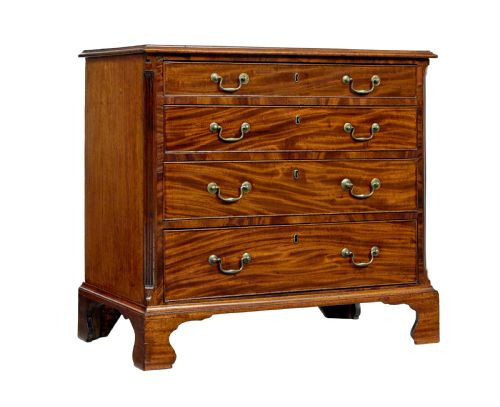
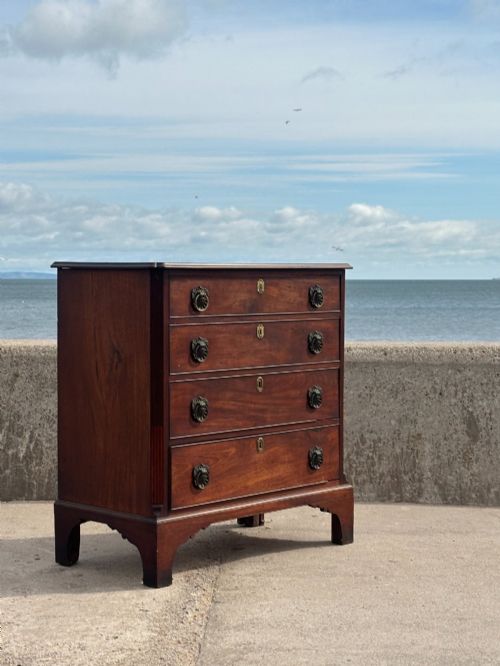
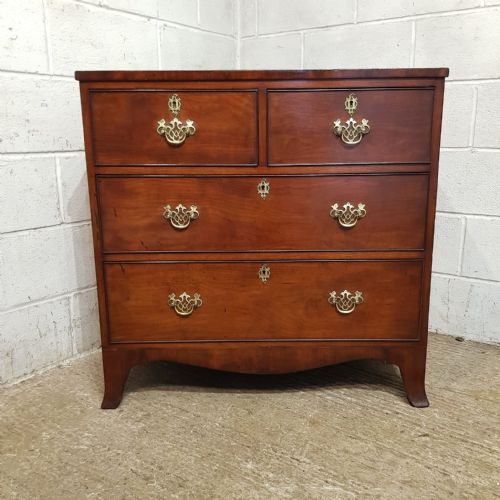
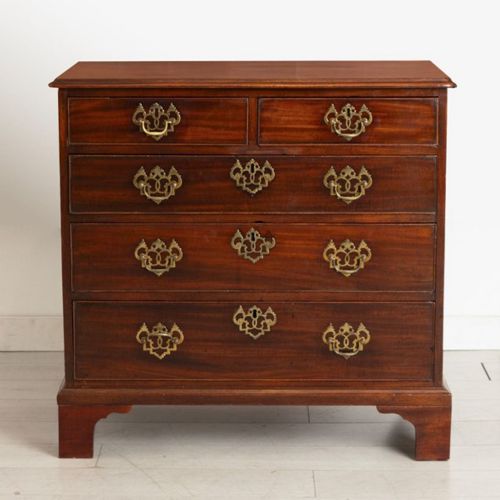
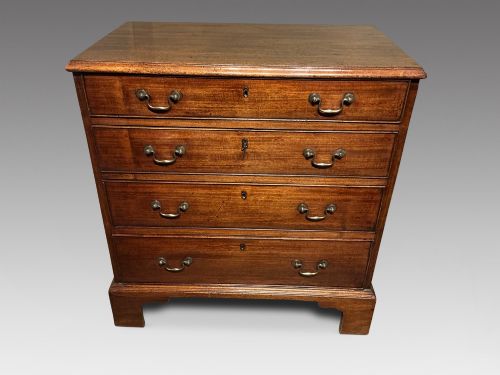


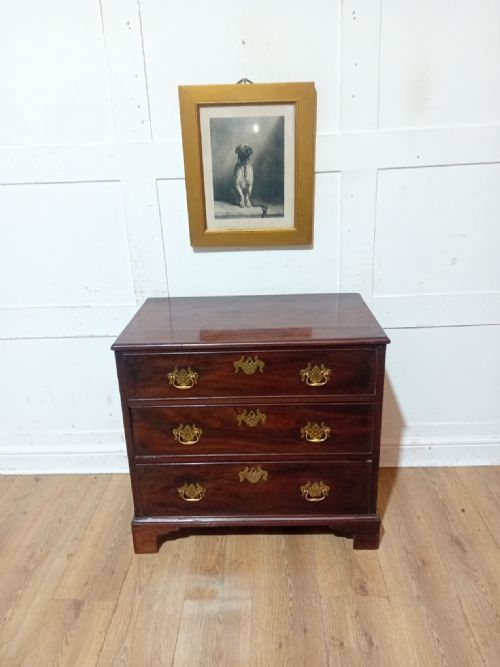


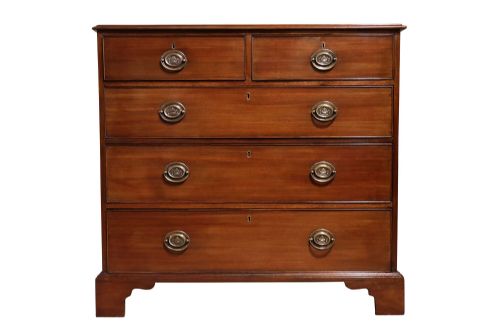

Georgian Straight Front Chest
A georgian straight front chest brings clean lines and solid proportion to a room, offering practical storage disguised in rich timber.

Georgian Straight Front Chest
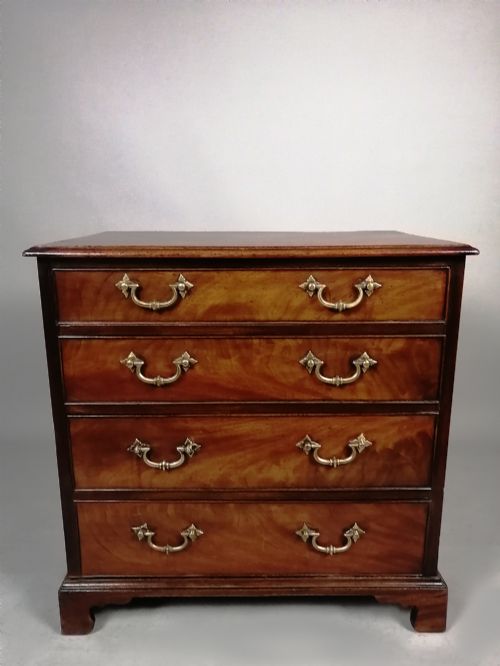
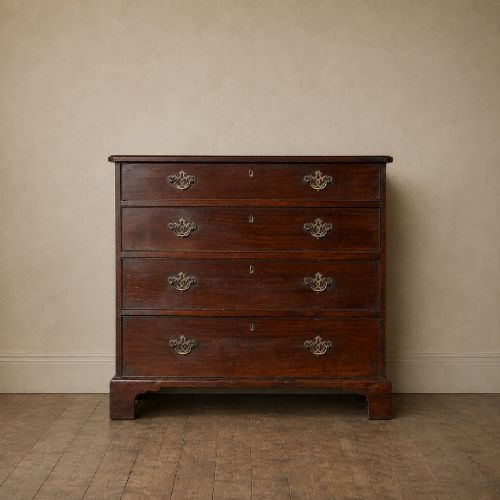
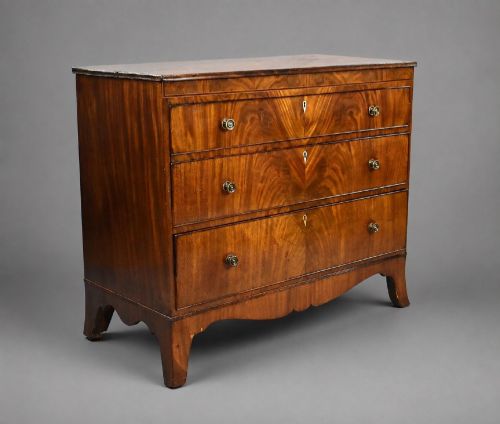
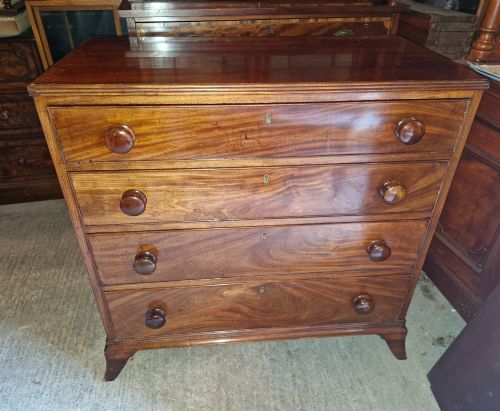
A georgian straight front chest is a drawer unit with a flat front elevation, appearing most frequently in eighteenth-century and early nineteenth-century iterations made from timber.
The pieces on this page span styles from George II and George III through to Regency, Edwardian and Victorian periods, with mahogany and oak dominating the forms.
Buyers encounter standard chests alongside bachelor's chests equipped with brushing slides, taller examples, and occasional painted or inlaid variations from regional workshops.
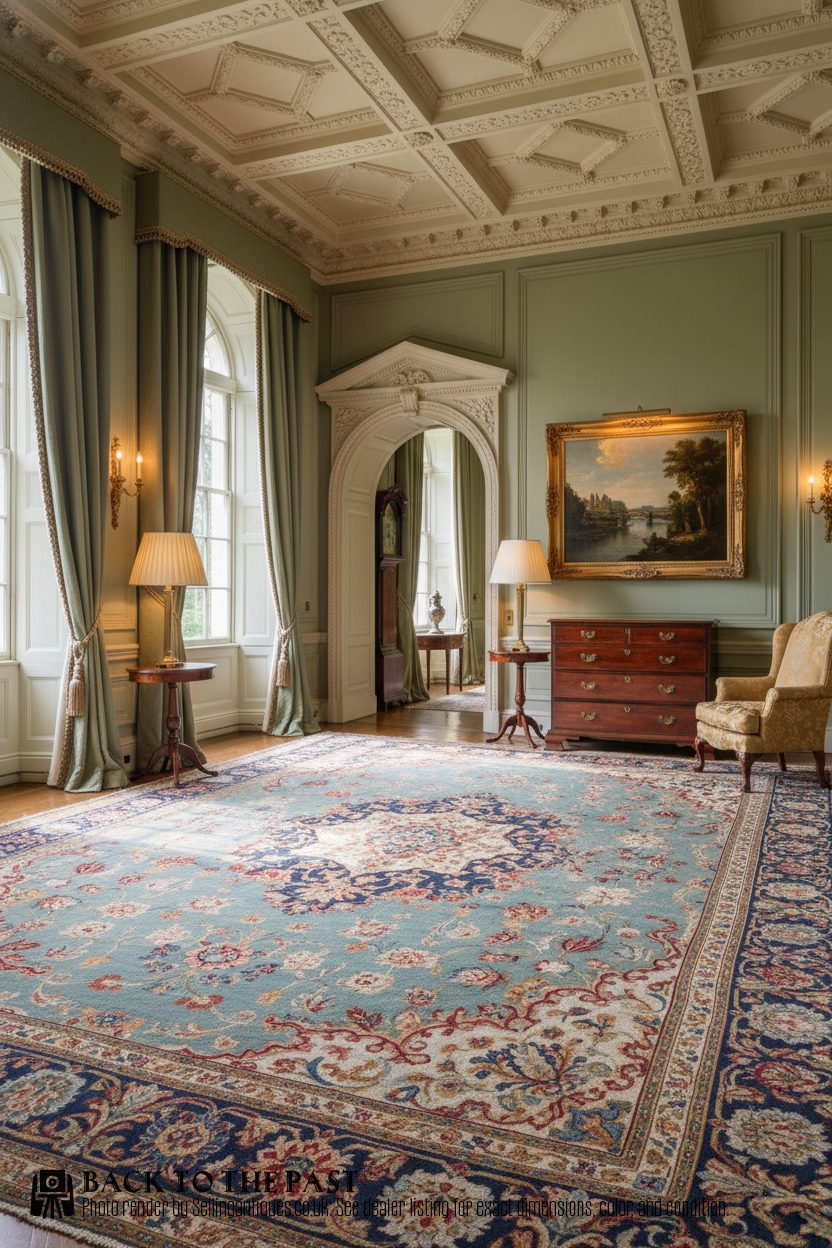
Materials and Construction
Cabinetmakers utilised mahogany, often curling or figured, alongside oak for interior linings and structural carcases.
Detailing relied on boxwood and satinwood line inlay, brass handle hardware, and structural elements like bracket feet or ogee feet.
Georgian Straight Front Chest Retail Price Guide 2026
Typical asking prices for georgian straight front chest among the pieces listed under this phrase on Sellingantiques today, from the lower quarter to the upper quarter. They describe what is for sale here now, not the wider market.
Some chests hide sliding boards meant for morning shirt-folding.
Quality and Distinction
The distinction between tiers rests upon timber selection, such as intense flame mahogany or dense Cuban varieties, paired with crispness in the drawer dovetailing and carcase proportions.
Originality of handles, feet, and internal linings elevates an example, whereas replacement hardware or later surface alterations shift a piece into a different category of collector interest.
Mawer & Stephenson·Gillows
The Georgian Straight Front Chest Glossary
- Brushing slide
- A pull-out shelf located above the top drawers, historically utilised for folding clothes or writing before the morning toilet.
- Bracket foot
- A simple structural foot shape supporting the bottom corners of the chest, cut in an L-bracket profile during the eighteenth century.
- Ogee foot
- A foot shaped with an S-curve profile, often seen on earlier pieces from the George II period.
- Flame mahogany
- Timber veneer cut from the branch junction of the mahogany tree, producing a dramatic, flickering grain pattern.
- Line inlay
- Thin strips of contrasting wood, such as boxwood or satinwood, inserted into grooves to outline drawer fronts and top edges.
Georgian Straight Front Chest: Frequently Asked Questions
What is a georgian straight front chest?
A georgian straight front chest is a set of drawers featuring a flat facade, built predominantly during the eighteenth and early nineteenth centuries in Britain.
These pieces served primarily for bedroom storage, combining deep drawer capacities with balanced proportions and decorative wood veneers.
How do I tell a George III chest from a Regency one?
George III chests generally display heavier cornices, bracket or ogee feet, and understated classical proportions typical of the mid-to-late eighteenth century.
Regency examples often shift towards cleaner architectural lines, ring handles, and darker mahogany timbers influenced by classical revival styles.
What is a bachelor's chest?
A bachelor's chest is a compact drawer unit that incorporates a pull-out brushing slide directly beneath the top surface.
This sliding board provided a convenient temporary shelf for writing or sorting items in smaller dressing rooms.
How should I care for antique mahogany?
Protect antique mahogany by keeping it away from direct sunlight and maintaining stable room humidity to prevent timber splitting.
Apply occasional traditional wax polish rather than modern silicone sprays to nourish the grain and preserve the surface sheen.