


Antique Mahogany Storage Drawers
Antique mahogany storage drawers are robust domestic storage pieces built from rich timber, offering timeless utility and classic proportions for the home.
What these pieces are
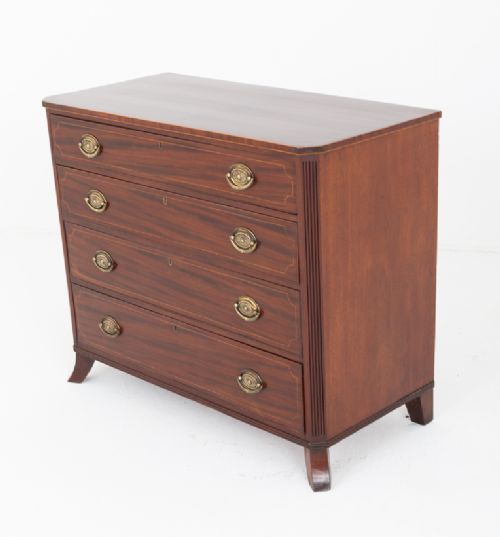
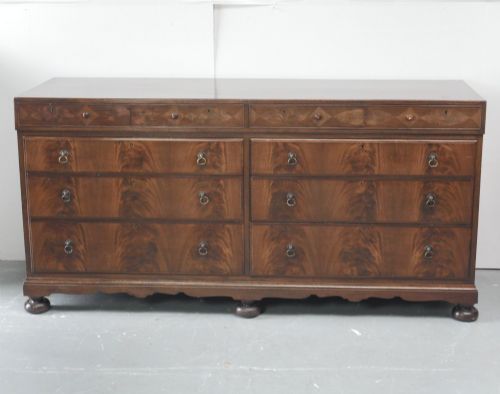
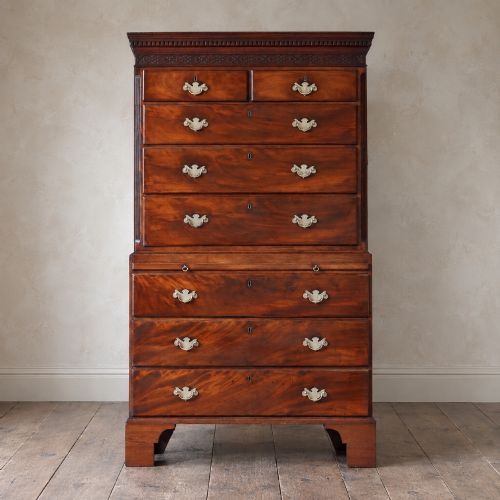
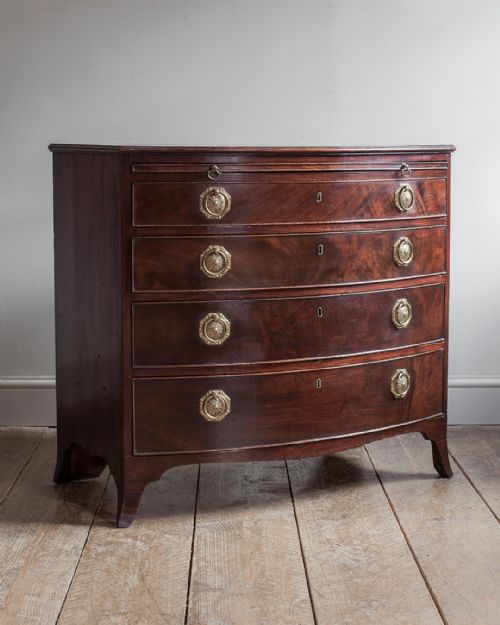
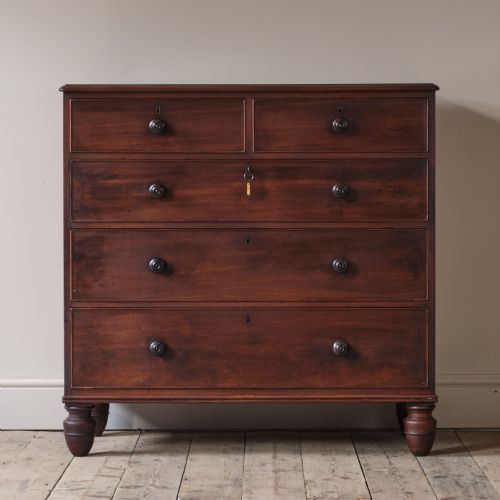
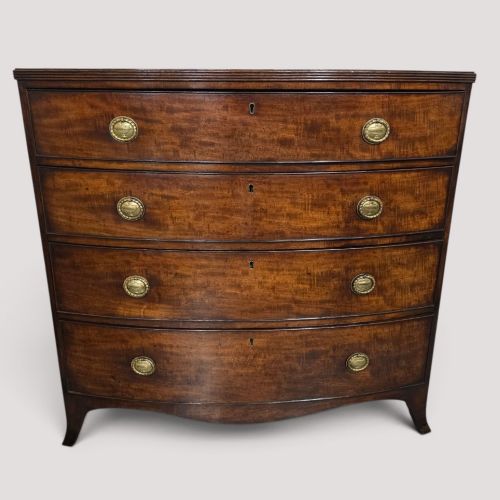
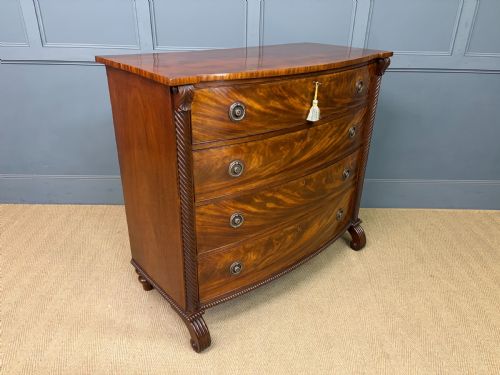
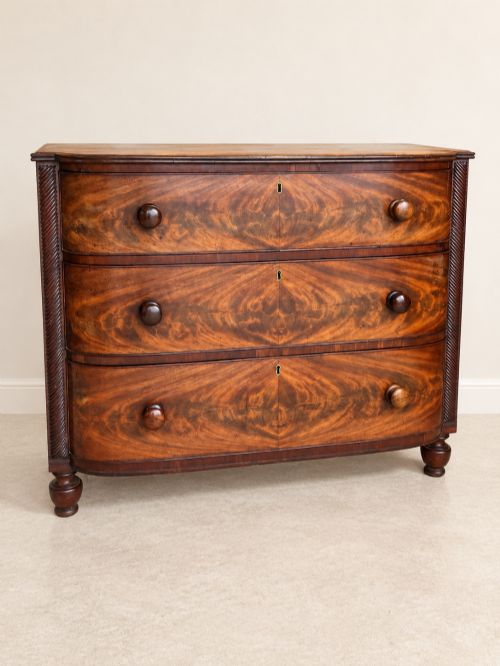
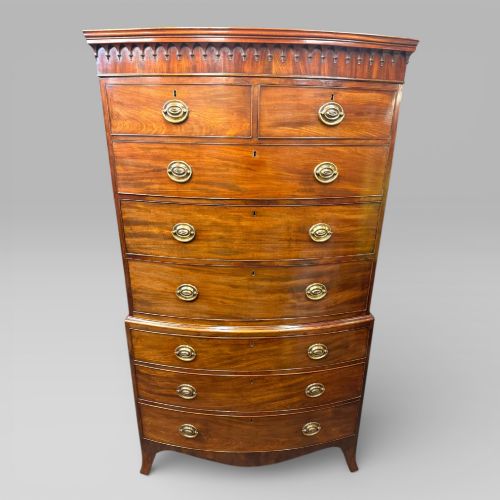
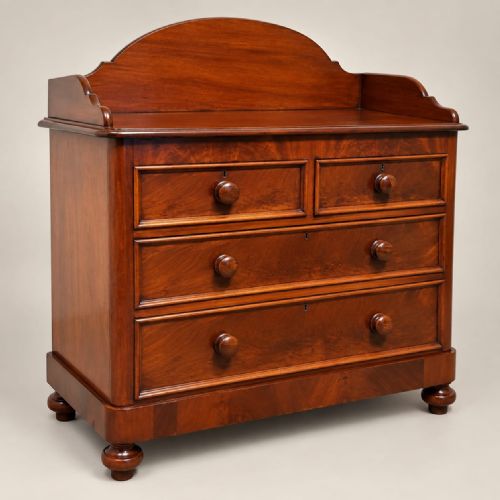
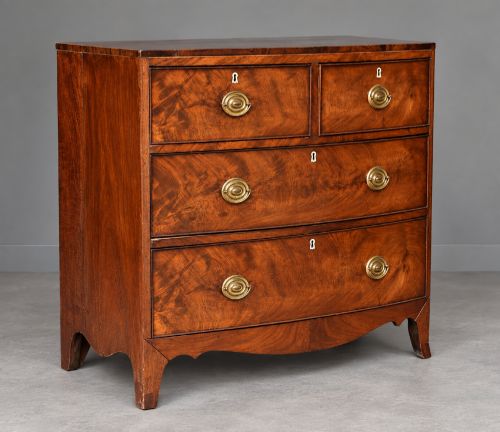
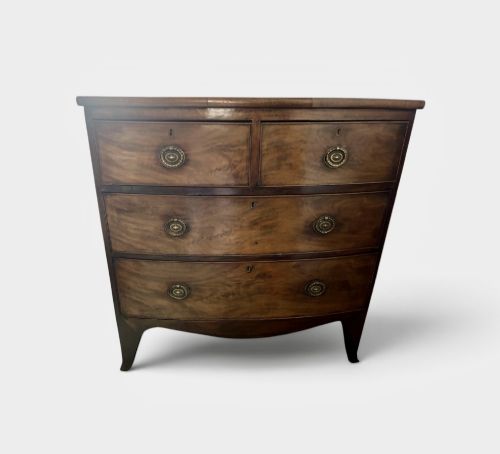
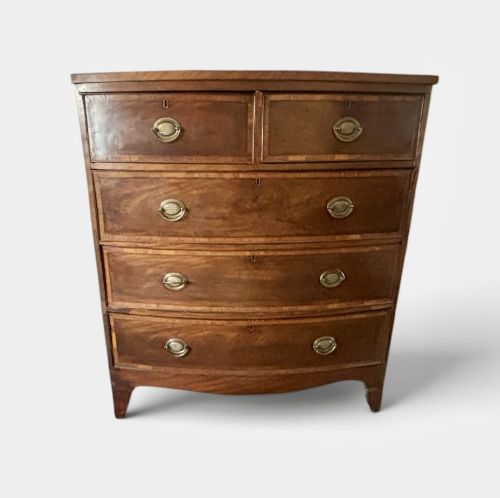
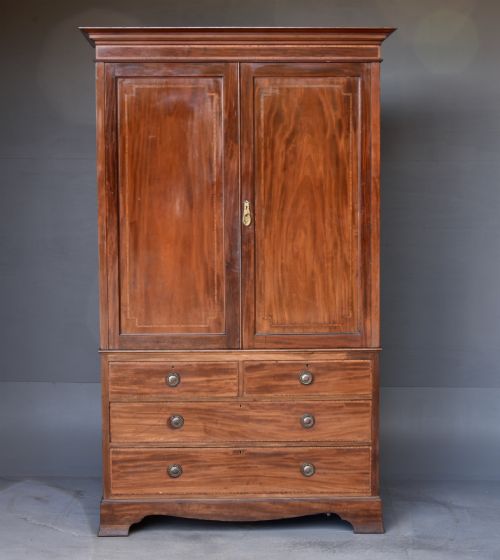
Antique mahogany storage drawers primarily take the form of chests of drawers spanning the Georgian, Regency, Victorian, and Edwardian periods. Examples range from compact 18th century pieces and George II designs featuring original ogee feet and brushing slides to George III four-long-drawer configurations and larger Edwardian inlaid models. Buyers searching for antique mahogany storage drawers will frequently encounter bow front designs alongside Scottish flame mahogany variations.
These items were constructed as essential household furniture for bedrooms and dressing rooms to store clothing and personal valuables. The forms vary from straightforward rectangular carcases to more sophisticated Regency and Georgian profiles incorporating decorative wood veneer and brass hardware. Each era contributes distinct architectural details, such as bracket feet or inlaid borders, while maintaining the primary function of compartmentalised storage.
How they were made
Makers utilised solid mahogany and mahogany veneers applied over secondary timbers such as oak and pine for drawer linings and internal carcase construction. Timber selection prioritized rich grain patterns, particularly demonstrated in flame mahogany panels used on drawer fronts. Brass hardware, including handles and escutcheons, was fitted to secure and operate the drawers.
Joinery methods involved traditional hand-cut dovetails for drawer construction and sturdy framing to support multiple heavy drawers. Secondary woods like oak provided structural stability inside the chests, whilst pine was used for backing boards and secondary framing elements. Surface finishes were hand-polished to highlight the natural depth and colour of the mahogany grain.
Retail Price Guide 2026
Typical UK retail prices for mahogany storage drawers, calculated from the Sellingantiques database of over a million retail prices indexed since 2003. This retail price guide relies exclusively on Sellingantiques data; no external sources or auction records are used, so the figures do not describe the wider market.
Periods represented in the inventory span the 1700s, 18th century, George II, Georgian, Regency, Victorian, and Edwardian eras.
What varies in quality
Quality in these pieces is dictated by the selection of timber figures, such as matched flame mahogany veneers, and the survival of original components like brass handles and ogee feet. Superior examples exhibit finer dovetail joinery and intact secondary woods such as oak linings that remain unaltered through centuries of use. The presence of integrated elements like original brushing slides distinguishes higher-tier George II and Georgian workshops from standard production.
Proportion and decorative restraint also separate standard utility items from exceptional cabinet work, particularly seen in the crispness of Edwardian inlay or the graceful curve of Regency bow fronts. Pieces retaining their structural integrity without heavy replacement timber represent the upper echelon of surviving domestic furniture from these periods.
The Antique Mahogany Storage Drawers Glossary
- Mahogany
- A durable tropical hardwood prized for its deep reddish-brown colour and smooth grain. It served as the primary exterior timber for fine cabinet making throughout the Georgian and Victorian eras.
- Brushing slide
- A pull-out shelf integrated above the top drawers of a chest. It provided a temporary horizontal surface for folding clothes or inspecting items.
- Ogee feet
- An architectural foot profile shaped with a double curve resembling an S-shape. This decorative support is frequently found on George II and Georgian furniture.
- Dovetail
- A traditional interlocking woodworking joint used to secure drawer corners. Hand-cut dovetails indicate older craftsmanship before mechanical routing became common.
- Bow front
- A convex curved cabinet front popular during the Regency period. This stylistic choice softens the rectangular geometry of standard storage chests.
Frequently Asked Questions
What periods do these pieces cover?
The available selection spans several distinct eras including the 1700s, George II, Georgian, Regency, Victorian around 1880, and Edwardian periods up to 1900. These eras represent evolving tastes in domestic furniture design and cabinet making.
Cabinet makers across these centuries adapted forms from simple utilitarian storage to sophisticated display pieces with decorative veneers and brass hardware.
Which woods were used to build them?
Mahogany served as the principal wood for external surfaces and drawer fronts, often utilised as solid timber or decorative veneer. Secondary woods like oak and pine were commonly employed for internal drawer linings and backboards.
This combination of durable hardwoods and supporting structural timbers ensured the chests could withstand heavy daily use over hundreds of years.
What is a brushing slide?
A brushing slide is a pull-out shelf integrated into the upper section of a chest of drawers. It provided a clean surface for brushing garments or folding clothes.
This feature is particularly associated with finer Georgian and George II examples designed for affluent households.
How do bow front chests differ?
Bow front chests feature a convex curved front profile rather than a flat rectangular shape. This style gained significant popularity during the Regency period.
The curved design required advanced woodworking skill to shape the solid mahogany and matched veneers accurately.