
Nineteenth Century Mahogany Chest
A nineteenth century mahogany chest brings rich timber and honest proportion to a room, offering deep drawers that tame clutter with traditional grace.
What nineteenth century mahogany chests are
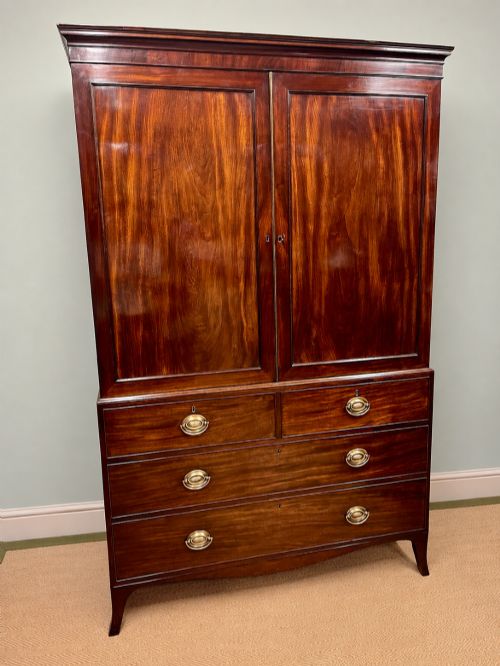
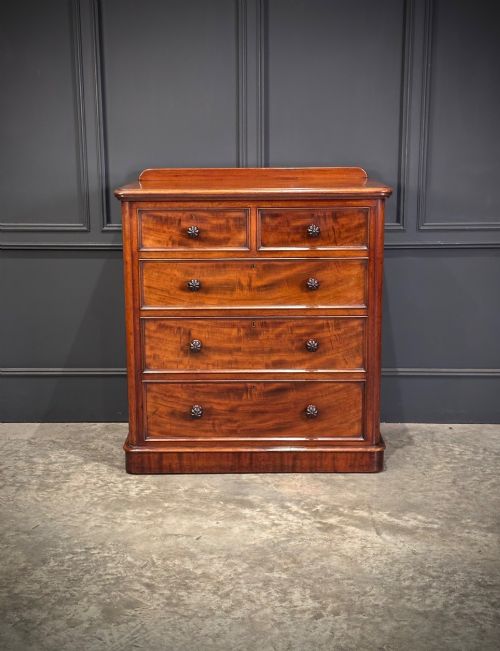
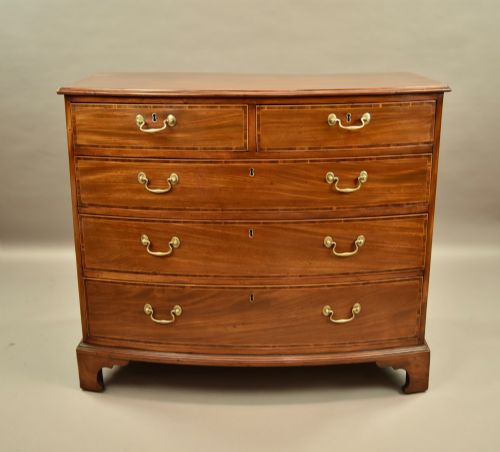
When you search for a nineteenth century mahogany chest, you encounter a robust storage furniture piece built to last through generations of domestic life. The examples span Regency and Victorian eras, presenting sturdy construction designed for daily utility in bedrooms and hallways.
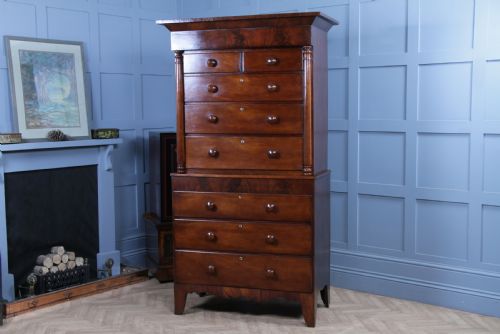
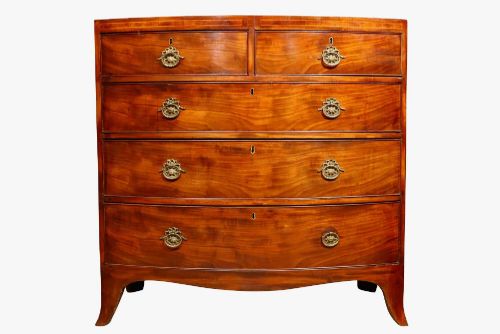
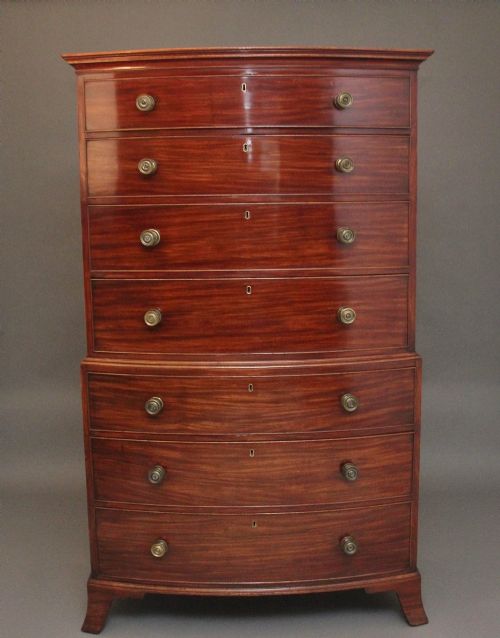
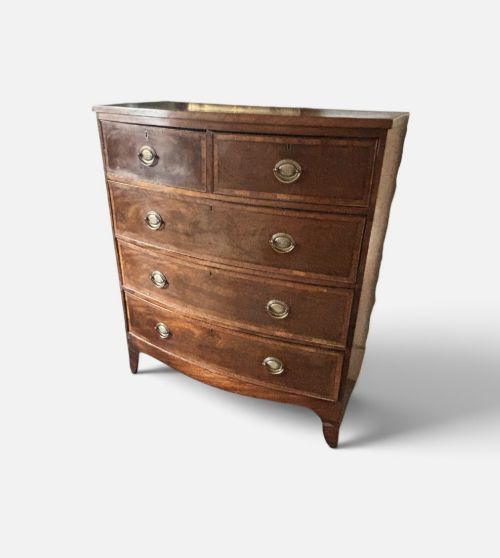
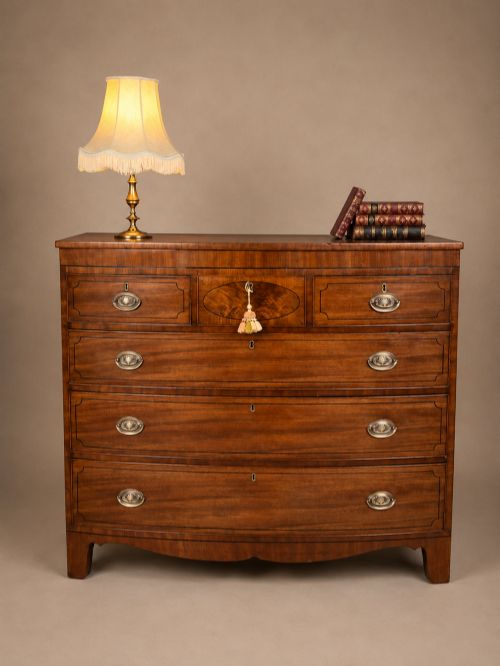
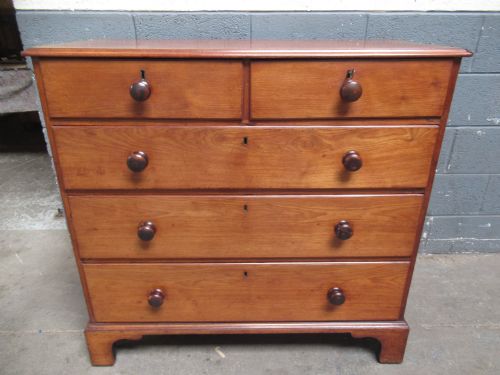
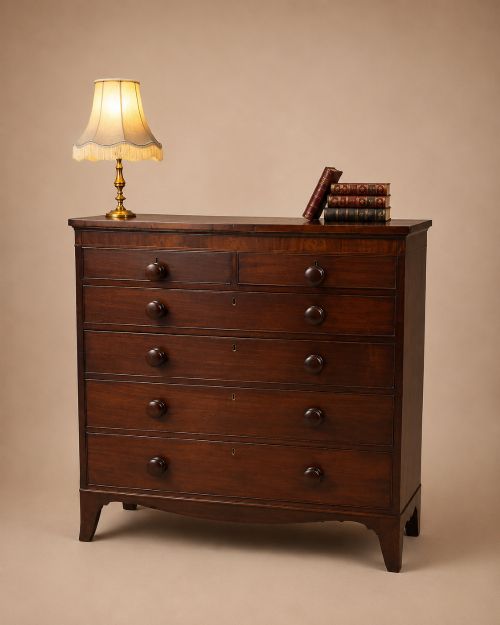
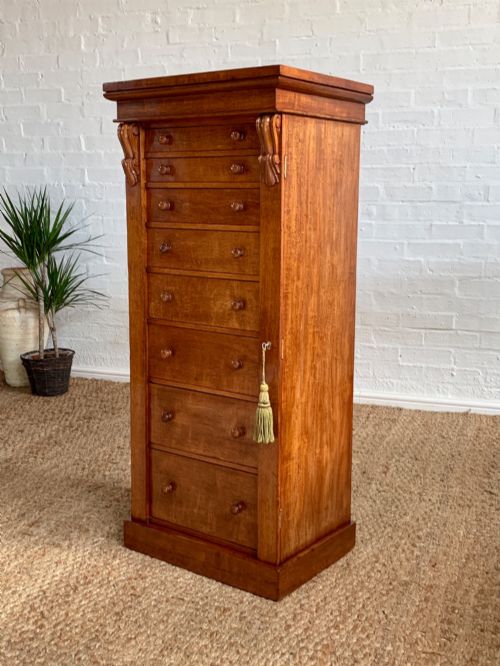
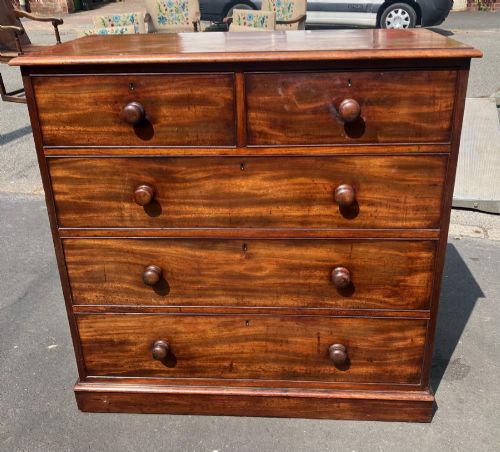
The primary forms on this page include bow front chests of drawers and straight fronted carcases with varying drawer counts. You find compact small chests alongside taller five and six height models, reflecting the diverse domestic needs of past centuries.
How they were made
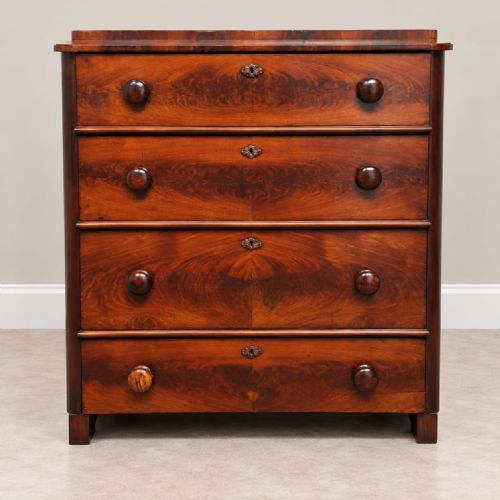
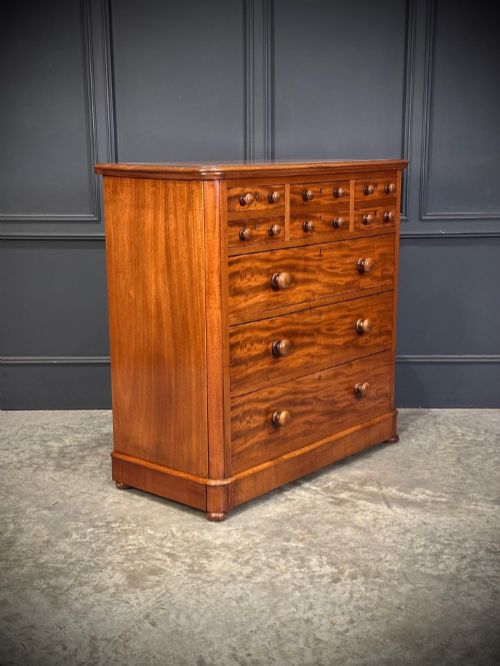
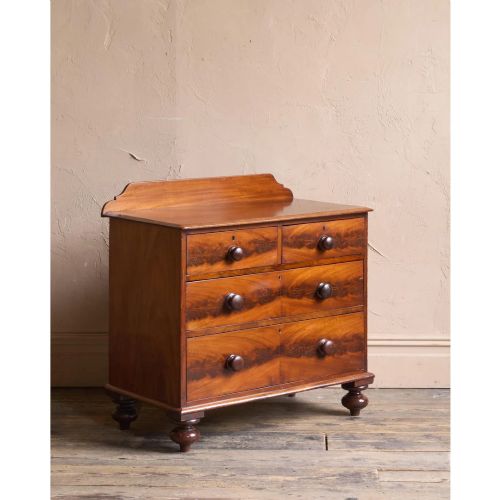
Cabinet makers utilised solid mahogany and applied flame mahogany veneer to primary surfaces to create striking grain patterns. Secondary timbers such as pine appear in drawer linings and carcase backs, supporting the heavier exterior boards.
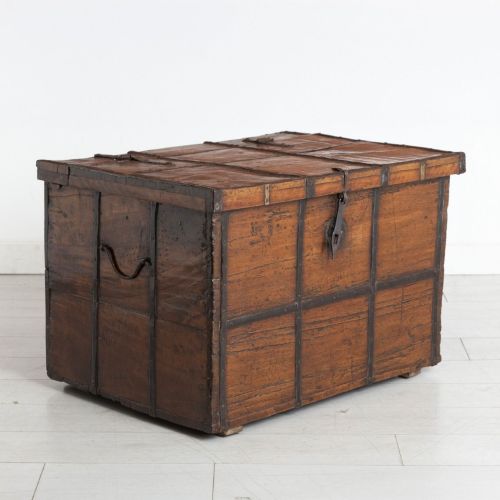
Metal fittings include brass drop handles and campaign hardware recessed into the timber, sometimes paired with bone escutcheons around keyholes. Drawers operate on side runners built directly into the solid wood frame.
Retail Price Guide 2026
Typical UK retail prices for nineteenth century mahogany chest, calculated from the Sellingantiques database of over a million retail prices indexed since 2003. This retail price guide relies exclusively on Sellingantiques data; no external sources or auction records are used, so the figures do not describe the wider market.
Some chests hide secret small drawers tucked neatly beneath the top surface moulding.
What varies in quality
The visual hierarchy of these pieces rests on the choice of wood and the skill of the veneer matching. Flame mahogany and birds eye maple accents demand superior timber selection from the cabinet maker, creating movement across the drawer fronts.
Structural refinement shows in the handling of feet, from splayed forms to integral stands, and the integration of bow front or serpentine profiles. Original brass hardware and clean drawer construction elevate the standing of a piece within its period.
The Nineteenth Century Mahogany Chest Glossary
- Bow front
- A convex curved cabinet front that projects outward in the centre. This shape softens the corners of a room and requires advanced woodworking skill.
- Flame mahogany
- A veneer cut from timber where the branch meets the trunk, producing a rippling flame pattern. It is prized for its dramatic visual movement.
- Campaign chest
- A modular chest built in sections with recessed brass handles and corner brackets. It was designed for easy transport by military officers.
- Escutcheon
- A small plate surrounding a keyhole, often made of brass or bone. It protects the surrounding wood from wear caused by the key.
- Chest on chest
- A tall furniture form featuring one chest stacked directly on top of another. It provides maximum storage without consuming excess floor space.
Frequently Asked Questions
How do I clean a mahogany chest?
Dust the timber regularly with a soft, dry cloth to prevent grit accumulation on the polished surface. Avoid modern silicone sprays that build up and dull the antique finish over time.
Apply a traditional beeswax sparingly once or twice a year to nourish the dry wood and maintain its natural lustre. Buff the surface gently after application to bring out the grain pattern.
Are campaign chests different?
Campaign chests are built in two or more stackable sections intended for military travel. They feature flush brass handles and corner braces to withstand rough journeys.
These pieces break down into manageable parts for packing into transit crates. Their utilitarian origins give them a sturdy and functional aesthetic.
How many drawers should it have?
Nineteenth century chests typically contain between three and seven drawers depending on the overall height of the carcase. Smaller bachelors chests offer compact proportions with fewer tiers.
Taller six and seven height models provide deep storage capacity for clothing and linens. The choice depends on available wall space and your storage needs.