

French Marble Top Tables
French marble top tables bring weight and classical polish to a room, uniting cool stone with rich timber or gilt metal.
French marble top tables
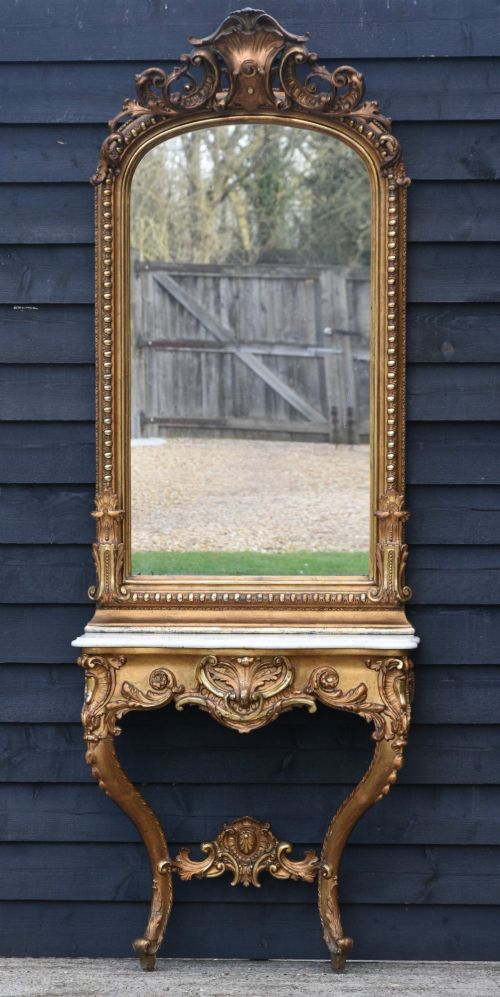
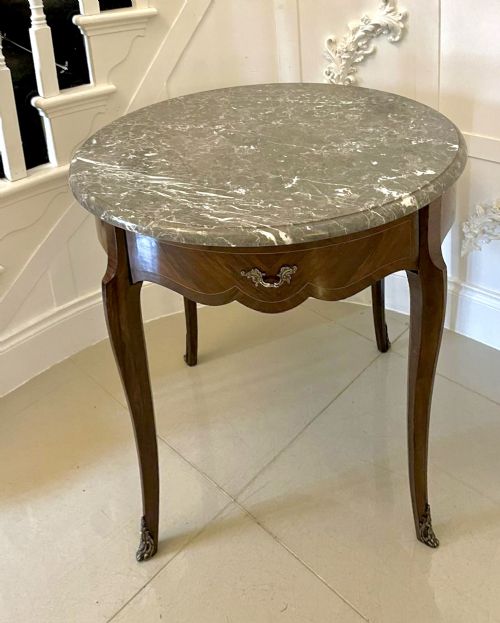
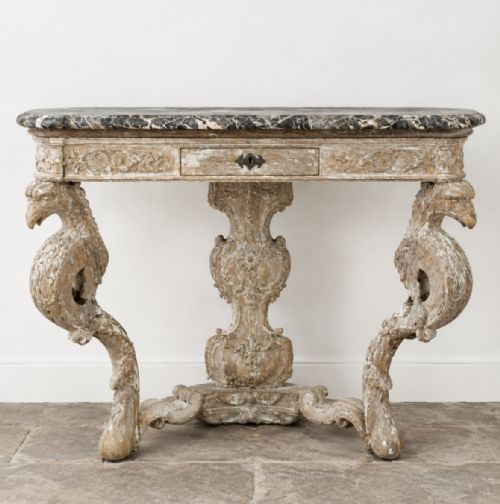
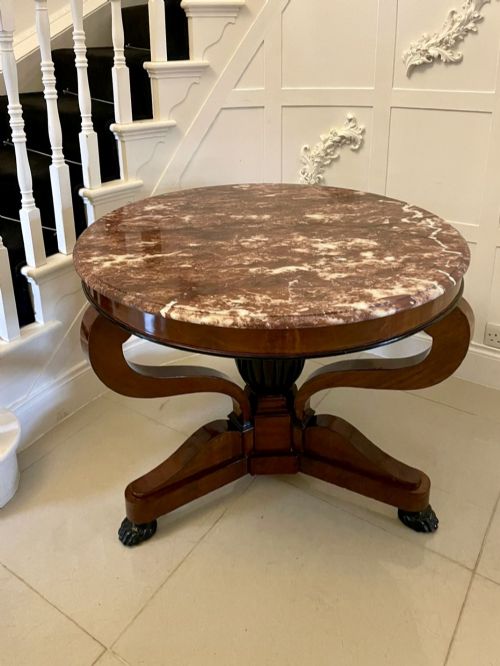
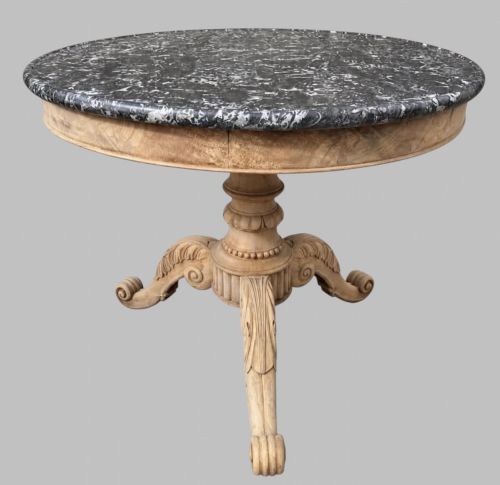
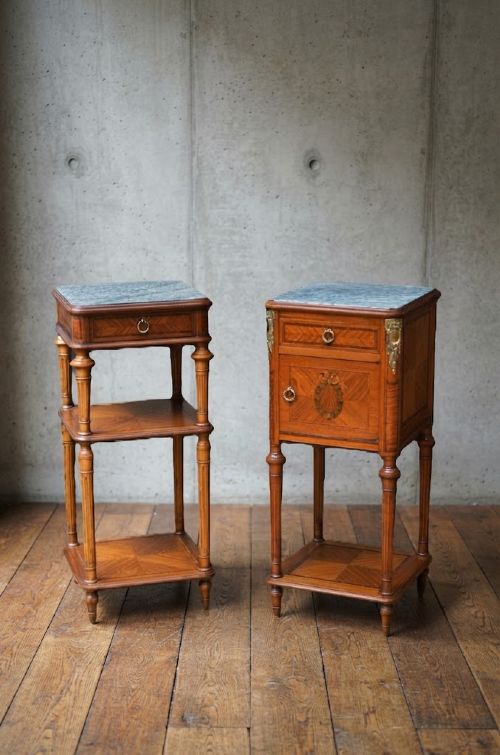
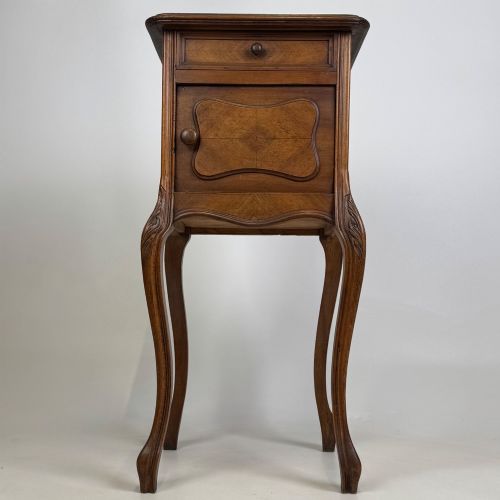
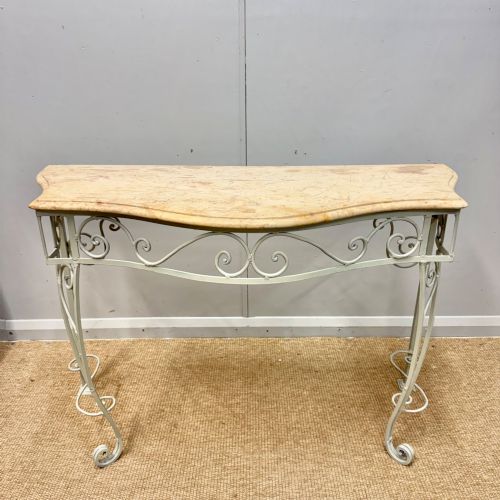
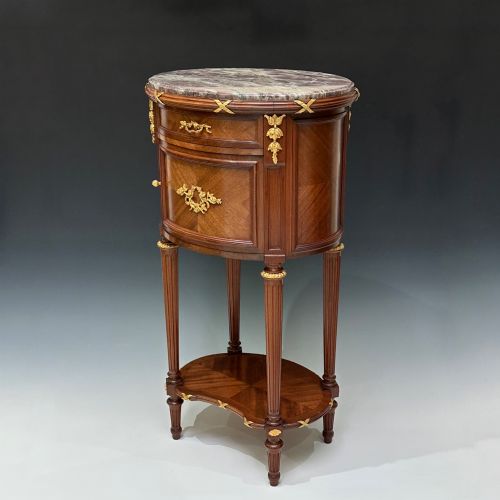
French marble top tables encompass a varied selection of occasional furniture, ranging from compact bedside cabinets to slender side tables and console surfaces. These pieces typically combine a heavy stone slab with supportive frames of walnut, kingwood, mahogany, or painted wood.
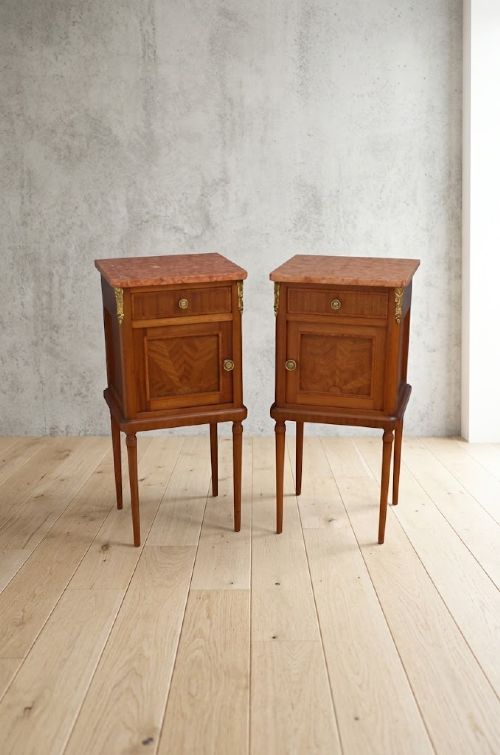
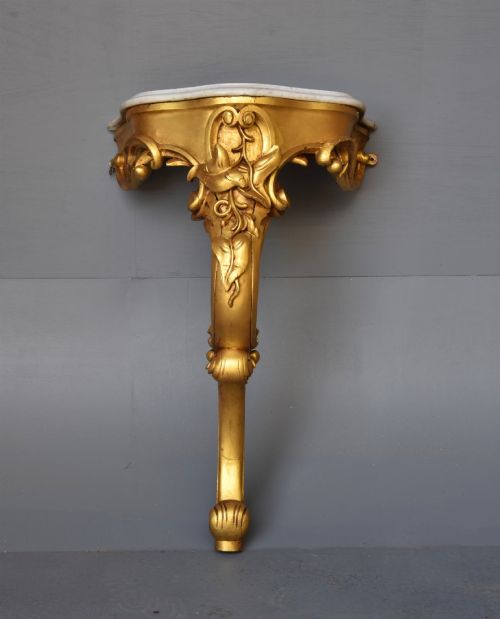
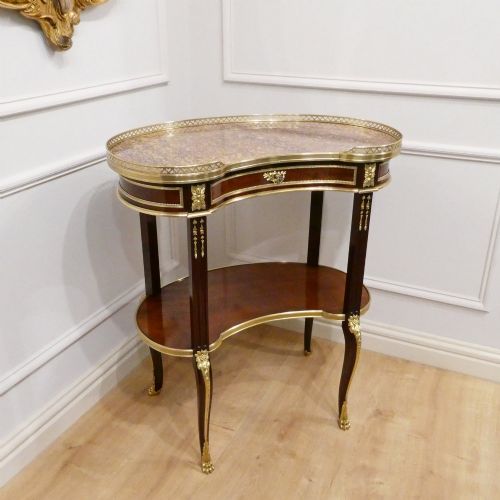
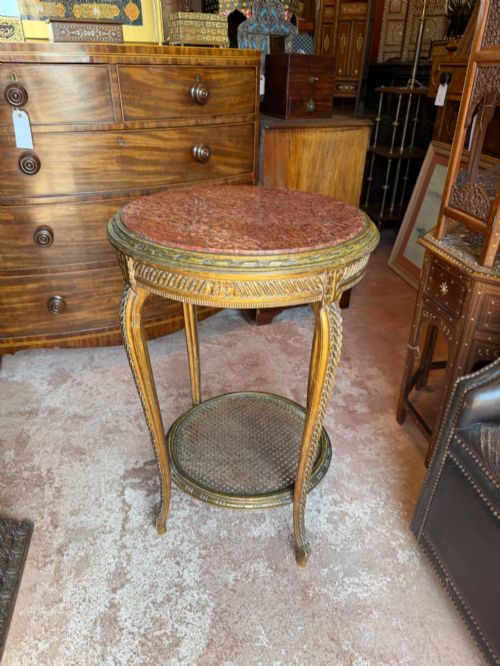
The archive and current selection show a strong preference for paired items, with matching bedside cabinets and lamp tables appearing frequently. Forms include kidney shapes, demi-lune wall-mounted brackets, and traditional four-legged gueridon designs.
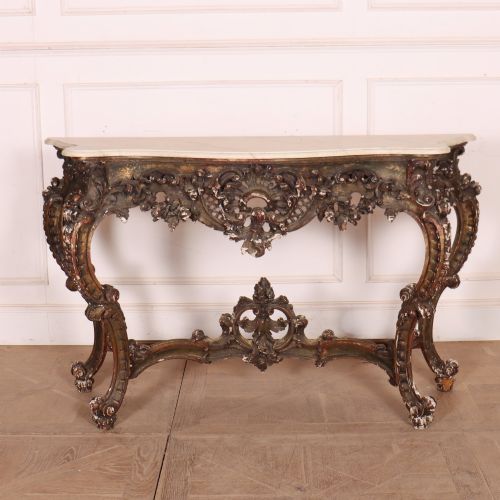
Origins span the nineteenth century through to the Art Deco period of the nineteen-thirties, crossing styles from Neoclassical Revival to French Rococo and Chateau influences. Buyers encounter everything from simple oak and walnut cupboards to elaborate marquetry and ormolu-mounted consoles.
Construction and Materials
Makers utilised dense natural stone, most notably white Carrara and coloured varieties, cut thick to form the flat working surface. These slabs sit atop structurally sound frames fashioned from hardwoods like walnut, mahogany, and oak, frequently enhanced with kingwood veneers.
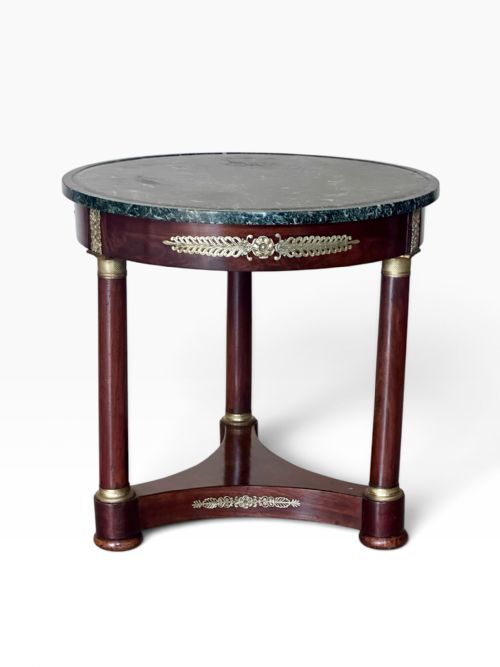
Decorative detailing relies on cast brass and ormolu mounts, applied to corners, legs, and aprons to accent the structural lines. Marquetry and inlaid woodwork appear on select surfaces, alongside painted finishes on nineteenth and early twentieth-century softwood frames.
Retail Price Guide 2026
Typical UK retail prices for french marble top tables, calculated from the Sellingantiques database of over a million retail prices indexed since 2003. This retail price guide relies exclusively on Sellingantiques data; no external sources or auction records are used, so the figures do not describe the wider market.
The inventory records French marble top tables spanning the nineteenth century through the nineteen-thirties, utilising brass, ormolu, walnut, kingwood, and painted wood.
Evaluating Quality
Quality rests upon the thickness and finish of the stone slab, alongside the precision of its fit within the wooden framework. Superior examples feature well-figured marble with smooth, polished edges and stable, heavy foundations.
Cabinetwork separates standard pieces from the finest work, visible in tight veneer joints, hand-cut marquetry patterns, and substantial cast bronze or brass ormolu mounts rather than light stamped metal. The structural integrity of the timber frame dictates longevity and daily usability.
The French Marble Top Tables Glossary
- Gueridon
- A small round occasional table designed for lamps or decorative objects. These often feature a single central pillar or three slender legs supporting a stone top.
- Ormolu
- Gilded bronze mounts applied to furniture for decoration. This technique adds metallic contrast and refined detailing to wooden frames.
- Demi-lune
- Half-moon shape characteristic of console tables built to sit flush against a wall. They frequently employ brackets or wall-mounting fixings.
- Marquetry
- The art of applying pieces of veneer to a structure to form decorative patterns. Craftsmen use various tinted woods to build pictorial or geometric designs.
- Carrara marble
- A type of white or blue-grey stone quarried in Italy. It provides a durable, cool surface commonly found on European case pieces.
Frequently Asked Questions
How do I care for marble tops?
Wipe stone surfaces with a damp cloth and mild soap, avoiding acidic cleaners that etch the polish. Use coasters under glasses to prevent liquid rings from soaking into porous areas.
Apply a protective stone wax periodically to maintain the sheen and guard against everyday staining.
Are these tables sturdy enough for daily use?
Most examples are built from solid hardwoods like walnut and oak, offering substantial stability for lamps and bedside items. Heavy stone slabs add significant weight, keeping the base securely planted.
Wall-mounted console variations require proper anchoring into studs or masonry to support the load safely.
How do I identify the period of a table?
Examine the secondary timbers, joinery methods, and the style of any brass or ormolu mounts. Nineteenth-century pieces often display hand-cut dovetails and heavier timber construction.
Nineteen-thirties examples lean towards cleaner lines or distinct Art Deco geometric forms, differing from ornate Rococo revival curves.
What is the difference between a gueridon and a console?
Gueridons are freestanding round tables suited for placement beside seating or in room corners. Consoles are semi-circular or rectangular tables designed to stand against a wall.
Consoles frequently feature wall-mounting brackets or elaborate front legs, whereas gueridons rely on a balanced central or multi-leg perimeter design.