
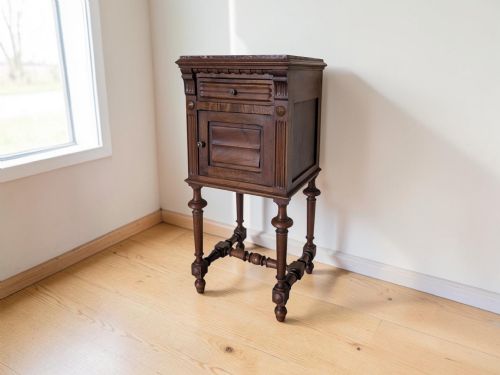
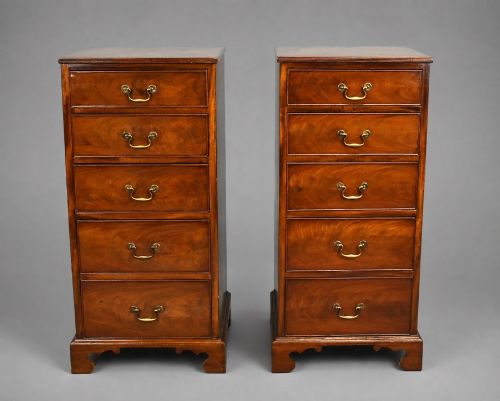
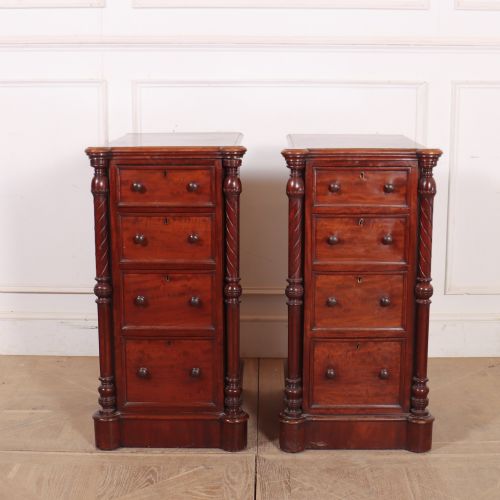
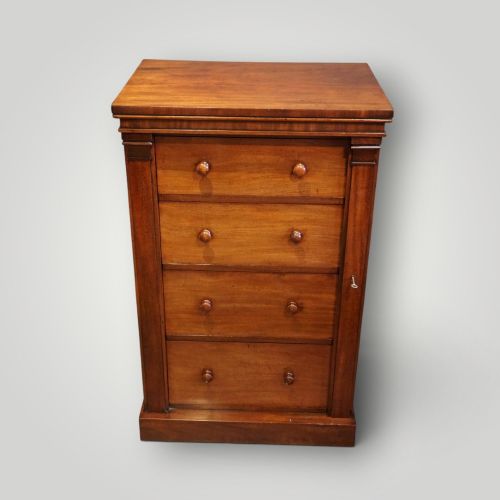
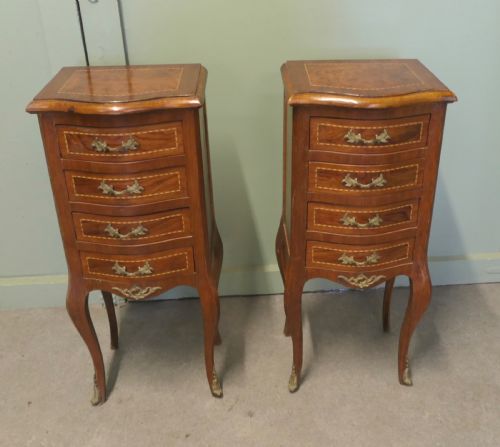
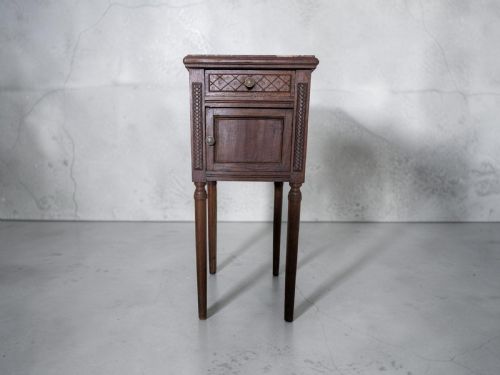
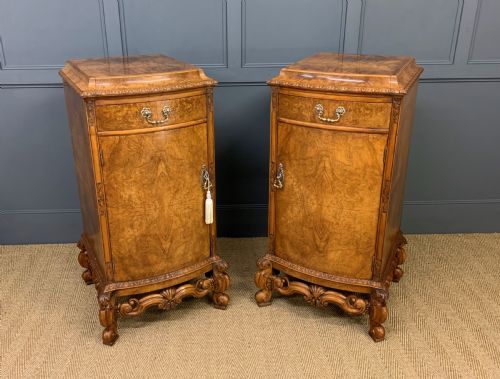

Tall Bedside Cabinets
Tall bedside cabinets solve the practical challenge of reaching a lamp or book from a high bed while keeping bedroom clutter neatly enclosed.
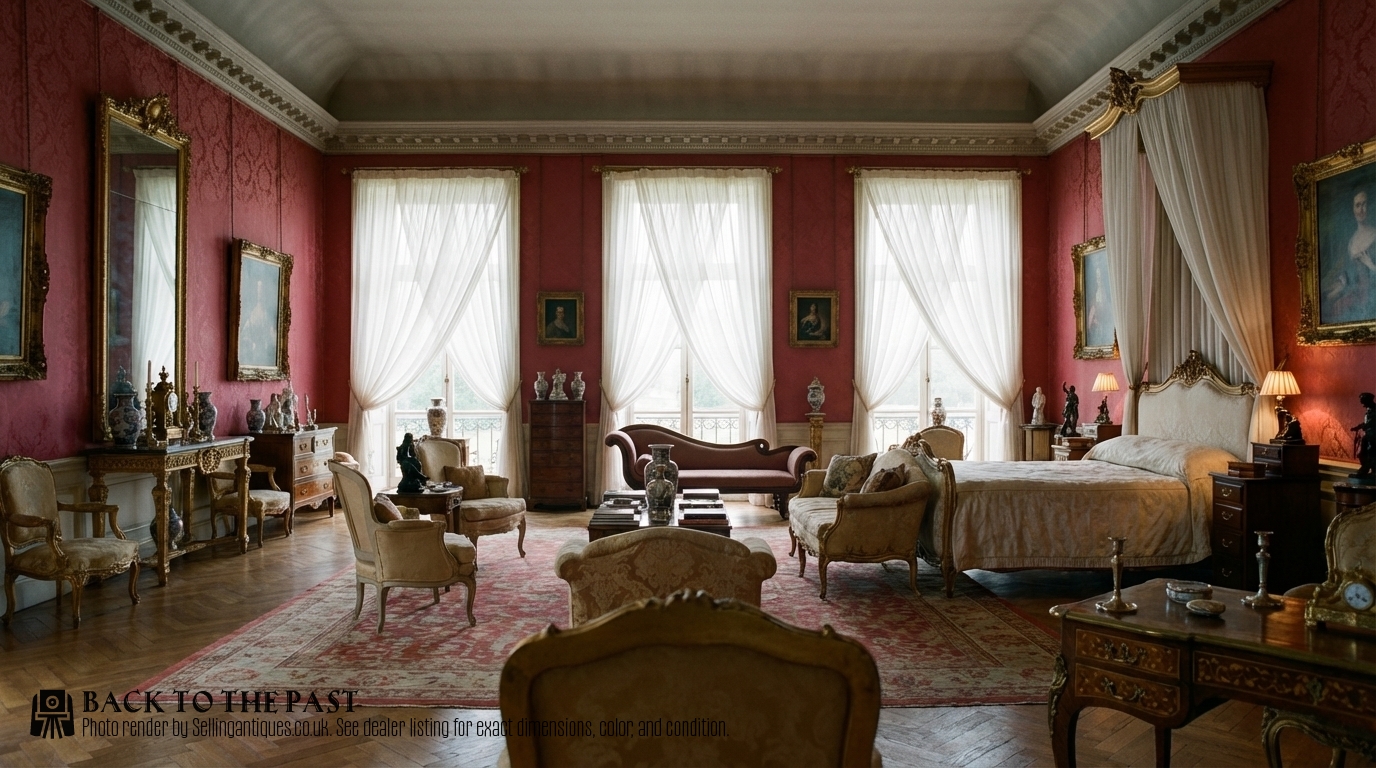
Tall Bedside Cabinets
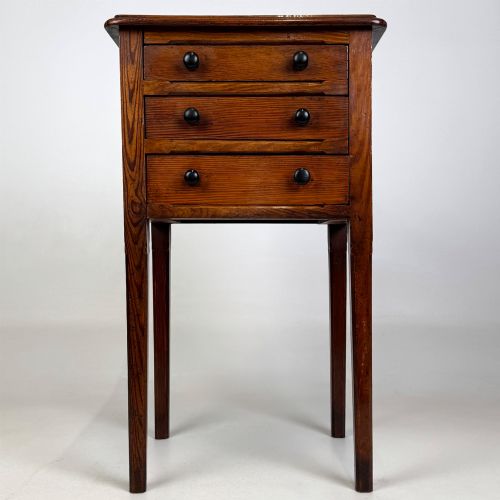
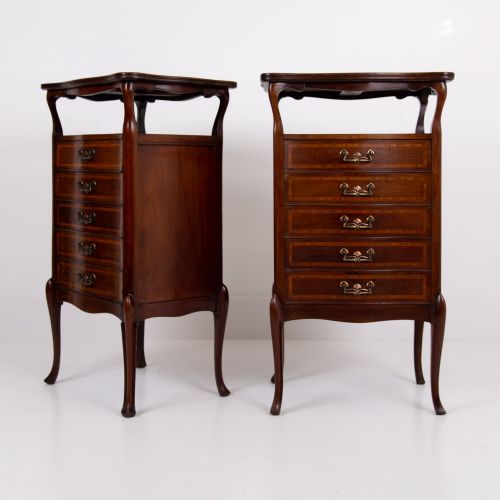
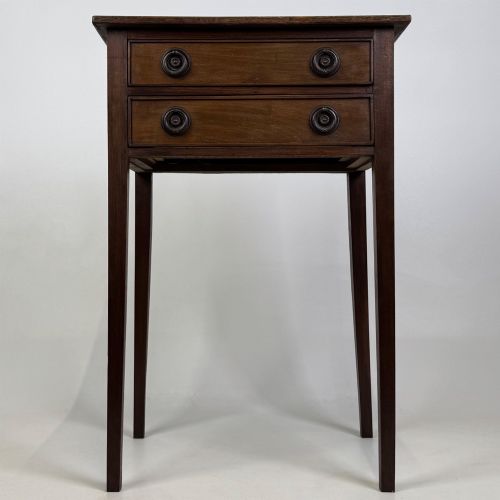
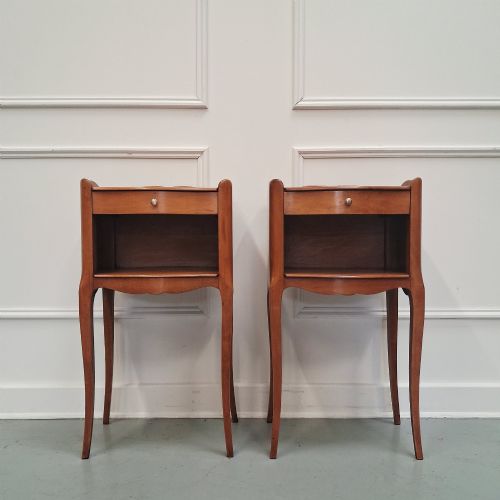
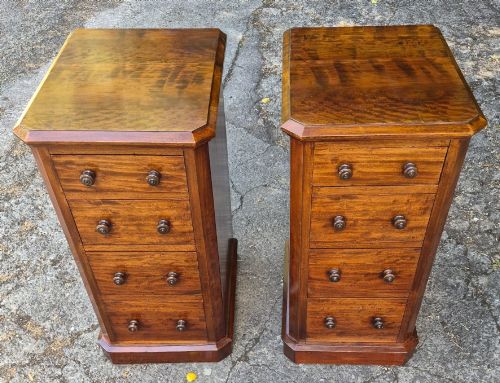
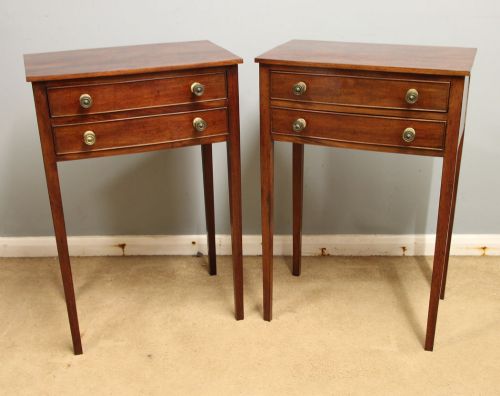
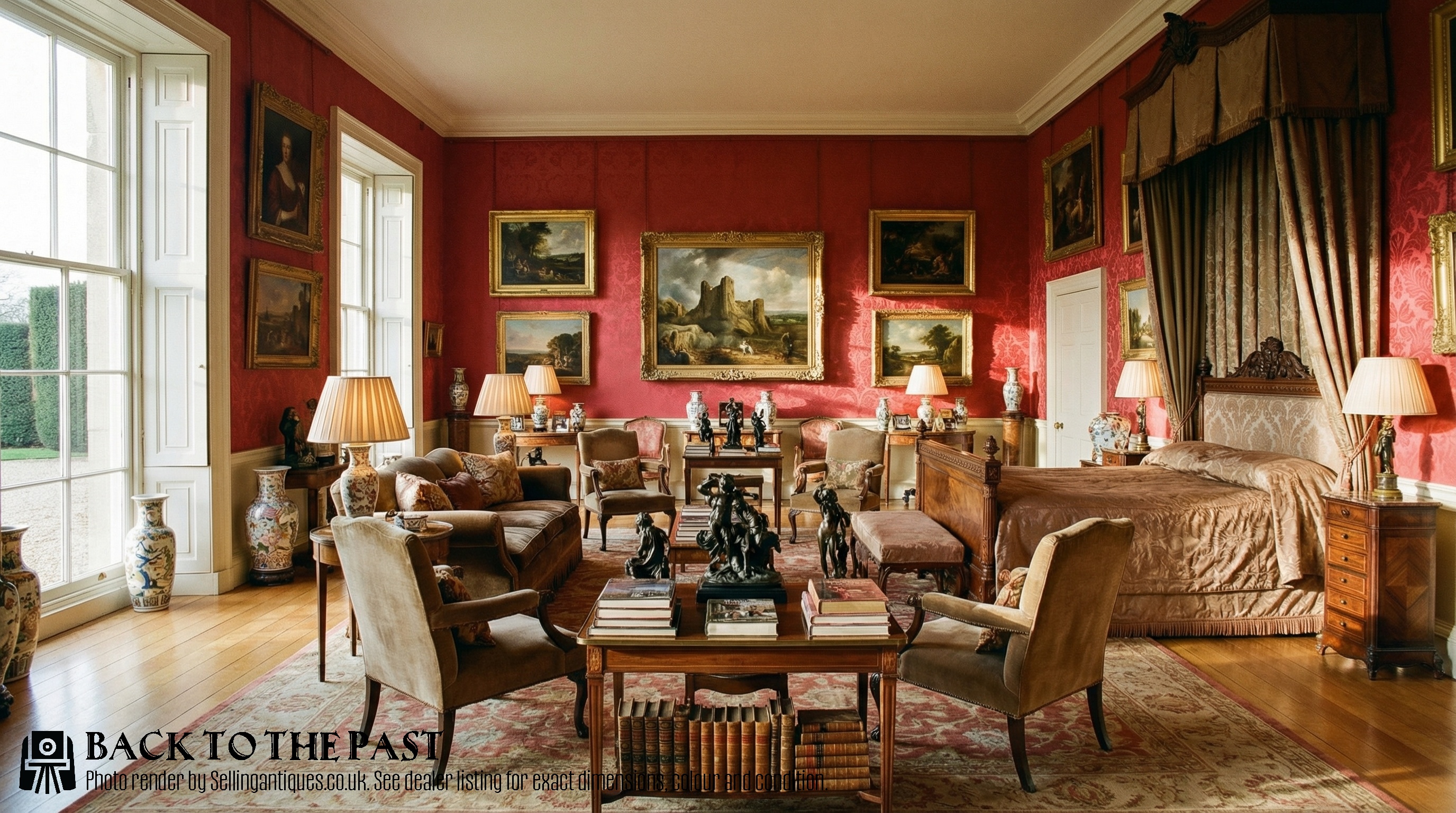
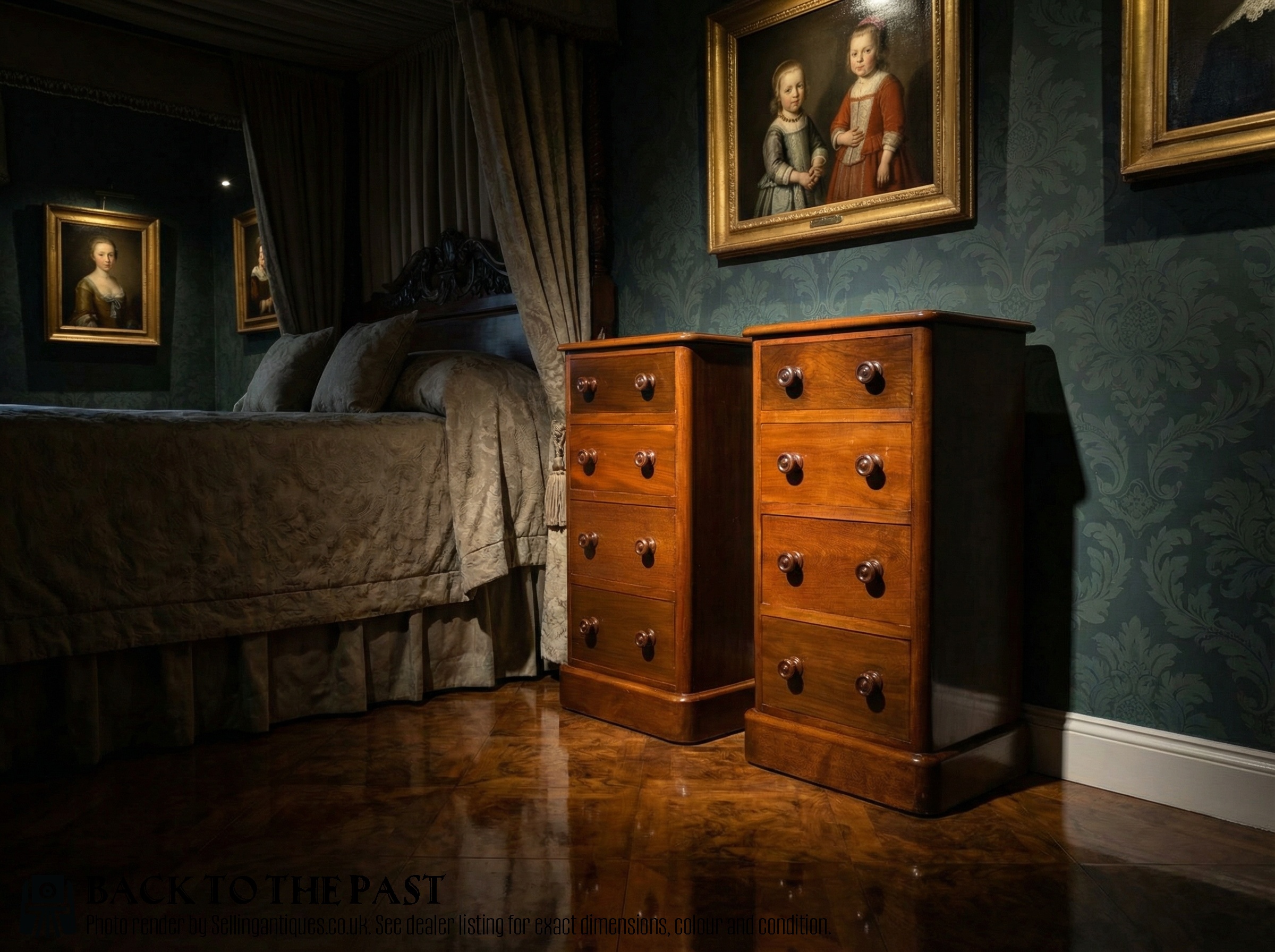
Tall bedside cabinets provide elevated storage beside the mattress, appearing primarily as upright cupboards, pedestals, and narrow chests of drawers. When you search for tall bedside cabinets, you encounter forms that rise above standard low tables, offering greater capacity for books and personal items.
The selection ranges from nineteenth-century Victorian pine and mahogany pieces to twentieth-century French designs from the nineteen-twenties and thirties. Many examples survive as matched pairs, though single pedestals and cupboards also appear across the selection.
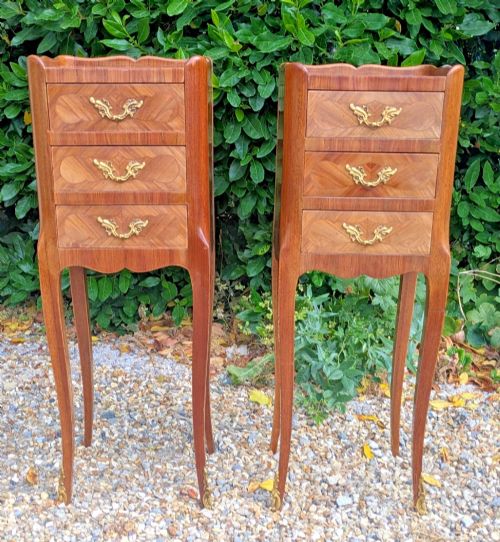
English and French workshops dominate the origins, spanning styles from Georgian and Victorian country to Art Deco and French Louis XV style. Proportions remain slender to fit tight spaces beside the bed while gaining storage height through multiple drawers or cupboard doors.
How they were made
Cabinetmakers utilised dense timbers such as mahogany, walnut, rosewood, and pine as structural bases, often applying burr walnut, kingwood, satinwood, or parquetry veneers to visible surfaces. These woods provided both the necessary strength for daily use and rich grain patterns for visual depth.
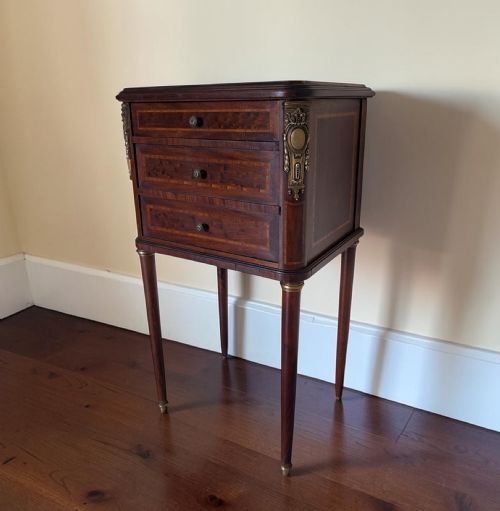
Metal accents in brass and ormolu appear on handles, key escutcheons, and structural mounts, particularly on French pieces. Inset panels of marble top certain cabinets, offering a durable surface resistant to water and wear.
Tall Bedside Cabinets Retail Price Guide 2026
Typical asking prices for tall bedside cabinets among the pieces listed under this phrase on Sellingantiques today, from the lower quarter to the upper quarter. They describe what is for sale here now, not the wider market.
Listings feature woods spanning mahogany, walnut, rosewood, satinwood, kingwood, amboyna, ash, birch, and pine, alongside marble and brass.
What varies in quality
Quality reveals itself in the choice of timbers and the precision of veneer work, such as symmetrical burr walnut or detailed floral marquetry. Superior cabinets display thoughtful proportions and clean joinery that keeps tall frames stable during daily opening and closing of drawers.
The integration of hardware, from cast brass mounts to fitted ormolu details, separates standard utility cupboards from more refined decorative pieces. Finish application also dictates standard, with hand-waxed surfaces showing depth while retaining the natural grain of the underlying wood.
The Tall Bedside Cabinets Glossary
- Pedestal cupboard
- A narrow, upright cabinet designed to stand beside a bed or desk, enclosing storage behind a single door. It offers vertical capacity without occupying excessive floor space.
- Pot cupboard
- A traditional bedside cabinet originally built to house a chamber pot, typically featuring a cupboard door and sometimes an internal shelf. Modern owners utilise them for general bedside storage.
- Marquetry
- Decorative woodwork where small pieces of veneer are fitted together to form geometric or floral patterns. Artisans inlay these designs into the primary surface of the cabinet.
- Ormolu
- Gilded bronze ornamentation applied to furniture, frequently found on French pieces from the nineteenth and early twentieth centuries. It provides metallic contrast against dark hardwoods.
Tall Bedside Cabinets: Frequently Asked Questions
Why choose tall bedside cabinets?
Tall bedside cabinets align better with high mattresses than standard low tables, making it easier to reach lamps, books, and glasses during the night.
They also enclose a greater volume of storage within a compact footprint, keeping bedroom surfaces clear of clutter.
How do I spot French styles?
French bedside cabinets often incorporate lighter decorative veneers like kingwood, alongside intricate brass details and shaped aprons.
They frequently favour curved lines or distinct periods such as Louis XV style and Art Deco compared to their English counterparts.
Are pieces usually sold as pairs?
Many tall bedside cabinets survive and sell as matching pairs, which suits symmetry on either side of a double bed.
Single cabinets also appear regularly for tighter spaces or eclectic bedroom layouts.
What materials were commonly used?
Mahogany, walnut, and pine form the primary structure of most cabinets, supplemented by exotic veneers like rosewood and satinwood.
Marble tops and brass hardware frequently add functional and decorative contrast to the timber frames.