
French Furniture Pair
A french furniture pair brings balanced symmetry to a room, offering matching proportions in tables, cabinets, and seating.
French Furniture Pair
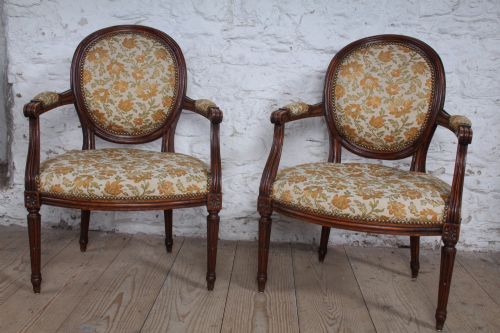
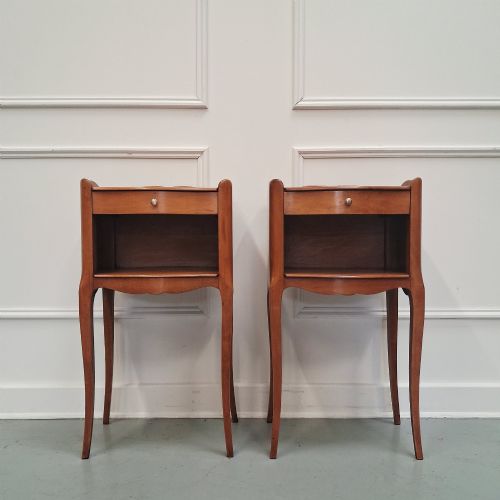
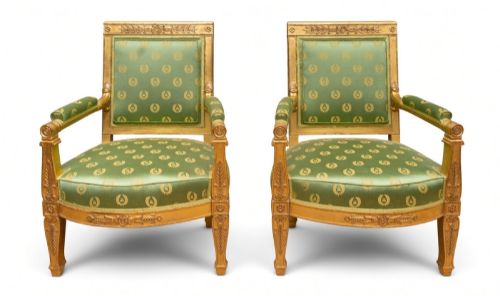
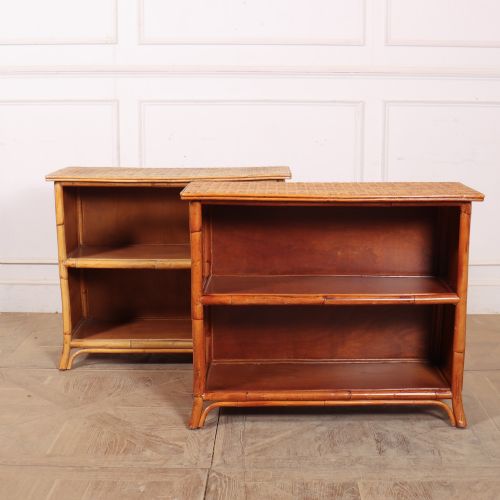
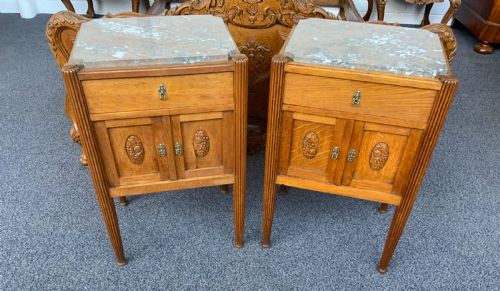
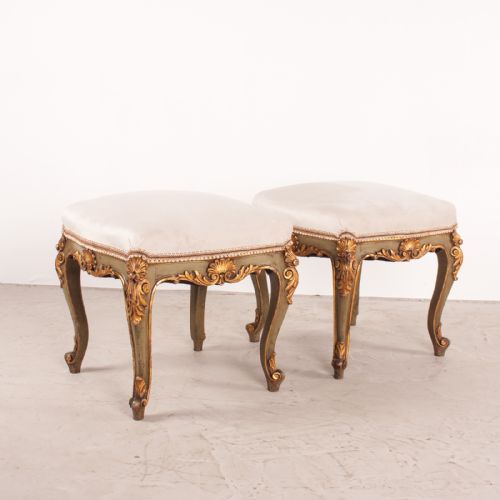
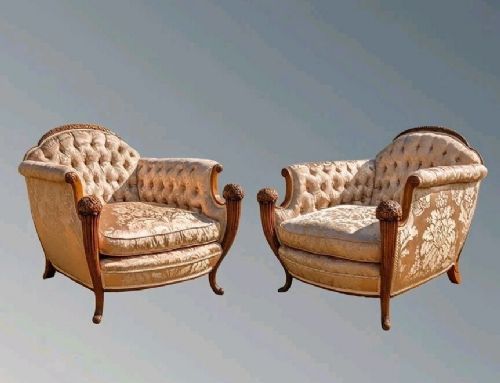
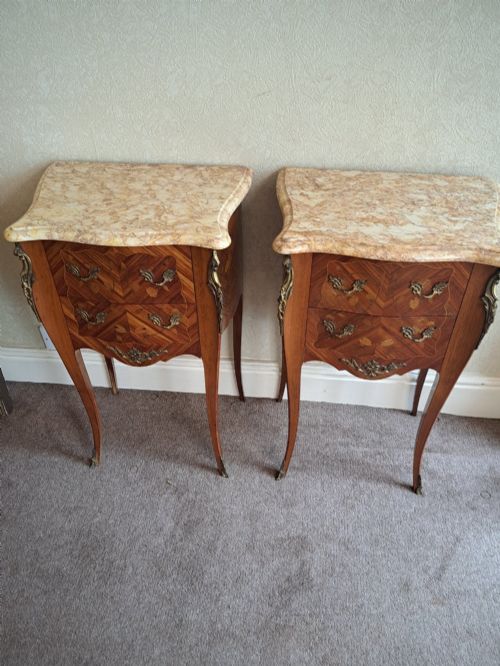
A french furniture pair encompasses matched seating, tables, and cabinets designed to sit together in a room. When searching for a french furniture pair, buyers encounter everything from bedside tables and commodes to armchairs and benches.
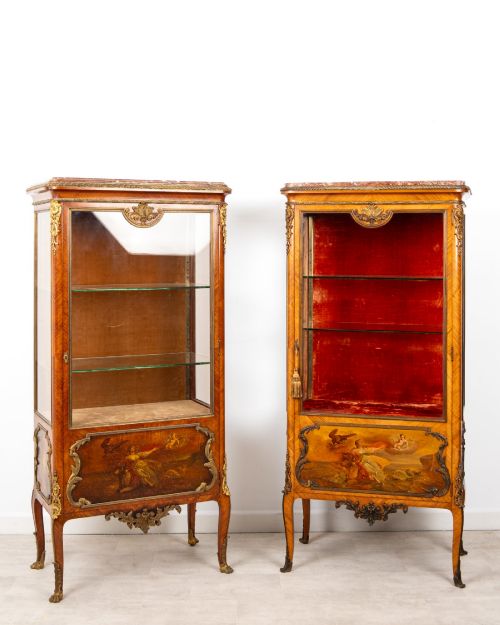
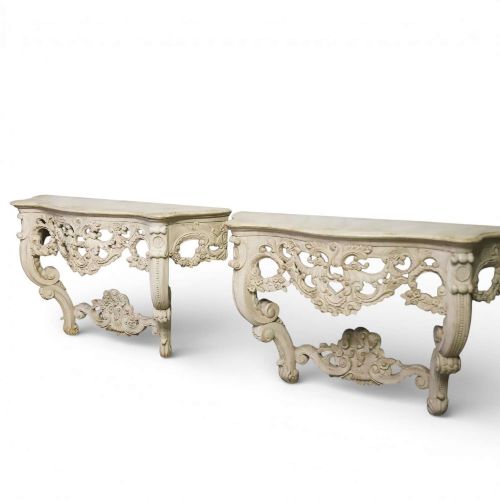
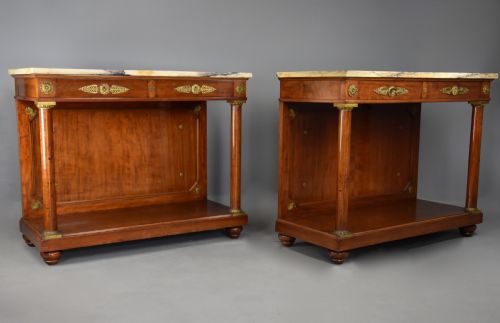
The selection spans multiple periods, featuring 19th-century revival styles alongside Art Deco pieces from the early decades of the twentieth century. Forms range from utilitarian bedside cabinets to grand vitrine display cabinets and console tables.
Materials and construction
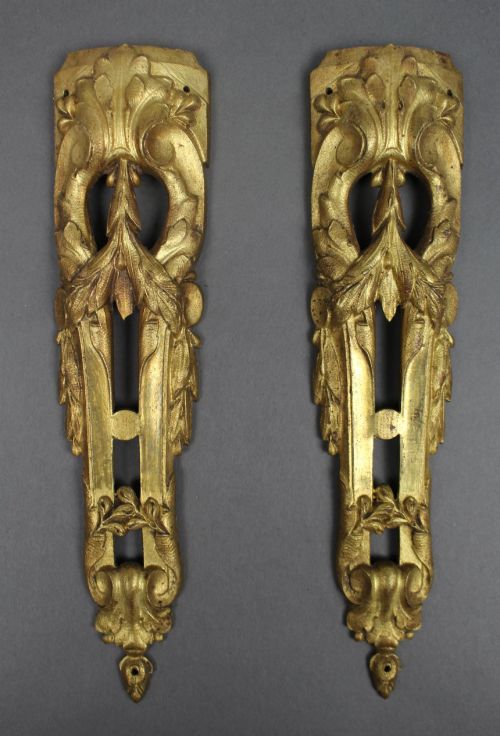
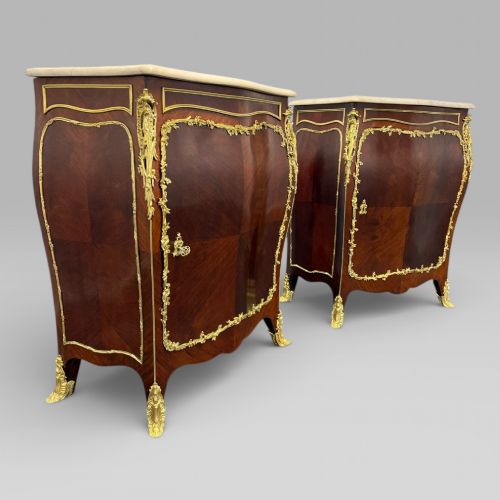
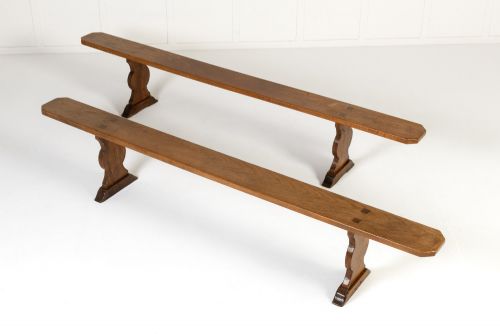
Cabinetry relies on timbers such as walnut, kingwood, mahogany, fruitwood, and oak, frequently paired with marble tops. Many pieces incorporate brass or ormolu mounts, giltwood finishes, and hand-carved detailing.
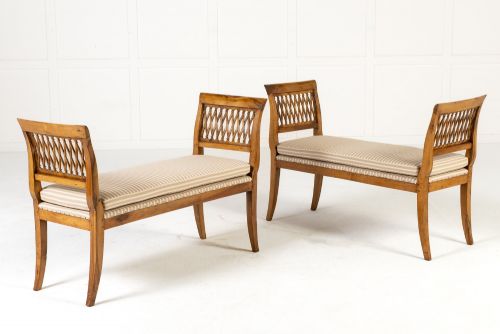
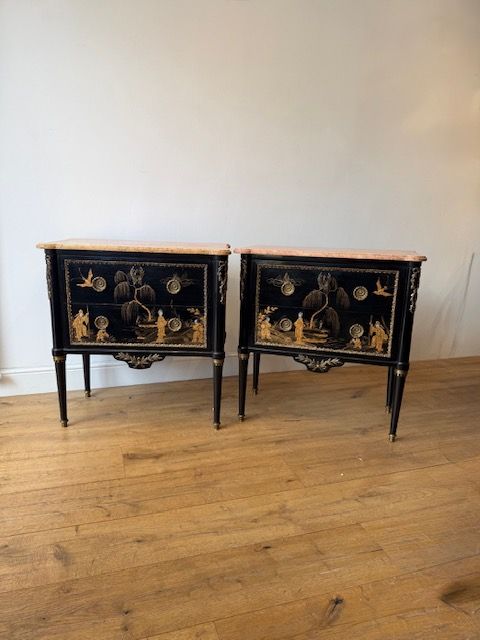
Specialist decorative techniques appear across the selection, including vernis martin lacquer work, chinoiserie decoration, and elaborate inlay. Seating forms utilise silk upholstery, cane work, and turned frames, while metal pieces employ wrought iron and brass.
Listings feature items spanning the nineteenth century through to the 1930s, including Victorian and Art Deco examples.
Assessing the standard
Quality rests upon the crispness of the carving, the selection of timber veneers like kingwood and burr walnut, and the weight of the ormolu mounts. Finer examples display meticulous joinery and carefully matched grain patterns across both items in the set.
The handling of decorative surfaces separates standard production from superior work. Hand-applied gilding, detailed lacquer work, and intact marble tops contribute significantly to the standing of a piece.
Jacob-Desmalter·Krieger Paris·E. Kahn·Sormani
The French Furniture Pair Glossary
- Ormolu
- Gilt-bronze ornamentation applied to furniture. This technique involves gilding a bronze base with finely ground gold.
- Vernis martin
- A type of simulated Japanese lacquer developed in France. It creates a lustrous, painted finish on cabinetry.
- Commode
- A low chest of drawers, often fitted with a marble top. These pieces frequently date from the nineteenth century.
- Fauteuil
- An open-armed upholstered armchair with exposed wooden framing. They appear in various revival styles across the periods.
- Vitrine
- A glass-fronted display cabinet intended for porcelain and ornaments. They often feature elaborate kingwood veneers and mounts.
French Furniture Pair: Frequently Asked Questions
What rooms suit a french furniture pair?
Matched pieces work well in bedrooms as bedside tables or cabinets, or in reception rooms as console tables and seating. Their balanced proportions help anchor a symmetrical room layout.
Larger items like vitrine display cabinets or commodes suit principal living spaces where they can serve as focal points.
How do I identify Louis XV style pieces?
Louis XV style items feature characteristic cabriole legs, asymmetrical curves, and naturalistic scrollwork. The carved woodwork often incorporates floral motifs.
These pieces rely on walnut or giltwood finishes and display the flowing lines typical of mid-eighteenth-century design revived in later periods.
Are marble tops original?
Many commodes, cabinets, and console tables feature fitted marble tops. These slabs were integrated into the initial design to provide durable surfaces.
Checking the underside and edges reveals how the stone sits within the wooden framing of the cabinet.
How do Art Deco pieces differ?
Art Deco french furniture pairs from the 1920s and 1930s favour geometric lines and streamlined forms over ornate curves. They often utilise oak, cherrywood, or contrasting veneers.
These later pieces present a simpler aesthetic while maintaining careful attention to timber selection and construction.