
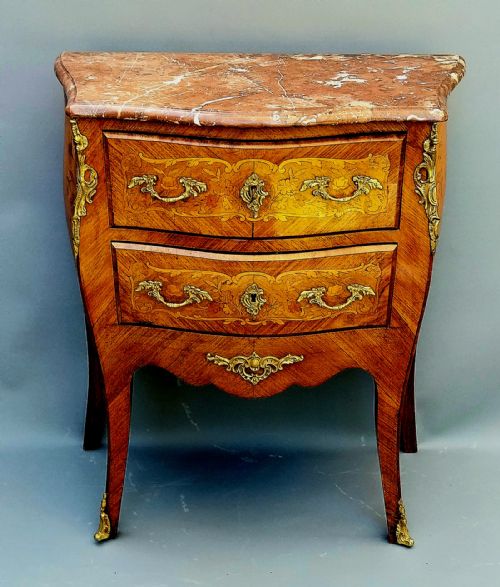


Kingwood Bedside Cabinets
Kingwood bedside cabinets combine rich timbers and marble tops, bringing French style and practical surface space to a bedroom scheme.
Kingwood Bedside Cabinets
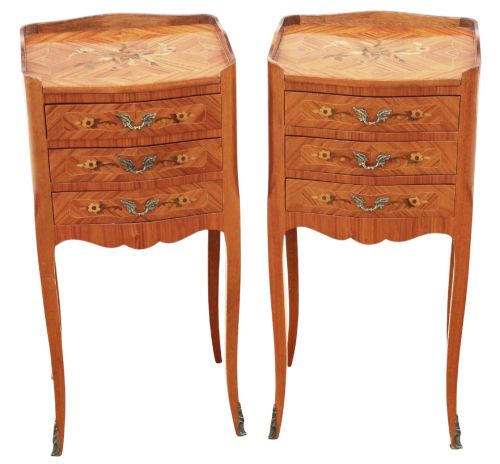
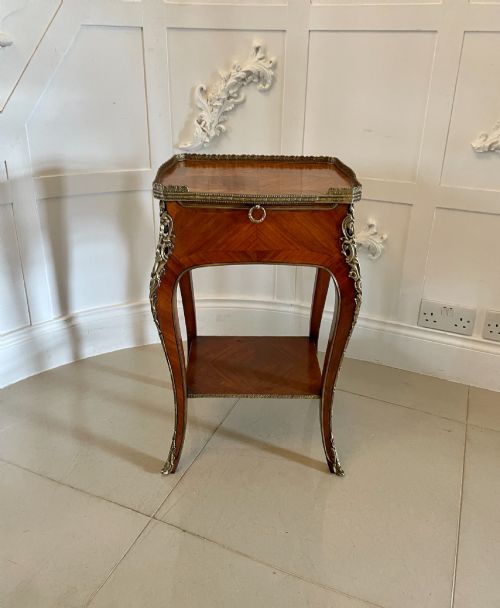
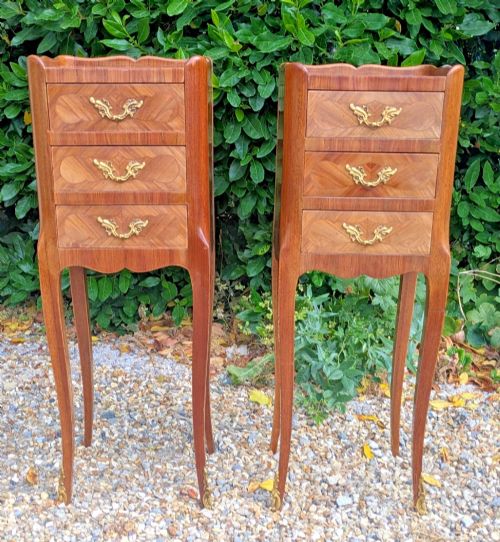
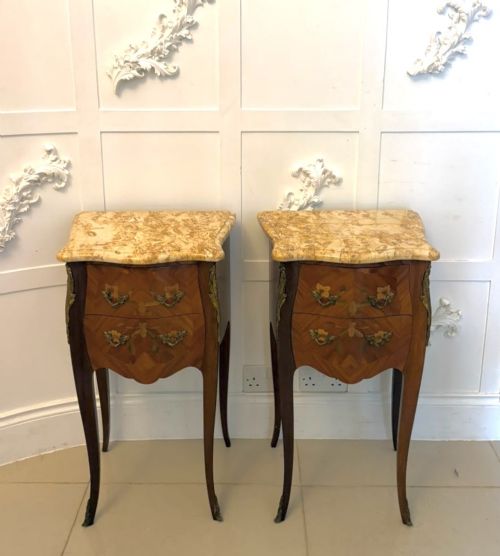
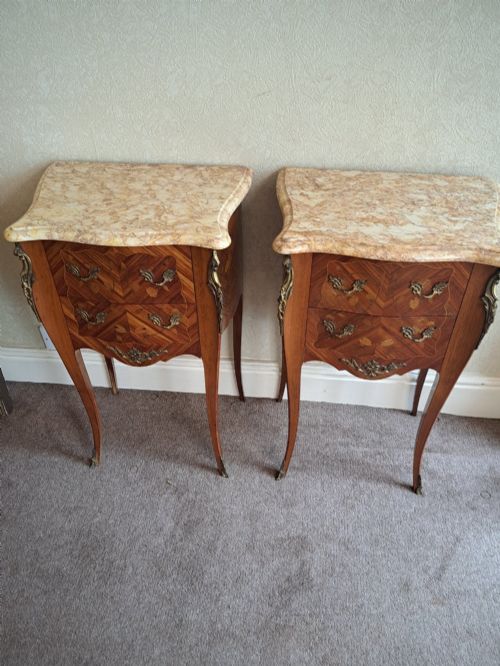
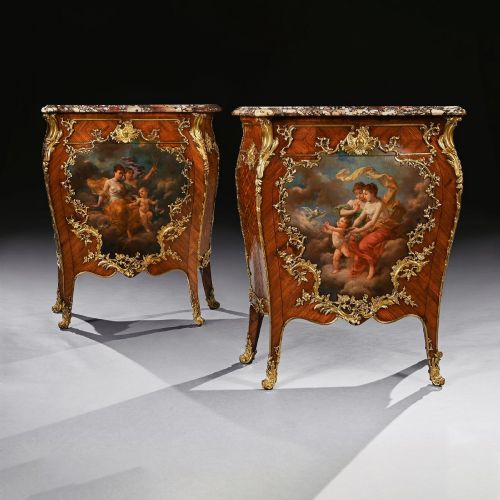
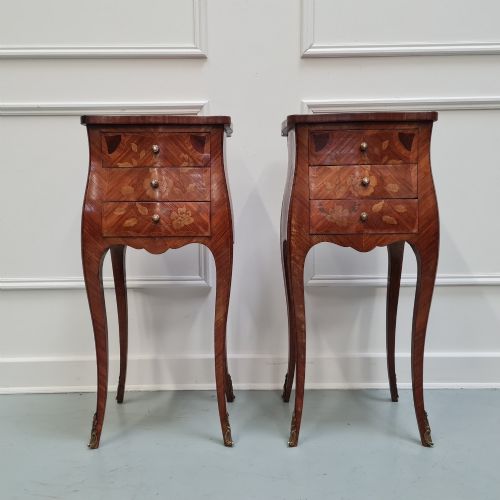
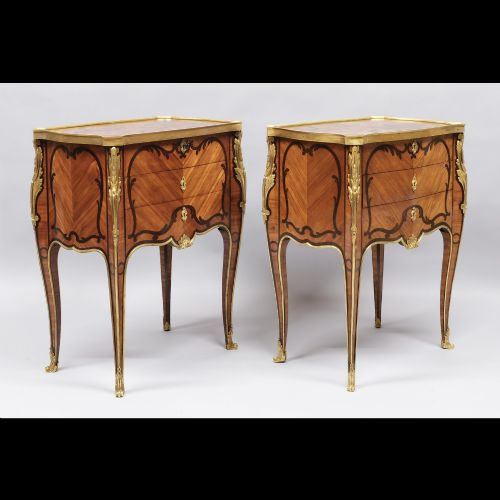
These kingwood bedside cabinets are typically encountered as pairs of French tables dating from the late nineteenth century into the 1930s. They generally take the form of bedside tables, chevet cabinets, or lamp tables designed for domestic utility.
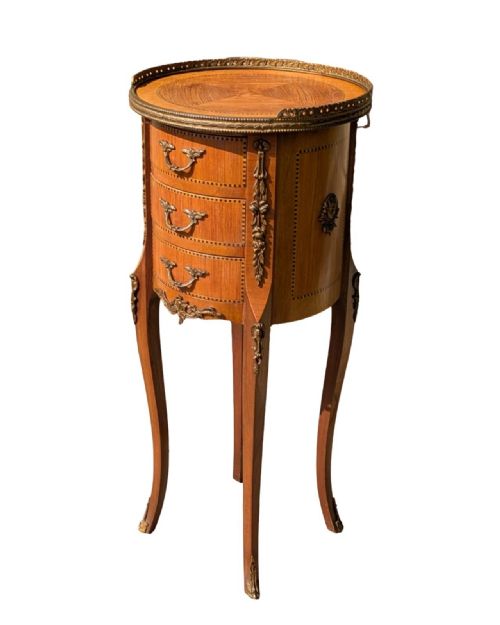
The aesthetic draws heavily on Louis XV and French Rococo traditions, often incorporating curved lines, compact proportions, and delicate stands by the bed.
Many examples arrive with matched side cupboards, open niches, or small drawers intended for nighttime storage.
Materials and Construction
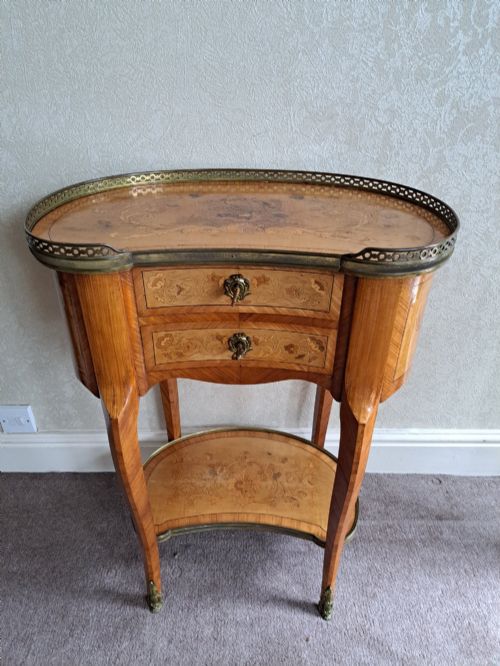
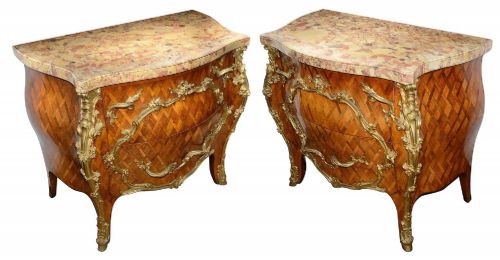
Cabinets rely upon timber frames utilising kingwood veneer, walnut, mahogany, or satinwood applied over secondary carcasses. Marquetry and parquetry patterns demonstrate precise geometric and floral wood arrangements across the exterior surfaces.
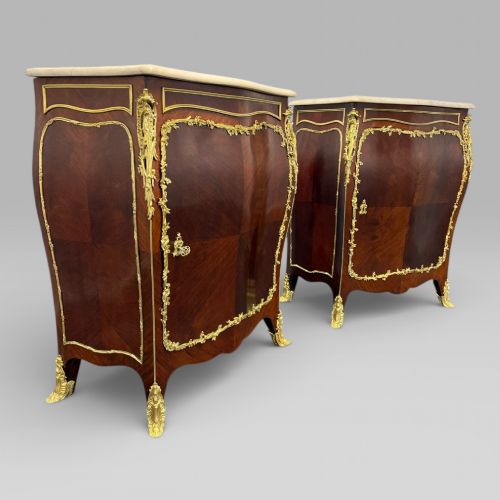
Mounts in brass, ormolu, and gilt bronze provide structural edge protection and decorative accents around the drawers and aprons. Fitted marble tops sit neatly on the upper surfaces, supplying a smooth and durable finish.
Retail Price Guide 2026
Typical UK retail prices for kingwood bedside cabinets, calculated from the Sellingantiques database of over a million retail prices indexed since 2003. This retail price guide relies exclusively on Sellingantiques data; no external sources or auction records are used, so the figures do not describe the wider market.
Recorded materials span kingwood veneer, marble, walnut, mahogany, satinwood, brass, ormolu, and gilt bronze.
Quality Variations
The distinction between tiers rests upon the crispness of the marquetry and parquetry work, where finer pieces exhibit tighter grain matching and more intricate floral motifs. The integration of heavier, more detailed ormolu or gilt bronze mounts elevates the decorative ambition of certain cabinets.
Heavier marble tops with distinct veining and superior edge profiling indicate higher production standards among the recorded French pieces.
The Kingwood Bedside Cabinets Glossary
- Kingwood
- A dense, richly figured Brazilian timber prized for its contrasting dark violet-brown and golden stripes. It was frequently used for veneer work on fine French furniture.
- Ormolu
- Gilt bronze mounts applied to furniture edges and corners. This technique adds metallic highlights and protects vulnerable timber corners.
- Parquetry
- Geometric wood patterns created by fitting small wooden veneers together. It forms repeating motifs across cabinet doors and tabletops.
- Marquetry
- Inlaid wood designs forming pictorial or floral scenes. Craftsmen cut various coloured veneers to build up complex decorative pictures.
- Chevet
- A French term for a small bedside table or nightstand. These pieces traditionally held nighttime accessories and lamps.
Frequently Asked Questions
What periods do these cabinets come from?
The records indicate production running from the nineteenth century through the 1930s, with a strong representation of twentieth-century French items.
Stylistic influences remain rooted in the Louis XV tradition regardless of the actual manufacturing decade.
Are these tables usually sold together?
A large proportion of the recorded pieces appear as matching pairs rather than single items. This makes them suitable for balancing opposite sides of a bed.
Combinations frequently feature identical marquetry patterns across both units.
What materials are combined with the kingwood?
Veneers of walnut, mahogany, and satinwood often accompany the primary kingwood exterior. Structural highlights include marble tops alongside brass, ormolu, and gilt bronze mounts.
These mixed materials contribute to the characteristic French Rococo appearance.
How were these cabinets used historically?
They functioned primarily as bedside companions for holding small personal items, books, and lighting. Cupboard spaces and drawers kept nighttime essentials neatly concealed.
Some examples also served as occasional lamp tables in sitting rooms.