
French Walnut Nightstands
French walnut nightstands bring practical French character to a bedroom, offering rich timber and compact storage beside the bed.

What French Walnut Nightstands Are
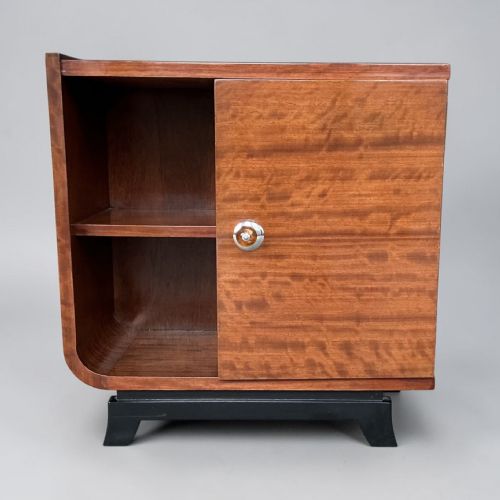
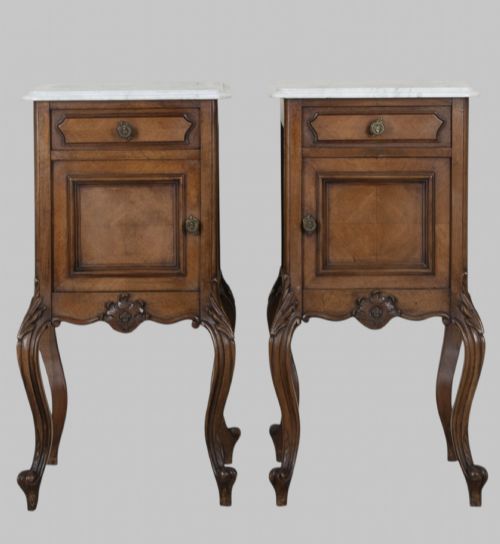
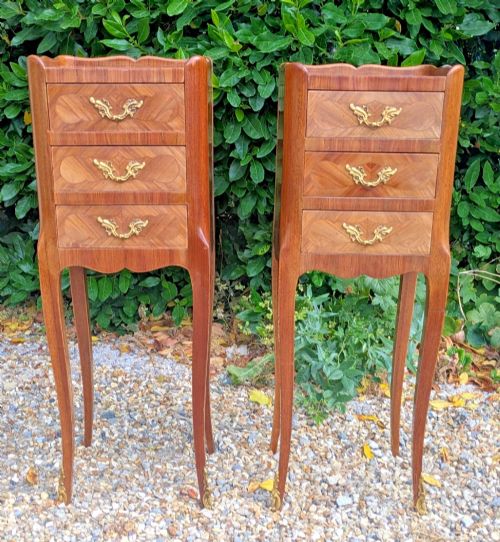
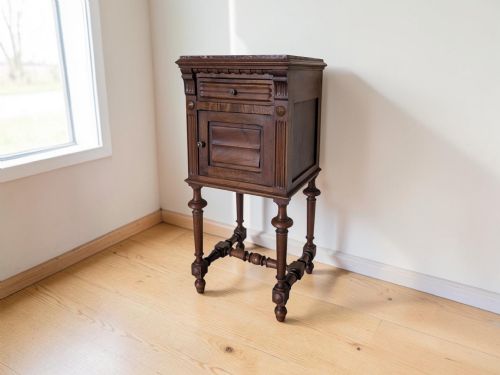
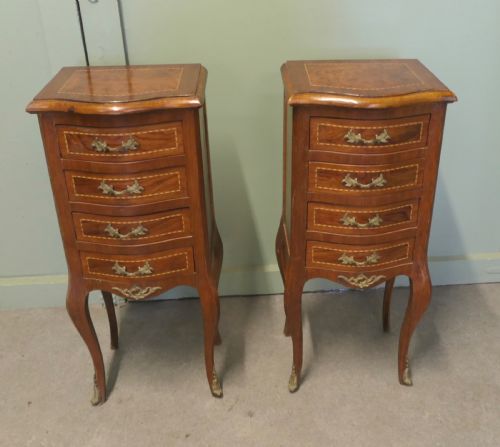
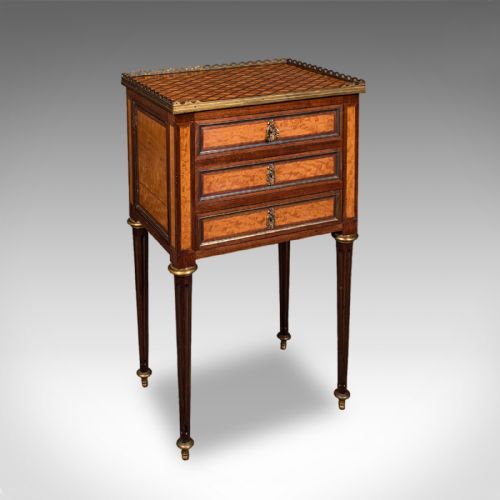
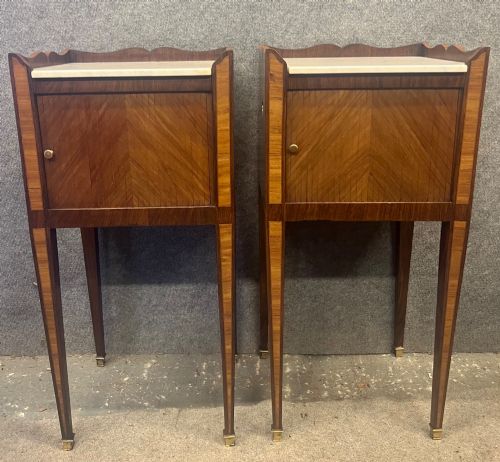
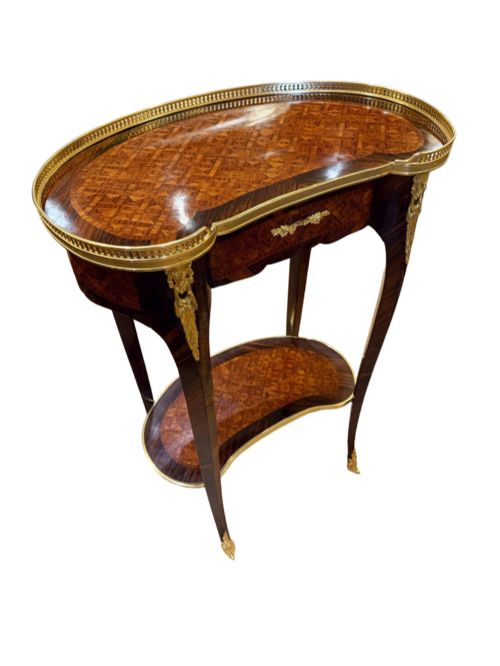
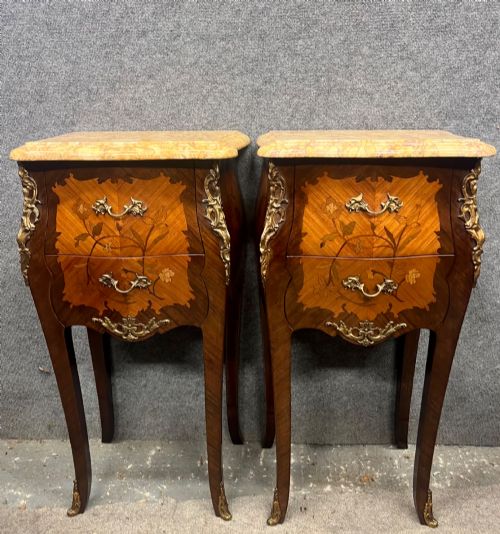
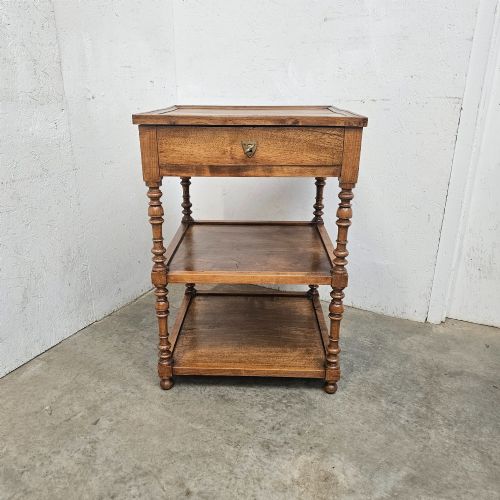
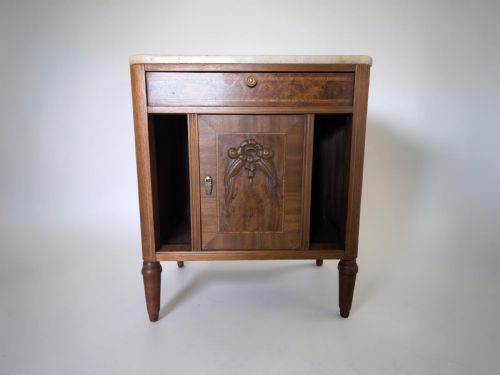
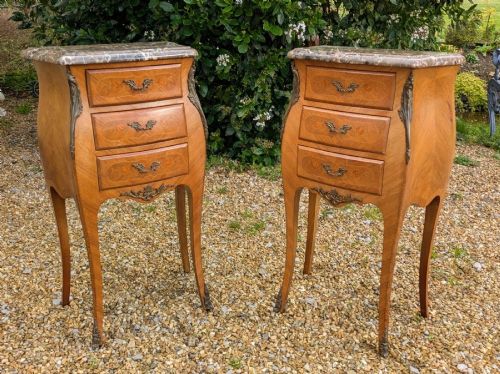
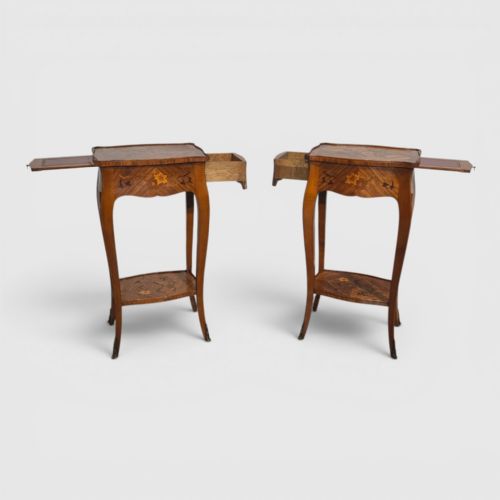
These pieces are bedside cabinets and tables created in France, designed to sit beside a bed for convenient storage. When searching for french walnut nightstands, a buyer finds compact bedside furniture primarily made from walnut timber. Most examples seen here appear in pairs, ready to flank a bed.
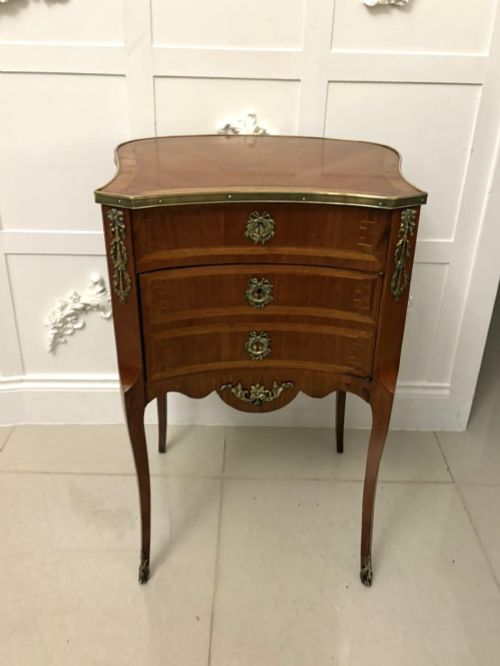
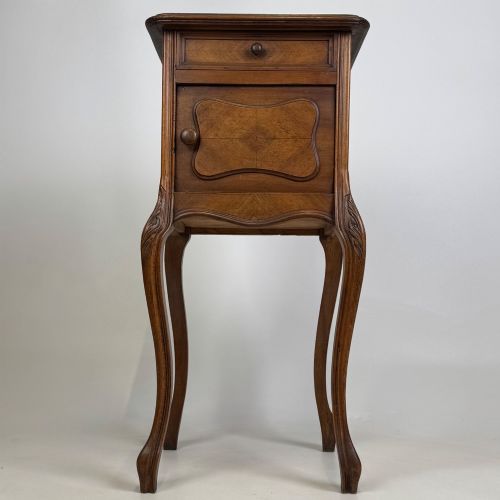
The objects date across the early twentieth century, spanning decades such as nineteen hundred, nineteen ten, nineteen twenty, and nineteen thirty. Styles range from classical Louis XV and French Provincial influences to clean-lined Art Deco forms. Alongside standalone bedside cabinets, the records show occasional larger bedroom suites that include matching beds.
Makers and designers produced these cabinets in various regional French aesthetics, including ornate chateau styles and simpler provincial designs. The surviving pieces demonstrate the enduring popularity of walnut as a primary timber for French bedroom furniture. Each cabinet provides a compact surface and enclosed storage space suitable for modern or traditional interiors.
How They Were Made
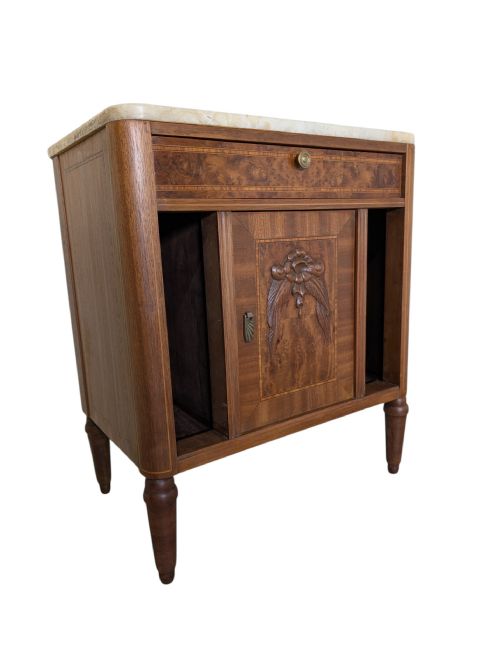
Cabinet makers utilised solid walnut and burr walnut veneer over supportive timber carcases to build these bedside tables. The decorative surfaces often showcase the natural grain patterns of burr walnut veneer, contrasting with solid structural elements. Carpenters employed traditional joinery techniques to construct durable bedside cabinets that withstand daily bedroom use.
Many examples incorporate contrasting materials, pairing the warm walnut wood with polished brass hardware and handles. Selected cabinets feature fitted tops made from Belgian Sainte-Anne marble, providing a durable and decorative working surface. Carved details appear on specific regional and period pieces, showing the hand of skilled woodworkers.
Retail Price Guide 2026
Typical UK retail prices for french walnut nightstands, calculated from the Sellingantiques database of over a million retail prices indexed since 2003. This retail price guide relies exclusively on Sellingantiques data; no external sources or auction records are used, so the figures do not describe the wider market.
The documented styles span Louis XV, French Provincial, French Chateau, Art Deco, and nineteenth-century French aesthetics.
What Varies in Quality
The distinction between standard and superior pieces rests on the choice of timber and the precision of the cabinet work. Cabinets featuring highly figured burr walnut veneer and intact Belgian Sainte-Anne marble tops occupy the upper tier of the range. The integration of period hardware, such as original brass mounts, elevates the authenticity and finish of an individual bedside table.
Stylistic execution also differentiates the pieces, with crisply carved Louis XV or Art Deco examples showing greater artistic intent than plain provincial versions. Matched pairs demonstrate a higher degree of initial commission quality compared to assembled pairings. The overall structural integrity and survival of original surface finishes determine the standing of each cabinet.
The French Walnut Nightstands Glossary
- Walnut
- A dense, hard timber prized for its rich brown colour and complex grain patterns. Furniture makers select it for both solid construction and decorative veneering.
- Burr Walnut Veneer
- Thin slices of wood cut from walnut tree growths, displaying swirling, highly decorative grain patterns. Craftsmen apply these veneers to primary surfaces for visual impact.
- Belgian Sainte-Anne Marble
- A distinctive dark grey or black limestone with white calcite veins, quarried in Belgium. It provides a heavy, smooth, and resilient top surface for bedside cabinets.
- Louis XV
- A French design style characterised by asymmetrical curves, natural motifs, and cabriole legs. It remains a dominant influence in classical continental furniture.
- Art Deco
- A design movement from the early twentieth century favouring geometric shapes, streamlined forms, and modern materials. Pieces from this era discard fussy ornamentation in favour of clean architectural lines.
Frequently Asked Questions
Are these cabinets sold individually or as pairs?
The listings on this page consist almost entirely of matched pairs designed to sit on either side of a bed. This reflects how these bedside cabinets were originally manufactured and purchased for French bedrooms.
Buyers seeking symmetrical bedroom arrangements will find that pairs predominate across the available selections and historical archives.
What periods do these French nightstands date from?
The pieces span the early twentieth century, with dates recorded from nineteen hundred through to nineteen thirty. This period captures a transition from traditional revival styles to modern Art Deco design.
Each decade brings distinct aesthetic choices, from ornate nineteenth-century French traditions to streamlined interwar geometries.
What materials are used in these bedside tables?
Walnut is the primary timber, appearing as both solid wood and decorative burr walnut veneer. Many cabinets incorporate contrasting elements such as polished brass hardware and heavy marble tops.
Specific examples feature Belgian Sainte-Anne marble surfaces, adding a cool stone texture above the wooden cabinetry.
How do I care for marble-topped walnut cabinets?
Keep the walnut timber clean using a soft, dry cloth and avoid harsh chemical polishes that can damage traditional finishes. Treat the marble top gently, wiping up spills promptly to prevent staining on the polished stone surface.
Maintaining stable room humidity protects the wooden carcase and prevents veneer lifting over time.