


Tables De Chevet Pair
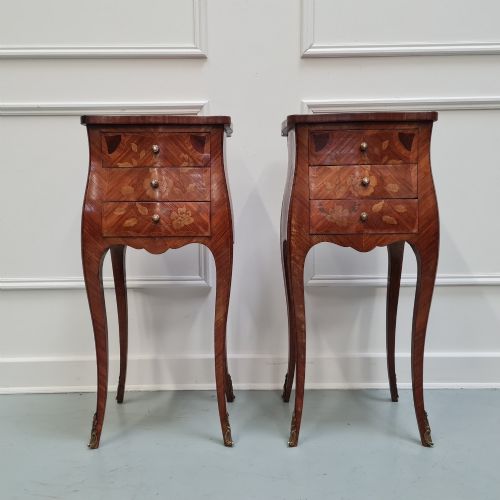
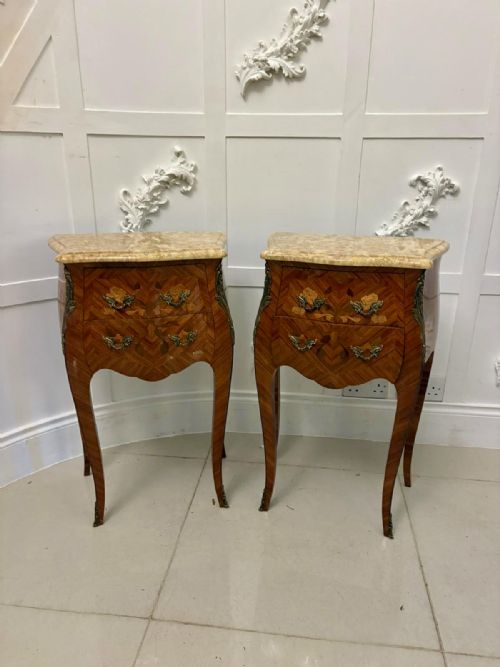
Tables de chevet pair are matching French bedside tables that bring practical surface space and continental elegance to a bedroom.
Tables De Chevet Pair
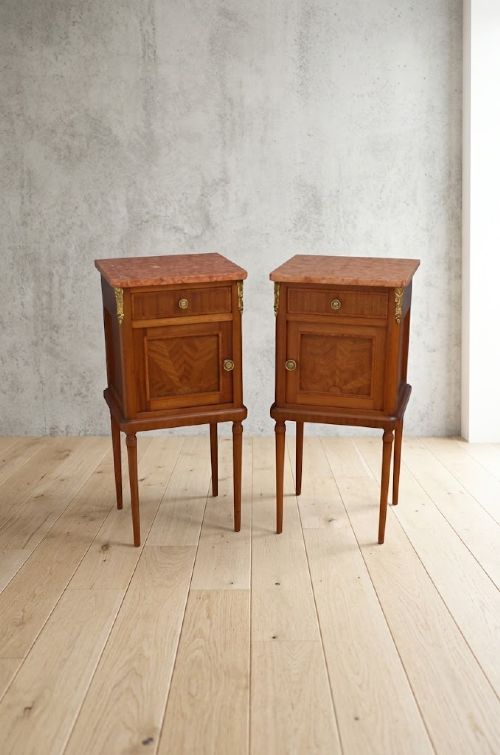
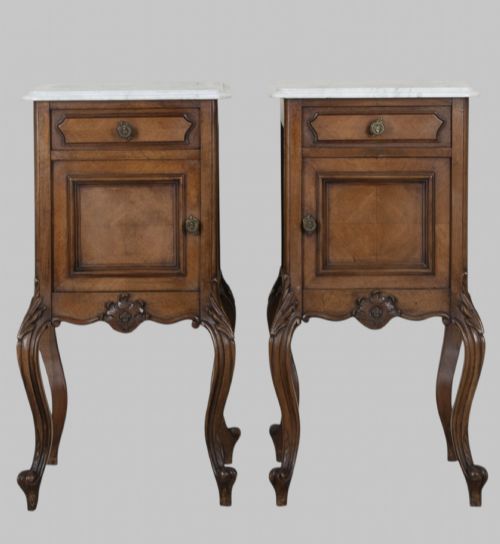
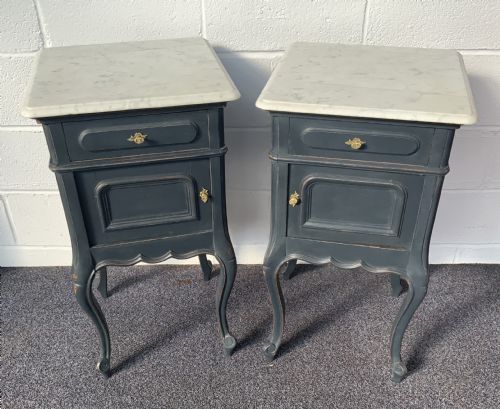
When searching for tables de chevet pair, buyers encounter matching pairs of small bedside cabinets and lamp tables originating from France. These pieces primarily date from the late nineteenth century through to the interwar decades of the twentieth century. The selection ranges from simple provincial woodwork to ornate revival interpretations.
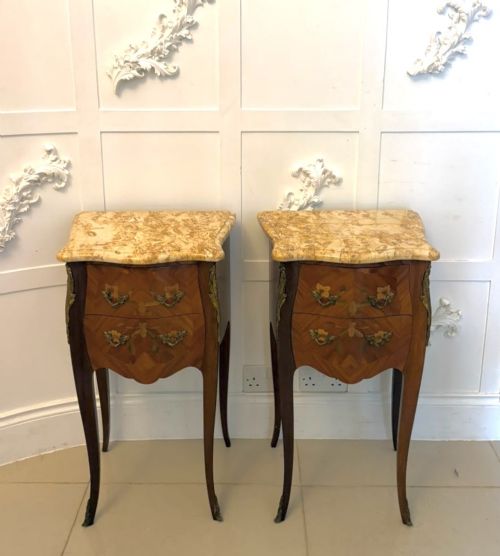
Most examples adopt classical French aesthetics, heavily influenced by Louis XV and Louis XVI designs. Forms include petite cupboards, chests of drawers, and open lamp tables designed to sit beside a bed. Marble tops and marquetry surfaces appear frequently across the available selection.
Makers constructed these companion pieces to balance symmetry within a bedroom interior. Finding an original pair remains considerably more difficult than acquiring single cabinets. Buyers select them for both utility and decorative presence.
Materials and construction
Cabinetmakers utilised rich timber veneers including kingwood, walnut, mahogany, rosewood, and satinwood over sturdy carcases. Marquetry and parquetry patterns demonstrate meticulous hand-cutting of diverse wood grains to form geometric or floral motifs. Ormolu mounts and cast brass handles provide decorative accents.
Marble tops, frequently in white or veined varieties, supply a durable and cool surface for bedside lamps and water jugs. Painted finishes also occur, using contemporary pigments applied to solid wood structures. Joinery relies on traditional techniques suited to domestic furniture of the period.
Some secretive bedside cabinets conceal a hidden compartment for midnight valuables.
Assessing quality
Quality reveals itself in the precision of the marquetry inlay and the selection of figured timber veneers. Superior cabinets display seamless pattern matching across drawer fronts and sides, whereas lesser examples use simpler, plain wood surfaces. The weight and crispness of ormolu mounts also signal higher workshop standards.
Construction details distinguish workshop tiers, particularly the smoothness of drawer operations and the fit of cabinet doors. Original marble tops without hairline fractures command greater appreciation from collectors. Subtle proportions and refined cabriole legs separate standard production items from finer pieces.
The Tables De Chevet Pair Glossary
- Marquetry
- Decorative veneer work forming pictures or patterns by assembling small pieces of wood, shell, or ivory. This technique defines many of the finer French bedside tables.
- Ormolu
- Gilt bronze mounts applied to furniture for decoration. These metal details enhance the Louis XV and Rococo aesthetic.
- Parquetry
- Geometric wood inlay forming repeating patterns such as cubes or chequers. It differs from floral marquetry through its strict linear geometry.
- Bombe
- A bulging or swelling outward contour on the front and sides of a cabinet. This curved shape requires advanced woodworking skill.
- Louis XV Style
- A revival design movement characterised by asymmetric curves, cabriole legs, and naturalistic floral motifs. Most nineteenth-century French bedside cabinets emulate this aesthetic.
Tables De Chevet Pair: Frequently Asked Questions
What is a tables de chevet pair?
A tables de chevet pair refers to two matching French bedside tables designed to sit on either side of a bed. They provide convenient storage and surface space while maintaining bedroom symmetry.
These pieces typically date from the nineteenth and early twentieth centuries. They incorporate traditional materials like marble, walnut, and marquetry veneers.
How do I date these bedside cabinets?
Dating relies on stylistic clues, construction methods, and materials observed in the piece. Pieces showing heavy Louis XV revival curves often date from the late nineteenth century.
Interwar examples from the nineteen-twenties and thirties tend to feature cleaner lines or simpler proportions. Comparing wood types and hardware provides further chronological context.
Are original marble tops common?
Many French bedside tables feature fitted marble tops designed to protect the wooden surface from spills. These slabs range from plain white to heavily veined coloured marble.
Inspectors look for original fits and absence of deep chips. The stone adds weight and stability to the small bedside chest.
How do I clean marquetry surfaces?
Marquetry surfaces require gentle maintenance using soft, dry cloths to remove dust. Avoid harsh chemical cleaners that can strip historic polish or damage delicate veneer joints.
Applying occasional microcrystalline wax helps preserve the timber's sheen. Keep wooden tables away from direct heat sources and strong sunlight.