

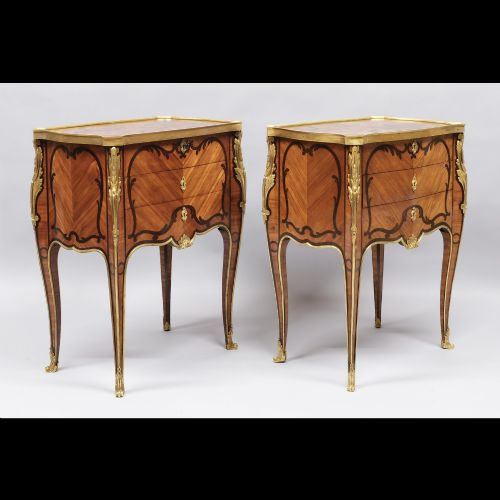


Antique French Night Tables
These antique french night tables bring continental elegance to a bedroom, combining practical bedside storage with distinctive period craftsmanship.
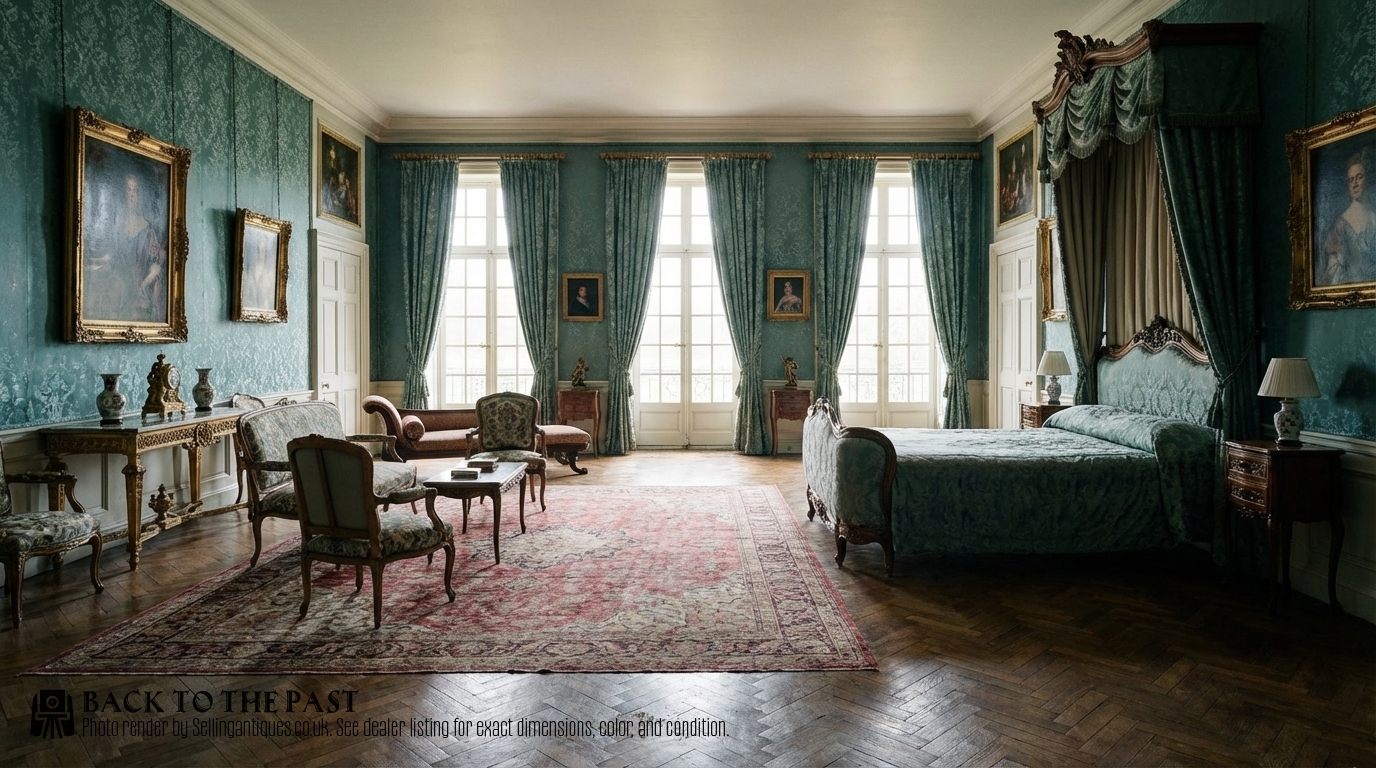
Antique French Night Tables
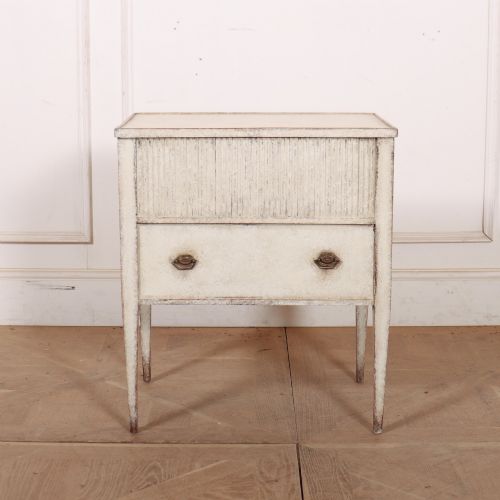
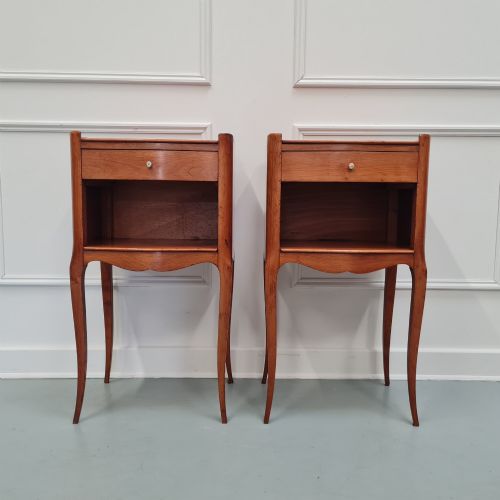
Antique french night tables encompass bedside cabinets, cupboards, and small chests designed for domestic sleeping quarters across the nineteenth and twentieth centuries. Buyers searching this phrase meet everything from austere oak forms to ornate marquetry designs.
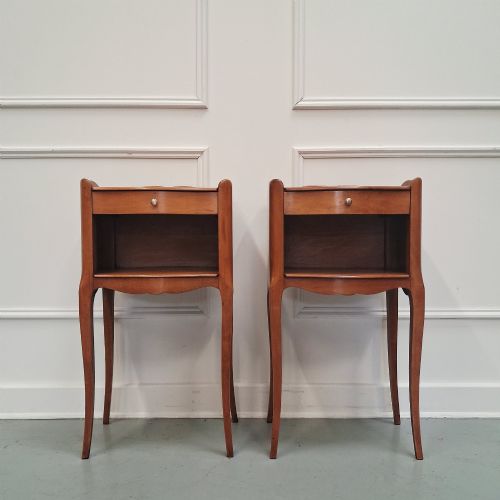
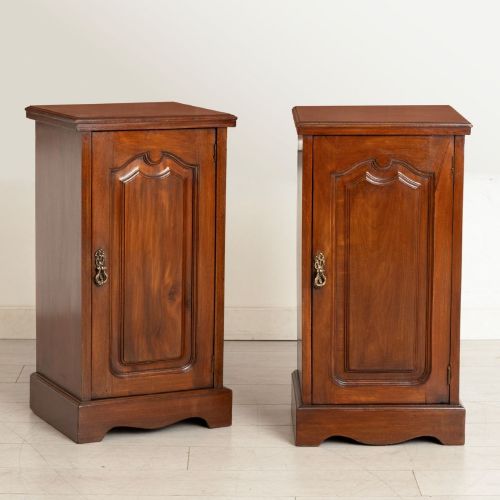
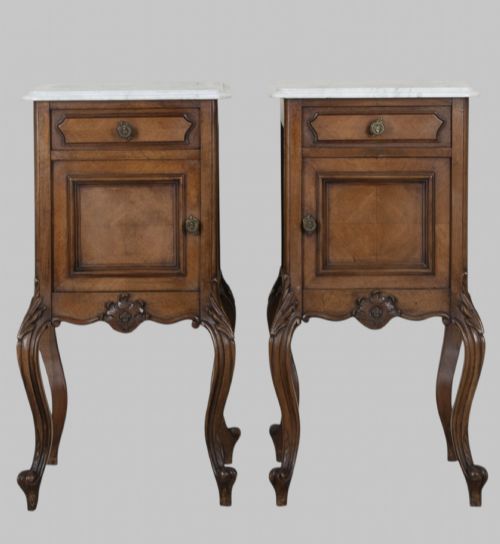
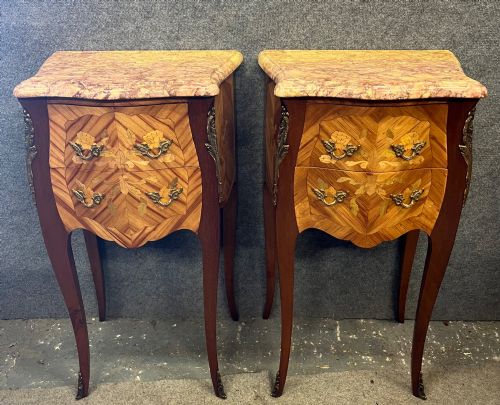
The selection frequently includes matched pairs featuring marble tops, enclosed cupboard doors, and compact drawer arrangements. Provenance spans multiple distinct periods, with significant representation from late nineteenth-century styles up through Art Deco iterations of the nineteen-thirties.
Materials and Construction
Cabinetmakers utilised dense hardwoods including walnut, mahogany, oak, and exotic veneers like tulipwood, rosewood, and kingwood for structural integrity and visual depth. Surfaces frequently incorporate intricate marquetry and parquetry geometric patterns.
Many examples integrate inset marble slabs on the top surface, providing a durable and decorative finish resistant to moisture and daily wear. Metal elements such as brass mounts, ormolu, and bronze accents complement the primary timber frames.
Antique French Night Tables Retail Price Guide 2026
Typical asking prices for french night tables among the pieces listed under this phrase on Sellingantiques today, from the lower quarter to the upper quarter. They describe what is for sale here now, not the wider market.
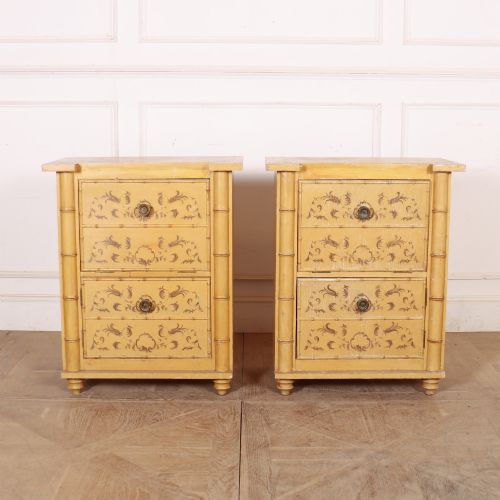
Certain nineteenth-century versions incorporate clever faux bamboo turned wooden elements alongside secret storage compartments.
Assessing Quality and Execution
Superior execution relies on the precision of timber selection and the complexity of decorative veneer work, where grain alignment enhances the overall visual harmony. Fine joinery and substantial marble thicknesses indicate higher workshop standards.
The integration of functional details, such as secret compartments or well-fitted hardware, distinguishes exceptional pieces from standard utility furniture. Original matching sets demonstrate a higher level of historical preservation.
Sormani·Argilor
The Antique French Night Tables Glossary
- Marquetry
- Decorative veneer work arranged in pictorial or floral motifs on a timber surface. Skilled craftspeople cut various wood species to create detailed surface imagery.
- Parquetry
- Geometric wood inlay patterns forming repeated designs such as squares or cubes. This technique showcases the natural colour variations of different timbers.
- Ormolu
- Gilt bronze ornamentation applied to furniture mounts and clocks. The process involves coating bronze in a gold amalgam to achieve a rich metallic finish.
- Louis XV Style
- Design aesthetic characterised by asymmetry, scrollwork, and natural organic curves. This eighteenth-century revival heavily influenced nineteenth-century continental cabinetmaking.
- Art Deco
- Modernist design movement prominent in the nineteen-twenties and nineteen-thirties. Pieces from this era favour streamlined silhouettes, geometric abstraction, and exotic wood veneers.
Antique French Night Tables: Frequently Asked Questions
What woods were used for antique french night tables?
Cabinetmakers employed a variety of timbers including walnut, mahogany, and oak for foundational stability and cabinet carcases.
More decorative pieces incorporated exotic veneers such as kingwood, tulipwood, satinwood, and rosewood to create contrasting patterns.
Are these tables usually found in pairs?
Many examples survive as matched pairs intended to flank a bed symmetrically on either side.
Single cabinets also appear regularly in the inventory for smaller bedrooms or alternative placement as side tables.
How do I identify an Art Deco piece?
Art Deco specimens from the nineteen-thirties typically exhibit streamlined silhouettes, parquetry veneers, and minimal ornamentation compared to earlier revival styles.
Materials often include sleek walnut or chrome accents paired with geometric forms.
What is the purpose of the marble top?
Marble provided a cool, wipeable, and durable surface resistant to water rings from bedside water jugs and glasses.
This practical feature also added considerable weight and visual luxury to the cabinet design.