
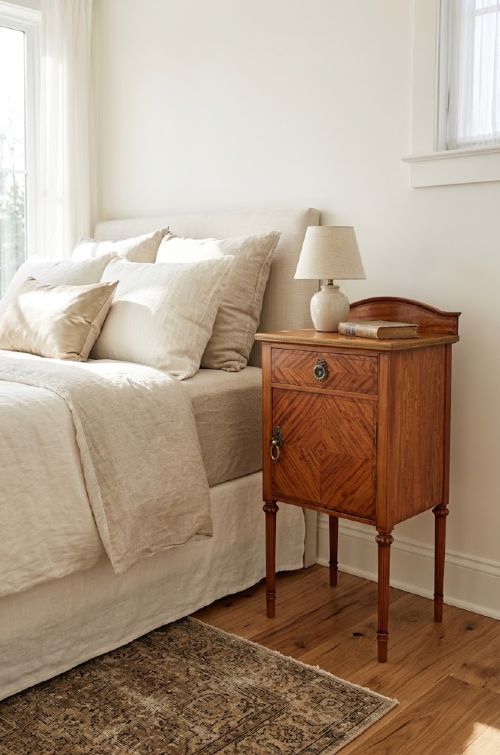


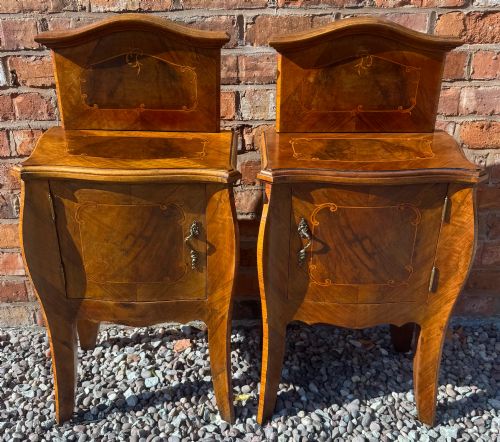


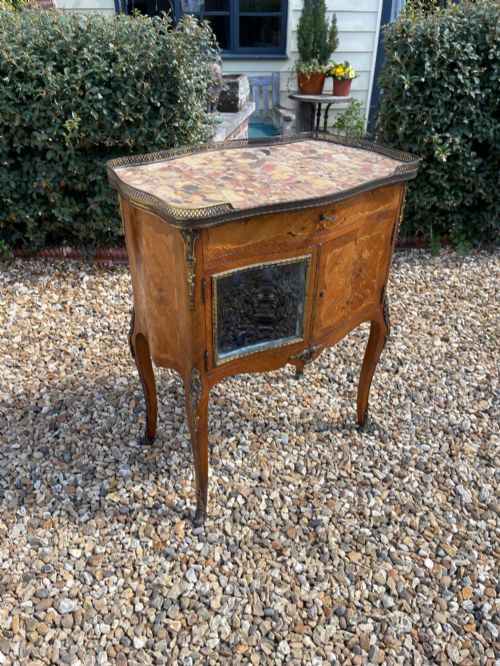

Satinwood Bedside Table
A satinwood bedside table brings pale timber and refined grain into the bedroom, offering a functional surface with distinctive decorative character.
What a satinwood bedside table is
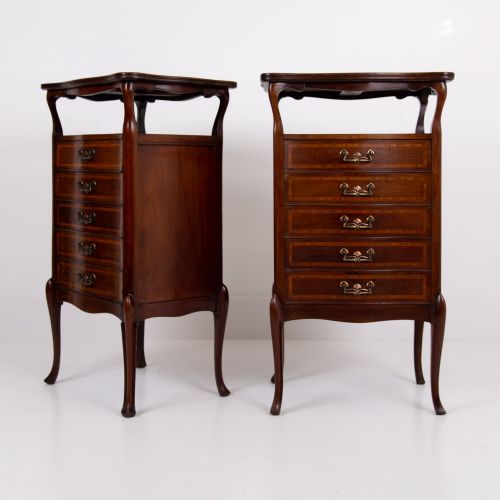
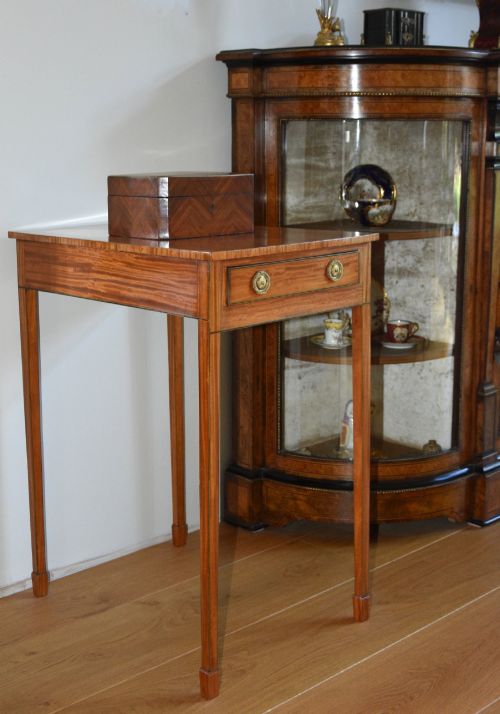
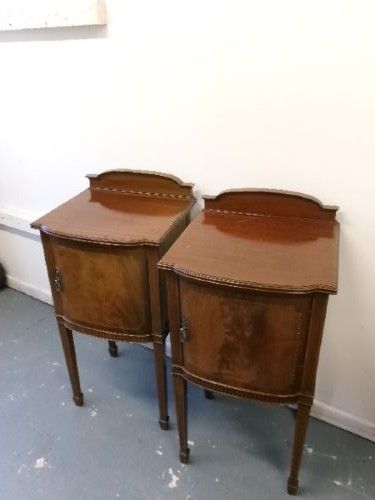
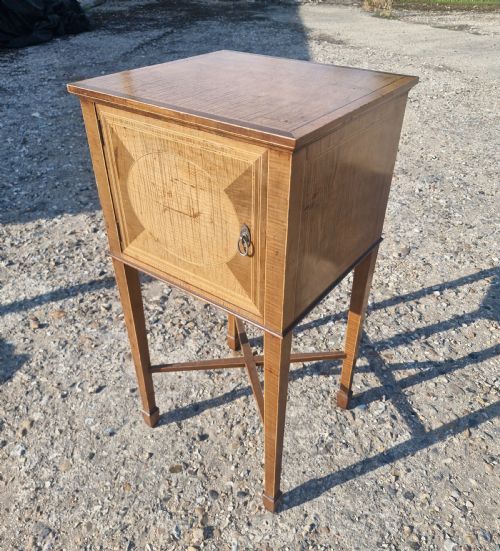
A satinwood bedside table provides a compact surface next to the bed, executed in light-toned timbers across several distinct historic periods. These pieces appear in forms ranging from simple side tables and open lamp stands to enclosed cupboards and commodes.
The selection includes examples from the Georgian era through to the Art Deco period, encompassing Victorian and Edwardian interpretations as well as French designs. Makers and designers represented in the records include Betty Joel, Maple and Co, Gillows, and Howard and Sons.
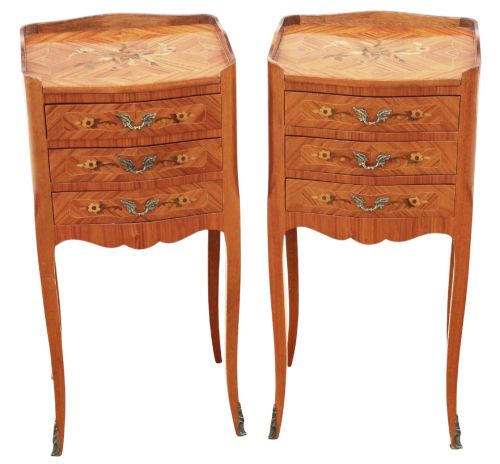
Edwardian and Victorian pieces dominate the selection, often featuring delicate banding or parquetry. Art Deco variations introduce contrasting timbers such as macassar alongside the characteristic satinwood surface.
How they were made
Construction relies upon wood veneer applied to structural timbers, frequently incorporating satinbirch, sycamore, birch, and mahogany. Cabinet makers utilised these veneers to create geometric patterns, including parquetry and contrasting border banding.
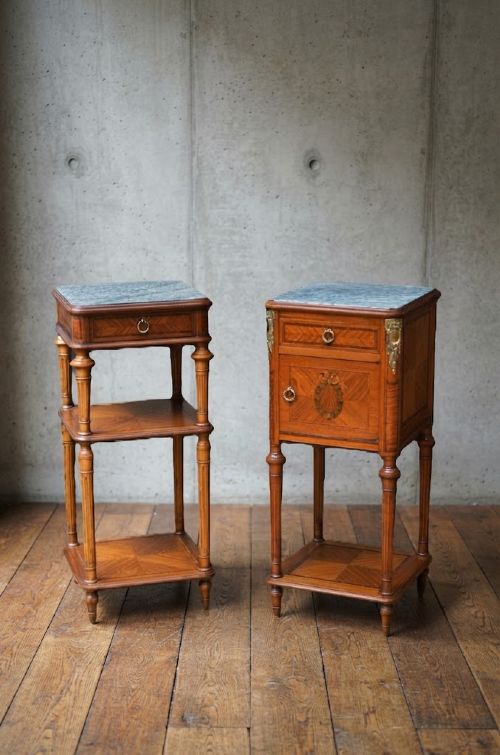
Hardware additions such as brass handles, gilt-bronze mounts, and occasional marble tops provide functional contrast and decorative weight to the lighter wooden carcases. Bakelite elements appear on later twentieth-century iterations.
Retail Price Guide 2026
Typical UK retail prices for satinwood bedside table, calculated from the Sellingantiques database of over a million retail prices indexed since 2003. This retail price guide relies exclusively on Sellingantiques data; no external sources or auction records are used, so the figures do not describe the wider market.
Bakelite occasionally turns up on the Art Deco pieces, proving that even historic bedside storage needed a modern plastic touch.
What varies in quality
Quality rests upon the selection and matching of the timber grain, where symmetrical figuring and crisp parquetry distinguish superior cabinet work from plain surfaces. The integration of secondary woods and the precision of the veneer work dictate the standard of execution.
Attribution to established makers such as Gillows, Maple and Co, or Howard and Sons elevates an individual piece through documented standards of construction. The sophistication of mounts, such as gilt bronze, and the inclusion of inset marble tops further separate standard examples from finer commissions.
Betty Joel·Maple and Co·Gillows·Howard and Sons
The Satinwood Bedside Table Glossary
- Satinwood
- A durable hardwood known for its golden-yellow sheen and lustrous, reflective grain. This timber takes a high polish and forms the primary decorative surface for these tables.
- Parquetry
- A geometric mosaic of wood veneers arranged in decorative patterns. This technique appears on French and English tables to create patterned surfaces on tabletops and doors.
- Commode
- A low enclosed piece of furniture featuring drawers or cupboards. In earlier periods, this form served functional domestic purposes before evolving into bedside storage.
- Banding
- A narrow strip of contrasting veneer bordering the main timber panel. Cabinet makers used this method to frame tabletops and drawer fronts with distinct colour variations.
Frequently Asked Questions
What periods do these bedside tables cover?
The available pieces span from the Georgian period through the Victorian, Edwardian, and Art Deco eras. Each era introduces distinct proportions and decorative treatments to the form.
Earlier examples reflect neoclassical lines, while later twentieth-century pieces adopt streamlined modernist geometries and contrasting dark woods.
How do I care for satinwood surfaces?
Satinwood benefits from regular dusting with a soft, dry cloth to protect the polished veneer. Avoid placing the furniture in direct sunlight or near heat sources to prevent the timber from drying.
Applying a traditional beeswax polish occasionally maintains the natural lustre of the wood grain without building up heavy residues.
Are these tables usually found in pairs?
The records contain both single pieces and matched pairs, reflecting how bedrooms were historically furnished. Pairs frequently feature mirror-image grain patterns or corresponding parquetry layouts.
Single tables often originate from larger suites or represent individual bespoke commissions for smaller chambers.
What is the difference between a bedside cabinet and a table?
A bedside cabinet incorporates enclosed storage such as a cupboard door or drawers to conceal personal items. This provides a more substantial visual weight beside the bed.
A bedside table typically offers an open surface or a simple tray top, prioritising a lighter silhouette and unencumbered space underneath.