



Art Deco Pot Cupboard
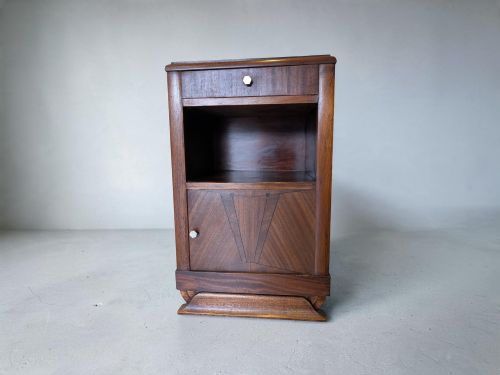
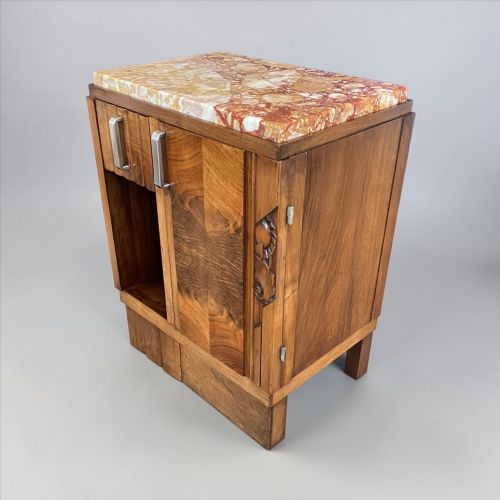
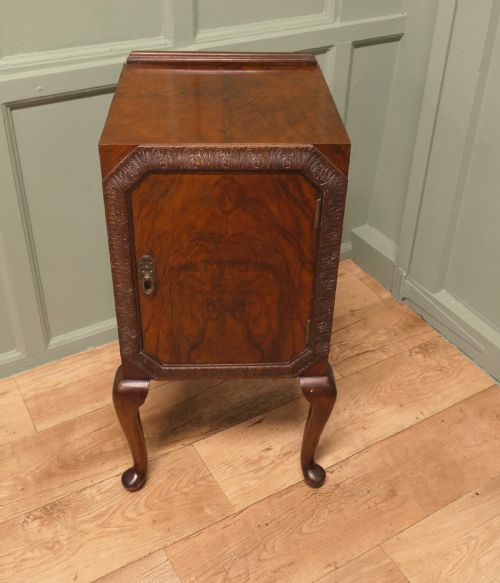
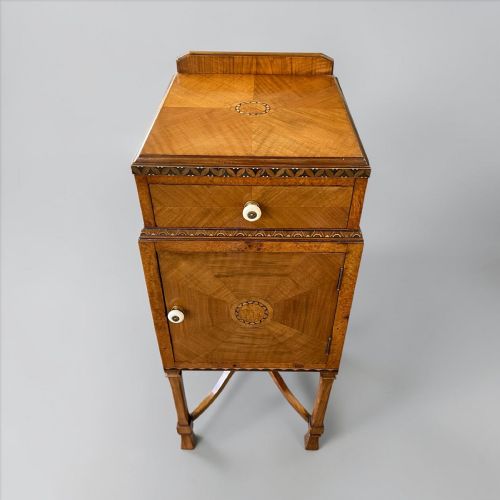
An art deco pot cupboard brings striking geometric elegance and practical bedside storage to a room, crafted in rich woods like walnut and maple.
Art Deco Pot Cupboard
An art deco pot cupboard is a compact bedside storage unit designed during the 1920s and 1930s. These pieces function primarily as bedside tables, lamp stands, or nightstands while offering enclosed cabinet space.
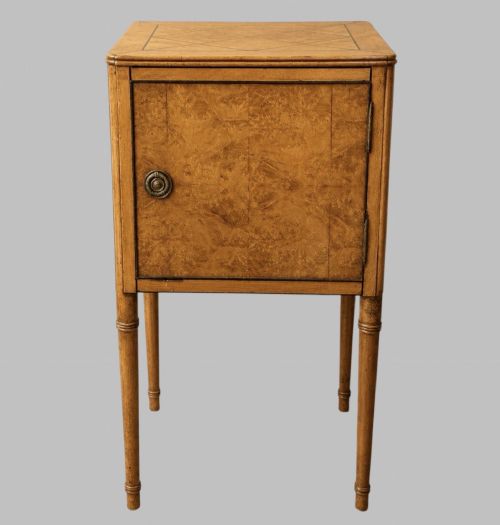
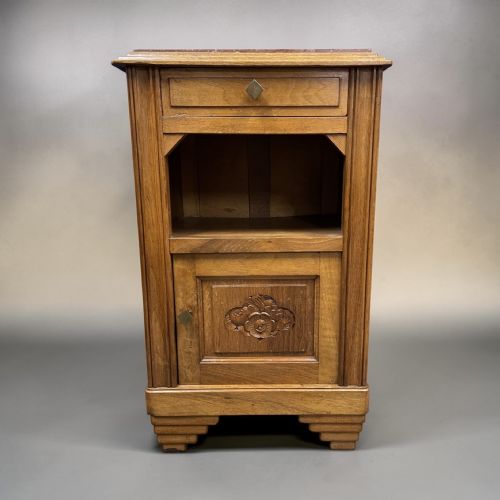
You are most likely to encounter walnut, burr walnut veneer, and birds eye maple versions on this page. They originate predominantly from the 1930s and 1920s, reflecting both English and French design sensibilities.
How they were made
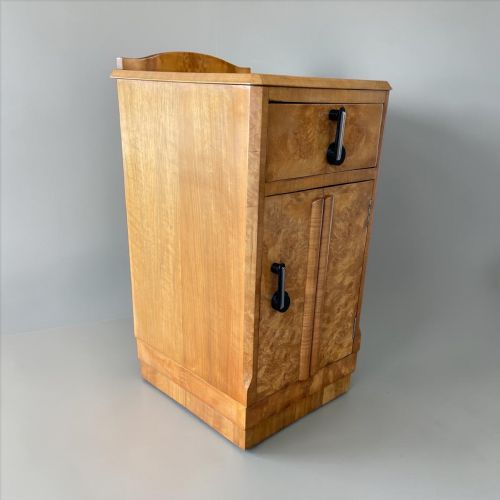
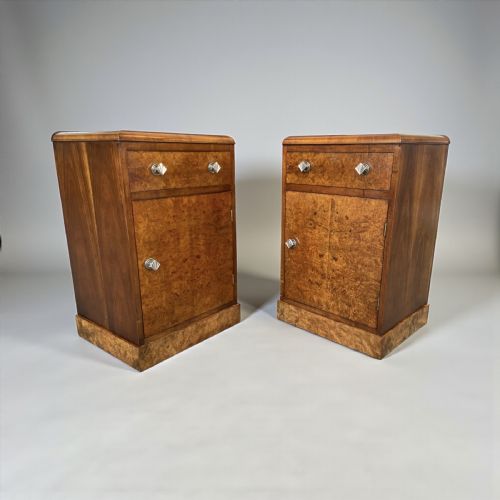
Cabinetmakers utilised timber construction overlaid with decorative veneers such as burr walnut, figured walnut, and burl amboyna to create striking grain patterns across the exterior surfaces.
Metal elements including chrome, brass, and occasionally bakelite appear as handles, hinges, and decorative accents that define the period aesthetic.
Art Deco Pot Cupboard Retail Price Guide 2026
Typical asking prices for art deco pot cupboard among the pieces listed under this phrase on Sellingantiques today, from the lower quarter to the upper quarter. They describe what is for sale here now, not the wider market.
The listings span the 1920s and 1930s, featuring walnut, burr walnut, birds eye maple, brass, chrome, and bakelite.
What varies in quality
The choice of veneer dramatically influences the visual appeal, with richly figured burr walnut and birds eye maple marking out superior examples from plainer wooden constructions.
The reputation of the maker or retailer, from individual designers to major London stores, elevates certain pieces above standard workshop production.
Walter Carter Harrods·Harry and Lou Epstein·Betty Joel·Bath Cabinet Makers
The Art Deco Pot Cupboard Glossary
- Burr walnut
- A highly figured wood grain obtained from the wart-like growths on walnut trees. It provides a swirling, decorative pattern across cabinet doors.
- Veneer
- A thin slice of superior wood applied over a sturdier base timber. This technique allowed makers to display dramatic grain patterns efficiently.
- Bakelite
- An early form of plastic utilised for handles and hardware. Its dark, lustrous finish is characteristic of the era.
- Pot cupboard
- A traditional term for a small bedside cabinet designed originally to house a chamber pot. They now serve universally as bedside tables.
Art Deco Pot Cupboard: Frequently Asked Questions
What is an art deco pot cupboard?
An art deco pot cupboard is a small bedside cabinet produced during the 1920s and 1930s. It provides enclosed storage alongside a surface for a lamp or bedside items.
These pieces showcase the distinct geometric lines and rich wood veneers typical of the period style.
How do I use a pot cupboard today?
You can use an art deco pot cupboard as a bedside table or nightstand in a modern bedroom. The interior cabinet space provides convenient storage for books and personal items.
They also function effectively as lamp stands or small side tables in living spaces.
Which woods are most common?
Walnut and burr walnut are the most frequently encountered timbers on these cabinets. Makers also utilised birds eye maple, mahogany, and burl amboyna.
Decorative veneers were favoured to highlight natural grain patterns across the doors and top surfaces.
How do I distinguish 1920s from 1930s pieces?
Both decades share similar vocabulary, though French pieces from the 1920s often feature distinct proportions and mahogany or exotic veneer combinations. English examples from the 1930s frequently employ burr walnut and straight geometric lines.
Stylistic markers overlap considerably between the two periods, making precise dating reliant on construction methods and known maker attribution.