
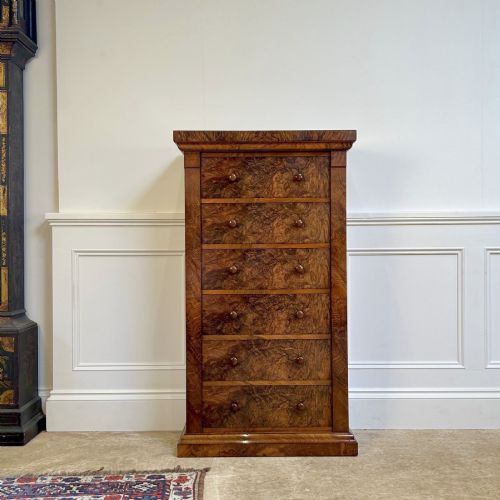
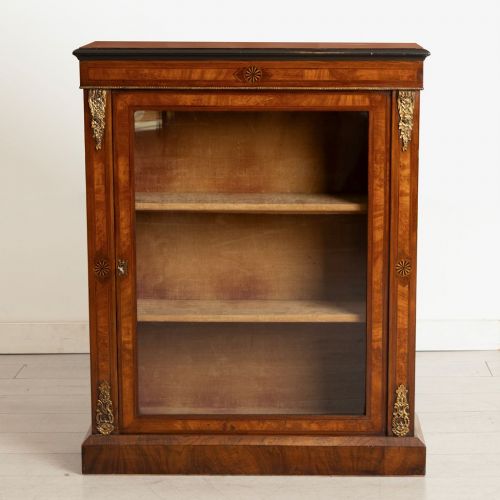
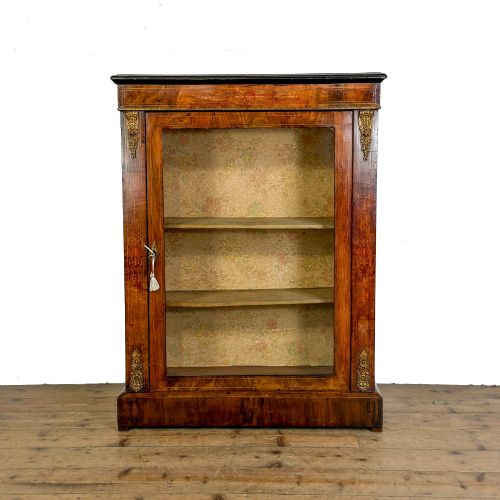
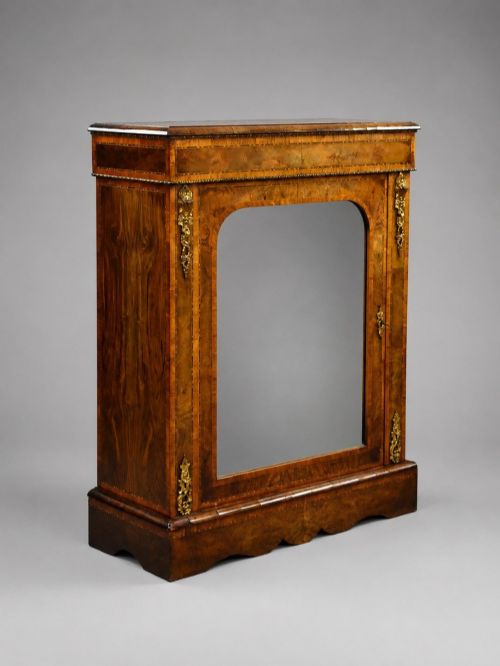

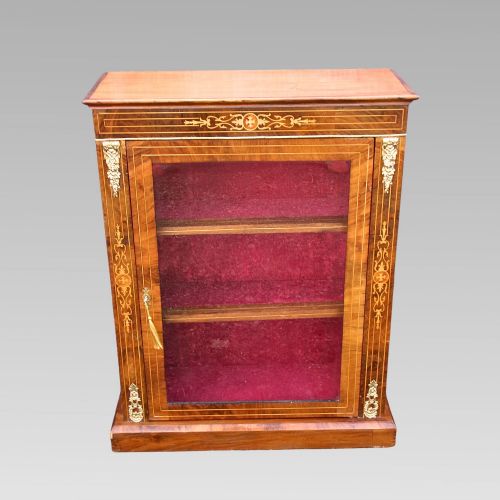


Narrow Walnut Cabinet
A narrow walnut cabinet brings rich timber grain and compact proportions to tight spaces, offering storage without dominating a room.
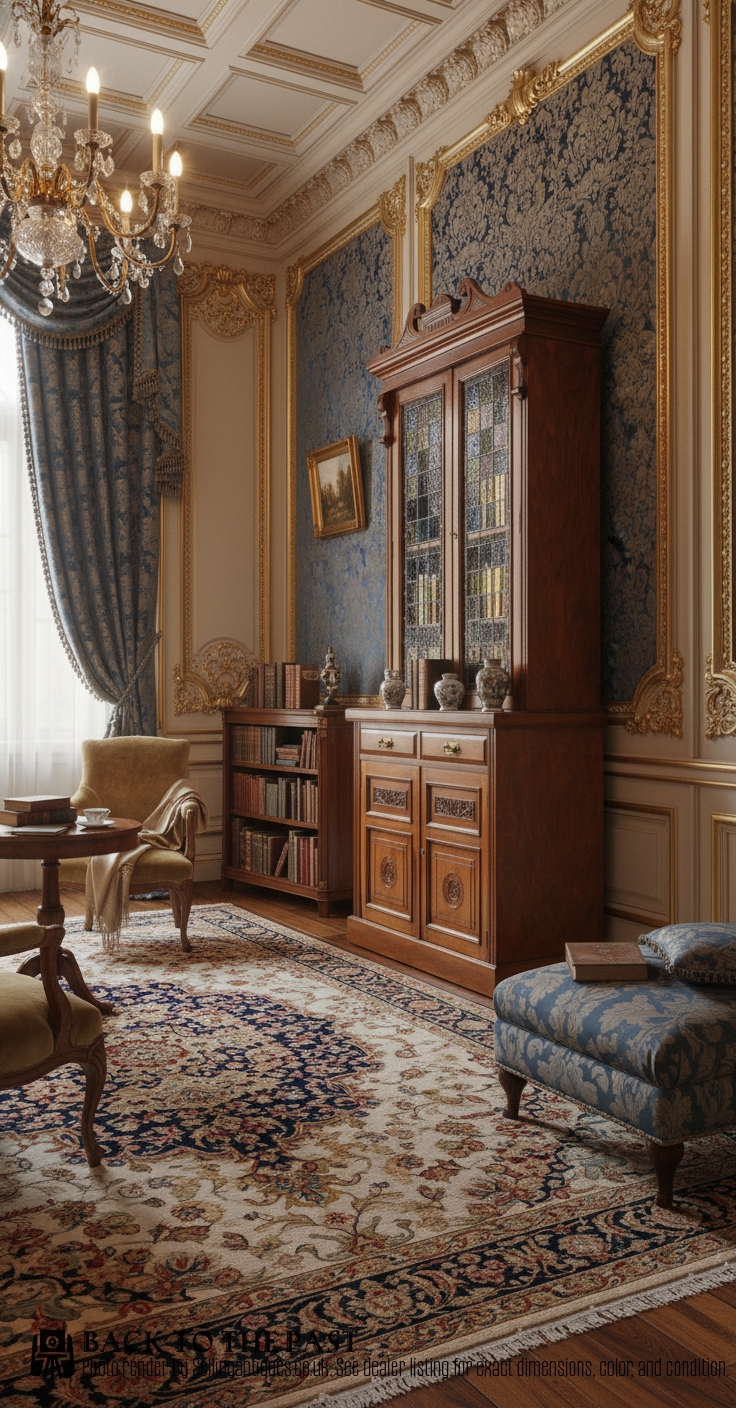
What these pieces are
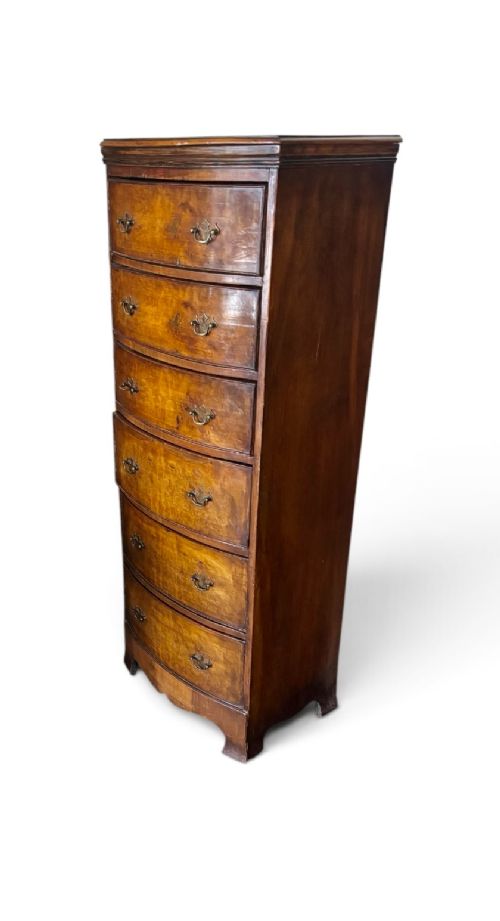
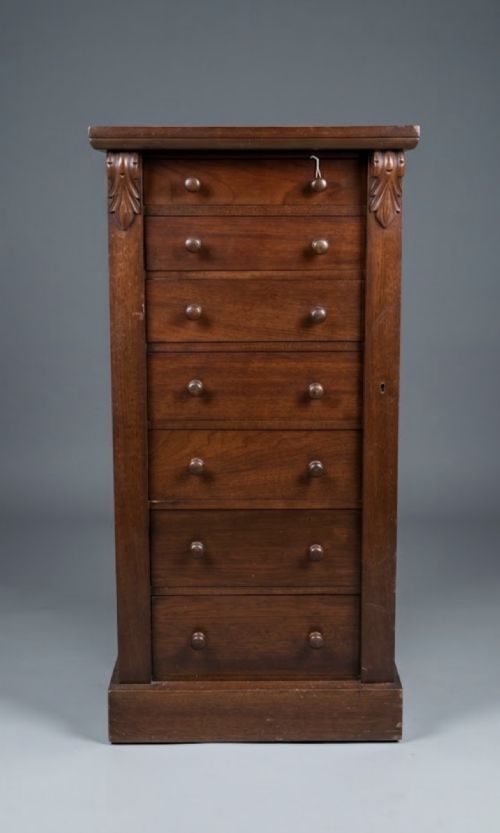
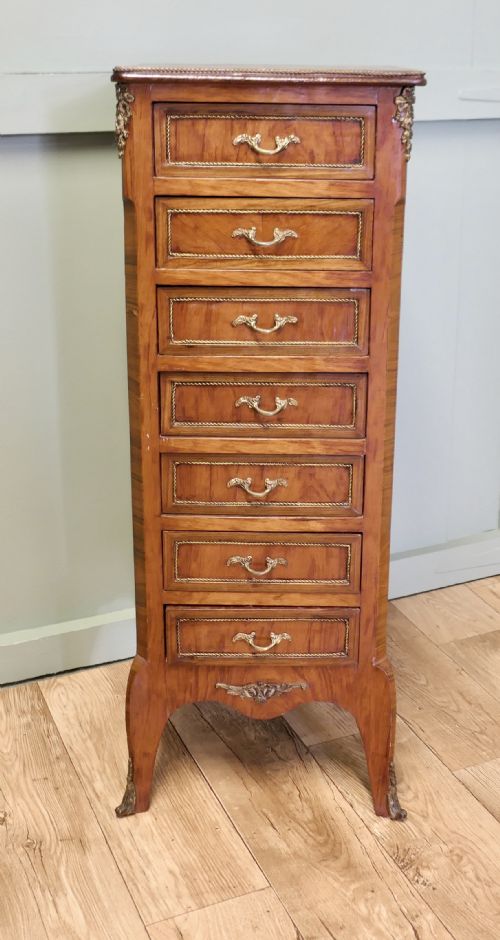
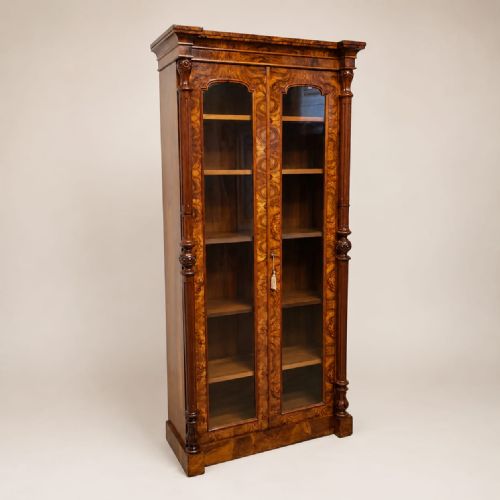
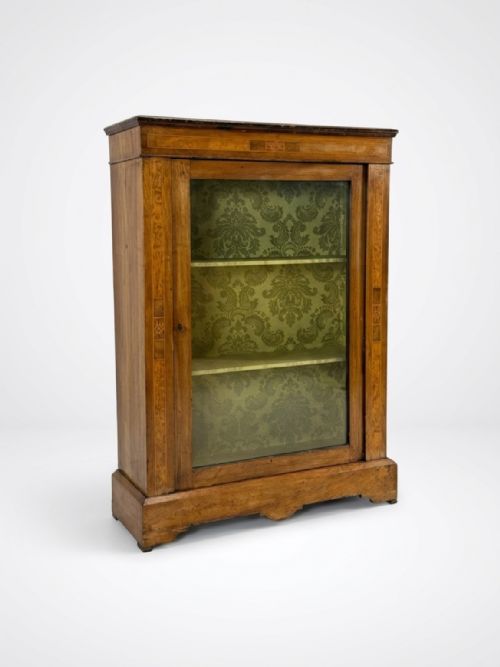
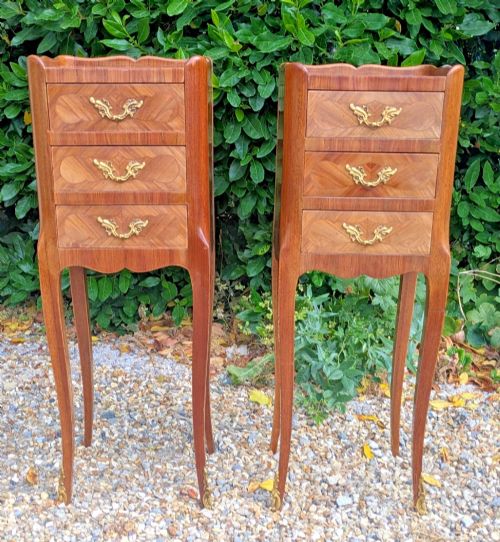
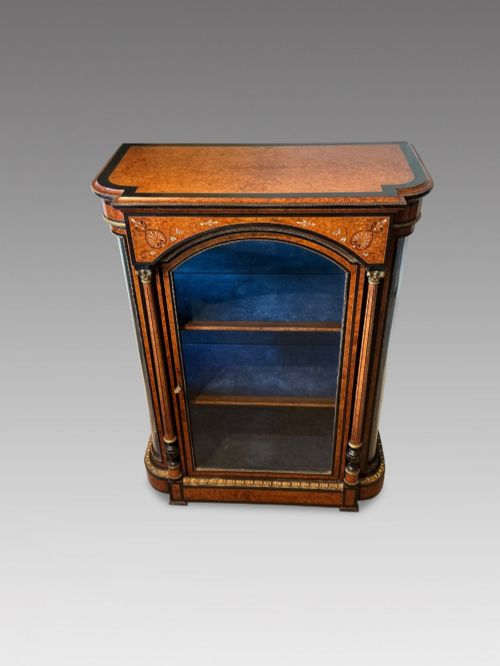
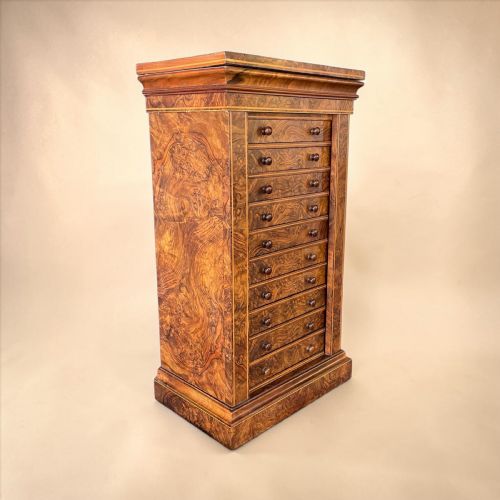
A narrow walnut cabinet covers a distinct group of compact furniture pieces designed to hold books, bedside items, or household collections. When you search for a narrow walnut cabinet, you encounter tall bookcases, bedside chests, music cabinets, and Wellington chests intended for restricted floor areas.
The pieces appearing on this page span the nineteenth century, the Victorian era, and the nineteen-thirties, alongside French provincial examples. Figured walnut, burr walnut, and standard walnut veneers dominate the forms, frequently paired with glass, brass, and oak.
Victorian examples lean towards marquetry inlay, ormolu mounts, and glazed doors for display purposes, while Art Deco pieces offer clean lines and figured surfaces. Bedside cupboards and pot cupboards represent the smaller domestic variants found within these groups.
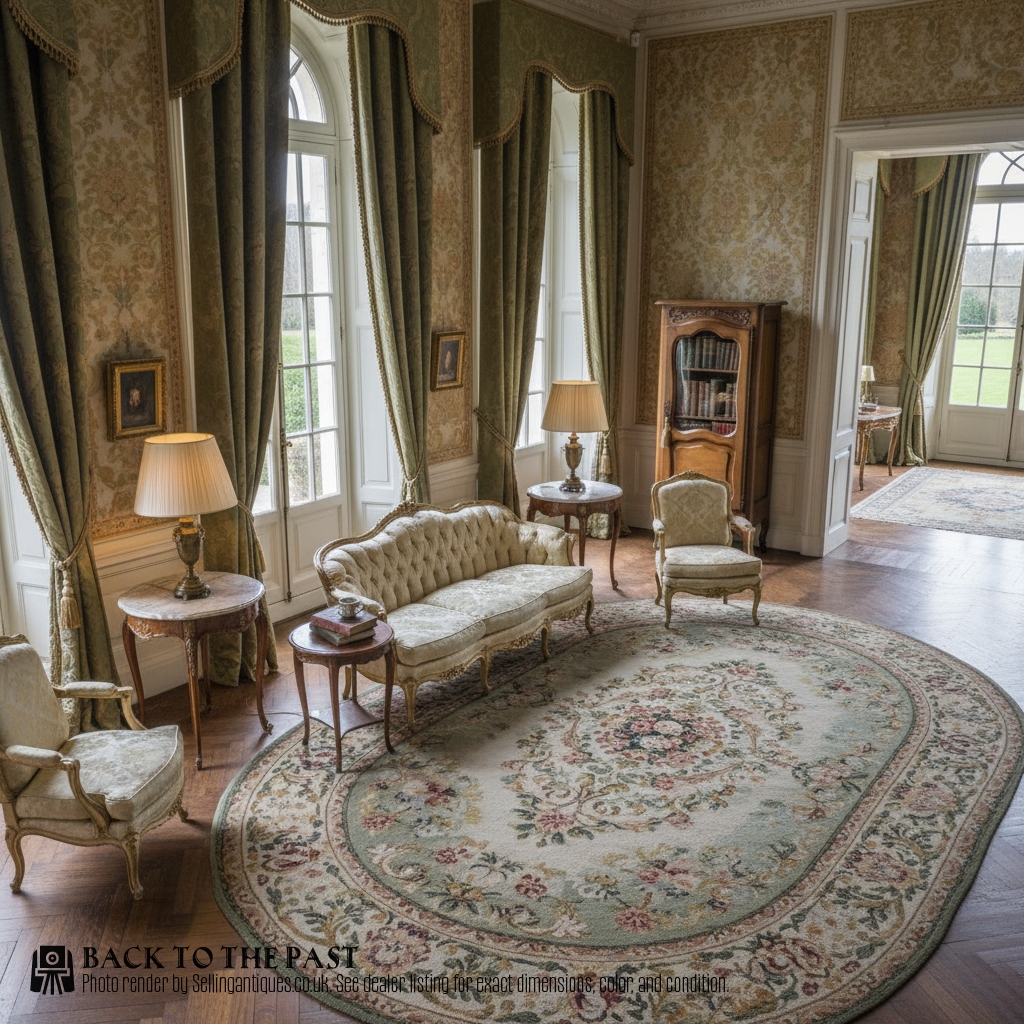
How they were made
Cabinet makers utilised solid walnut and applied walnut veneers, including burr and figured variations, over secondary timbers such as oak. Surfaces often display intricate marquetry inlays using contrasting woods like satinwood.
Retail Price Guide 2026
Typical UK retail prices for narrow walnut cabinet, calculated from the Sellingantiques database of over a million retail prices indexed since 2003. This retail price guide relies exclusively on Sellingantiques data; no external sources or auction records are used, so the figures do not describe the wider market.
Some nineteenth-century bedside cabinets doubled as discreet storage for chamber pots before modern plumbing arrived.
What varies in quality
Quality rests in the choice of timber veneer and the execution of decorative details like marquetry and metal mounts. Matched burr walnut figures and precise brass hardware distinguish finer pieces from simpler utility items.
Construction methods also separate standard production from master work, visible in the tightness of dovetail joints and the stability of tall, narrow carcases over time.
The Narrow Walnut Cabinet Glossary
- Burr Walnut
- A timber derived from the warted growths on walnut trees, yielding complex, swirling grain patterns. It was sliced into thin veneers for high-status cabinet fronts.
- Wellington Chest
- A tall, narrow chest of drawers secured by a hinged locking stile on one side that fastens with a key. This design originated in the nineteenth century.
- Marquetry
- The art of applying pieces of veneer to a structure to form decorative patterns and pictures. Makers used contrasting woods to create floral or geometric designs.
- Ormolu
- Gilded bronze mounts applied to furniture edges and feet during the nineteenth century. It adds metallic contrast to dark walnut surfaces.
- Pot Cupboard
- A small bedside cabinet originally designed to house a chamber pot. They typically feature a single door and a small interior shelf.
Frequently Asked Questions
What rooms suit a narrow walnut cabinet?
These compact pieces fit easily into alcoves, hallways, and bedrooms where floor space is limited. Their vertical proportions provide storage or display utility without overpowering smaller domestic areas.
Walnut tones pair well with both traditional and contemporary interiors, acting as focal points or functional bedside units.
How do I care for walnut veneer?
Keep walnut furniture away from direct sunlight and heat sources to prevent the wood and underlying glue from drying out. Dust regularly with a soft, dry cloth.
Avoid silicone-based polishes and excessive moisture, applying traditional wax polish sparingly to maintain the natural sheen of the timber.
Are these cabinets purely Victorian?
While the majority date from the nineteenth century and the Victorian era, the selection includes pieces from later periods. Art Deco examples from the nineteen-thirties also appear alongside French provincial variations.
Each period brings distinct design characteristics, from heavy marquetry inlay to streamlined geometric forms.
What is the difference between a credenza and a pier cabinet?
A credenza is typically a low, long side cabinet often fitted with doors and display sections, though smaller narrow variants exist. A pier cabinet is designed specifically to fit against the wall space between windows.
Pier cabinets often feature glazed doors and decorative mounts suited for displaying collections.