
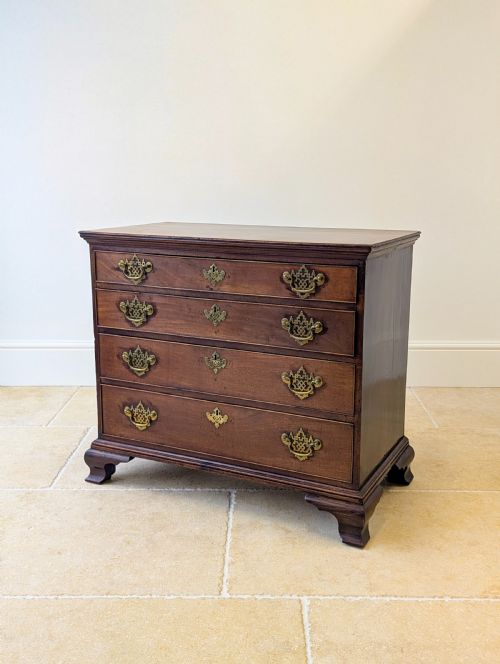
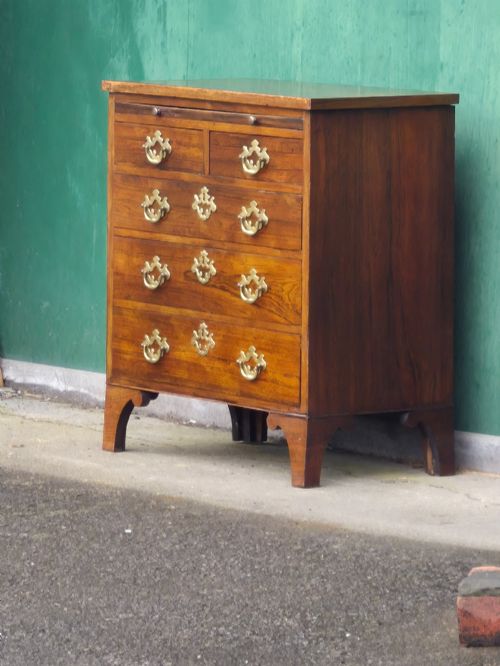
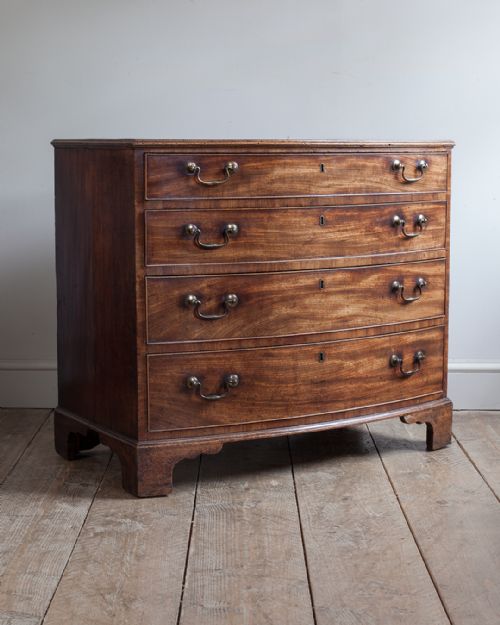


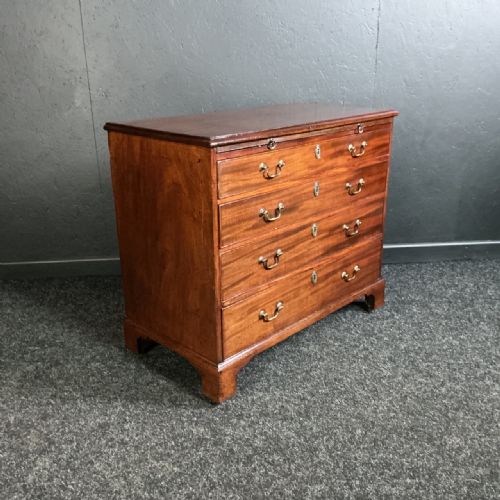


Graduated Chest of Drawers
These graduated chest of drawers pieces offer genuine period character and proportion, pairing stacking storage with subtle depth progression.
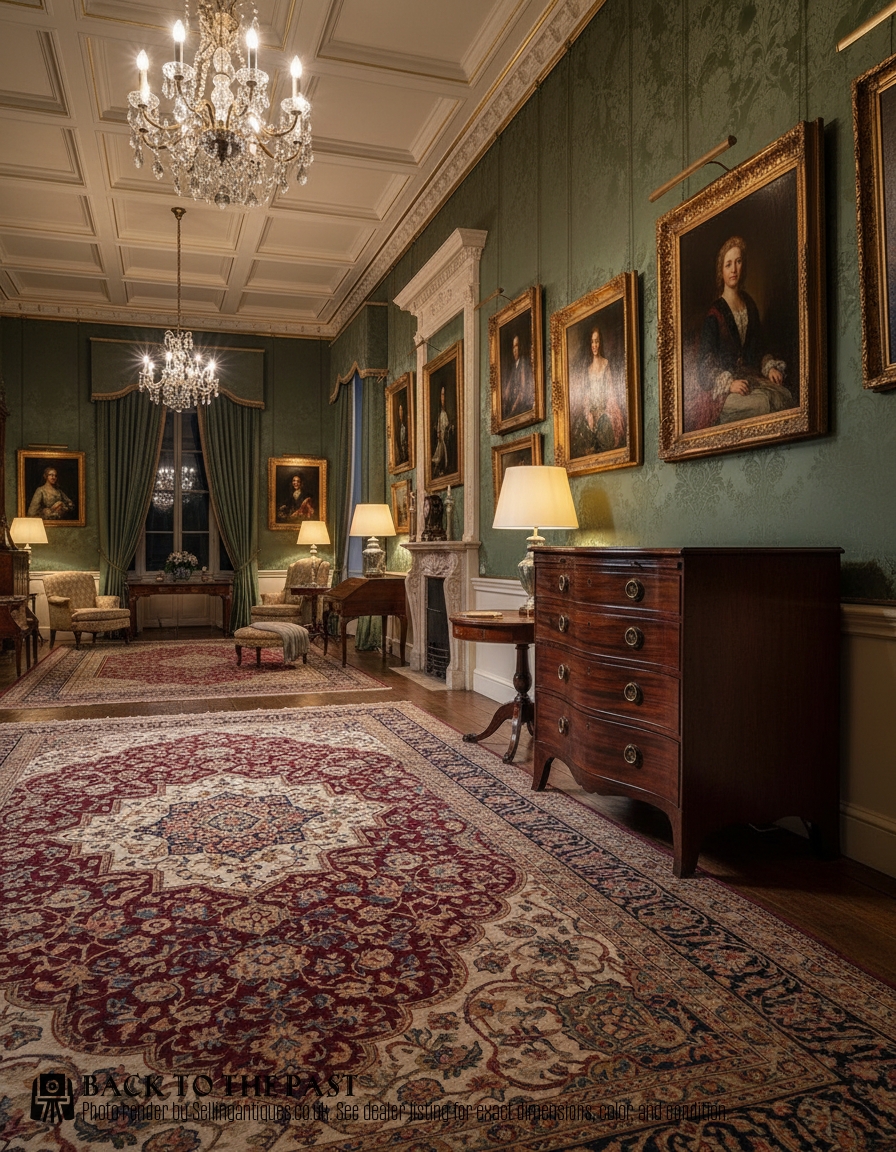
What They Are
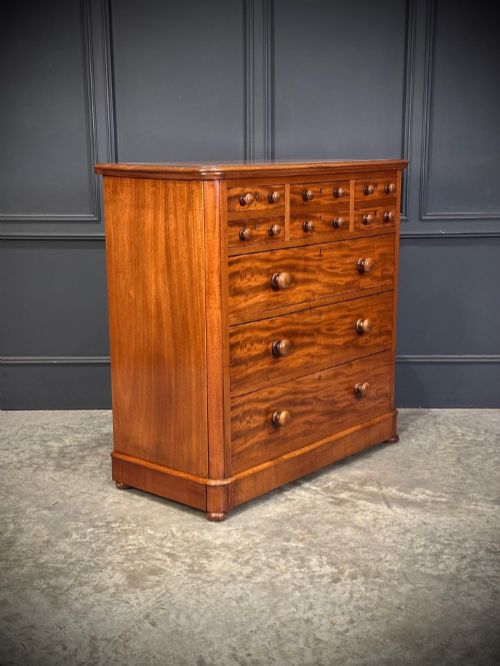
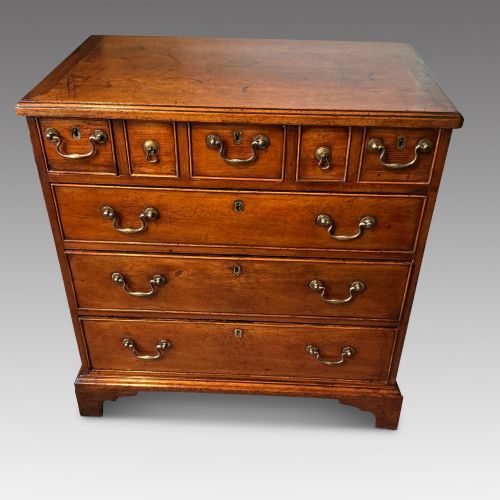
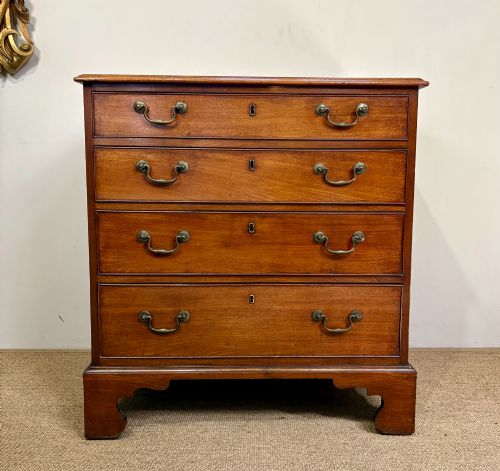
A graduated chest of drawers brings together practical storage and careful proportion through rows of drawers that decrease in depth from bottom to top. The pieces appearing here span from the 18th century through the Victorian era to 1900, showing various forms of this traditional design.
Mahogany and walnut dominate the structural choices, alongside oak and satin birch in certain examples. Dating stretches from George III periods through the 19th century and up to 1900, offering both robust country pieces and refined urban cabinetwork.
What Varies in Quality
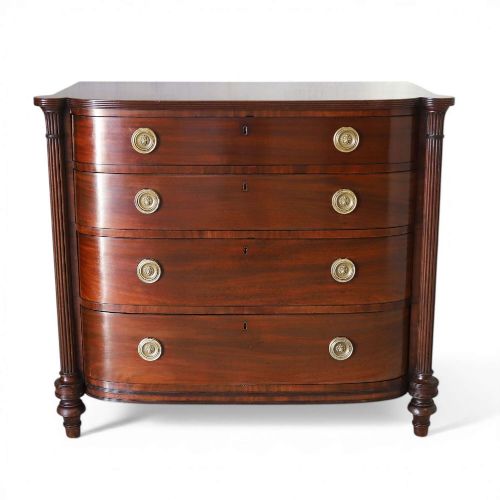
Quality rests in the precision of the timber selection and the harmony of the proportions as the drawers step back in size. Finer pieces display carefully chosen mahogany or walnut veneers that wrap smoothly around bow-front or serpentine carcases.
The refinement of the supporting feet, from simple bracket feet to shaped bases, distinguishes standard utilitarian storage from more ambitious cabinetwork. The crispness of carved elements, where present, marks the distinction between workshop levels.
Retail Price Guide 2026
Typical UK retail prices for graduated chest of drawers, calculated from the Sellingantiques database of over a million retail prices indexed since 2003. This retail price guide relies exclusively on Sellingantiques data; no external sources or auction records are used, so the figures do not describe the wider market.
One Victorian Wellington chest hides its contents behind a locking side flap decorated with carved green man masks.
The Graduated Chest of Drawers Glossary
- Graduated drawers
- Drawers arranged in a vertical sequence where each tier decreases in depth from bottom to top. This arrangement creates a balanced visual perspective on the front of the furniture.
- Bow-front
- A convex curved cabinet front that swells outward in the centre. This shape softens the profile of a standard rectangular chest.
- Serpentine
- A front configuration featuring a convex central section flanked by concave curves. It demands advanced woodworking skill to shape timber precisely.
- Bracket feet
- Simple feet supporting the lower corners of a chest, often shaped with an ogee curve. They lift the carcase slightly off the floor.
- Wellington chest
- A tall, narrow chest of drawers secured by a locking side flap that hinges down over the drawer edges. It typically contains multiple shallow graduated drawers.
Frequently Asked Questions
What is a graduated chest of drawers?
A graduated chest of drawers is a storage unit where the horizontal drawers reduce in height progressively from the bottom to the top. This design creates a visually balanced elevation that draws the eye upward.
Such pieces appear in various timbers like mahogany and walnut across the 18th and 19th centuries, serving as both decorative and functional furniture.
How do I date an antique chest?
Dating relies on observing the timber species, overall style, hardware, and construction methods used in the carcase. Georgian and Victorian examples display distinct shifts in proportion and decorative carving.
Examining the secondary woods inside the drawers and the style of the feet provides further clues regarding the period of manufacture.
Where should I place a tall chest?
Tall slim chests suit bedrooms, hallways, or reception rooms where floor space is limited but vertical storage is required. Their narrow footprint allows them to fit comfortably into alcoves.
Keeping them away from direct heat sources helps preserve the stability of the timber and polished surfaces.
What timber was used most often?
Mahogany and walnut are the primary hardwoods found across these listings, prized for their rich grain patterns and durability. Oak also appears in earlier or more utilitarian formats.
These materials were finished with traditional polishes that highlight the natural figure of the wood over centuries of use.