


Maple Bedside Cabinet
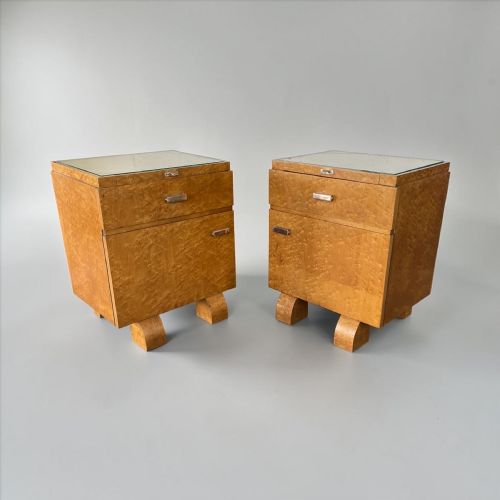
These maple bedside cabinet pieces bring striking grain and useful bedside storage, and you will most often find them in bold Art Deco forms.
Maple Bedside Cabinet
A maple bedside cabinet sits beside a bed to hold evening necessities while showing the natural grain of the wood. When you search for maple bedside cabinet, you encounter compact cupboards and open nightstands designed for domestic use.
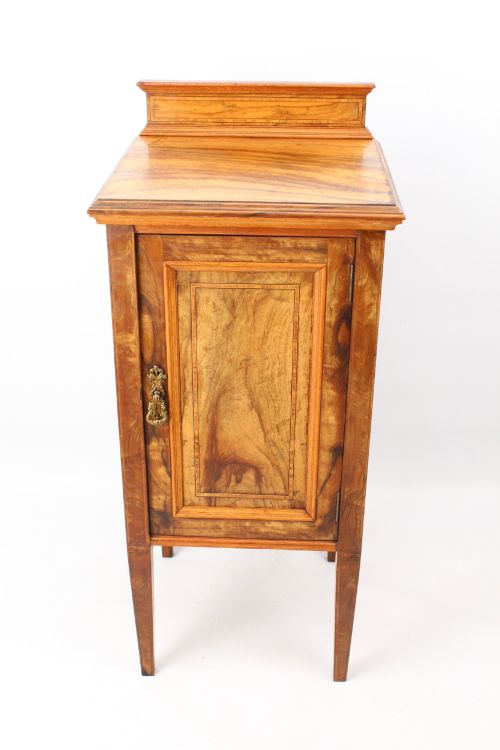
The versions most frequently met on this page date from the Art Deco period, often constructed as matching pairs in blonde or birds-eye timber. Earlier examples stretch back through the Edwardian years and the nineteenth century, taking the form of inlaid cupboards or satin-polished bedside tables.
How they were made
Cabinet makers utilised select timbers such as birds-eye maple, fiddle-back maple, and burr walnut, arranging veneers to create symmetrical patterns across door fronts and tops. Solid wood formed the structural carcases, frequently accented with contrasting inlay lines or brass hardware.
Surfaces received French polish or clear varnishes to protect the wood while highlighting the natural figuring. Metal elements like chrome and brass appeared in later twentieth-century designs, while earlier items relied entirely on traditional joinery and wood-in-wood decoration.
Listings feature maple bedside cabinets spanning from the nineteenth century through the Edwardian era and into the 1930s.
What varies in quality
Quality rests heavily on the selection and matching of the veneer figures, where skilled workshops aligned the patterns across multiple drawers and doors. The crispness of inlaid borders and the stability of the underlying carcase construction also separate standard utility items from finer workshop output.
Makers such as Maple and Company produced substantial numbers of these cabinets, ranging from simple inlaid mahogany or walnut hotel pieces to high-end domestic suites with integrated beds. The depth of the timber finishing and the integrity of the original hardware distinguish the better-preserved examples.
Maple and Co
The Maple Bedside Cabinet Glossary
- Birds Eye Maple
- Timber showing small, circular markings resembling tiny eyes caused by local depressions in the growth rings. This figured grain is highly prized for decorative veneer work on cabinet doors.
- Art Deco
- A design style dominant in the 1920s and 1930s characterised by streamlined geometric shapes, clean lines, and symmetrical wood veneers. Cabinets from this era often feature stepped silhouettes and blonde finishes.
- Pot Cupboard
- A traditional term for a small bedside cabinet originally built to house a chamber pot behind a single door. These compact pieces evolved into general bedside storage tables.
- Inlay
- Small pieces of contrasting wood, shell, or metal fitted into recesses flush with the surrounding surface. Edwardian and nineteenth-century examples often use fine stringing lines to outline drawer fronts.
Maple Bedside Cabinet: Frequently Asked Questions
What is a maple bedside cabinet?
A maple bedside cabinet is a small piece of bedroom furniture designed to stand next to a bed for nighttime storage.
These cabinets usually feature a single door, drawers, or open shelving constructed using maple wood veneers.
Are Art Deco maple cabinets common?
Art Deco pieces form a substantial portion of available maple bedside cabinets, frequently appearing in matching pairs.
These twentieth-century examples often display blonde birds-eye maple grain and streamlined geometric silhouettes.
How do I identify Edwardian maple cabinets?
Edwardian pieces generally incorporate contrasting wood inlays, mahogany accents, or satinwood details around the edges.
They tend to follow more traditional cabinet proportions compared to the later 1930s designs.
Did makers brand these cabinets?
Major retail furnishers like Maple and Company often stamped their company name inside drawers or on the back panels.
Such paper labels or brand stamps help confirm the origin and approximate period of manufacture.
How should I care for vintage maple furniture?
Protect antique maple surfaces by keeping them away from direct sunlight and maintaining stable indoor humidity.
Regular dusting with a dry cloth preserves the polished finish without harming the delicate wood veneers.