


Antique Blonde Bedside Cabinet
An antique blonde bedside cabinet brings light wood grain and compact storage to a bedroom, combining functional design with period character.
Antique Blonde Bedside Cabinet
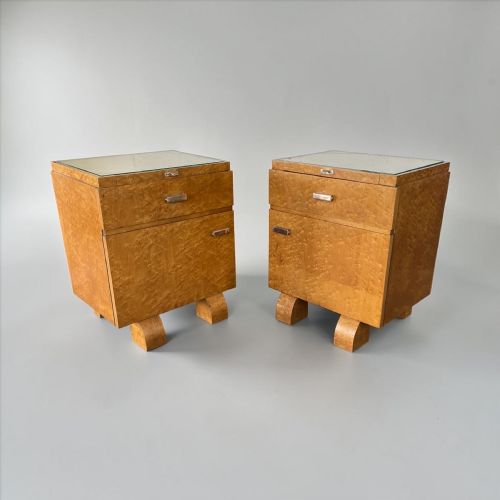
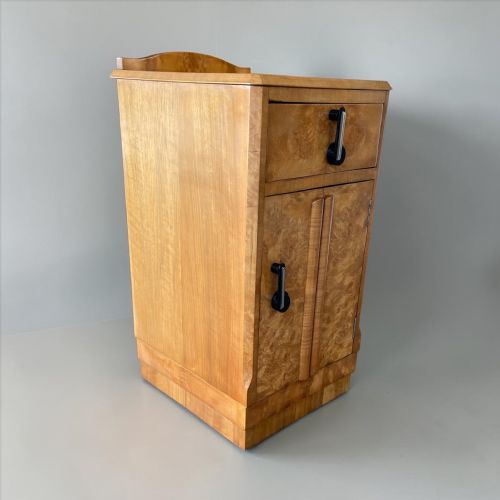
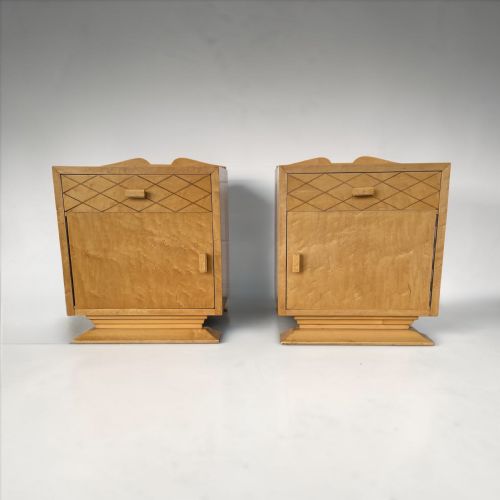
An antique blonde bedside cabinet typically takes the form of a small cupboard, table, or drawer unit designed to sit beside a bed. When buyers search for an antique blonde bedside cabinet, they most often encounter Art Deco examples dating from the nineteen thirties, alongside earlier Edwardian and Victorian pieces.
How they were made
Cabinet makers utilised select light timbers such as satinwood, birch veneer, and birdseye maple to achieve the pale, blonde aesthetic demanded by twentieth-century tastes. These veneers and solid woods were frequently paired with contrasting details in ebonised wood to accentuate the geometric lines of Art Deco design.
Hardware played an integral structural and decorative role, with brass and chrome handles or fittings complementing the polished wooden surfaces. Construction methods combined traditional cabinetry joinery with the sleek, streamlined silhouettes typical of Scandinavian and British workshops from the nineteen twenties and nineteen thirties.
Listings feature items from the Victorian period through to 1930, utilising materials such as birdseye maple, satin birch, chrome, and brass.
What varies in quality
The distinction between standard examples and finer pieces rests in the selection and matching of wood grain across the cabinet faces. Matched pairs showing continuous birdseye maple or satin birch movement represent a higher tier of design than mismatched or plain timber constructions.
Maker attribution and structural integration also define the upper tier, seen in pieces bearing stamps from notable firms or featuring complex, purpose-built furniture combinations like beds with integral cabinets. The precision of the joinery and the harmonious integration of brass or chrome elements further separate volume-produced items from bespoke workshop commissions.
Morant and Co·Betty Joel
The Antique Blonde Bedside Cabinet Glossary
- Birdseye maple
- A figured timber showing small, swirling eyes within the grain pattern. It was widely utilised during the Art Deco period for decorative veneer panels.
- Satin birch
- A pale, lustrous hardwood with a fine texture often used in Edwardian and late Victorian bedroom furniture. It takes a high polish while retaining a naturally bright blonde tone.
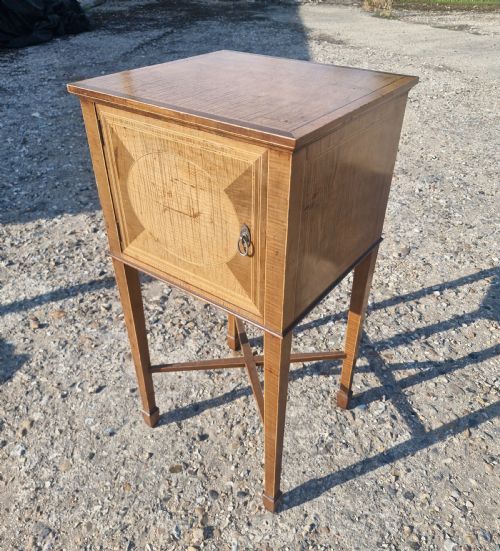
- Pot cupboard
- A small bedside cabinet originally designed to house a chamber pot behind a single door. Many surviving examples have been adapted for general bedside storage.
- Ebonised wood
- Timber treated to resemble ebony, providing a deep black contrast against lighter woods. It frequently appears as trim or banding on twentieth-century cabinets.
Antique Blonde Bedside Cabinet: Frequently Asked Questions
What periods do these cabinets come from?
The pieces span from the Victorian era and the Edwardian period through to the nineteen twenties and nineteen thirties. Art Deco examples from nineteen thirty are particularly common.
Earlier nineteenth-century pieces tend to use satin birch, while the interwar years favoured birdseye maple and streamlined forms.
Are pairs common for these bedside cabinets?
Many of the listed blonde cabinets do survive and appear as matching pairs, especially those from the Art Deco period. Single tables and cupboards also feature.
Matching pairs usually command higher interest from collectors looking to balance a bedroom layout symmetrically.
How do I identify blonde wood types?
Blonde woods across these listings include satinwood, birch, and maple, each displaying distinct grain characteristics. Birdseye maple shows distinctive circular figures, while satin birch offers a uniform pale shimmer.
Examining the grain pattern under good light helps differentiate natural blonde timbers from stained surfaces.
What metal hardware was used?
Hardware typically includes brass and chrome, depending on the manufacturing period. Edwardian pieces often feature traditional brass fittings, while Art Deco designs lean towards polished chrome.
These metals provide functional handles and decorative accents that contrast against the pale blonde cabinet bodies.