

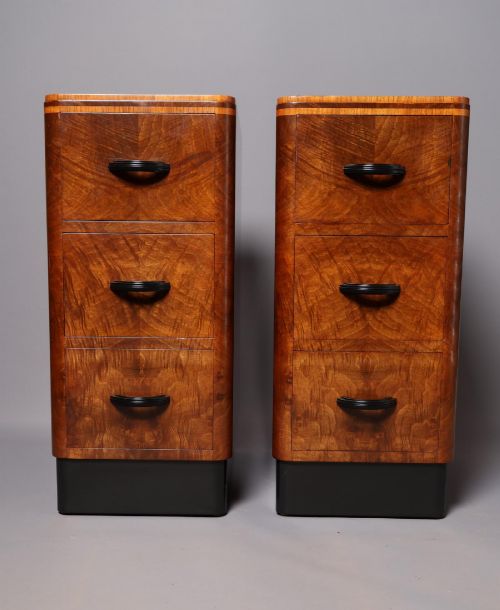
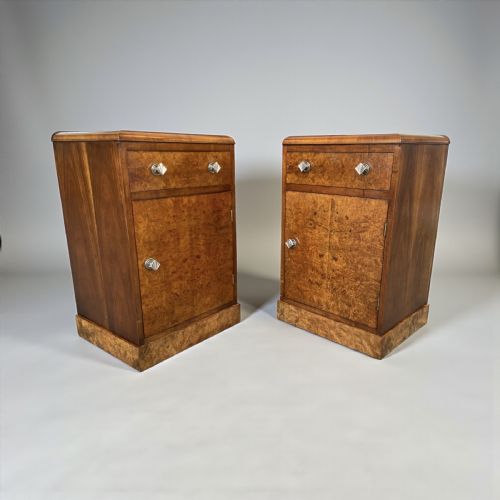

Art Deco Bedside Cupboards
Art deco bedside cupboards bring striking geometric lines and rich grain patterns directly to the bedroom.
Understanding Art Deco Bedside Cupboards
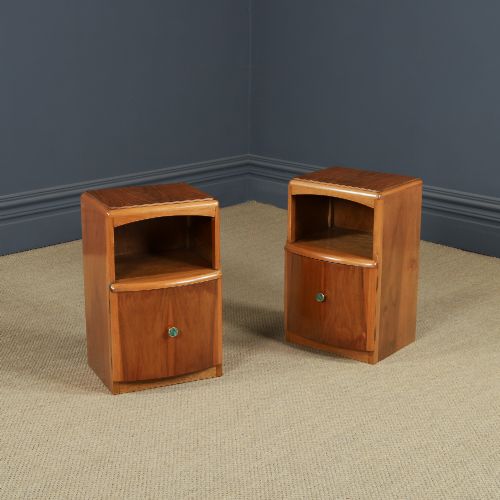
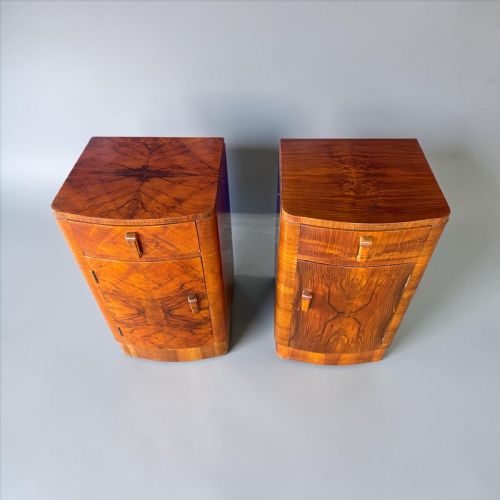
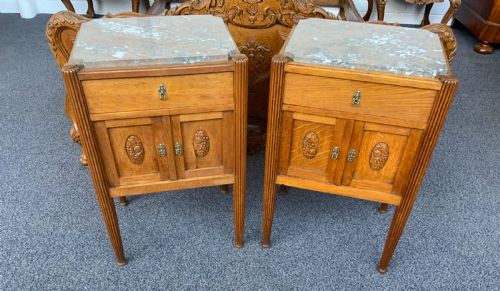
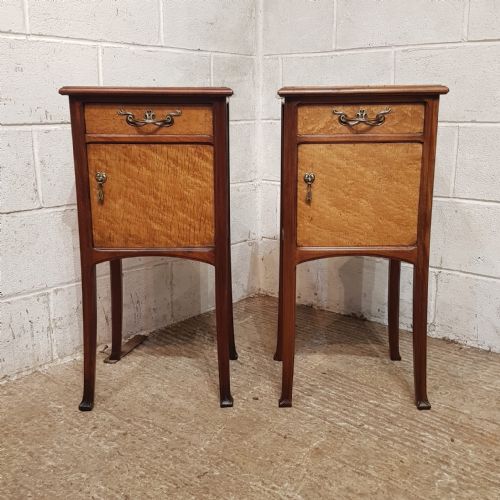
Art deco bedside cupboards are compact bedroom storage pieces typically standing beside a bed to hold lamps, books and small personal items. These items appear most frequently as matched pairs, offering symmetry for a bedroom layout.
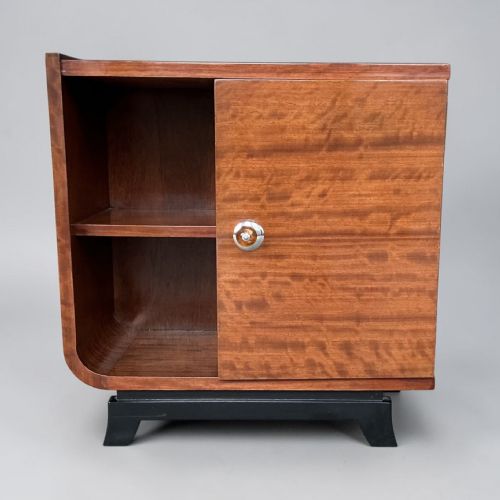
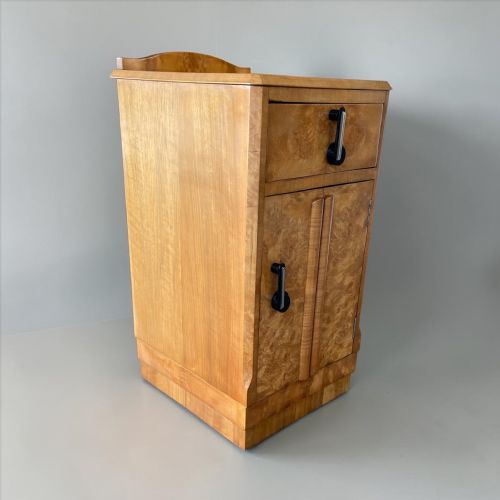
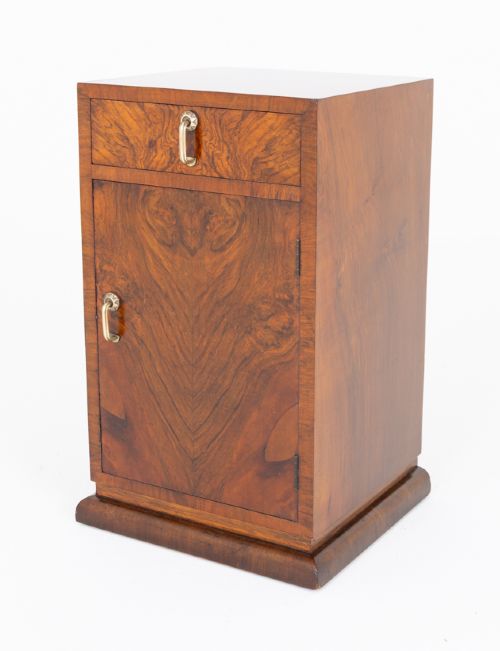
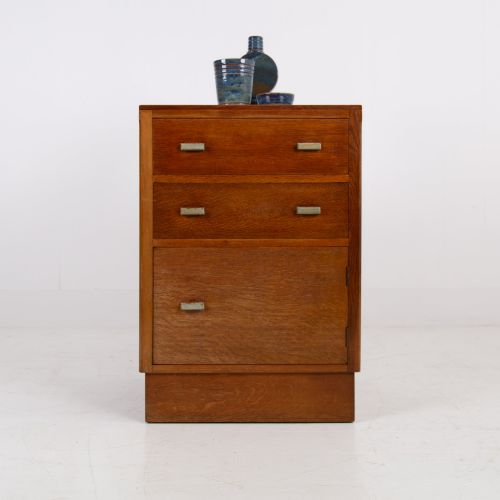
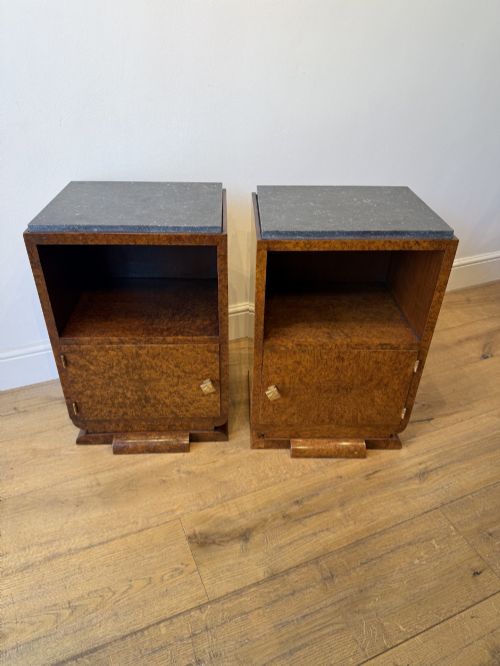
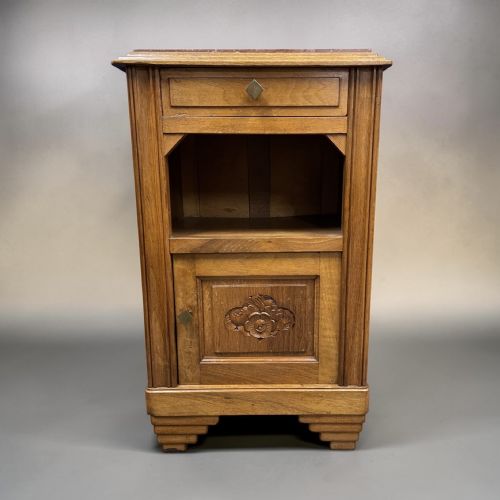
The evidence shows designs spanning the 1920s and 1930s, taking the form of enclosed cabinets, cupboards with open storage areas, and occasional marble-topped variants. English and French examples dominate the record, alongside associated bed headboard combinations.
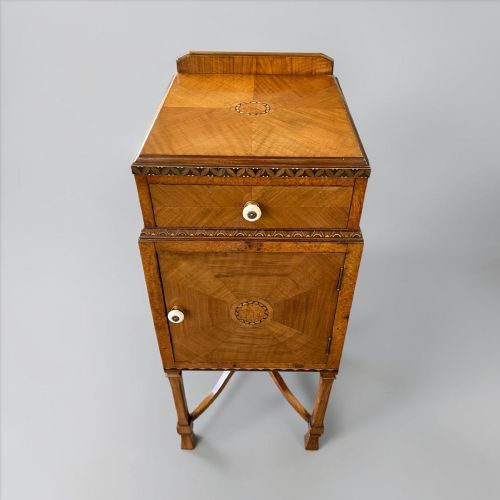
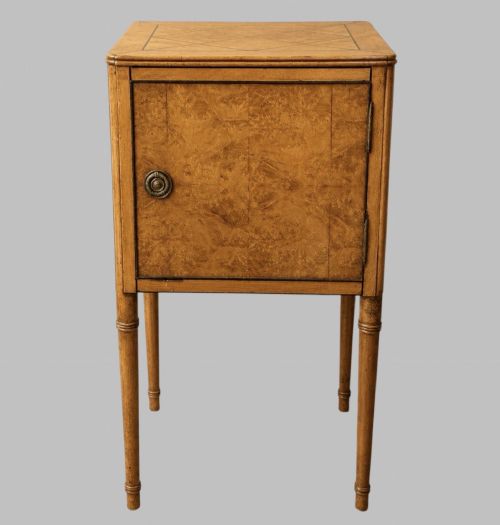
Buyers encounter forms described variously as bedside tables, nightstands, lamp stands and pot cupboards. The core function remains storing nighttime essentials behind a single door while displaying decorative surfaces above.
Materials and Construction
Cabinet makers utilised a substantial timber carvings foundation overlaid with decorative wood veneers. Burr walnut, figured walnut and birds eye maple appear prominently, alongside satinbirch, oak and mahogany.
Surfaces make heavy use of grain patterns to create visual rhythm, often arranged in matched book-matched configurations across the cabinet doors. Metal, glass and bakelite details provide contrasting hardware touches against the polished timber.
Retail Price Guide 2026
Typical UK retail prices for art deco bedside cupboards, calculated from the Sellingantiques database of over a million retail prices indexed since 2003. This retail price guide relies exclusively on Sellingantiques data; no external sources or auction records are used, so the figures do not describe the wider market.
Several cupboards moonlight as disguised homes for chamber pots, proving that early twentieth-century glamour still had practical chores.
Factors That Separate the Range
Quality rests heavily on the selection and symmetry of the wood veneer across the front panels. Highly figured burr walnut and exotic maple veneers show deliberate matching by the original cabinet maker.
Form and secondary materials also set pieces apart. The inclusion of original handles, glass tops, marble surfaces or integrated open display areas distinguishes standard production items from more ambitious designs.
Epstein·Maples
The Art Deco Bedside Cupboards Glossary
- Burr Walnut
- A timber obtained from walnut tree growths, featuring swirling, complex grain patterns prized by cabinet makers.
- Veneer
- A thin layer of choice wood applied over a sturdier secondary timber base to create decorative exterior surfaces.
- Nightstand
- A small low table or cabinet placed beside a bed for holding nighttime items.
- Pot Cupboard
- A traditional small bedroom cabinet originally designed to house a chamber pot behind a door.
- Bakelite
- An early synthetic thermosetting plastic frequently utilised for period handles and decorative hardware.
Frequently Asked Questions
Are these cupboards usually sold in pairs?
Many listings feature matched pairs designed to sit symmetrically on either side of a bed. Single cabinets also appear for tighter bedroom layouts.
Buyers seeking a balanced bedroom aesthetic generally look specifically for the paired sets recorded across both current and archive listings.
What fits inside an art deco bedside cupboard?
The interior compartments typically hold books, reading glasses and personal items out of sight behind a hinged door. Open storage areas on certain models accommodate items requiring quick access.
The top surface provides adequate space for a bedside lamp, an alarm clock and a glass of water.
How do I care for walnut veneer?
Polished wood veneer surfaces require protection from direct sunlight and excessive moisture to prevent fading and lifting. Regular dusting with a soft, dry cloth preserves the polished finish.
Avoid placing damp items directly onto the wood without coasters or protective mats.
Did french designs differ from english ones?
French examples frequently incorporate distinct touches such as marble tops and lighter satinbirch or oak timbers. English pieces often lean heavily into figured walnut and burr walnut veneers.
Both national traditions share the characteristic geometric lines and streamlined forms of the period.