




Walnut Night Tables
Walnut night tables bring rich grain and practical bedside storage into a bedroom, spanning French provincial designs to sleek Art Deco forms.
Walnut Night Tables
Walnut night tables encompass compact bedside furniture produced across the eighteenth, nineteenth, and early twentieth centuries. These pieces serve primarily as bedside cabinets, lamp tables, and small side cupboards next to a bed.
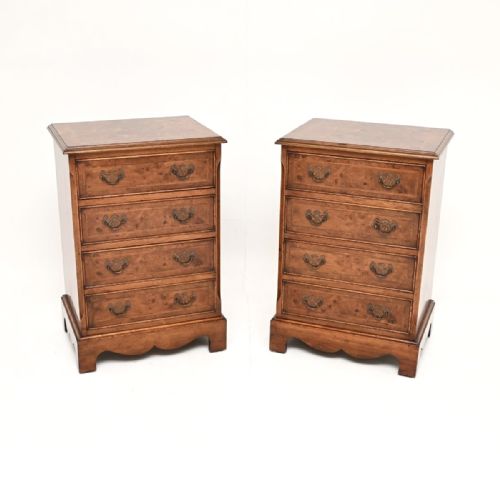
The selection ranges heavily toward twentieth-century examples, particularly Art Deco pieces from the 1930s and Edwardian or slightly earlier French designs. Buyers encounter both single items and matched pairs frequently.
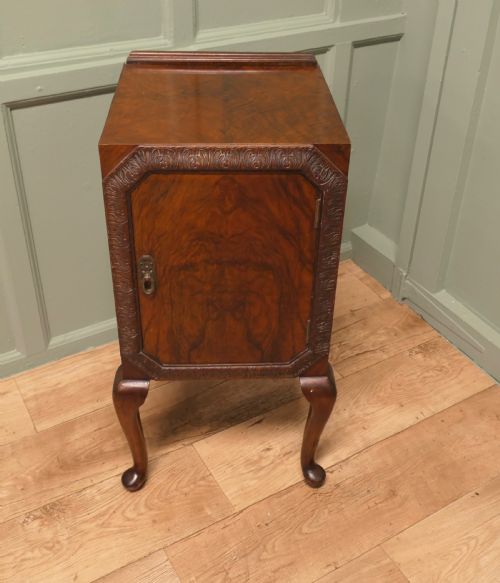
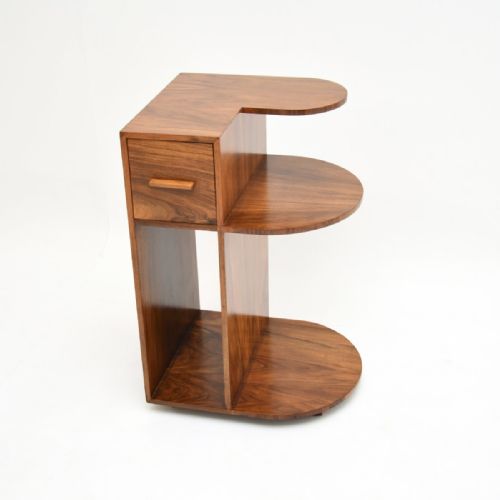
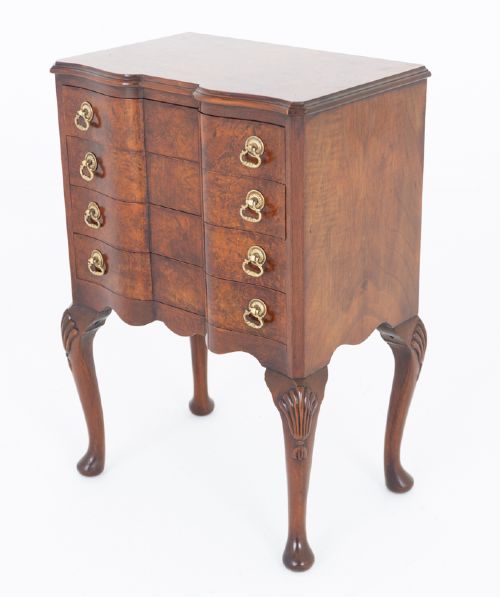
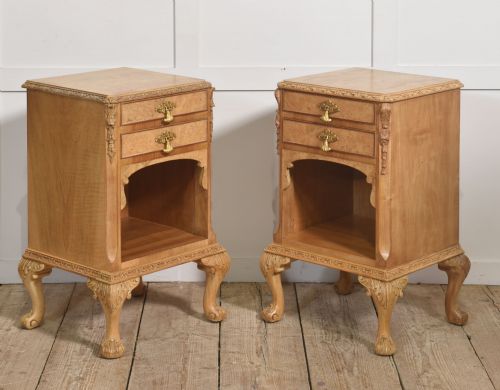
Forms vary from simple open bedside tables to enclosed cabinets featuring drawers, doors, and occasionally marble tops or secret compartments. Styles stretch from Queen Anne revival and Louis XV influences to streamlined geometric Art Deco shapes.
How they were made
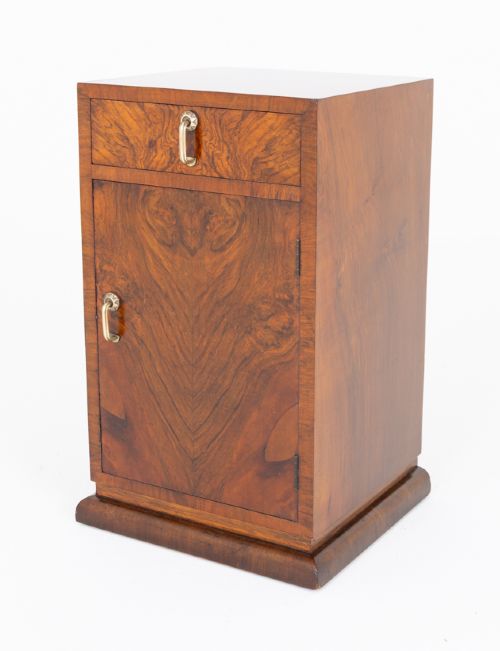
Cabinet makers utilised solid walnut alongside burr walnut, figured walnut, and satin walnut veneers to achieve striking surface patterns. Secondary woods form the carcase, while applied details often incorporate tulipwood, satinwood, or birch.
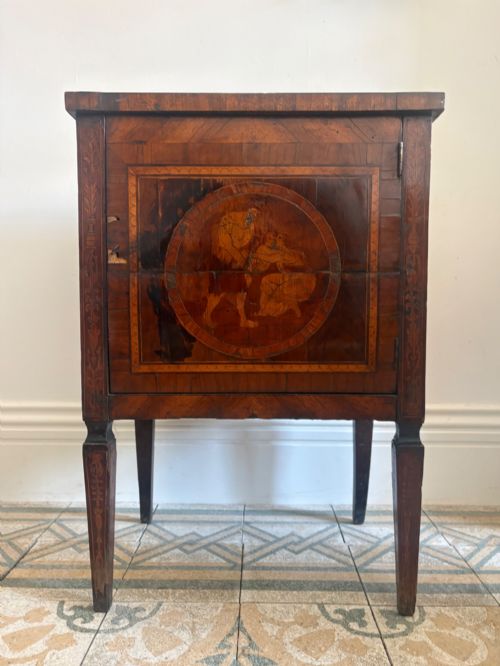
Decorative elements frequently include inlaid marquetry and parquetry work. Metal fittings in brass appear on handles and mounts, particularly on French and Art Deco examples.
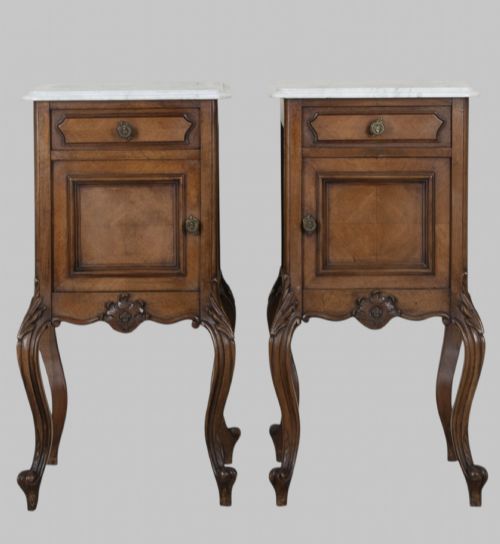
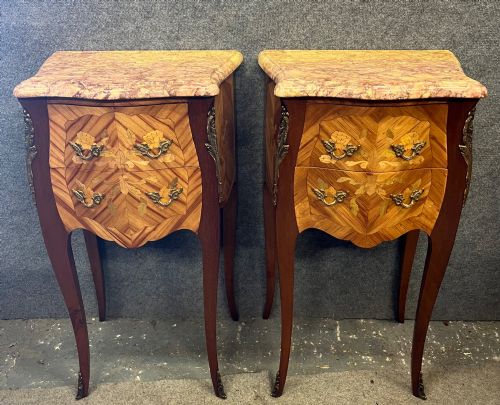
Many nineteenth-century and Edwardian pieces feature carved wooden details such as barley twist legs. Marble inserts provide durable, decorative tops on specific French and Continental bedside cabinets.
The listings span the eighteenth century through to the 1930s, featuring walnut, burr walnut veneer, brass, and marble.
What varies in quality
The selection of timber sets the visual standard, with highly figured burr walnut and book-matched veneers commanding stronger presence than plain grain. The precision of inlaid marquetry and parquetry patterns also dictates the level of craftsmanship.
Structural integrity depends on stable joinery within the carcase and drawers, alongside original hardware such as brass handles and working locks. Subtle details like secret compartments or shaped marble tops elevate specific pieces above standard utility cabinets.
Maple and Co
The Walnut Night Tables Glossary
- Burr walnut
- A prized wood cut from walnut tree growths, displaying swirling, highly decorative grain patterns. It forms the primary decorative surface on many twentieth-century chests.
- Marquetry
- The art of applying thin pieces of wood veneer to a structure to form decorative patterns or pictures. It appears frequently on Continental tables.
- Parquetry
- A geometric mosaic of wood pieces used for surface decoration, commonly seen on tabletops. This technique creates patterned surfaces similar to tiles.
- Pot cupboard
- A traditional enclosed bedside cabinet originally designed to house a chamber pot. These pieces usually feature a door and sometimes an internal shelf.
- Barley twist
- A decorative turning style resembling a rope or twisted column. It is often found on the legs of nineteenth-century French furniture.
Walnut Night Tables: Frequently Asked Questions
What is the difference between a night table and a pot cupboard?
A night table often provides open surface space or a combination of drawers and small shelves for bedside items. A pot cupboard specifically includes an enclosed cabinet space originally intended to conceal a chamber pot.
Over time, many pot cupboards have been repurposed as standard bedside storage units while retaining their original enclosed cabinet doors.
Are walnut night tables usually found as pairs?
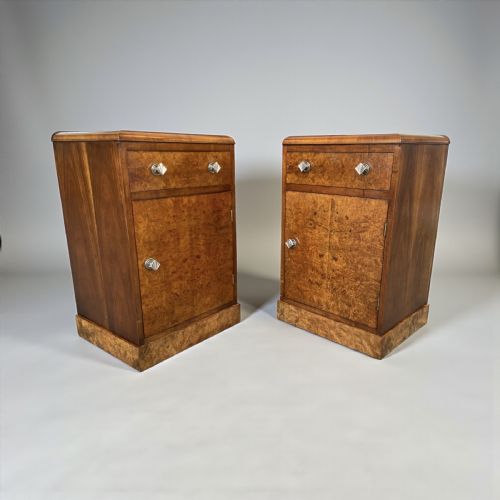
Many walnut bedside cabinets and tables survive as matched pairs, particularly from the Edwardian and Art Deco periods. These matched sets were produced for twin beds or double bedrooms.
Single tables also appear frequently, often originating from earlier nineteenth-century French or Continental workshops where pieces were built individually.
How do I identify an Art Deco walnut night table?
Art Deco pieces from the 1930s typically feature clean geometric lines, minimal ornamentation, and highly figured burr walnut or contrasting satinwood veneers. They often present curved or bow-front silhouettes with streamlined handles.
Earlier nineteenth-century versions lean instead toward traditional revival styles such as Queen Anne or Louis XV with carved cabriole legs.
Did these tables always have marble tops?
Marble tops appear primarily on French and Continental bedside cabinets from the nineteenth and early twentieth centuries. This material provided a durable, wipe-clean surface for holding water jugs and washing accessories.
English examples more commonly feature wooden tops, sometimes accented with glass protectors or simple polished walnut grain.