
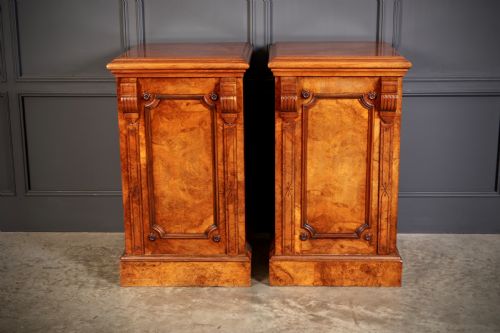


Figured Walnut Nightstands
Figured walnut nightstands are timber bedside cabinets displaying rich grain patterns, prized for bringing warmth and texture to a bedroom.
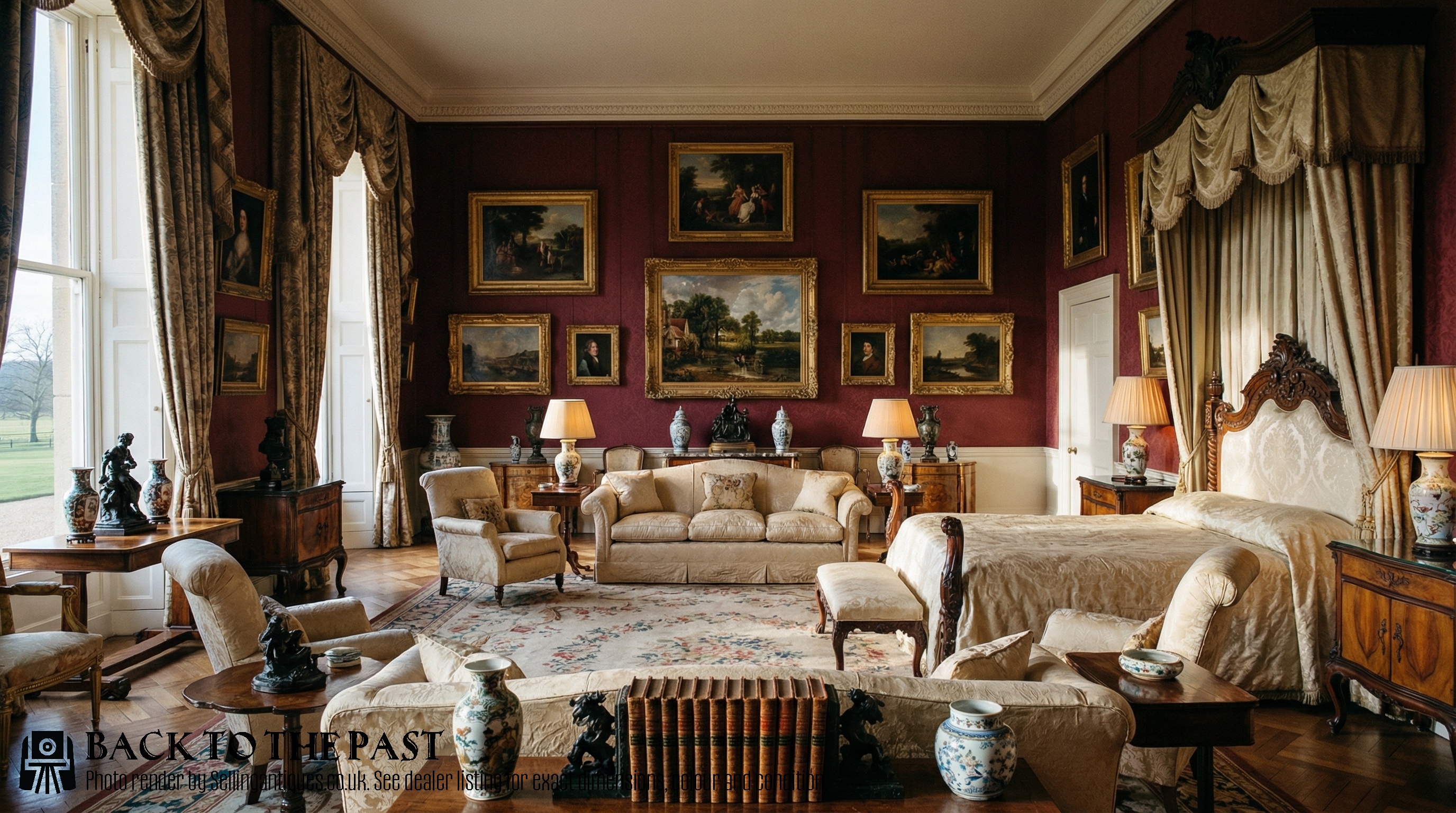
Figured Walnut Nightstands
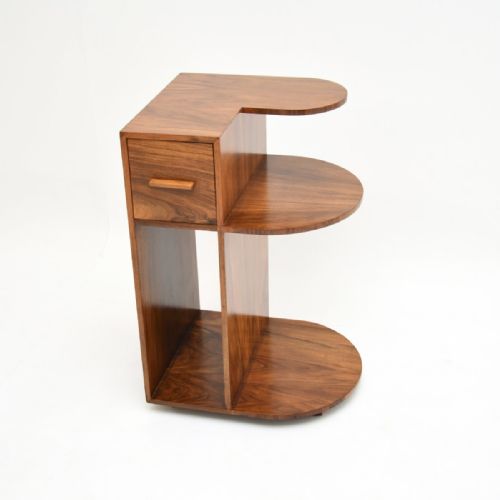
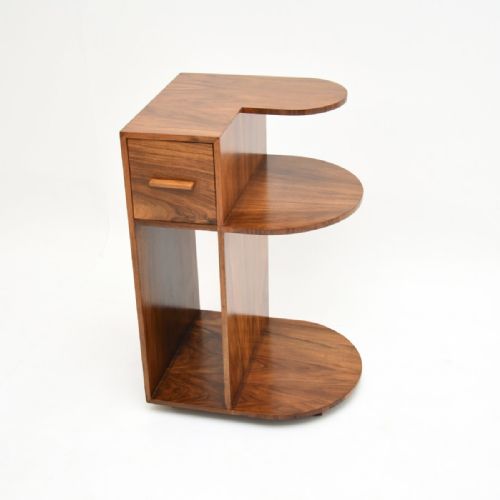
Figured walnut nightstands span several distinct stylistic periods, including Edwardian, Victorian, and Art Deco designs. Buyers searching for figured walnut nightstands most commonly encounter pieces produced around nineteen thirty, alongside examples from the nineteenth century and the Edwardian era.
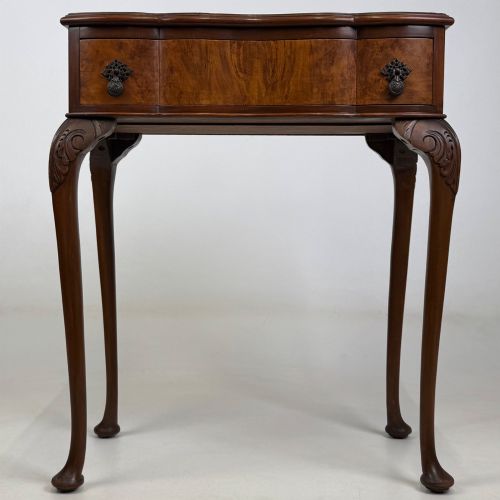
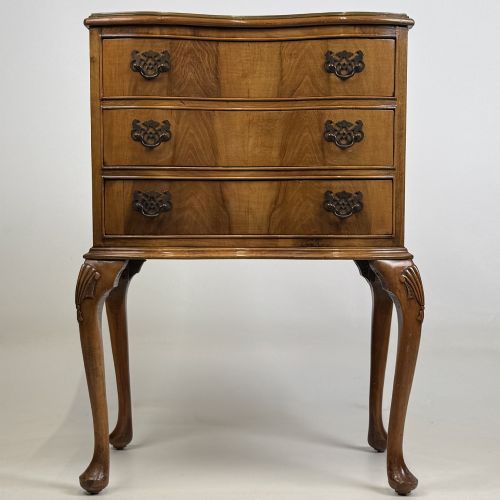
The forms vary from simple side tables and book tables to enclosed bedside cabinets, pedestal cabinets, and small chests of drawers. Pairs appear frequently alongside single pieces, offering symmetrical options for either side of a bed.
Origins stretch across English and French workshops, encompassing revival styles like Queen Anne and Louis XV alongside clean geometric Art Deco lines. Each piece serves primarily as a bedside surface or enclosed storage cabinet for personal items.
How they were made
Cabinetmakers utilise walnut, burr walnut, and figured walnut veneers applied over solid wood foundations to display striking, swirling grain patterns. Master craftsmen match these veneers symmetrically across drawer fronts and cabinet doors to create balanced visual effects.
Secondary materials such as brass provide hardware handles and mounts, while glass sometimes protects upper surfaces. Floral marquetry inlay appears on select Victorian examples, adding contrasting timber details to the figured walnut background.
Listings feature walnut, burr walnut, and figured walnut veneers, complemented by brass hardware and occasional marble tops.
What varies in quality
The visual impact of the timber figure defines much of the distinction between pieces, with highly variegated burr and figured walnut veneers commanding attention. Superior examples exhibit precise veneer matching that flows seamlessly across multiple drawers or cabinet doors.
Construction methods and cabinet proportions also dictate standard, from robust panelled French nightstands with marble tops to streamlined Art Deco bedside chests. The integration of functional elements, such as smoothly operating drawers and original brass hardware, separates standard production from exceptional pieces.
Maurice Adams
The Figured Walnut Nightstands Glossary
- Figured walnut
- Wood timber showing exceptional, highly decorative grain patterns caused by irregular growth. This distinct figuring makes each nightstand visually unique.
- Veneer
- A thin slice of superior timber applied over a secondary wood base. This technique allows cabinetmakers to showcase expensive figured walnut while maintaining structural stability.
- Burr walnut
- Wood taken from a tree growth or burl, featuring swirling knot clusters. It offers an intensely rich texture highly favoured in premium bedside cabinets.
- Marquetry
- Decorative patterns created by fitting together small pieces of tinted wood veneer. Victorian craftsmen utilised this technique to introduce floral motifs onto cabinet doors.
- Pedestal cabinet
- A tall, freestanding enclosed bedside cupboard supported on a single base or plinth. These pieces provide substantial vertical storage beside a bed.
Figured Walnut Nightstands: Frequently Asked Questions
What periods do these nightstands come from?
The pieces span from the nineteenth century through the Edwardian era up to nineteen thirty. Art Deco designs from the interwar period appear frequently alongside Victorian and Edwardian examples.
Cabinet styles shift accordingly, moving from ornate floral marquetry and revival forms towards geometric lines and streamlined waterfall silhouettes.
Are pairs commonly available?
Yes, matching pairs surface regularly among English and French designs. These allow for symmetrical placement on both sides of a bed.
Single bedside cabinets also appear often, functioning effectively as standalone lamp tables or compact side chests.
How do I care for figured walnut?
Keep wooden surfaces away from direct sunlight and excessive moisture to protect the delicate veneer and polish. Regular dusting with a soft, dry cloth preserves the natural lustre of the grain.
Avoid placing damp glasses directly on the wood, using coasters to protect the polished surface.
What is the difference between a nightstand and a bedside cabinet?
Nightstands often refer to open side tables or small tables with a single drawer, providing accessible surface space. Bedside cabinets and pedestal cupboards feature enclosed doors or multiple drawers for concealed storage.
Both forms serve the same domestic function beside a bed but offer different levels of internal organisation.