

Brown Bedside Cabinets
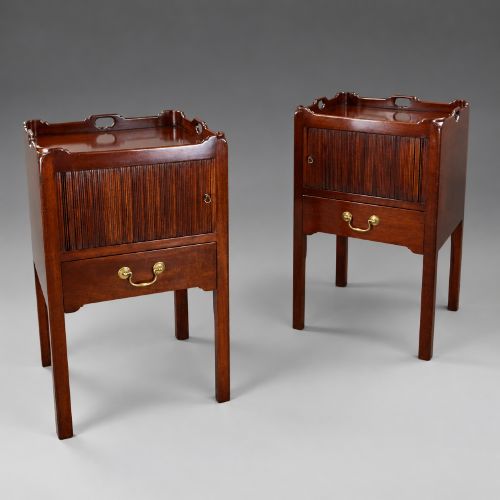
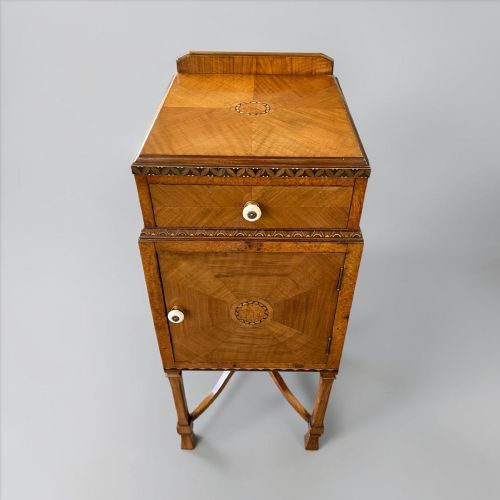
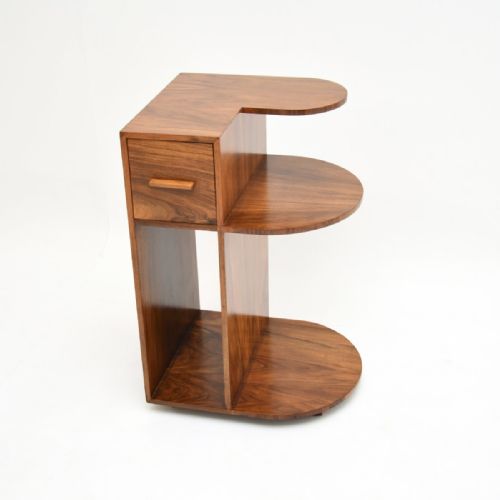
Brown bedside cabinets deliver bedside storage in timber ranging from Victorian mahogany to Art Deco walnut.
Brown Bedside Cabinets
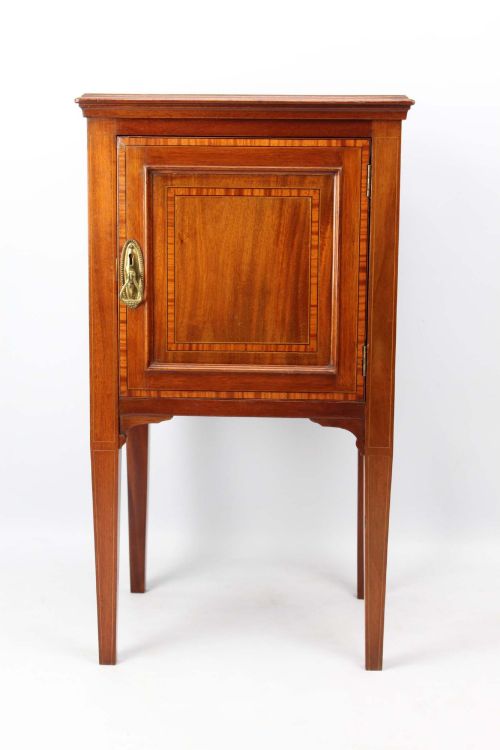
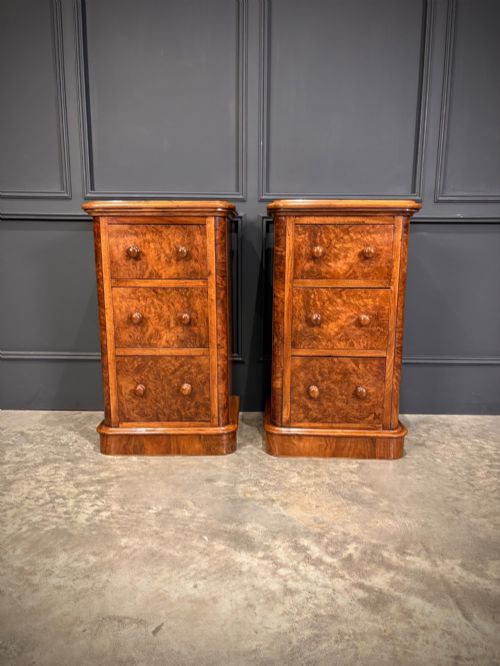
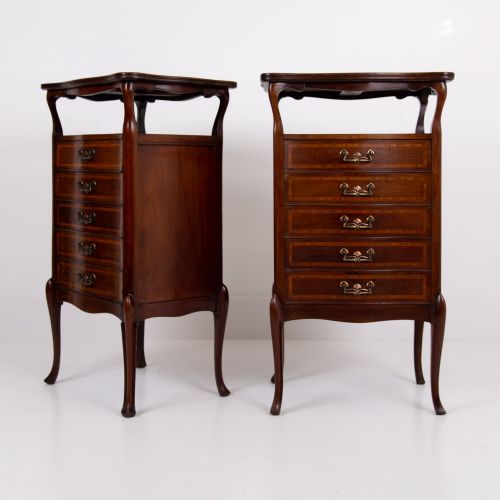
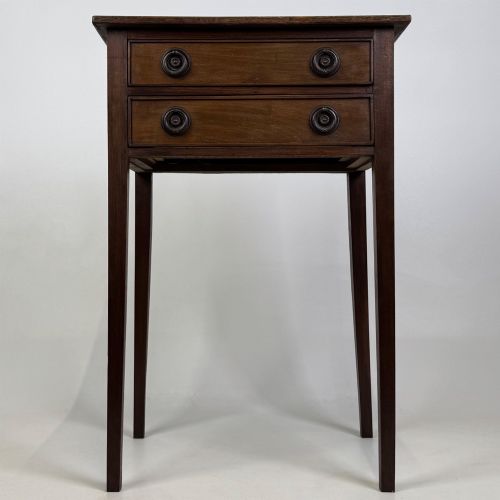
Brown bedside cabinets provide compact storage beside a bed, taking the form of bedside tables, chests, and small cupboards. When searching for brown bedside cabinets, buyers encounter pieces spanning the Victorian and Edwardian eras, through to the 1930s Art Deco period.
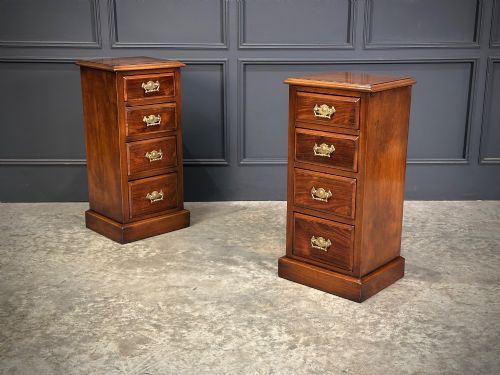
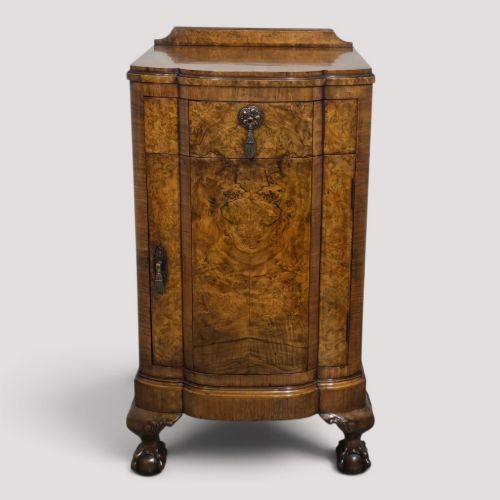
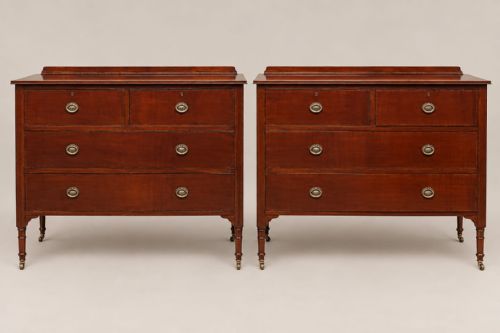
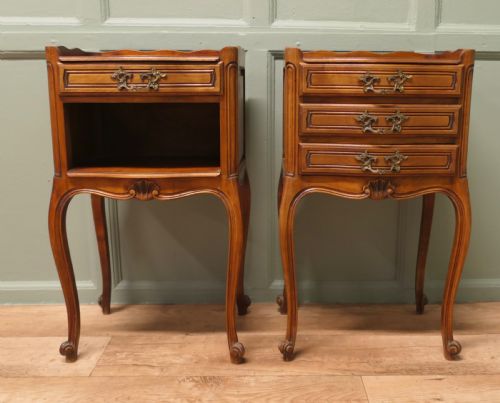
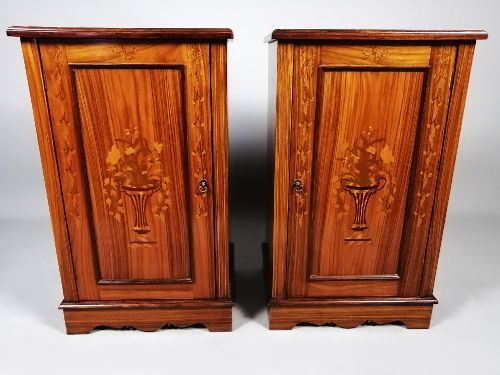
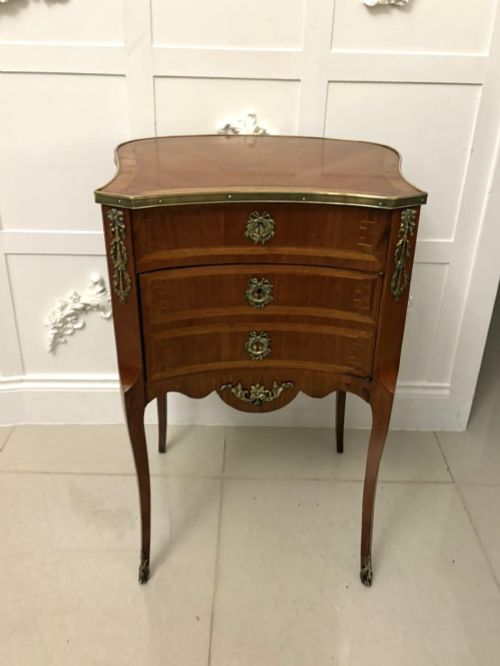
Mahogany and walnut dominate the selection, often appearing in matched pairs or single configurations. Forms range from simple single-door cupboards to multi-drawer chests and marble-topped French commodes.
The objects serve practical domestic roles while reflecting the prevailing taste of their decade, whether the clean lines of the 1930s or the substantial timbers of the nineteenth century.
How they were made
Cabinetmakers utilised solid timbers and decorative veneers, applying mahogany, burr walnut, and oak over robust structural carcasses. Flame mahogany provides striking grain patterns, while walnut and marquetry introduce intricate surface detail to French styles.
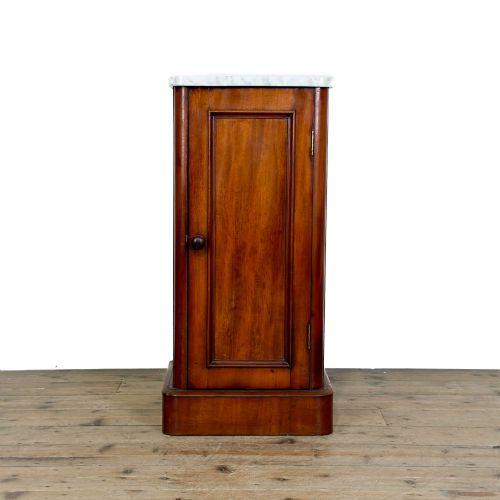
Brass handles, ormolu mounts, and white marble tops complete many of the continental and Victorian examples. Joinery methods rely on traditional drawer construction and close-fitting cupboard doors hung on brass hinges.
Some nineteenth-century pine cupboards started life hiding chamber pots before retiring to hold modern bedtime reading.
What varies in quality
Quality rests in the selection of timber veneers and the crispness of carved details or inlaid banding. Fine proportion and matching pairs demand greater skill from the maker than standard utility pieces.
The integrity of the internal drawers, the weight of the marble tops, and the subtlety of polished finishes separate standard production from superior craftsmanship.
François Linke
The Brown Bedside Cabinets Glossary
- Ormolu
- Gilded bronze mounts applied for decorative effect on French cabinets. It adds metallic contrast to dark timber surfaces.
- Marquetry
- The art of applying pieces of veneer to a structure to form decorative patterns. French Louis styles frequently display this technique.
- Flame mahogany
- A veneer cut from the fork of the mahogany tree to create a distinctive flickering flame pattern. It appears on substantial nineteenth-century pieces.
- Pot cupboard
- A traditional enclosed bedside cabinet originally designed to house a chamber pot. These form a large portion of early bedside storage.
Brown Bedside Cabinets: Frequently Asked Questions
Are these cabinets sold in pairs?
Many listings comprise matched pairs, particularly from the Victorian and Edwardian periods. Single bedside tables also appear frequently.
Buyers searching for symmetrical bedside placement will find numerous dual configurations across mahogany and walnut options.
What wood types are most common?
Mahogany and walnut form the vast majority of the timber selection. Burr walnut and flame mahogany variants offer more decorative grain figures.
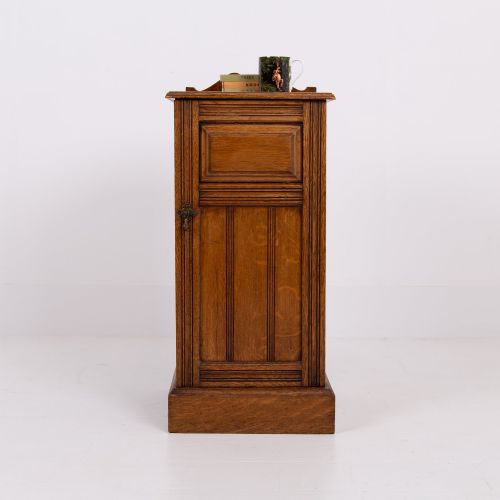
Oak and pine also feature in nineteenth-century country and Gothic Revival pieces.
How do I identify Art Deco pieces?
Art Deco cabinets typically date from around 1930 and utilise figured walnut with clean geometric lines. They often incorporate open display areas alongside enclosed cupboards.
These contrast with the heavier mouldings of Victorian mahogany chests.
Do French styles differ from English ones?
French cabinets frequently incorporate marble tops, ormolu mounts, and marquetry in the Louis XV or Louis XVI revival styles. English equivalents rely more on polished mahogany or oak surfaces.
Proportions on continental pieces tend towards neat commodes and bedside tables de nuit.