


Vintage English Nightstands
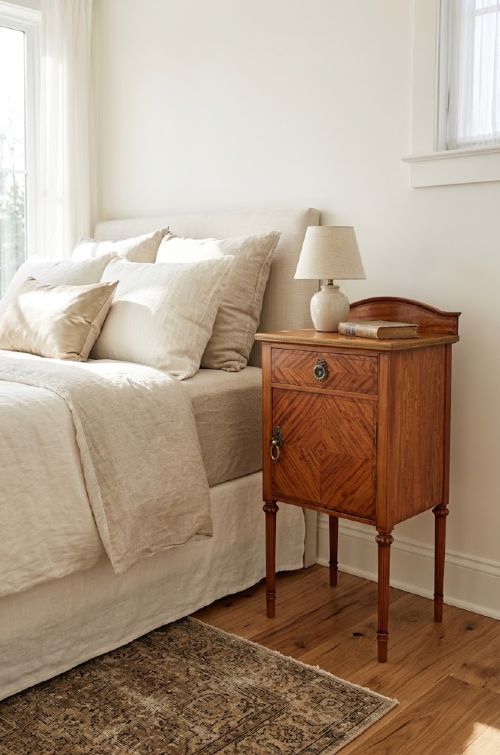
Vintage English nightstands bring character to a bedroom through polished hardwoods and practical storage crafted over the past three centuries.
Vintage English Nightstands
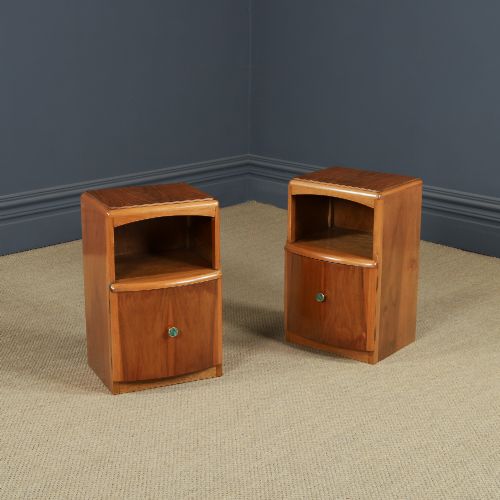
Vintage English nightstands comprise a diverse selection of bedside storage and display pieces originating from the eighteenth, nineteenth, and early twentieth centuries. These encompass Georgian mahogany cupboards, Victorian cylindrical cabinets, Edwardian satinwood pieces, and walnut examples from the Art Deco period.
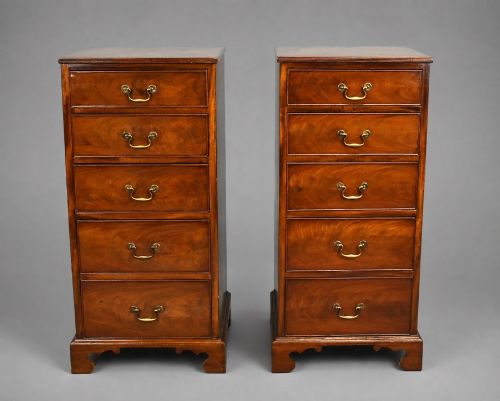
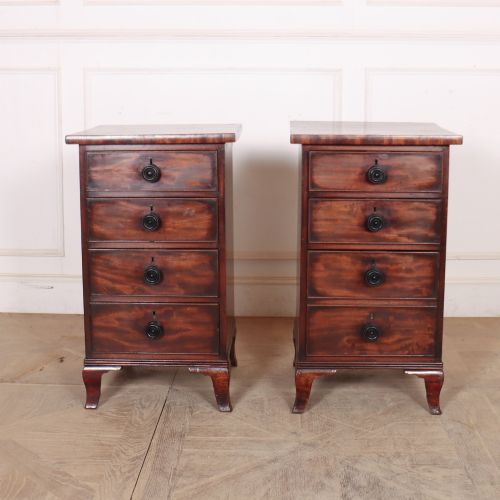
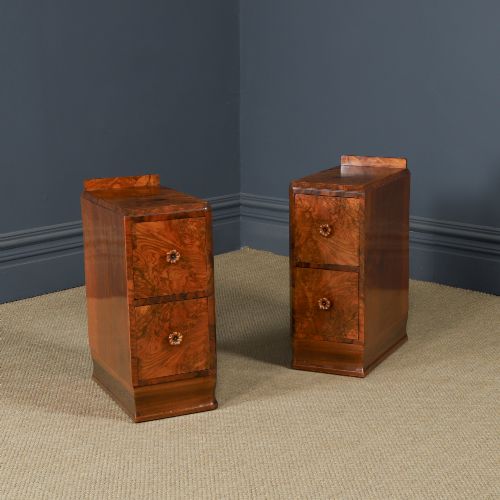
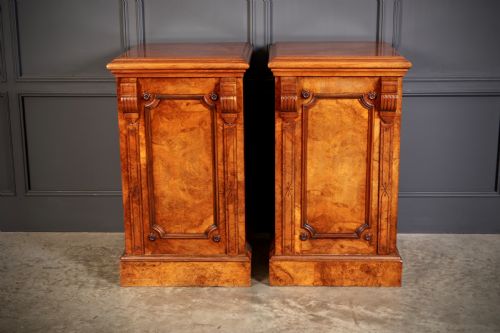
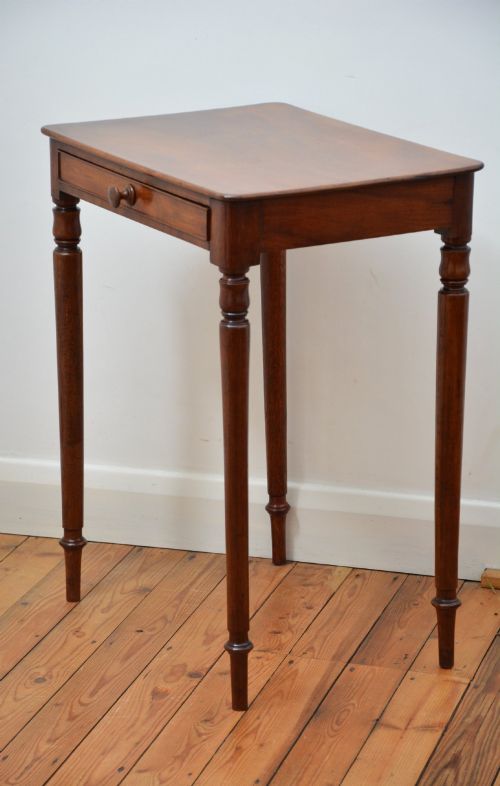
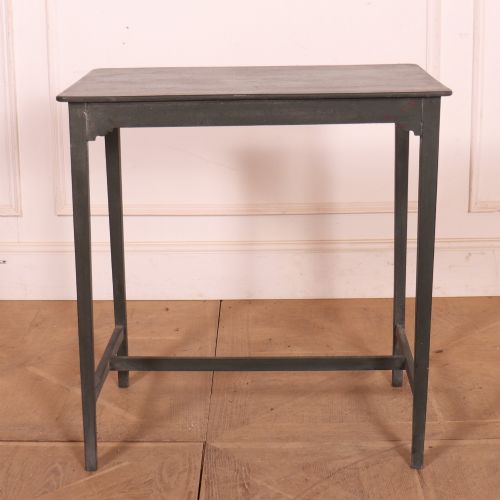
Buyers browsing this selection will frequently encounter matched pairs alongside single items, taking forms such as bedside chests of drawers, pedestal cabinets, and compact side tables. Materials span traditional timbers like oak, walnut, and mahogany, often enhanced by brass hardware and painted finishes.
The assortment reflects traditional British cabinetry across various regional styles, including English Country and Sheraton Revival. Pieces range from open lamp tables to enclosed bedside cupboards designed to hold night-time essentials.
How they were made
Cabinet makers utilised dense hardwoods such as mahogany, walnut, and oak to construct the carcases and frames of these bedside pieces. Selected veneers, including burr walnut and birds-eye maple, were frequently applied to drawer fronts and door panels to create distinctive figured patterns.
Joinery techniques relied on traditional dovetailed drawer construction and solid timber framing to ensure structural longevity. Brass handles, hinges, and occasional gallery rails were incorporated as functional metalwork accents.
Materials documented across the inventory include brass, mahogany, walnut, oak, metal, pine, satinwood, and burr walnut.
What varies in quality
The standard of timber selection largely dictates the distinction between ordinary and superior pieces, particularly regarding highly figured veneers and solid primary hardwoods. Master craftsmen achieved greater refinement through balanced grain matching and finely proportioned mouldings.
Originality of surface finish and hardware plays a significant role in determining overall excellence. Pieces retaining their patina, original brass fixtures, and sound structural joinery stand apart from those with compromised surfaces or later replacements.
WAS Benson
The Vintage English Nightstands Glossary
- Nightstand
- A small low table or cabinet placed beside a bed for holding lamps and personal items. In British usage, these are more traditionally catalogued as bedside tables or cabinets.
- Pedestal Cabinet
- A freestanding single-door cupboard resting on a plinth or feet. These tall storage units often feature internal shelving.
- Satinwood
- A pale, hard timber possessing a lustrous satin-like sheen. It gained popularity during the late eighteenth and Edwardian periods for fine inlaid furniture.
- Art Deco
- A design style from the nineteen-thirties characterised by geometric symmetry and streamlined forms. Walnut and birds-eye maple were frequently utilised in these pieces.
- Burr Walnut
- Timber taken from a tree growth displaying intricate swirling grain patterns. It is typically sliced into veneers for decorative cabinet fronts.
Vintage English Nightstands: Frequently Asked Questions
How do I date an English nightstand?
Dating relies on identifying timber choices, construction methods, and stylistic cues present in the piece. Georgian items often display hand-cut dovetails and solid mahogany, whereas Edwardian examples favour satinwood and lighter frames.
Hardware and secondary timbers provide further clues. Oak linings and brass drop handles typically indicate earlier periods, while machine-cut elements point towards the twentieth century.
Are matched pairs difficult to find?
Matched pairs of bedside cabinets appear across various nineteenth and twentieth-century periods, though they take patience to source. Art Deco walnut pairs and Victorian pedestal versions surface periodically.
Single items outnumber pairs significantly due to the dispersal of bedroom suites over time. Securing a matched set often requires looking towards Edwardian and later twentieth-century productions.
How should I care for polished wood?
Maintaining vintage polished wood requires keeping pieces away from direct sunlight and steady heat sources. Regular dusting with a soft, dry cloth preserves the aged lustre without building up excess residue.
Applying a traditional beeswax occasionally helps nourish older finishes. Avoid modern silicone sprays, which can penetrate porous timber and damage the historical patina.