
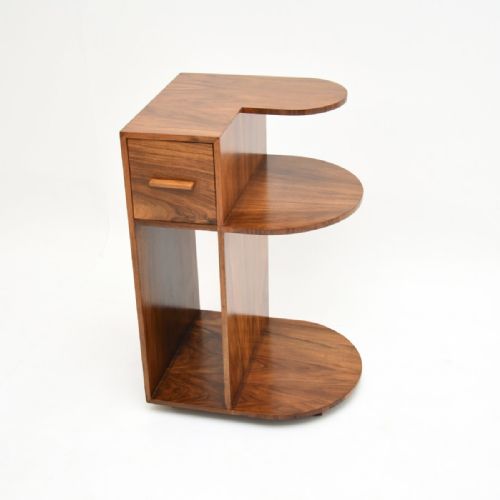


Curved Walnut Bedside Cabinets
Curved walnut bedside cabinets bring elegance and practical storage to a bedroom, prized for their rich grain and sweeping lines.
Curved Walnut Bedside Cabinets
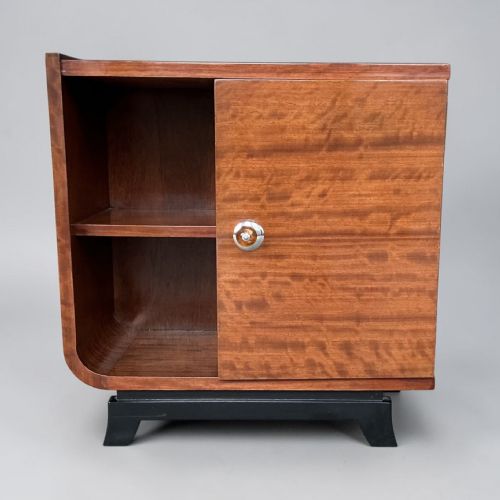
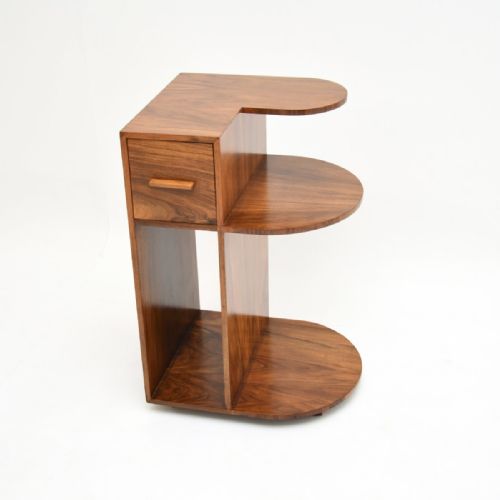
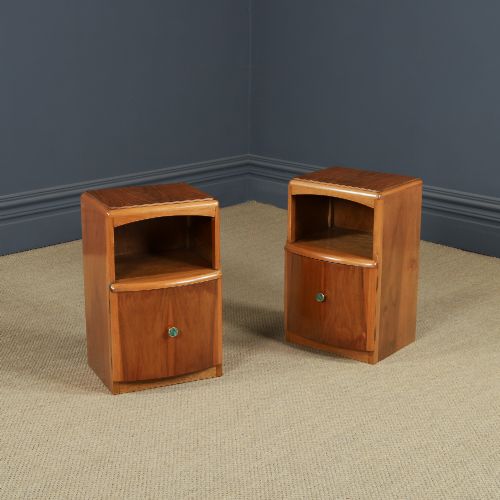
When you search for curved walnut bedside cabinets, you seek low-profile bedroom storage that displays the distinctive grain of walnut wood alongside rounded or serpentine forms. The pieces available range from compact bedside tables to larger side cabinets and matched pairs.
The examples you will most likely encounter date from the Art Deco period of nineteen thirty, alongside earlier Italian Rococo and continental pieces from nineteen hundred. These items often appear alongside related furniture such as side tables, chest of drawers, and bed frames.
Makers and designers of the period shaped these cabinets to soften bedroom layouts, utilising drum shapes, bombe profiles, and integrated nightstands. Walnut veneer, burr walnut, and figured walnut predominate across the selection, occasionally paired with marble tops or ebonised wood details.
How they were made
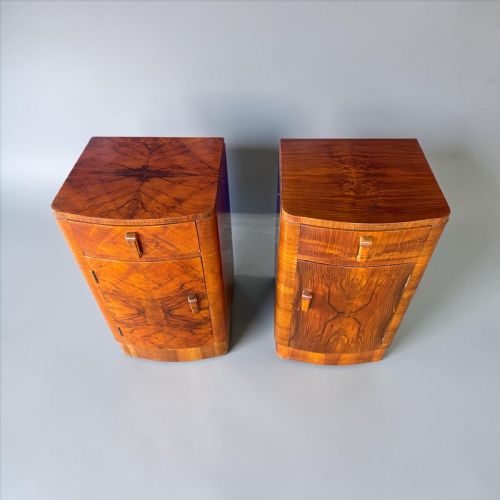
Cabinet makers constructed these pieces using solid wood foundations overlaid with walnut veneer, burr walnut veneer, or general wood veneer to achieve rich surface patterns. Skilled artisans laid these thin sheets of timber across curved carcasses to highlight the natural figures of the wood.
The structural forms rely on specialist woodworking techniques capable of bending timber and shaping composite frames into drum shapes, bombe contours, and smooth radiuses. Workshops integrated functional elements like cupboards, open storage areas, and illuminated tops directly into these flowing designs.
One exceptional piece lights up its own top surface, proving that nineteen-thirty designers took bedtime reading very seriously indeed.
What varies in quality
The sophistication of the veneer matching distinguishes simpler production from finer work, particularly where burr walnut or figured walnut wraps symmetrically around curved drawer fronts and cabinet doors. Superior examples display seamless transitions across rounded corners and drum circumferences.
Attribution to documented designers such as Maurice Adams elevates the standing of a piece, separating standard commercial output from high-end commissions. The inclusion of original materials like marble tops or integrated bedside lighting also marks the upper tier of the range.
Maurice Adams
The Curved Walnut Bedside Cabinets Glossary
- Burr walnut
- A veneer taken from the warted growths of a walnut tree, producing swirling, intricate grain patterns. It provides a highly decorative surface on cabinet doors and tabletops.
- Bombe
- A swelling, outward-curving profile found on chests and cabinets, originating in continental furniture design. This shape requires advanced mastery of curved woodwork.
- Veneer
- A thin layer of superior wood adhered to a secondary timber base for decorative effect. This technique allows makers to utilise expensive grains efficiently across curved surfaces.
- Art Deco
- A design style prominent around nineteen thirty, characterised by streamlined geometric forms and smooth curves. Furniture from this era often utilises figured walnut and polished finishes.
- Drum shaped
- A cylindrical form used for compact tables and bedside cabinets. This circular construction eliminates sharp corners in bedroom interiors.
Curved Walnut Bedside Cabinets: Frequently Asked Questions
What are curved walnut bedside cabinets?
These are bedroom storage units featuring rounded or curved profiles built primarily from walnut and walnut veneer. They frequently appear as matched pairs designed to sit beside a bed.
Most examples in the current selection date from the Art Deco era around nineteen thirty, though earlier continental pieces also occur.
How were these cabinets used?
They served to hold nighttime essentials like lamps, books, and personal items while keeping bedrooms tidy within closed cupboards or open compartments. Some designs formed part of larger bed headboard arrangements or matched suite groupings.
In period interiors, their rounded shapes softened the geometry of the room and saved space.
How do I live with walnut furniture?
Walnut benefits from placement away from direct sunlight and excessive heat sources to protect the polished wood surfaces and delicate veneers. Regular dusting with a soft cloth maintains the natural lustre of the grain.
Their compact footprints allow them to fit easily beside modern beds despite their historic origins.
How can I tell the periods apart?
Nineteen-thirty Art Deco pieces favour streamlined cylindrical drum shapes, burr walnut veneers, and minimalist hardware. Earlier pieces from nineteen hundred often show Italian Rococo influence with bombe profiles and marble tops.
Nineteenth-century items tend towards heavier solid timber construction and distinct classical proportions.