


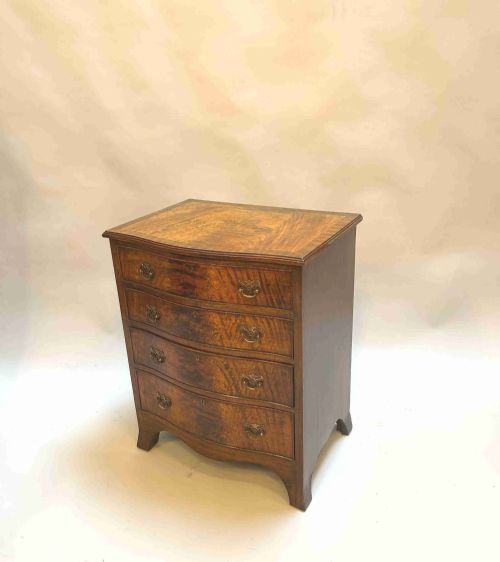
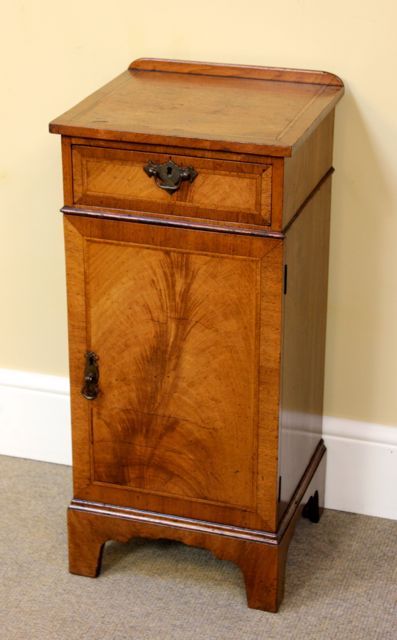
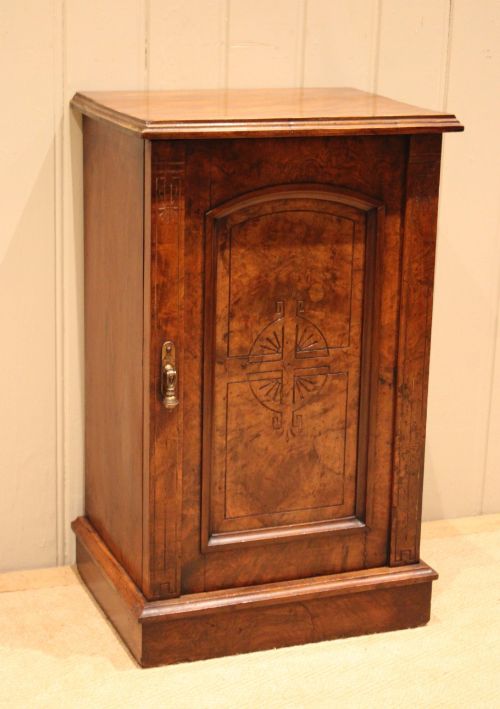
Burr Walnut Bedside Cabinet
A burr walnut bedside cabinet brings distinctive figured grain and compact storage to the bedroom.
Burr Walnut Bedside Cabinet
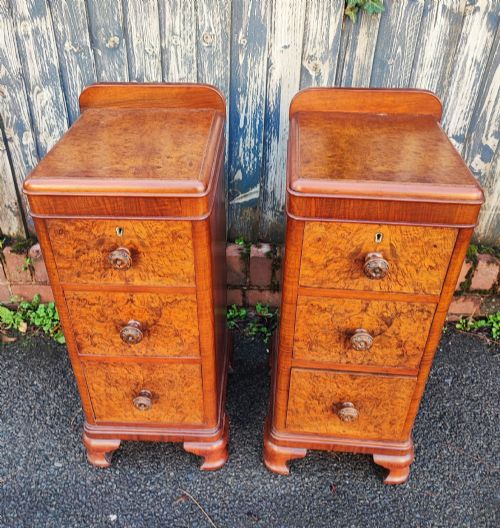
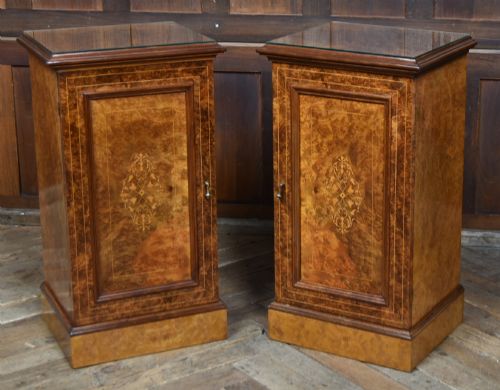
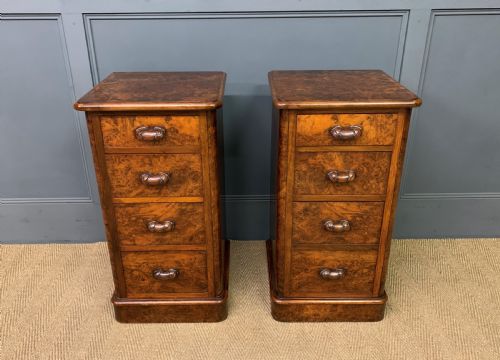
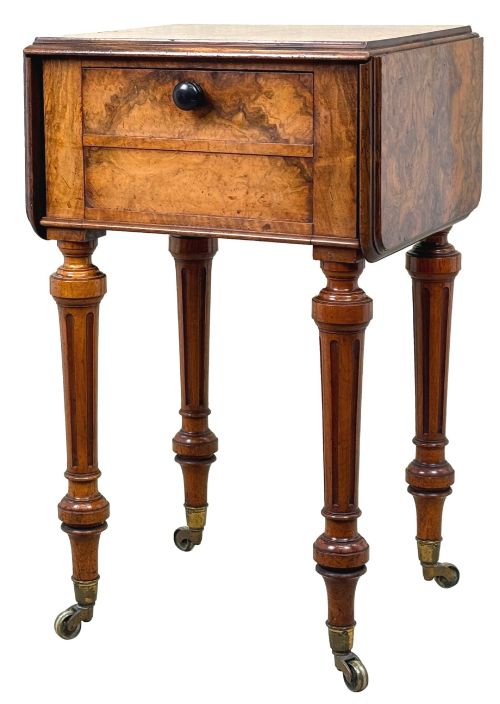
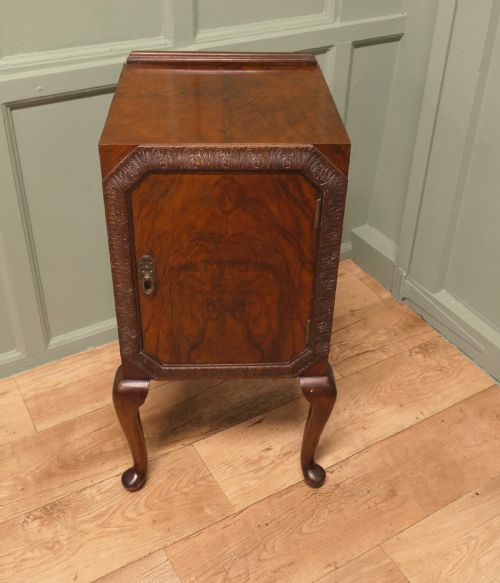
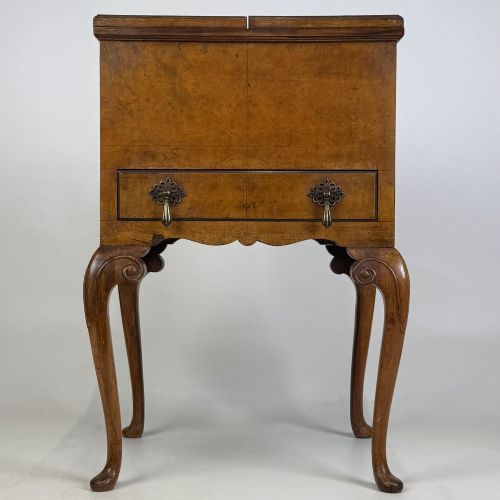
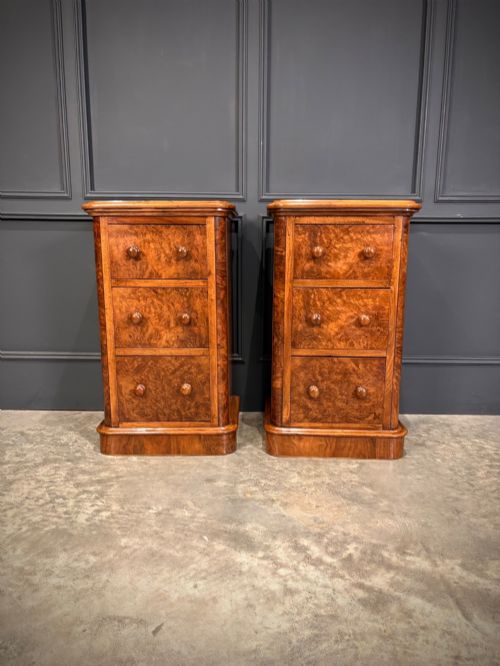
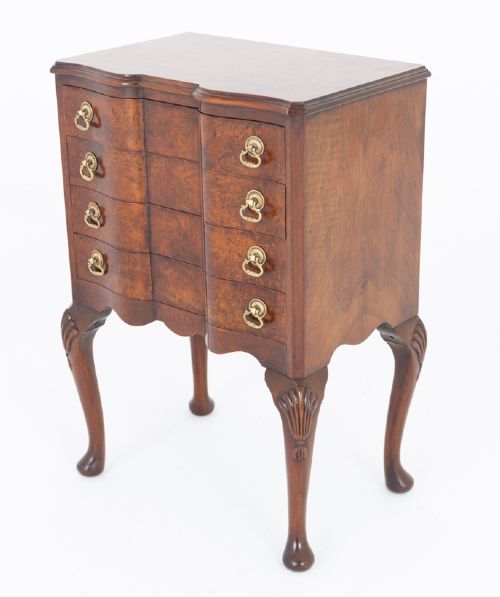
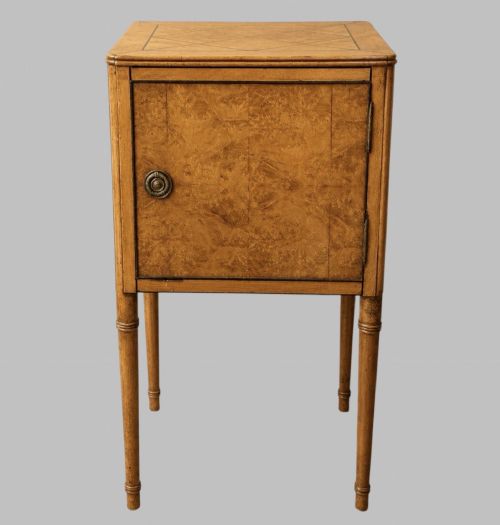
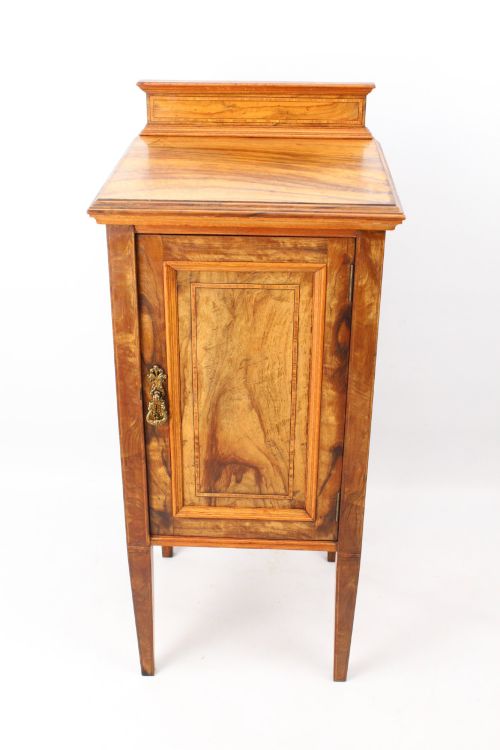
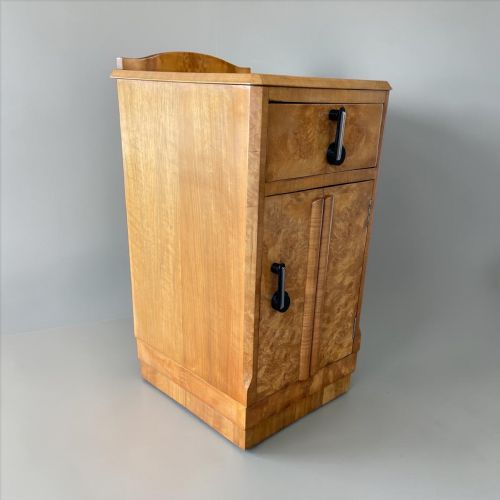
When searching for a burr walnut bedside cabinet, buyers encounter a range of compact bedside furniture designed to sit beside a bed. The pieces span several decades, with Victorian examples, Edwardian variations, and 1930s Art Deco designs appearing frequently.
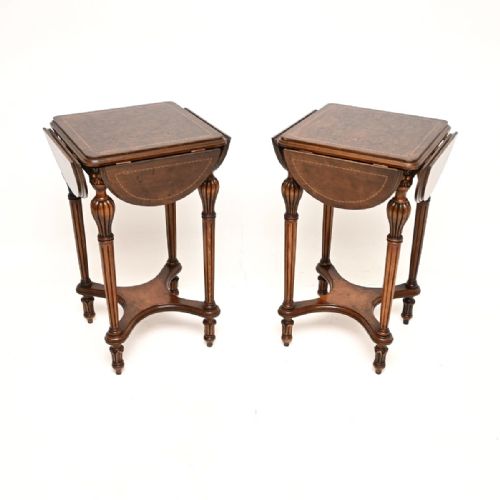
The forms vary from pedestal cupboards and small chests of drawers to open bookcases and marble-topped tables. Pairs are common alongside single cabinets, originating from English workshops as well as French makers.
How they were made
Cabinet makers utilised timber frameworks of pine or solid walnut as the structural base for these pieces. Burr walnut veneer was then applied to the exterior surfaces to display the swirling grain patterns.
Details such as brass handles and hardware complemented the wood, whilst certain continental examples incorporated marble tops into the construction.
Burr Walnut Bedside Cabinet Retail Price Guide 2026
Typical asking prices for burr walnut bedside cabinet among the pieces listed under this phrase on Sellingantiques today, from the lower quarter to the upper quarter. They describe what is for sale here now, not the wider market.
Listings include items spanning the Victorian period through to 1940, incorporating solid walnut, timber, brass, and marble.
What varies in quality
The visual impact of a burr walnut bedside cabinet depends on the selection and matching of the veneer across the drawer fronts and doors. Finer pieces demonstrate careful symmetry in the grain patterns rather than random placement.
Construction methods also distinguish the cabinet tiers, with traditional joinery and sturdy internal timber framing separating standard production from superior work.
Maple and Co·Walter Carter Harrods·Waring and Gillow·Maurice Adams
The Burr Walnut Bedside Cabinet Glossary
- Burr walnut
- A specialised wood veneer taken from the growth growths or burls of walnut trees, prized for its complex, swirling grain patterns. It creates highly decorative surfaces on Victorian and Art Deco furniture.
- Pedestal cupboard
- A tall, single-door cabinet designed to stand beside a bed or in a corner for enclosed storage. These pieces often feature a single internal shelf.
- Pot cupboard
- A traditional 19th-century term for a small bedside cabinet originally built to house a chamber pot. They typically include a cupboard door and sometimes an upper drawer.
- Art Deco
- A design style spanning the 1920s and 1930s characterised by streamlined shapes, geometric forms, and smooth polished wood surfaces. Cabinets from this period favour clean lines over revivalist ornamentation.
- Queen Anne style
- A revival aesthetic featuring cabriole legs and subtle curved forms popular in early 20th-century cabinet making. These items emulate 18th-century English furniture proportions.
Burr Walnut Bedside Cabinet: Frequently Asked Questions
What is a pot cupboard?
A pot cupboard is a compact bedside cabinet from the Victorian era originally designed to contain a chamber pot. These pieces usually feature a single door opening to reveal internal storage space.
Modern buyers utilise them as standard bedside tables or small side cabinets while retaining the historic enclosed storage.
Are matching pairs common?
Pairs of bedside cabinets appear frequently in both Victorian and Art Deco designs. Cabinet makers often produced matching sets to flank a double bed symmetrically.
Finding an original pair requires looking for consistent grain matching and identical dimensions across both units.
How do I identify Art Deco pieces?
Art Deco bedside cabinets date primarily from the 1930s and display streamlined geometric shapes. They avoid historical revival motifs in favour of smooth, curved veneers and minimalist hardware.
These cabinets often pair burr walnut finishes with stepped forms or waterfall edges.
What wood is underneath the veneer?
Cabinet makers laid burr walnut veneer over solid timber foundations such as pine or plain walnut. This technique allowed workshops to display expensive decorative grain without building the entire carcase from solid burr wood.
Underlying secondary woods remain visible inside the drawers and along the internal framing.