
French Bedside Cupboards
French bedside cupboards bring continental utility and charm to a bedroom, offering concealed storage alongside a stable surface for a lamp.
French Bedside Cupboards
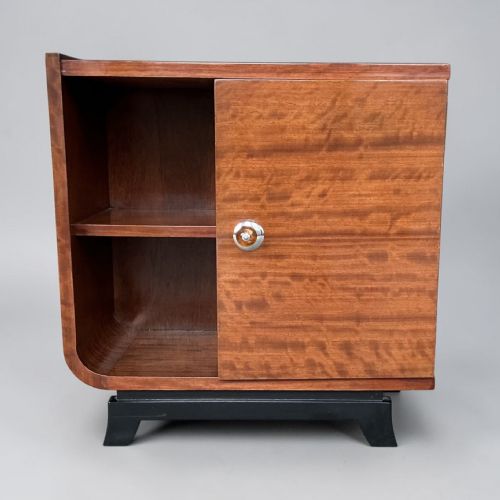
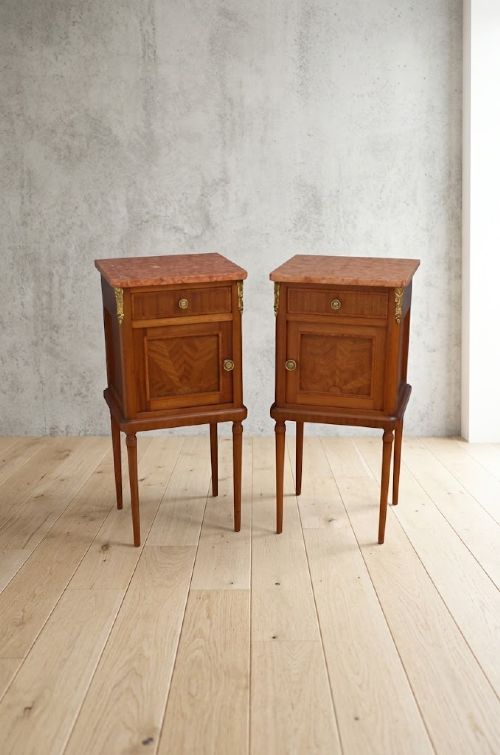
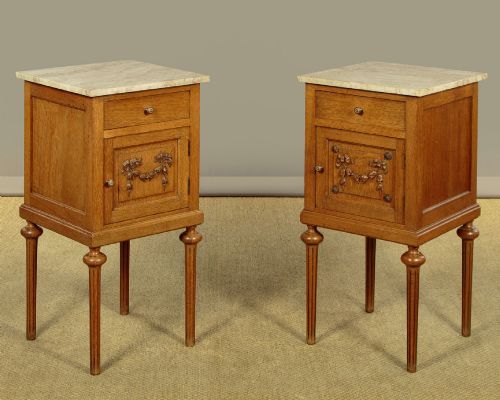
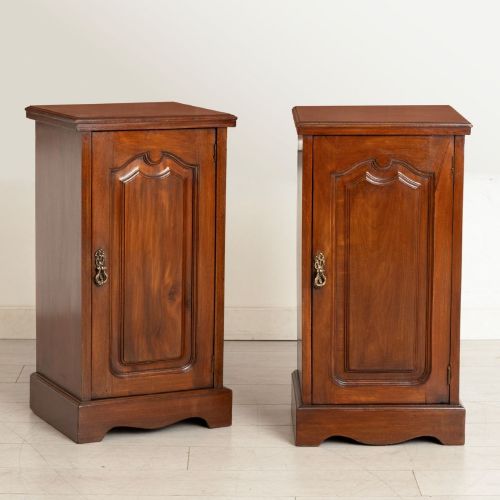
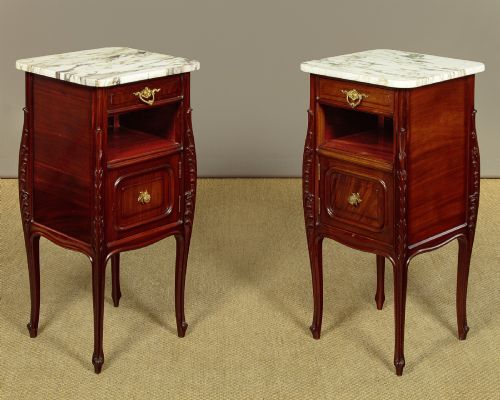
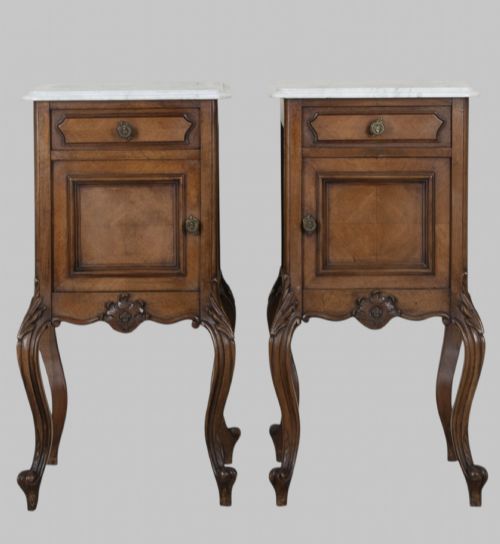
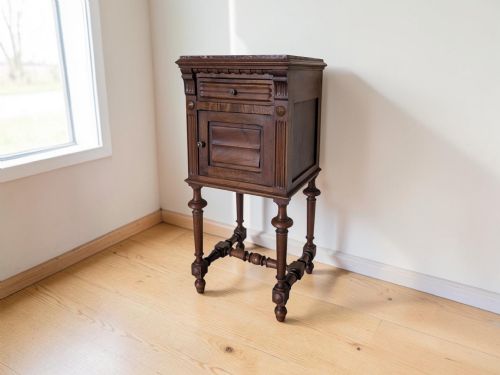
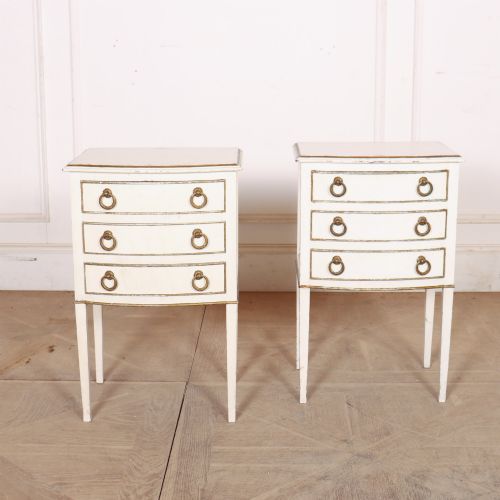
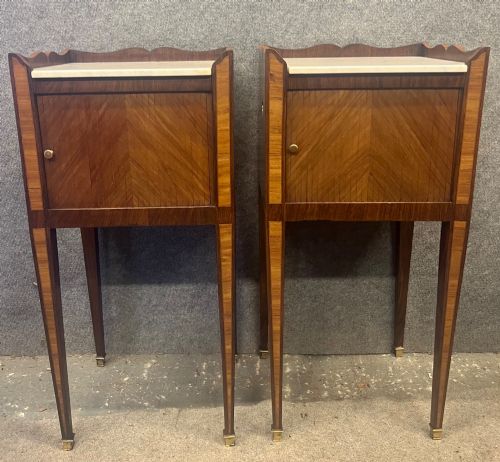
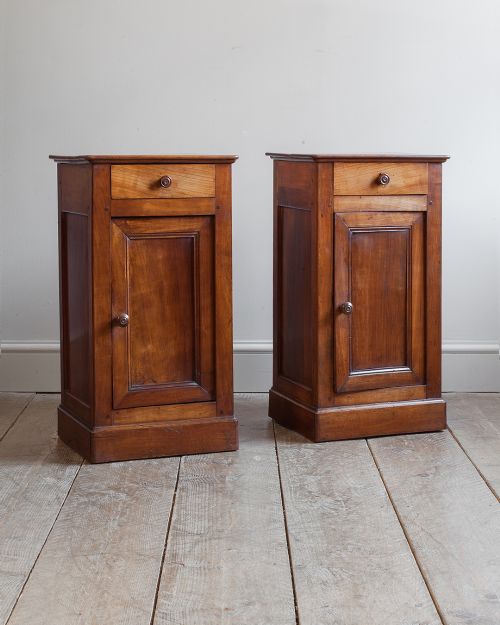
French bedside cupboards are practical bedroom items that combine a small cabinet space with a flat top, often designed as matching pairs. These pieces appear in styles ranging from plain rustic country forms to elaborate revival designs inspired by earlier royal courts. Most examples on this page date from the late nineteenth century and the early decades of the twentieth century.
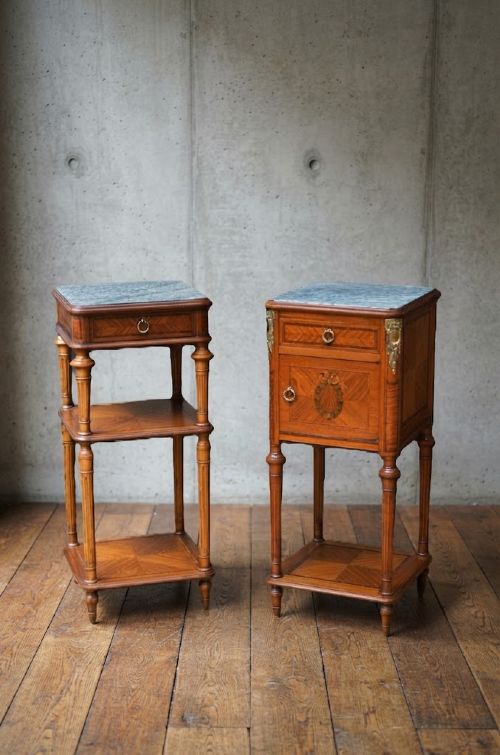
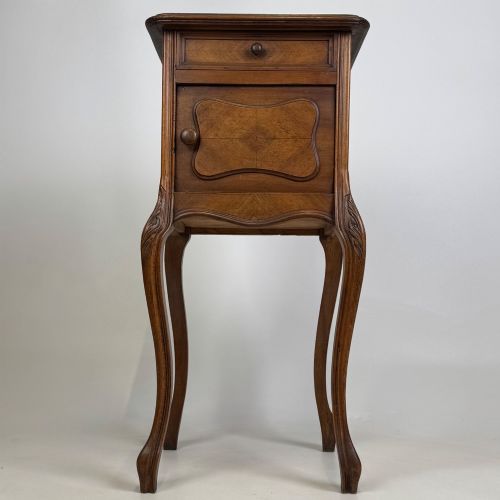
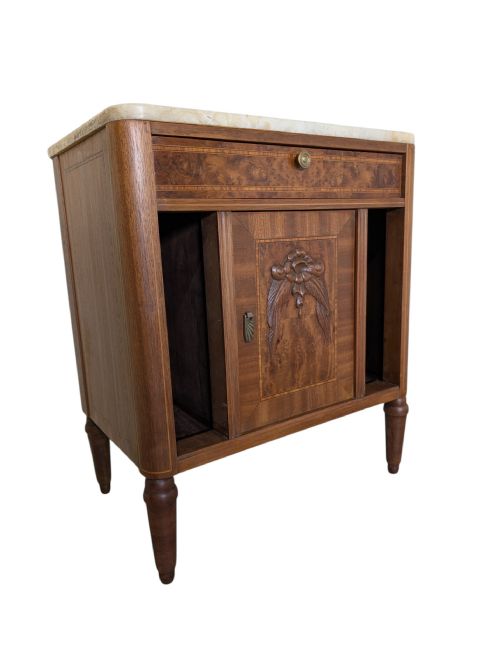
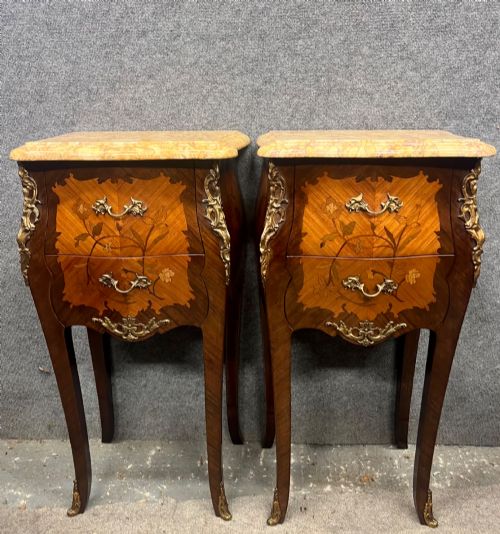
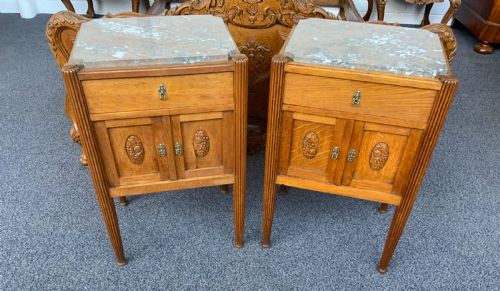
The materials used across these items include walnut, mahogany, oak, and tulipwood, frequently paired with fitted stone surfaces. Cabinetmakers also applied painted, ebonised, and bleached finishes to suit different domestic interiors. Many surviving specimens incorporate inlaid decoration or parquetry patterns on their exterior surfaces.
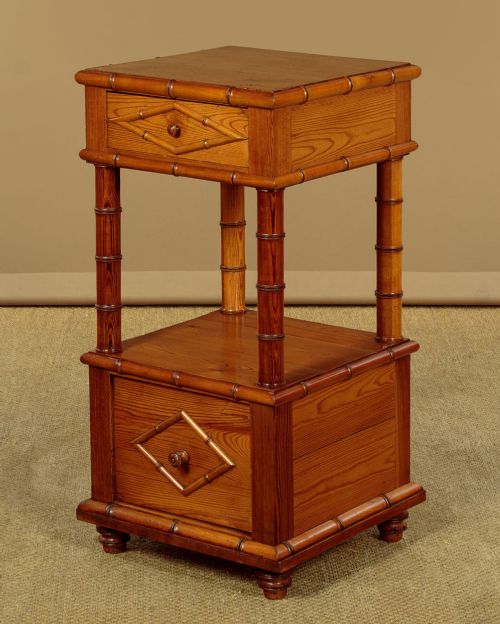
The primary forms found in this category include bedside cabinets, pot cupboards, and open lamp tables. Buyers frequently encounter these items configured with a single upper drawer above a cupboard door, or occasionally as cylindrical carcases. Their dimensions remain compact to fit tightly beside a bed frame.
Evaluating the Range
The distinction between standard examples and top-tier pieces rests on the choice of primary timbers, the complexity of decorative veneers, and the quality of the hardware. Superior specimens feature carefully matched walnut or mahogany grains, intricate marquetry inlay, and heavy marble tops with finely moulded edges. Lesser examples rely on plain solid woods or simpler painted finishes with minimal ornamentation.
Construction precision and the presence of original brass mounts further separate the grades. Better workshops employed skilled carvers and marquetry cutters to produce bombe shapes or Gothic architectural details, whereas utility pieces focused purely on basic storage. The survival of matching pairs in clean condition elevates the status of any grouping.
Retail Price Guide 2026
Typical UK retail prices for french bedside cupboards, calculated from the Sellingantiques database of over a million retail prices indexed since 2003. This retail price guide relies exclusively on Sellingantiques data; no external sources or auction records are used, so the figures do not describe the wider market.
Listings feature pieces from the late nineteenth and early twentieth centuries, constructed primarily from walnut, mahogany, oak, and tulipwood.
The French Bedside Cupboards Glossary
- Marquetry
- Decorative woodwork where small pieces of veneer are fitted together to form geometric or pictorial patterns on furniture surfaces.
- Bombe
- A swollen, outward-curving shape found on the sides and fronts of certain cabinets, popular in continental furniture design.
- Parquetry
- A geometric mosaic of wood pieces used for decorative floors and cabinet surfaces, similar to tilework.
- Pot cupboard
- A traditional name for a small bedside cabinet originally constructed to house a chamber pot behind its lower door.
- Sainte-Anne marble
- A specific type of dark grey or black Belgian limestone marble characterised by white fossil veins, often used for furniture tops.
Frequently Asked Questions
How were French bedside cupboards used?
These small cabinets sat beside a bed to hold personal items, night-time reading materials, and lighting on the upper surface. The enclosed lower compartment originally served to conceal a chamber pot or nighttime necessities.
Over time, their internal space adapted to hold general personal belongings as household plumbing and bedroom layouts evolved. Their compact footprints made them suitable for smaller domestic spaces.
Do these cupboards usually come in pairs?
A large proportion of surviving French bedside cupboards appear as matching pairs intended to flank a double bed symmetrically. Finding a matched pair remains common because bedrooms traditionally utilised twin bedside units.
Single items do appear occasionally, having been separated from their original pairing over decades of use. Buyers seeking balance for a bed frame generally look for matching sets.
What woods were used for these cabinets?
Cabinetmakers utilised a variety of native and exotic timbers depending on the region and the intended style of the piece. Walnut and mahogany were standard choices for refined urban pieces, while oak appeared frequently in provincial workshops.
Tulipwood and ebonised treatments were also introduced for decorative contrast or to meet changing interior fashions. Many pieces combined a solid timber carcase with contrasting veneer panels.
How do I care for marble top tables?
The marble tops found on many French bedside cabinets require simple cleaning with a damp cloth and mild, non-acidic soap. Avoid abrasive cleaners or acidic liquids like lemon juice, which can etch the polished stone surface.
Using coasters under glasses protects the porous stone from staining over years of daily domestic use. Regular dusting keeps the wooden bases and mounts in good condition.