

French Style Nightstands
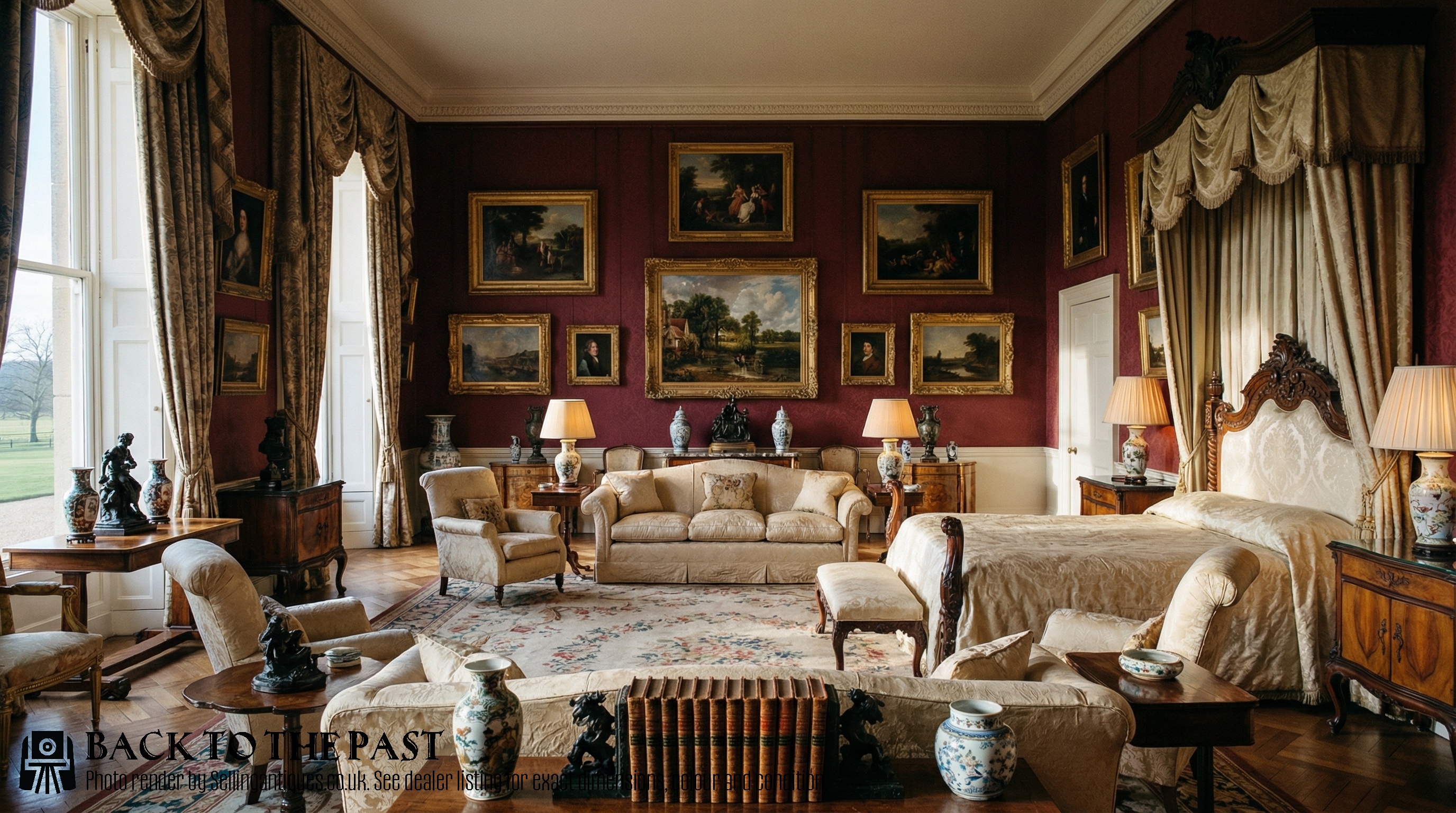
French style nightstands bring continental elegance to the bedroom, offering practical surface space alongside classic period craftsmanship.
French Style Nightstands
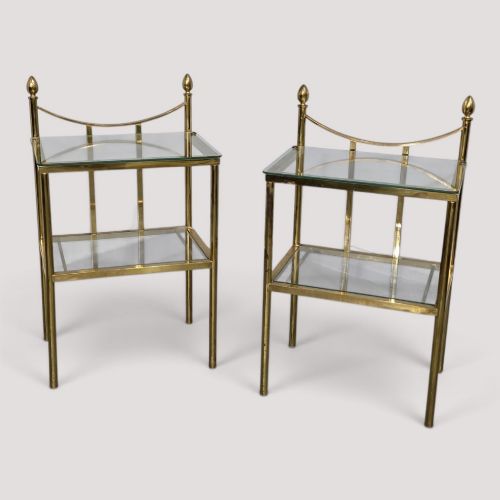
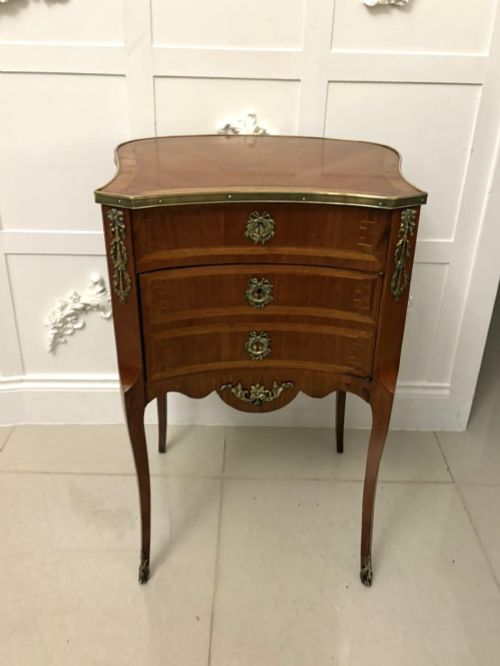
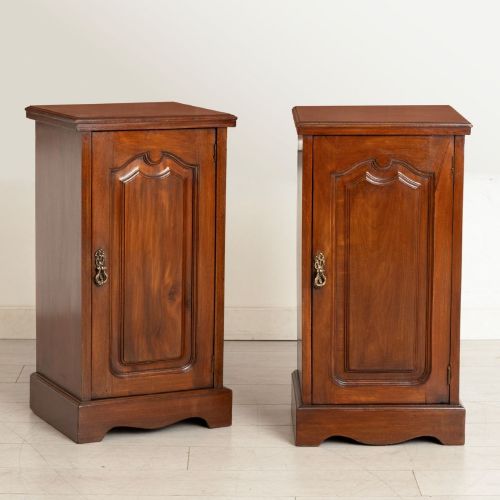
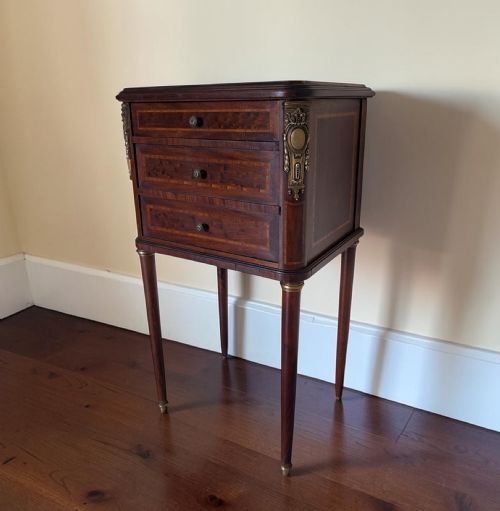
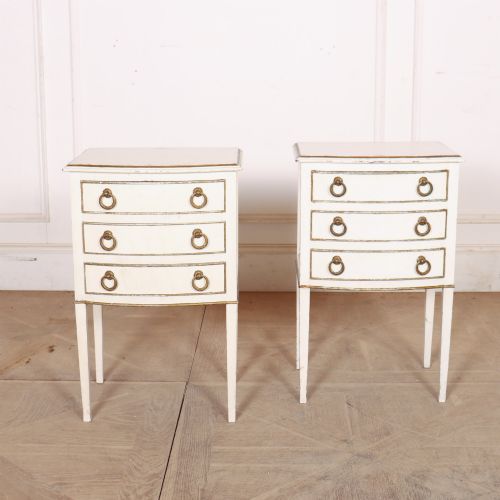
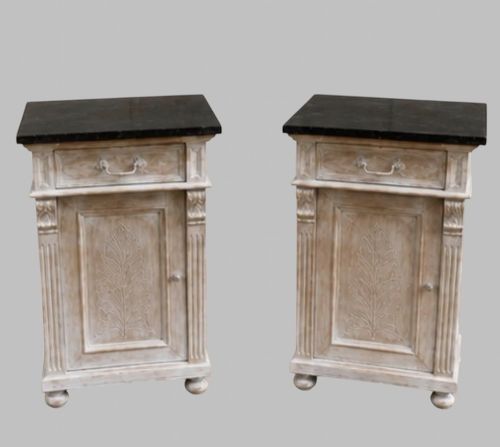
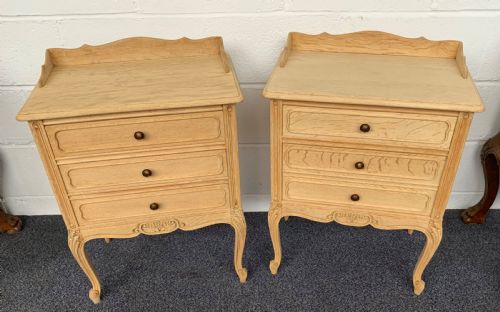
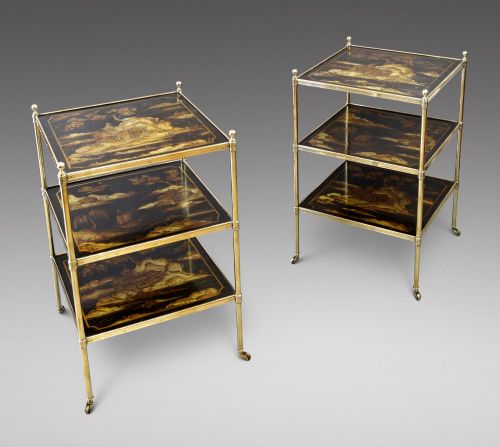
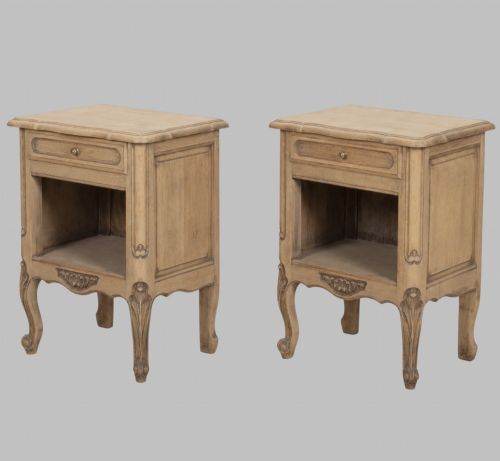
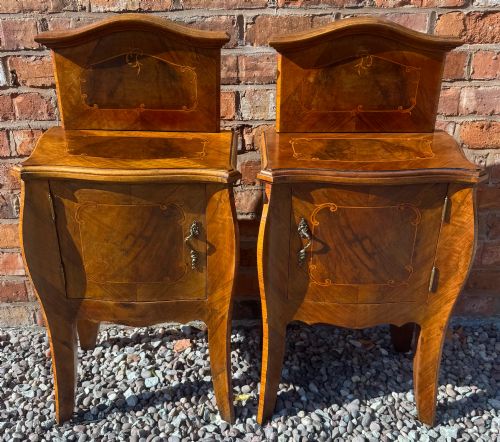
French style nightstands encompass a variety of bedside forms, including compact cabinets, chests of drawers, commodes, and open lamp tables. These pieces draw from stylistic revivals of the eighteenth century, manifesting primarily through Louis XV and Louis XVI designs alongside provincial and chateau interpretations.
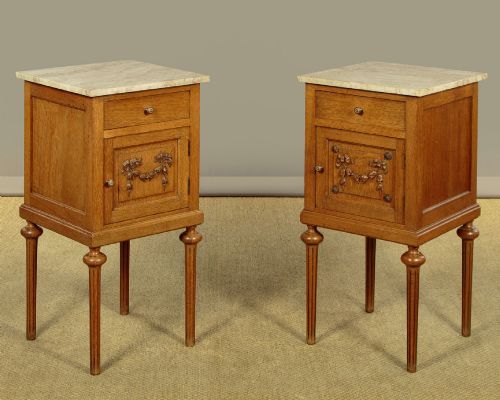
The inventory on this page ranges from the nineteenth century into the 1930s, capturing Victorian-era cabinetmaking as well as early twentieth-century production. Buyers encounter both single examples and matched pairs configured with doors, drawers, or drop-leaf surfaces.
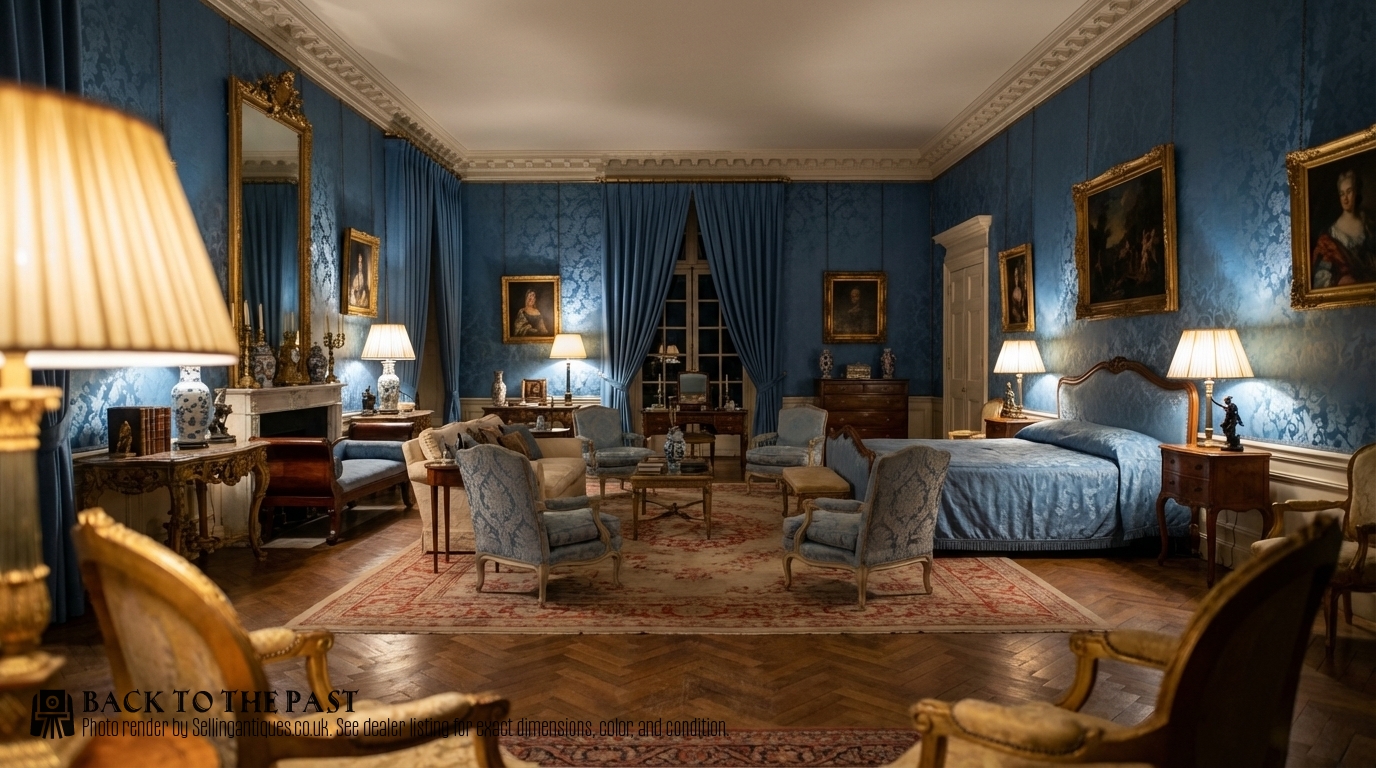
Materials and Technique
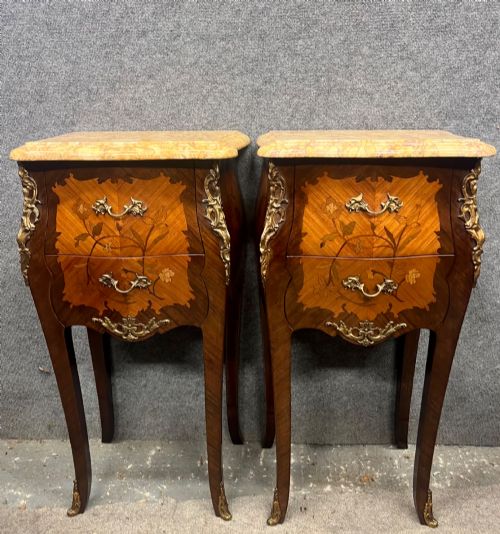
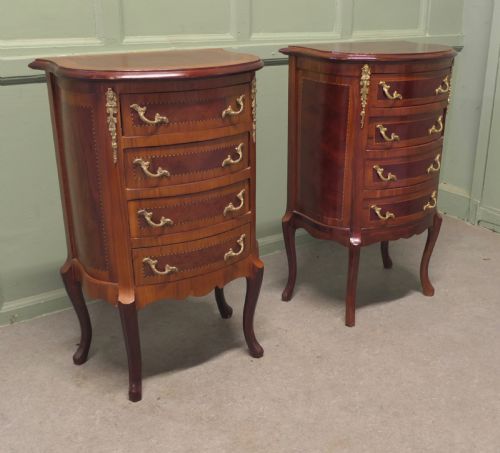
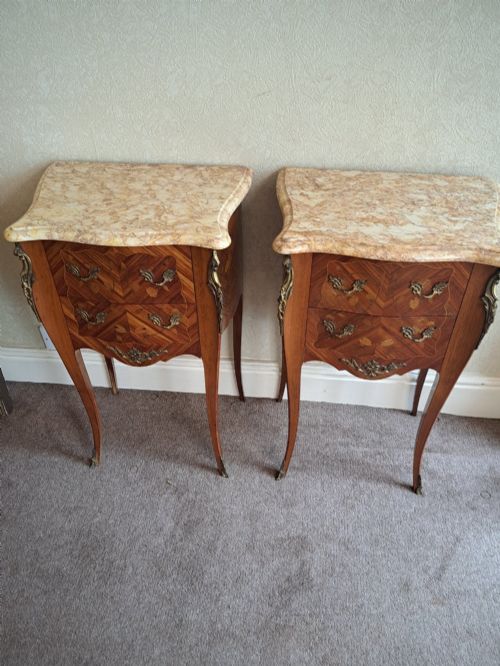
Cabinetmakers utilised dense hardwoods such as mahogany, walnut, rosewood, kingwood, and oak as the foundational carcasses for these nightstands. Finer examples display intricate marquetry and parquetry work, incorporating contrasting veneers like satinwood to create geometric or floral patterns.
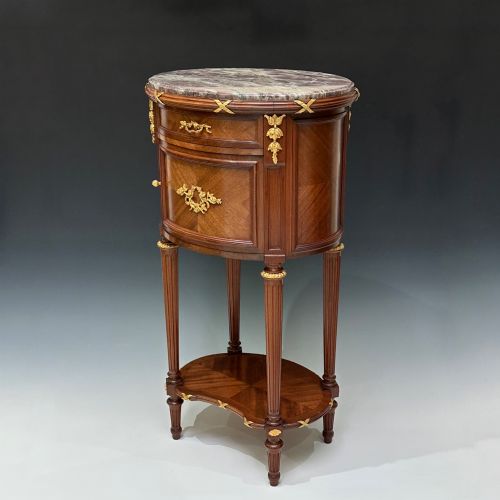
Many pieces incorporate inset marble tops and cast brass or ormolu mounts to accent the contours of the woodwork. Surface treatments range from natural polished timber finishes to painted surfaces, decorative lacquer, and chinoiserie.
French Style Nightstands Retail Price Guide 2026
Typical asking prices for french style nightstands among the pieces listed under this phrase on Sellingantiques today, from the lower quarter to the upper quarter. They describe what is for sale here now, not the wider market.
Several clever pieces disguise themselves as standard cabinets while concealing faux bamboo turnings or drop-leaf surfaces.
Judging Quality
Quality rests upon the precision of the timber matching and the crispness of the veneer work, where superior examples exhibit seamless joints and balanced grain patterns across curved surfaces. The integration of secondary materials, such as heavy gilt bronze mounts or finely veined marble slabs fitted flush to the wooden carcass, elevates a piece significantly.
Structural integrity reveals itself in the hand-cut joinery of the drawers and the weight and finish of the hardware. Pieces attributed to notable makers demonstrate superior attention to internal construction and decorative restraint.

François Linke·Sormani
The French Style Nightstands Glossary
- Marquetry
- Decorative veneer work arranged in pictorial or floral patterns using various coloured woods. It creates intricate surface designs across the top and sides of the cabinet.
- Ormolu
- Gilded bronze mounts applied to furniture for decorative accent. These metal elements outline drawers and highlight the corners of period pieces.
- Parquetry
- Geometric wood inlay patterns resembling mosaics. This technique uses contrasting timber tiles to form repeating shapes on table tops.
- Chevet
- A French term for a small bedside table or cabinet. These diminutive pieces provide enclosed storage beside the bed.
French Style Nightstands: Frequently Asked Questions
What is the difference between a chevet and a commode?
A chevet is specifically designed as a bedside cabinet or table, usually smaller in scale to sit adjacent to a bed. A commode is traditionally a larger chest of drawers intended for general room storage.
While both appear in French provincial and revival styles, their proportions dictate their placement within a bedroom layout.
Are marble tops original to these nightstands?
Marble tops frequently appear on nineteenth-century and early twentieth-century pieces, providing a durable and decorative surface resistant to water and wear. Many Louis XV and Louis XVI style cabinets were designed specifically to accommodate these heavy stone slabs.
Inspect the seating of the marble within the wooden frame to ensure it matches the period of the carcass.
How do I identify Louis XV style from Louis XVI style?
Louis XV style pieces are characterised by flowing serpentine lines, cabriole legs, and asymmetrical rococo mounts. They emphasise curves and organic forms throughout the silhouette.
In contrast, Louis XVI style embraces neoclassical symmetry, featuring straight fluted legs, right angles, and architectural restraint.
Do these nightstands usually come in pairs?
The selection includes both individual tables and matched pairs, with pairs being particularly sought after for balancing a bed on both sides. Sourcing a matching set from the nineteenth or early twentieth century requires careful attention to dimensions and wood grain.
Single cabinets work effectively as standalone accent pieces or lamp tables.