
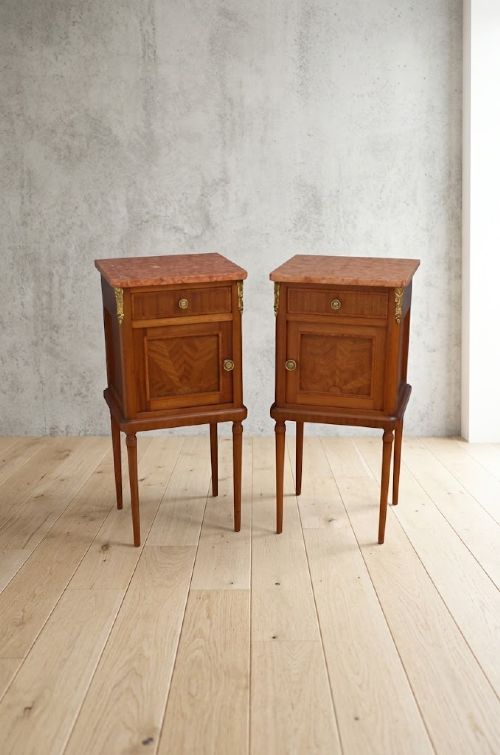
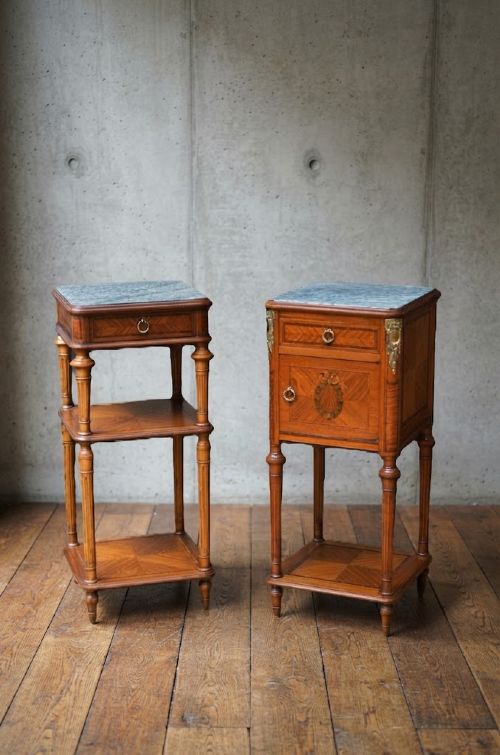
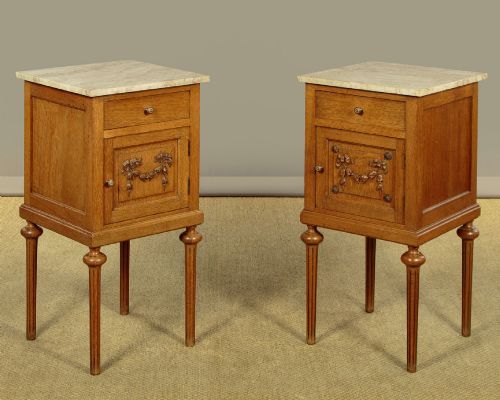
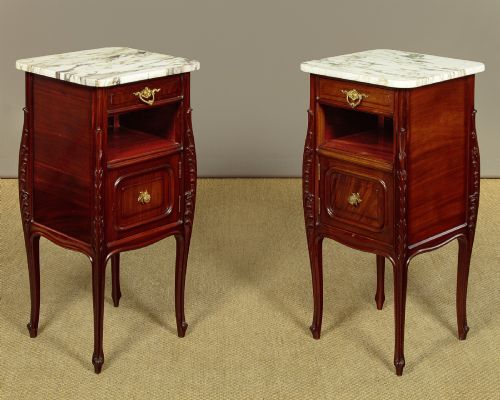
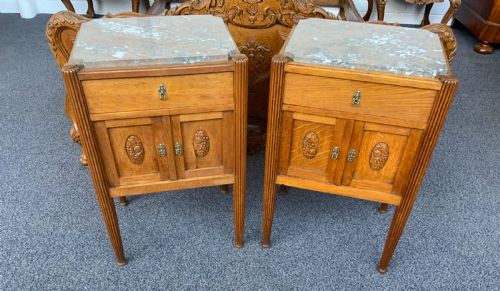

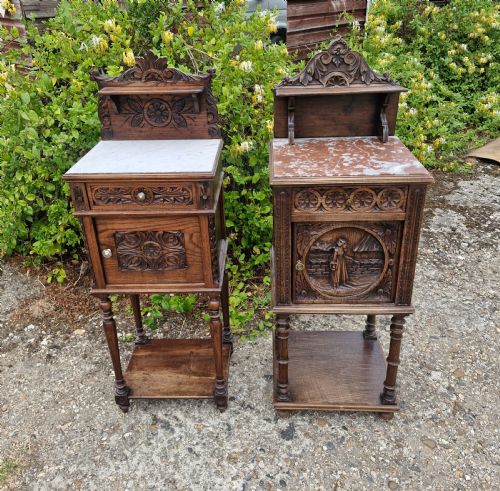
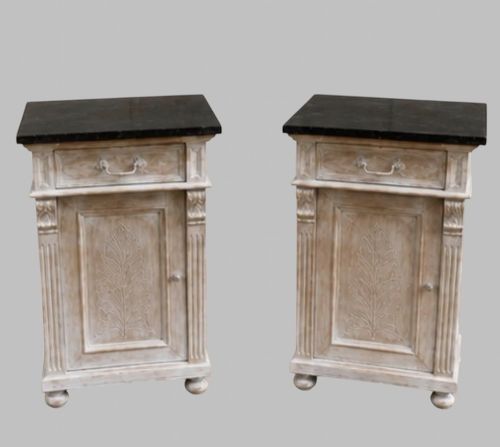
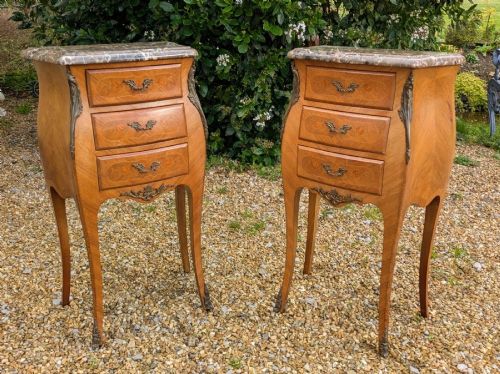
Pair Marble Top Nightstands
These pair marble top nightstands bring practical bedside surface space and enduring French stylistic elegance to a room.

Pair Marble Top Nightstands
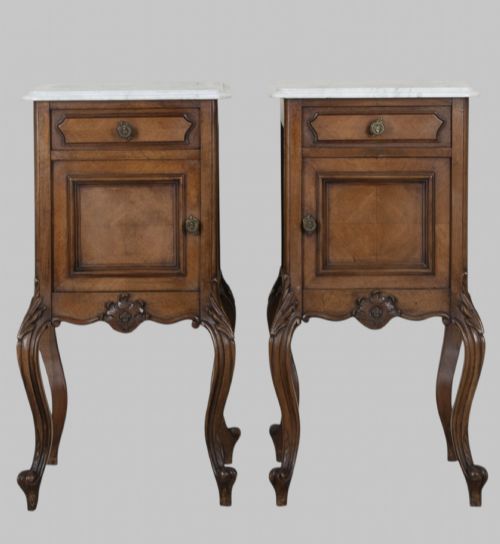
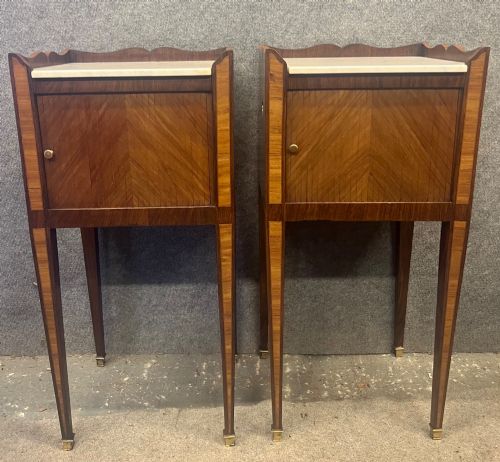
A search for pair marble top nightstands directs attention towards matched pairs of bedside cabinets, commodes, and lamp tables designed to stand symmetrically beside a bed. The pieces encountered most frequently on this page originate from continental workshops spanning the late nineteenth century through the art deco period of the nineteen-thirties.
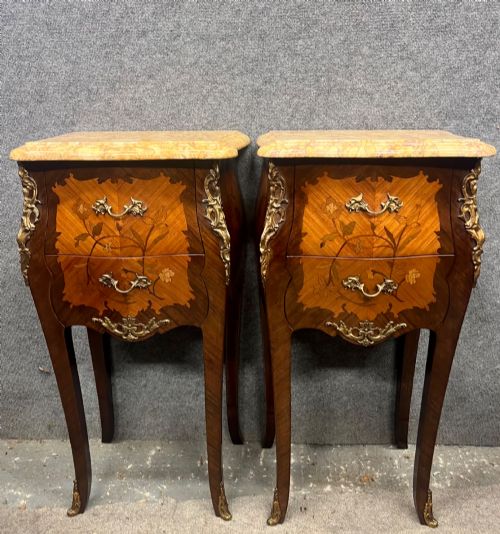
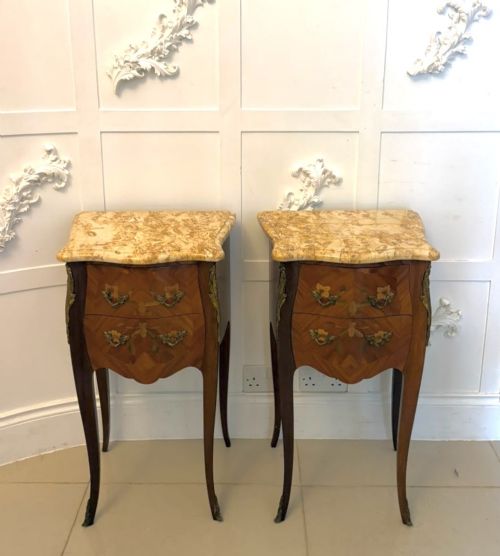
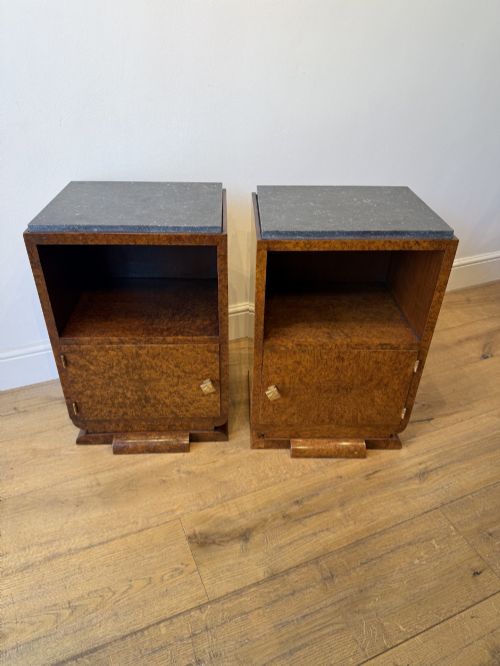
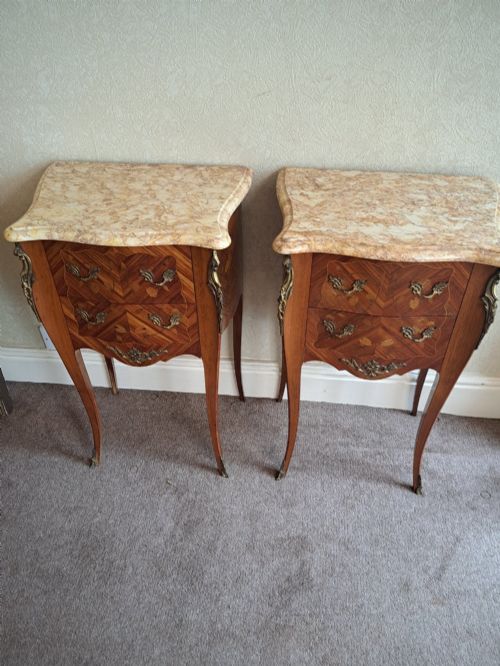
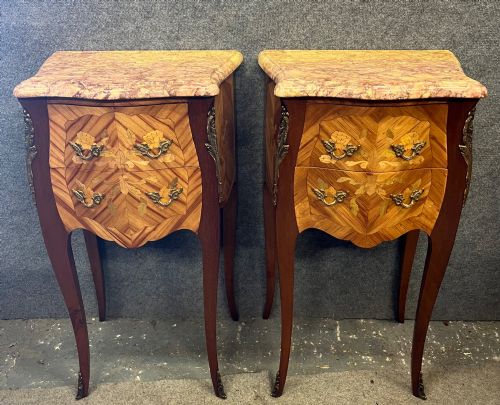
Makers often fashioned these functional items from rich timbers including walnut, kingwood, and oak, frequently incorporating decorative veneers and stone surfaces. Buyers encounter forms ranging from serpentine frontages and bombe profiles to straightforward rectilinear cabinets with fitted marble tops.
The selection reflects diverse regional aesthetic movements, capturing French provincial styles, Louis XV and Louis XVI revivals, and geometric art deco designs. These matched sets offer dual bedside storage while displaying the characteristic stone and timber combinations typical of European domestic furniture from these eras.
Materials and construction methods
Cabinet makers utilised a foundation of solid timbers like oak, pine, or walnut, applying decorative veneers such as kingwood, satinwood, mahogany, and burr walnut across the visible surfaces. Marquetry and inlay techniques added intricate geometric or floral patterns, particularly during the nineteenth and early twentieth centuries.
Heavy marble slabs, including Belgian Sainte-Anne varieties, were cut and polished to fit precisely onto the top of each cabinet, providing a durable and water-resistant surface for bedside items. Ormolu mounts, cast bronze details, and brass handles were secured to enhance the stylistic vocabulary of Louis XV and Empire revival pieces.
Construction frequently incorporated traditional joinery methods, allowing cabinets to support the weight of thick stone tops while maintaining structural integrity over decades of domestic use.
Evaluating craftsmanship and distinction
The distinction between standard examples and superior pieces rests on the precision of the timber matching and the intricacy of the marquetry inlay. Artisans who selected highly figured grain patterns or executed complex floral marquetry created items of greater visual depth.
The quality of the marble top and its edge profiling also separates grades of production, with thicker stone, sophisticated bevelling, and specific named varieties indicating higher workshop standards. Furthermore, the integration of fire-gilded or finely chased ormolu mounts rather than stamped brass elements elevates the standing of an individual pair.
E. Kahn
The Pair Marble Top Nightstands Glossary
- Chevet
- A French term for a small bedside table or cabinet. These diminutive pieces usually feature a small cupboard door or drawer situated beneath the stone surface.
- Ormolu
- Gilt bronze mounted onto furniture as a decorative ornament. This technique involves applying a gold amalgam to bronze components before heating.
- Bombe
- A swelling, outward-curving chest or cabinet profile popular in continental furniture design. This curvaceous shape requires advanced woodworking skill to construct accurately.
- Marquetry
- The art of applying small pieces of veneer to a structure to form decorative patterns. Craftsmen use contrasting woods to create pictorial or geometric designs.
- Sainte-Anne marble
- A specific dark grey or black variety of limestone featuring distinctive white fossil inclusions. Quarried in Belgium, it provides a dramatic and durable tabletop surface.
Pair Marble Top Nightstands: Frequently Asked Questions
What periods do these nightstands come from?
The pieces listed span from the late nineteenth century through the early twentieth century, encompassing the eighteen-eighties up to nineteen-thirty.
Art deco and revival styles heavily feature alongside earlier nineteenth-century French cabinet-making traditions.
How were marble top nightstands used?
They served beside beds to hold lighting, water jugs, and personal items while concealing chamber pots or night storage within the cupboards.
The stone top provided a practical surface that resisted moisture and staining from everyday bedside use.
Are the marble tops original to the cabinets?
Most surviving cabinets retain their heavy fitted stone surfaces, which were custom cut to follow the specific contours of the timber base.
Varieties like Sainte-Anne marble indicate regional European sourcing consistent with the manufacturing period of the furniture.
How do I distinguish Louis XV style from Art Deco?
Louis XV style pieces display sweeping cabriole legs, asymmetrical floral marquetry, and ornate ormolu mounts reflecting eighteenth-century French court aesthetics.
Art deco examples favour clean geometric lines, burr walnut veneers, and symmetrical forms characteristic of nineteen-thirties design.