


French Walnut Pot Cupboards
French walnut pot cupboards are compact bedside companions offering hidden storage and elegant continental charm.
French Walnut Pot Cupboards
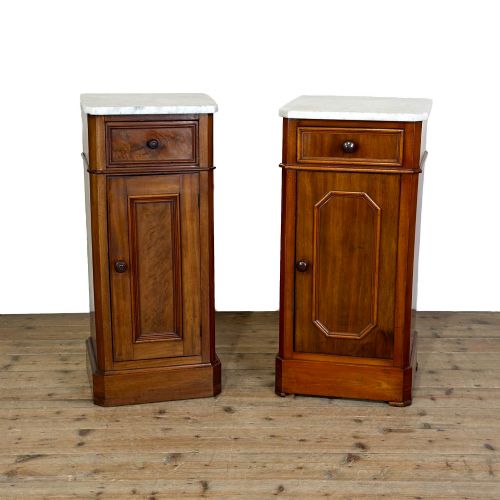
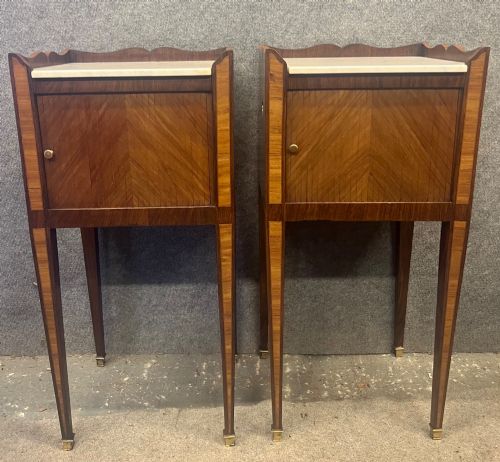
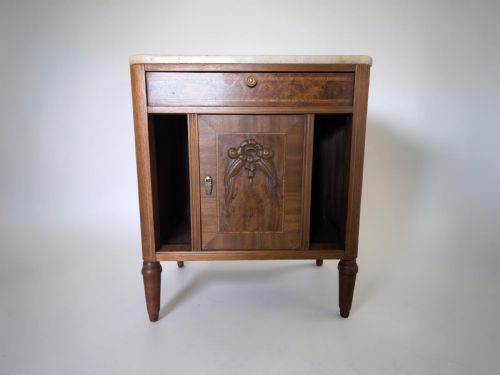
French walnut pot cupboards are functional bedside cabinets designed to house a chamber pot alongside other night-time necessities. When you examine this selection, you encounter pieces spanning the nineteenth century through to the early twentieth century, taking the form of bedside tables, nightstands, and small side cabinets.
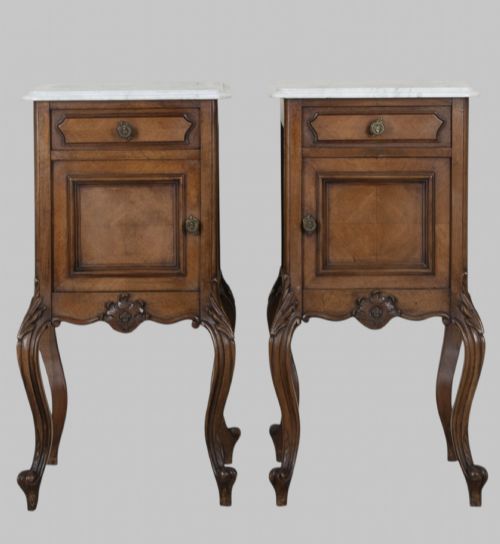
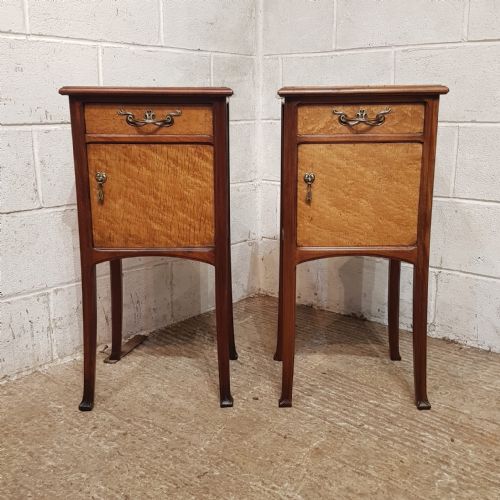
The version you are most likely to meet on this page is a single-door cupboard topped with white or coloured marble, often appearing as a matched pair. These furnishings reflect diverse continental aesthetics, including French Provincial, Louis XV revival, and Henri II styles.
How they were made
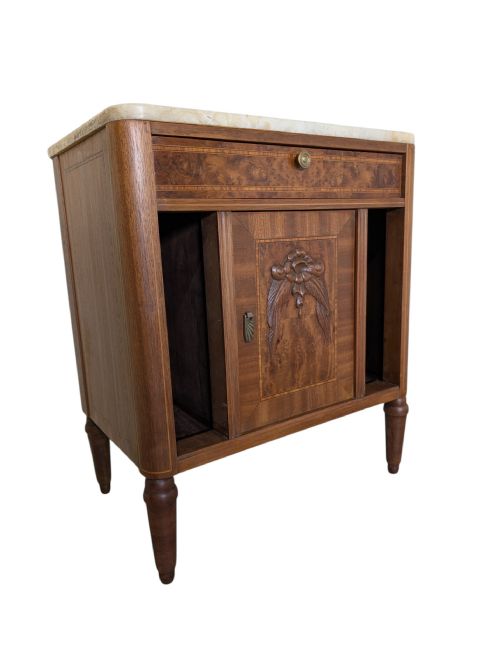
Cabinet makers utilised solid walnut and figured veneers such as burr walnut, tulipwood, and kingwood applied to sturdy timber carcases. Marquetry inlay and panelled construction display the joinery skills standard to French workshops of the period.
Many examples incorporate fitted marble slabs to the upper surface, providing a durable and hygienic platform for washing equipment or water jugs. Brass handles, escutcheons, and occasional metal mounts complete the hardware of these nightstands.
The inventory spans Victorian and Edwardian eras alongside nineteenth-century French provincial designs.
What varies in quality
The refinement of the carving and the choice of wood veneers separate standard bedroom furniture from superior examples. Finely figured burr walnut and intricate marquetry demonstrate a higher level of artisan investment.
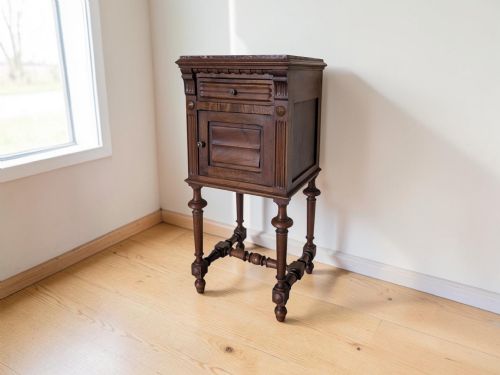
The integration of heavy marble tops, precise door alignment, and the retention of original brass hardware indicate the original tier of production. Subtle details such as barley twist supports or bombe shaping alter the visual weight of each piece.
The French Walnut Pot Cupboards Glossary
- Pot cupboard
- A small bedside cabinet originally constructed to contain a chamber pot behind its single door. These pieces often feature an internal shelf or small drawer.
- Bombe
- A swelling or outwardly curving convex shape characteristic of continental case furniture. This profile appears frequently on revival pieces from the nineteenth century.
- Tambour
- A flexible shutter formed of narrow strips of wood glued to canvas, allowing a sliding door to curve around a corner. This mechanism appears on select nightstands in the evidence.
- Marble top
- A stone slab fitted to the upper surface of a cabinet to provide a heat and water resistant finish. These tops are found in various shades across the inventory.
- Escutcheon
- A protective plate surrounding a keyhole, usually fashioned from brass. They add decorative detail to the cabinet doors.
French Walnut Pot Cupboards: Frequently Asked Questions
What is a French pot cupboard?
A French pot cupboard is a small bedside cabinet designed in the nineteenth or early twentieth century to hold a chamber pot. They typically feature a cupboard door and an interior compartment.
Today, they serve as bedside tables or small side cabinets in living spaces and bedrooms, providing discreet storage alongside a decorative surface.
How do I date a French walnut cabinet?
Dating involves examining the timber selection, construction methods, and stylistic revival cues such as Louis XV or Art Nouveau motifs. Nineteenth-century examples often display hand-cut dovetails and solid timber carcases.
Comparing the hardware, marble thickness, and veneer patterns against known period styles helps narrow the decade of manufacture.
Are marble tops original to these cabinets?
Marble tops on French bedside cabinets are generally original, serving a practical purpose for placing water jugs and washing items. They were cut to fit the specific dimensions of each carcase.
Inspect the seating of the stone against the wooden frame to ensure it matches the proportions and wear consistent with the rest of the piece.
How do I care for walnut and marble?
Walnut benefits from occasional polishing with appropriate wax to maintain the grain and protect the surface from moisture. Avoid placing the wood in direct sunlight to prevent fading.
Marble requires gentle cleaning with mild, non-acidic soap and water to preserve the polish and prevent staining from spills.