
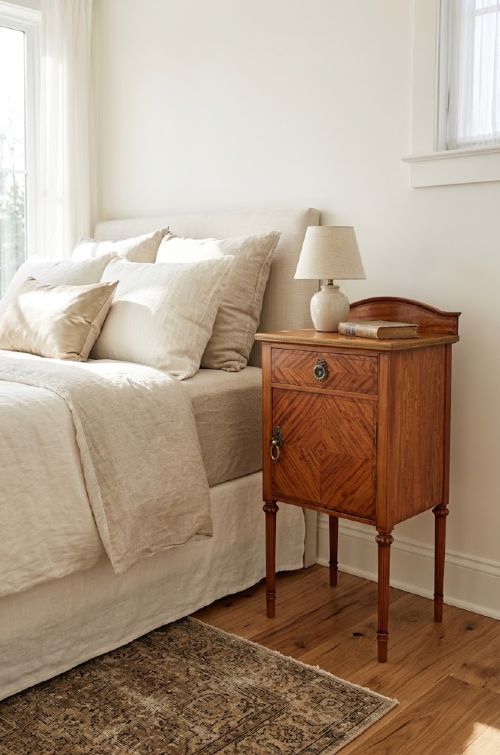
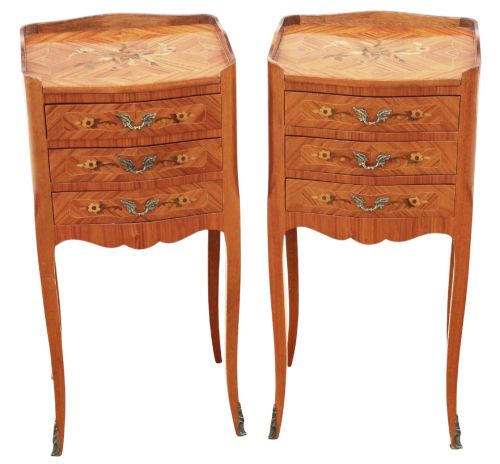
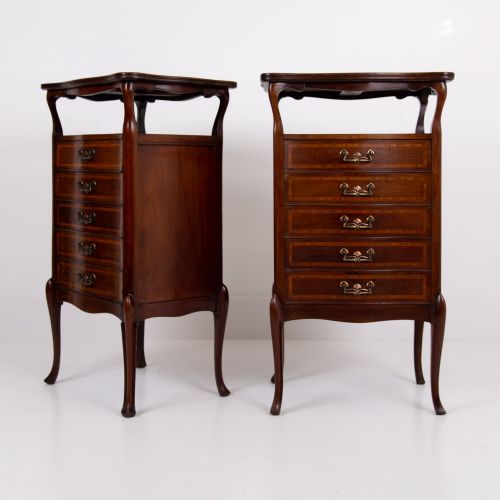
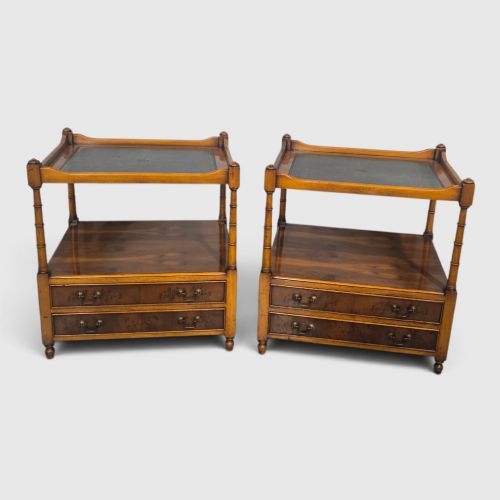

Vintage Bedside Drawers
Vintage bedside drawers offer neat bedside storage, pairing period craftsmanship with compact domestic utility.
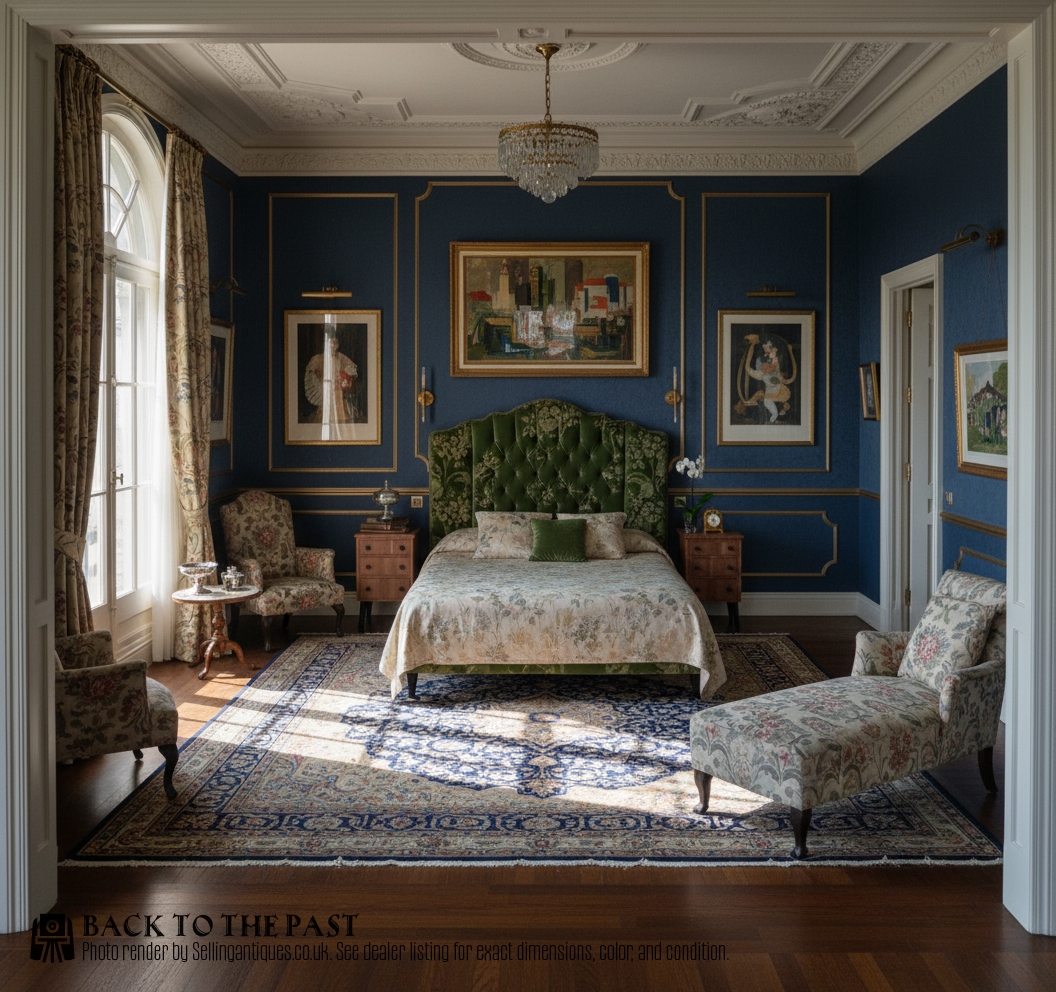
What vintage bedside drawers are
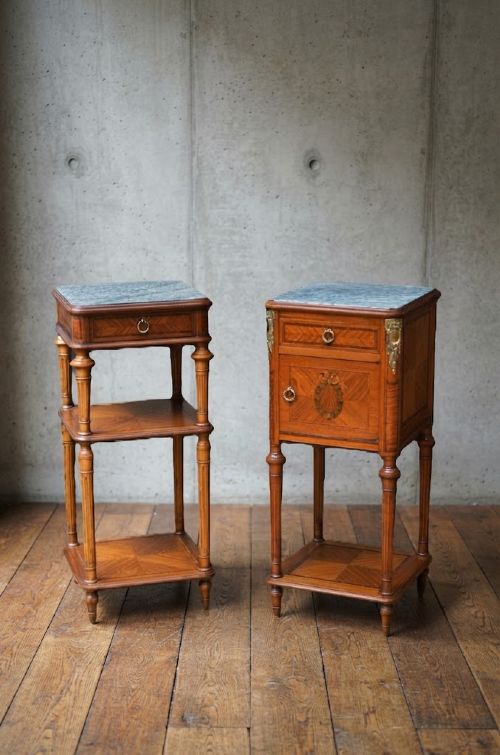
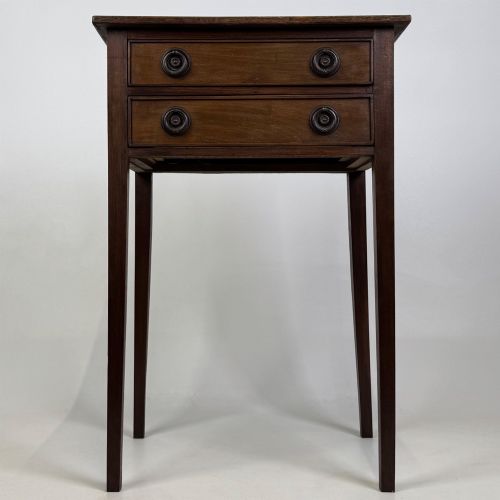
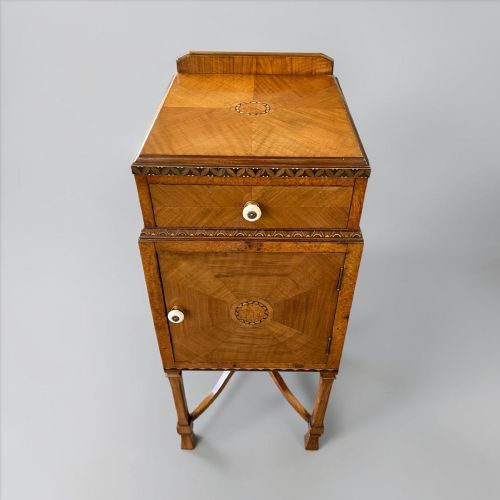
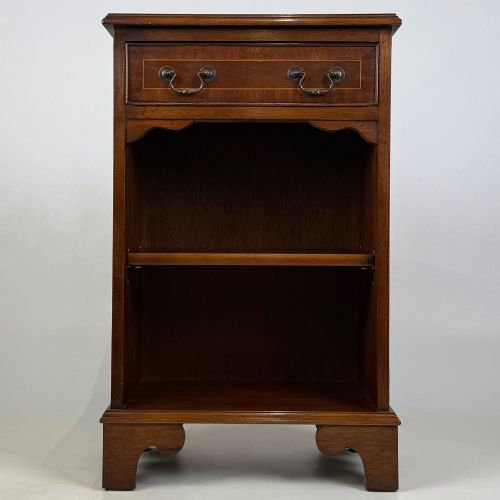
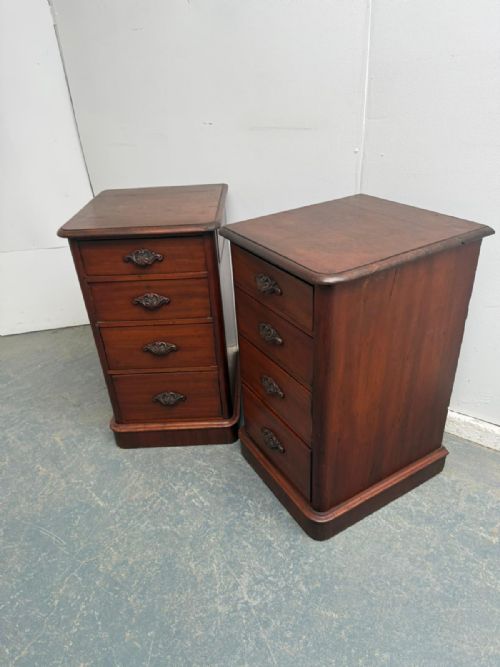
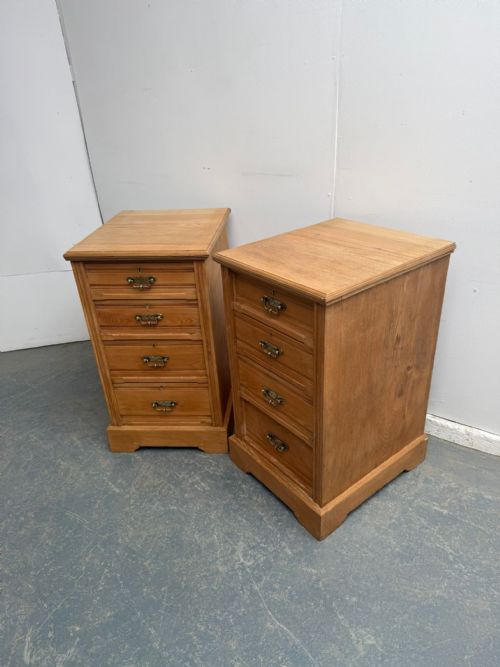
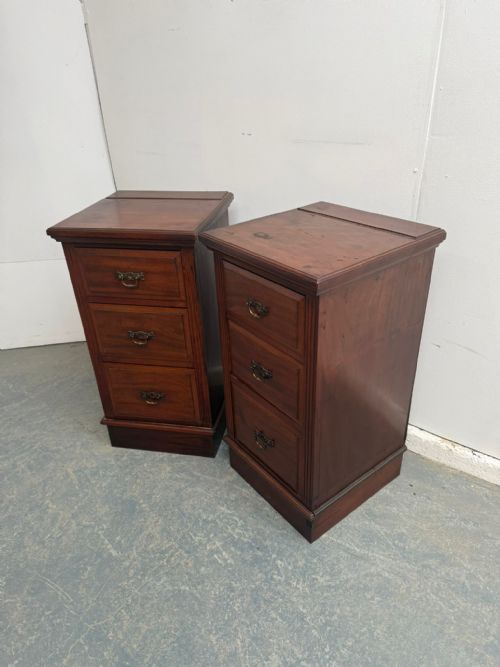
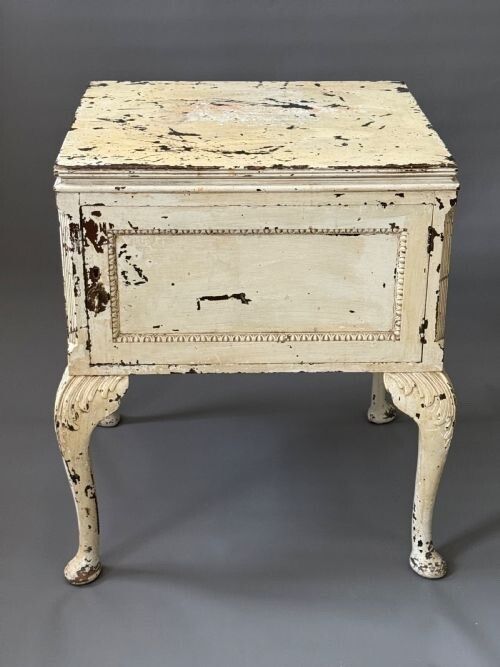
Vintage bedside drawers encompass practical bedside cabinets, tables, and chests designed to sit neatly beside a bed. When searching for vintage bedside drawers, buyers encounter pairs and single items spanning several eras from the nineteenth century through to the early twentieth century.
The selection on this page includes nineteenth-century pieces alongside examples from the Victorian era, nineteen-hundred, and nineteen-thirty. Forms range from simple three-drawer chests to marble-topped cabinets and compact side tables.
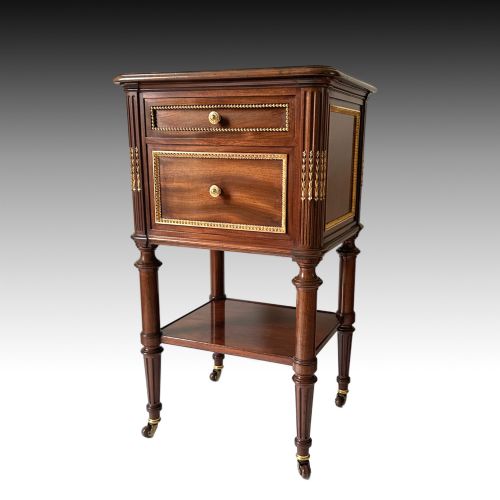
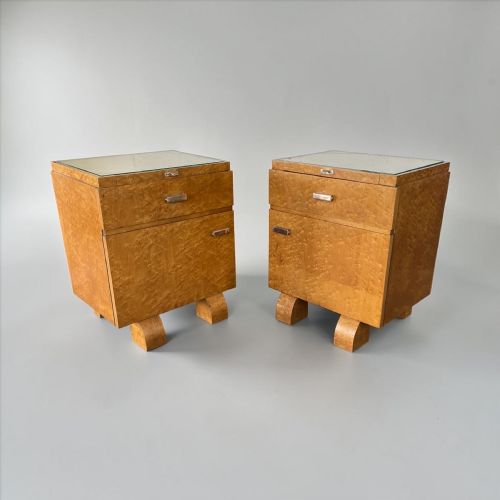
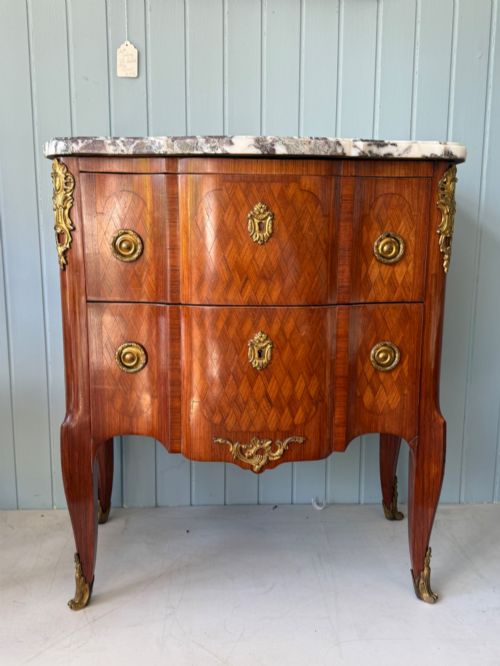
Makers and designers drew on diverse stylistic influences, including Irish Regency, Regency style, Queen Anne style, Louis XVI revival, and French Louis XV style, as well as Art Deco. Buyers frequently find matching pairs designed to sit symmetrically on either side of a bed.
How they were made
Cabinetmakers utilised a variety of timbers such as mahogany, satinwood, walnut, burr walnut, and kingwood veneer over a wood carcase. Surfaces often received a waxed finish to protect the grain while preserving the natural appearance of the timber.
Many finer pieces incorporate contrasting materials, pairing wooden construction with inset brass hardware or heavy marble tops. Construction methods varied by period, from traditional joinery on nineteenth-century pieces to streamlined forms on nineteen-thirty examples.
Retail Price Guide 2026
Typical UK retail prices for vintage bedside drawers, calculated from the Sellingantiques database of over a million retail prices indexed since 2003. This retail price guide relies exclusively on Sellingantiques data; no external sources or auction records are used, so the figures do not describe the wider market.
Current listings span from the nineteenth century through Victorian and nineteen-thirty periods, utilising mahogany, walnut, satinwood, and marble.
What varies in quality
Quality in these pieces rests upon the selection of timber figures, such as burr walnut and figured mahogany, matched with the precision of the cabinetwork. The choice of secondary woods and the neatness of drawer construction distinguish standard production from finer work.
The presence of integrated decorative elements, like fine satinwood banding or fitted marble tops, elevates the status of a cabinet. Pairs matching in timber grain and proportions naturally command greater attention than mismatched items.
The Vintage Bedside Drawers Glossary
- Satinwood
- A pale, lustrous hardwood often used for fine veneer work and decorative banding on nineteenth-century furniture. It provides a bright contrast to darker timbers.
- Kingwood veneer
- A choice exotic timber sliced into thin sheets and laid over a stable wood base to create decorative geometric patterns. It appears on French-influenced cabinets.
- Burr walnut
- Timber taken from the warted growths of walnut trees, yielding a swirling, highly figured grain pattern. Cabinetmakers reserved this material for prominent drawer fronts and top surfaces.
- Waxed finish
- A traditional surface treatment rubbed into the wood pores to create a soft, tactile sheen. It nourishes the timber without forming a heavy plastic coating.
Frequently Asked Questions
Are these drawers sold as pairs?
Many listings feature matching pairs designed to sit symmetrically on either side of a bed.
Single items also appear for asymmetric bedroom layouts or standalone placement.
What periods do these pieces span?
The selection includes nineteenth-century items, Victorian pieces, and examples from nineteen-hundred and nineteen-thirty.
Styles range from traditional Regency and Queen Anne revivals to Art Deco.
What materials were used?
Construction relies on timbers such as mahogany, walnut, satinwood, and kingwood veneer over wood carcases.
Selected cabinets incorporate brass fittings and heavy marble tops.
How do I choose the right size?
Dimensions vary, with some neat side tables measuring under forty centimetres in width for tight spaces.
Larger cabinets offer three or more drawers for greater bedside storage capacity.