

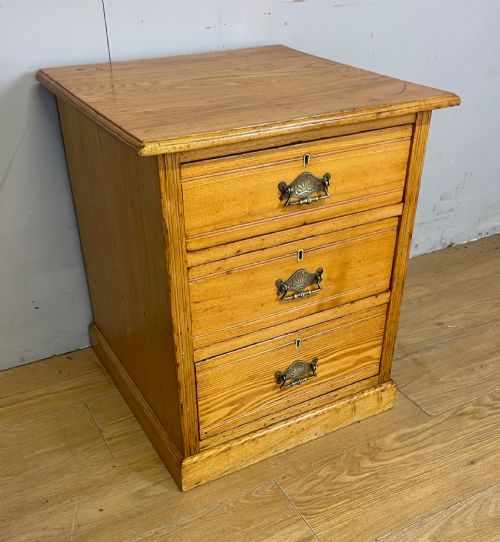

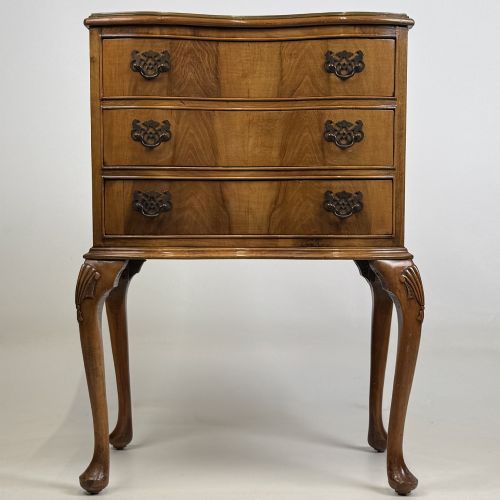

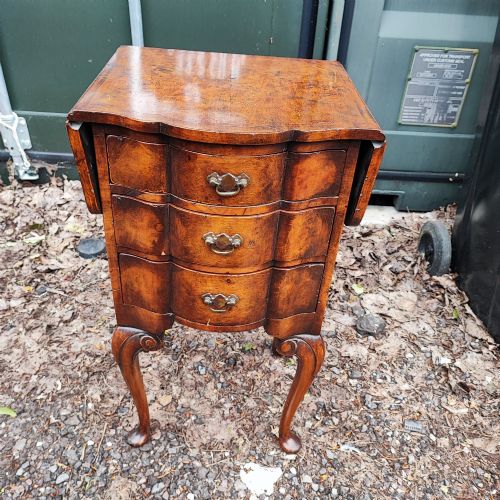


Three Drawer Bedside Chest
A three drawer bedside chest offers compact bedroom storage with distinct period character, spanning Victorian timber work to Art Deco walnut lines.
What a three drawer bedside chest is
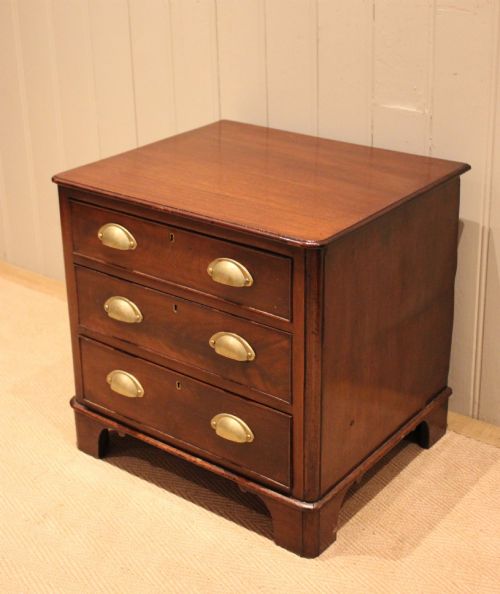
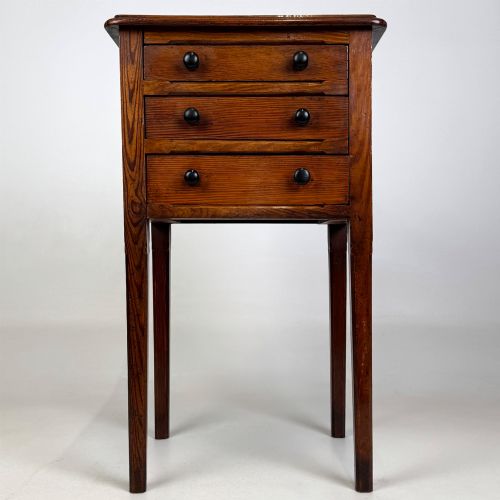
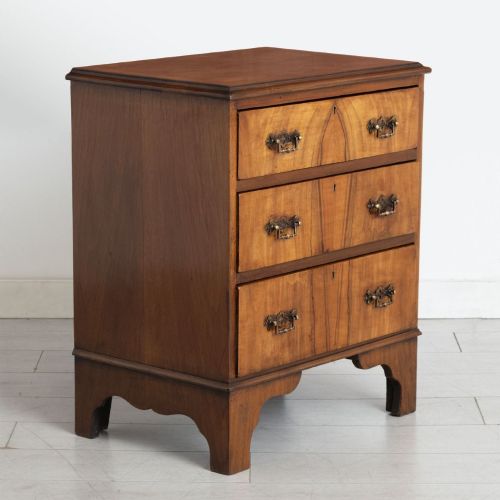
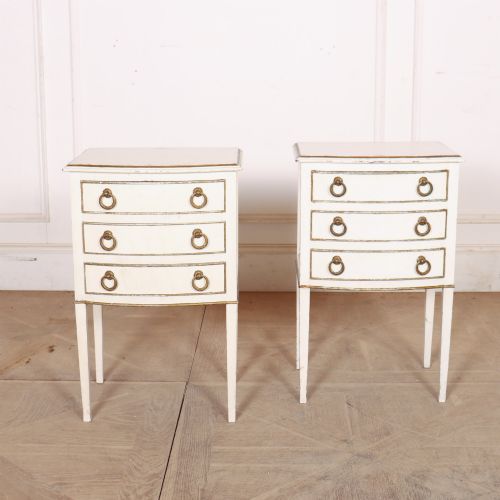
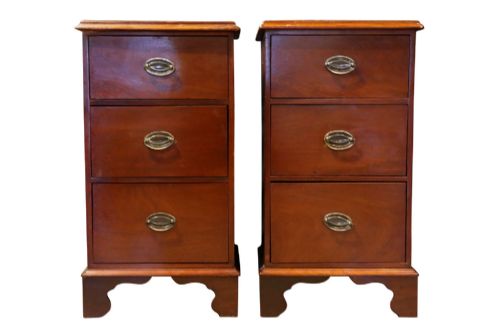
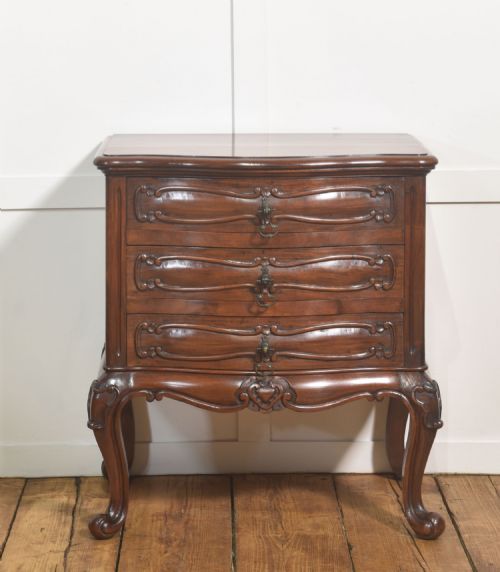
A three drawer bedside chest brings scaled-down proportions to the bedroom, combining the height needed beside a mattress with the practical capacity of three superposed drawers. The pieces appearing here encompass distinct regional traditions and decades, ranging from nineteenth-century English country examples to French revival models.
Most variations lean towards compact chests of drawers or petit commodes rather than standard tall furniture. Buyers frequently encounter matched pairs originating from the late nineteenth century alongside twentieth-century interpretations.
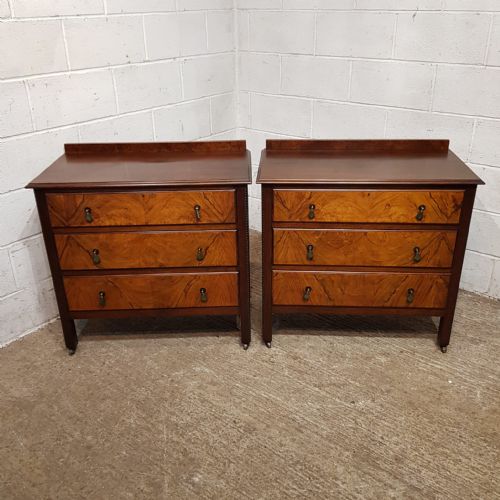
The form adapts to diverse aesthetic preferences through distinct stylistic vernaculars. Examples span Queen Anne style curves, Louis XVI ornamentation, and restrained Art Deco geometry.
How they were made
Cabinetmakers utilised a variety of woods including mahogany, walnut, and oak to construct the carcase and drawer frames. Structural integrity often relied on traditional joinery techniques suited to smaller dimensions.
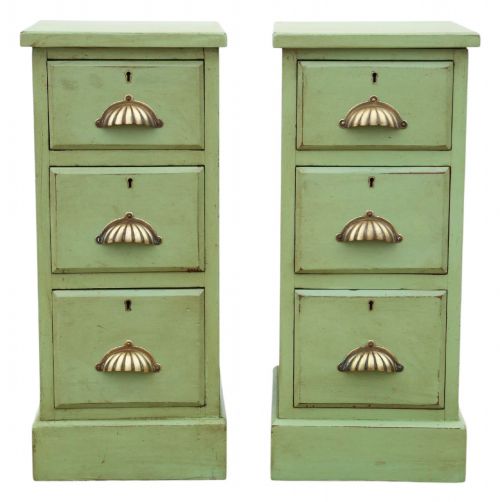
Surface treatments varied widely according to period taste and regional workshop practice. Finish details incorporated natural timber grains, painted wood simulations, gilt accents, inset leather panels, and marble tops.
Retail Price Guide 2026
Typical UK retail prices for three drawer bedside chest, calculated from the Sellingantiques database of over a million retail prices indexed since 2003. This retail price guide relies exclusively on Sellingantiques data; no external sources or auction records are used, so the figures do not describe the wider market.
Listings feature woods such as mahogany, walnut, and oak alongside painted and gilt surfaces, spanning the nineteenth and twentieth centuries.
What varies in quality
The distinction between standard examples and superior specimens rests on the choice of primary timber and secondary framing woods. Selected grain matching across drawer fronts and the finesse of applied brass hardware elevate a piece above utilitarian production.
Execution of decorative details dictates overall refinement. Hand-carved flourishes on revival pieces or precise marquetry show the artisan's hand more clearly than mechanically finished surfaces.
The Three Drawer Bedside Chest Glossary
- Petit commode
- A small French chest of drawers typically utilised for bedroom storage. These scaled-down pieces often feature delicate legs and decorative mounts.
- Louis XVI Revival
- A nineteenth-century design movement drawing inspiration from neoclassical French furniture. Pieces display straight tapered legs and restrained classical symmetry.
- Art Deco
- A twentieth-century design style defined by sleek geometric lines and streamlined forms. Walnut veneers frequently serve this aesthetic.
- Queen Anne style
- A traditional furniture design characterised by curved lines and cabriole legs. These pieces maintain a graceful, domestic silhouette.
Frequently Asked Questions
What is a three drawer bedside chest?
A three drawer bedside chest is a compact storage unit designed to sit beside a bed. It combines the height of a conventional bedside table with the storage capacity of stacked drawers.
Such pieces appear in various historical styles, ranging from Victorian mahogany versions to twentieth-century walnut interpretations.
How were these chests used?
These chests served primarily for bedside storage of personal items, nightwear, and reading materials. Their three-drawer configuration offered more capacity than a simple one-drawer table.
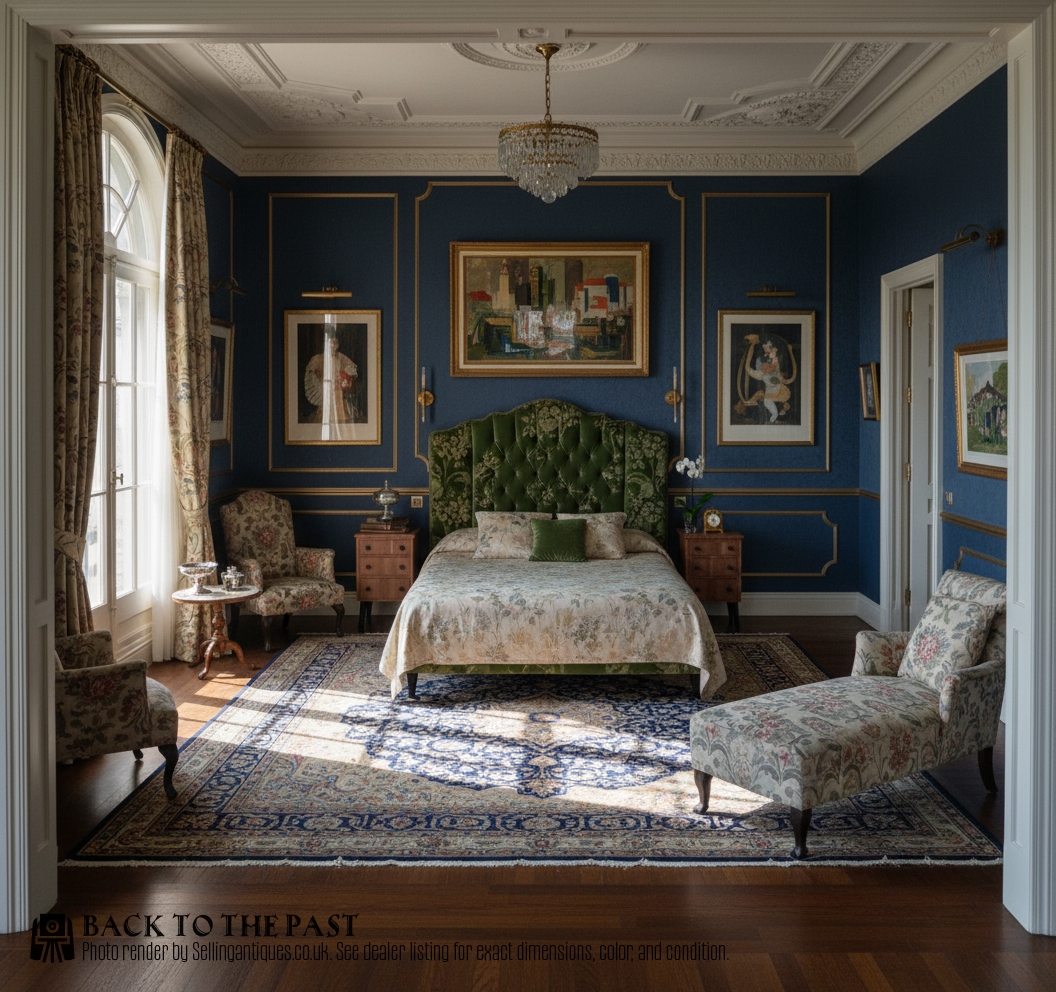
In period bedrooms, they functioned as functional companions to the bed while matching the broader decorative scheme of the room.
How do I identify the period?
Period identification relies on observing the combination of materials, construction methods, and stylistic details. Victorian examples often utilise heavy mahogany or walnut, whereas Art Deco pieces show distinct twentieth-century geometry.
Design motifs such as Louis XVI revival mounts or Queen Anne cabriole legs further anchor a piece to its era of manufacture.
Are matched pairs common?
Matched pairs appear frequently among surviving bedroom storage pieces. Cabinetmakers often built companion chests to flank larger beds in period sleeping quarters.
Finding a pair requires attention to subtle variations in timber grain and hardware that indicate workshop consistency.