

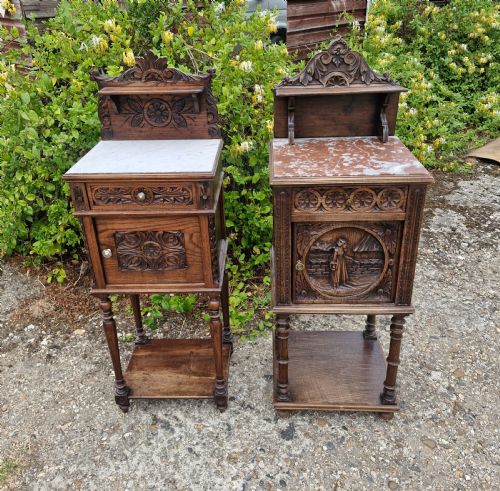
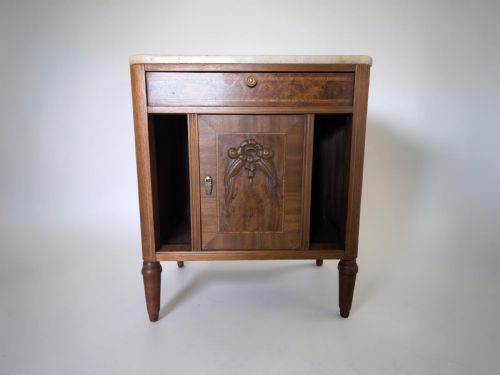
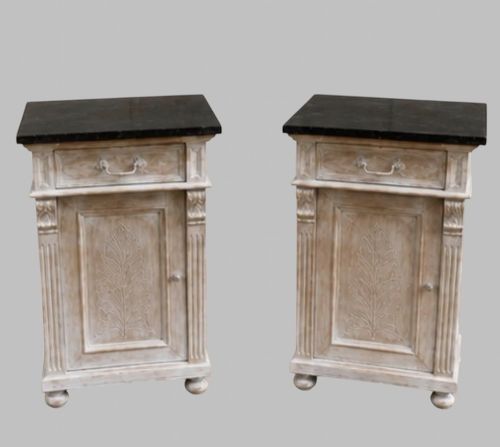
Vintage Marble Top Nightstands
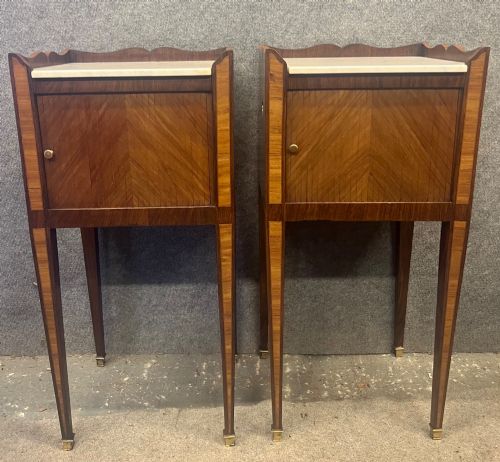
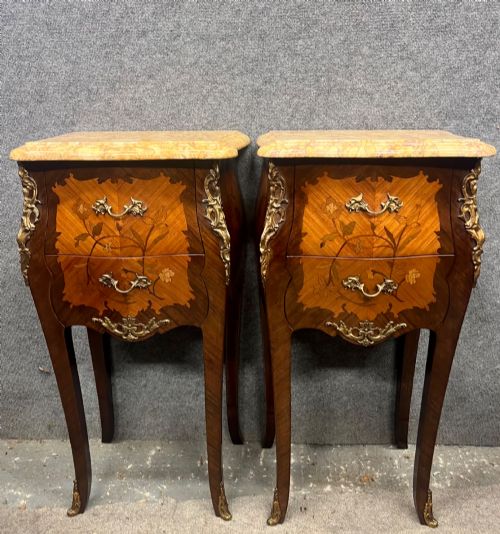
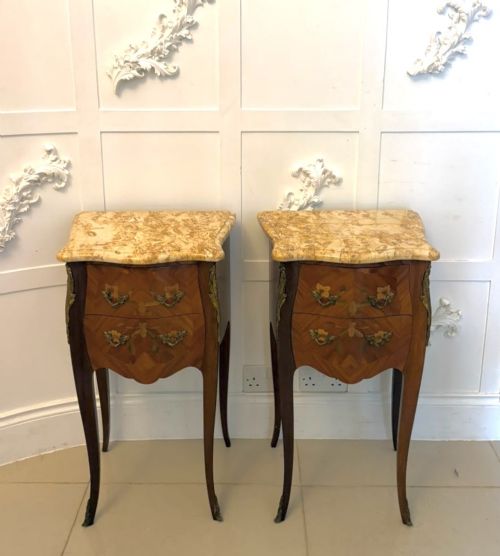
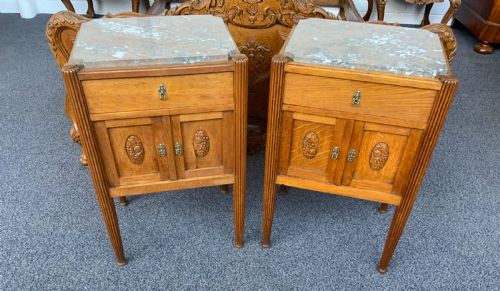
Vintage marble top nightstands are substantial bedside cabinets combining natural stone slabs with timber frames, offering a sturdy surface for nighttime essentials.
Vintage Marble Top Nightstands
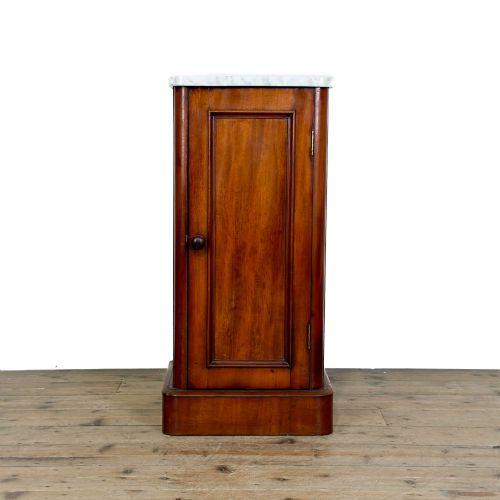
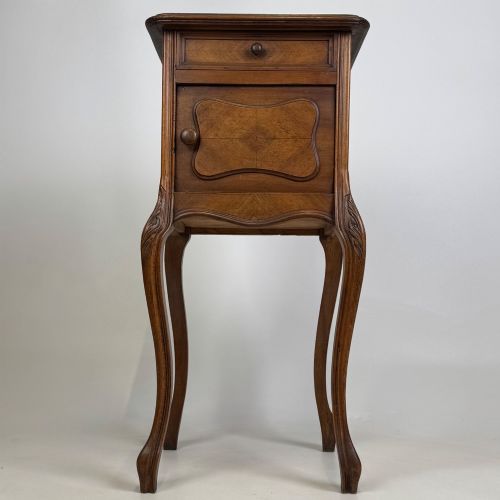
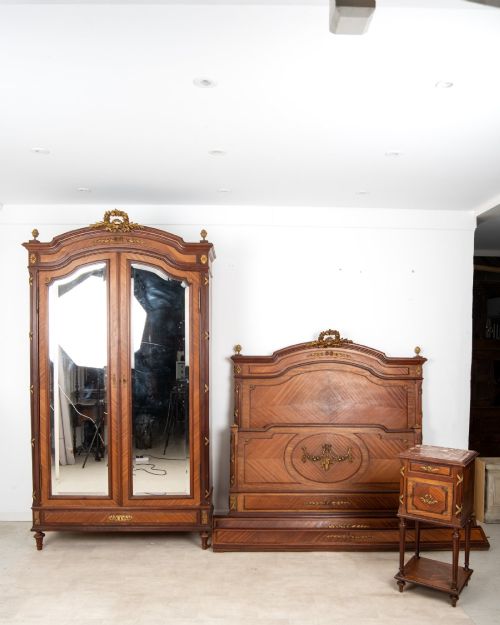
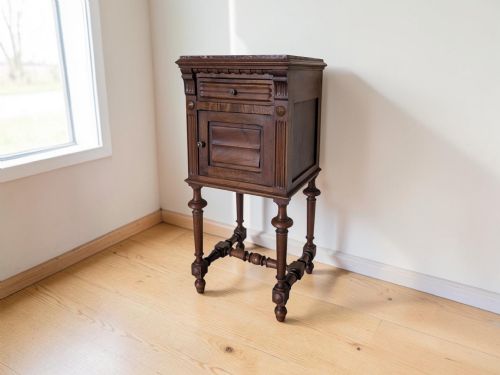
Vintage marble top nightstands encompass bedside cabinets, side tables and bedside chests designed to sit beside a bed. The pieces listed here span the nineteenth century through to the Art Deco period, drawing heavily on French provincial and revival styles.
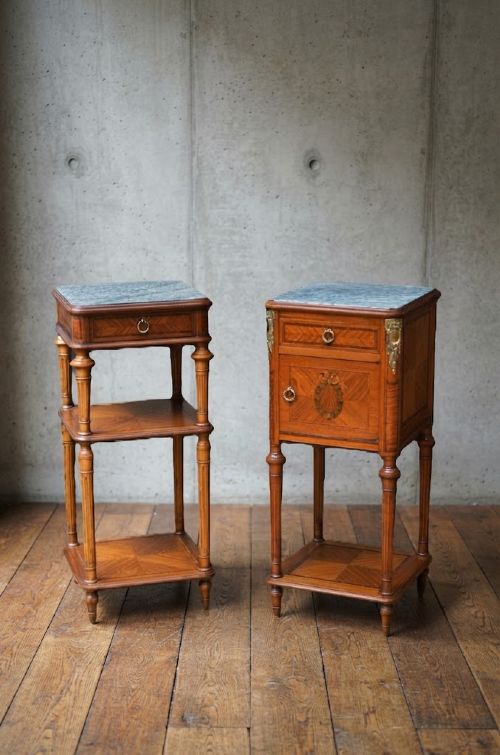
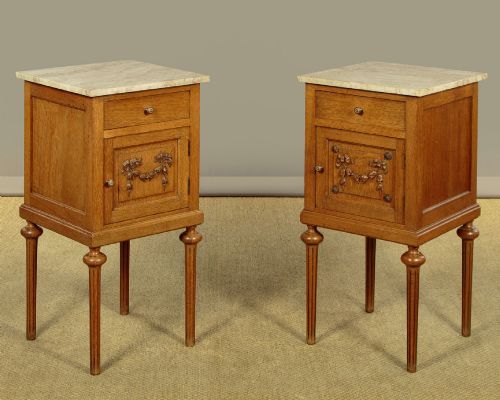
Most examples appear as matched pairs executed in walnut, oak or mahogany, frequently fitted with contrasting marble surfaces. Buyers encounter both open bedside tables and enclosed cabinets featuring single doors or drawers.
Origins stretch across European workshops, with particular emphasis on French cabinet-making traditions alongside English and Hungarian examples. These items served a purely domestic function in period bedrooms before finding favour in modern interiors as lamp tables.
How they were made
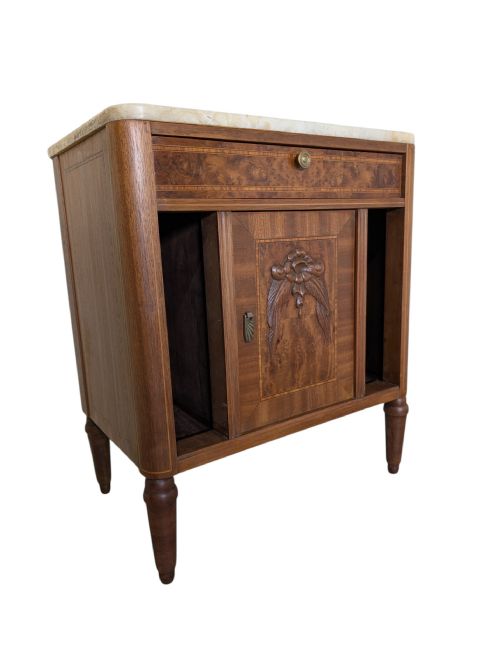
Cabinet makers utilised dense hardwoods such as walnut, oak, mahogany and kingwood for the structural carcasses, often applying decorative veneers or marquetry inlay to the exterior surfaces. Ormolu mounts and brass hardware provided structural accents and decorative contrast.
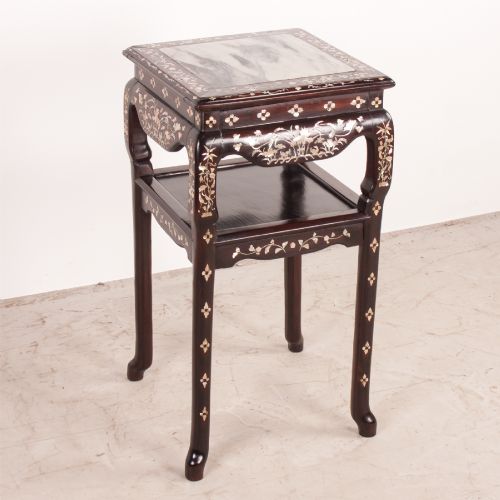
Slabs of natural marble, including specialised varieties like Sainte-Anne, were cut and polished to form impervious table tops designed to withstand spilled water or cosmetics. Joinery relied on traditional techniques such as dovetailing for drawers and mortise and tenon joints for the frames.
Periods represented span from the Victorian era and the nineteenth century through to Art Deco.
What varies in quality
The sophistication of the timber work and the precision of the marquetry inlay dictate much of the distinction between standard and superior pieces. Finer cabinets display hand-cut veneers, intricate floral marquetry and well-matched timber grains across both sides of a pair.
The selection and thickness of the marble top also separate grades, with specific regional marbles and serpentine shaped slabs indicating higher workshop standards. Original mounts, intact hardware and harmonious proportions further elevate the standing of a piece.
François Linke
The Vintage Marble Top Nightstands Glossary
- Marquetry
- Decorative patterns formed by fitting small pieces of veneer into a wood foundation. This technique allows cabinet makers to create complex floral or geometric designs across drawer fronts and top surfaces.
- Ormolu
- Gilt bronze mounts applied to furniture for decorative effect. It gained widespread popularity in French furniture during the nineteenth century.
- Serpentine
- A furniture front or top curving outward at the centre and inward at the sides. This shape demands considerable skill from the woodworker.
- Sainte-Anne
- A specific dark grey or black Belgian marble featuring white calcite veining. It appears frequently on fine nineteenth-century cabinet tops.
Vintage Marble Top Nightstands: Frequently Asked Questions
Are these nightstands sold in pairs?
Many of the bedside cabinets and chests listed appear as matched pairs, though single tables also occur frequently in the selection. Buyers searching for a balanced bedroom layout often target these paired items.
Matching sets typically share identical wood veneers, hardware and marble slabs, though minor variations can happen due to hand-finishing in period workshops.
What wood types should I expect?
The frames and carcasses utilise traditional cabinet timbers including walnut, oak, mahogany, satinwood and kingwood. Some pieces incorporate decorative fruitwood veneers or painted finishes.
These hardwoods provided the structural strength required to support heavy stone slabs while accepting intricate carving and inlay work.
How do I care for the marble?
Marble surfaces require gentle cleaning with warm water and a soft cloth to preserve the polished finish. Acidic liquids such as vinegar or citrus juice should be kept away from the stone to prevent etching.
Using coasters and mats helps protect the natural porous material from everyday stains and moisture rings.