
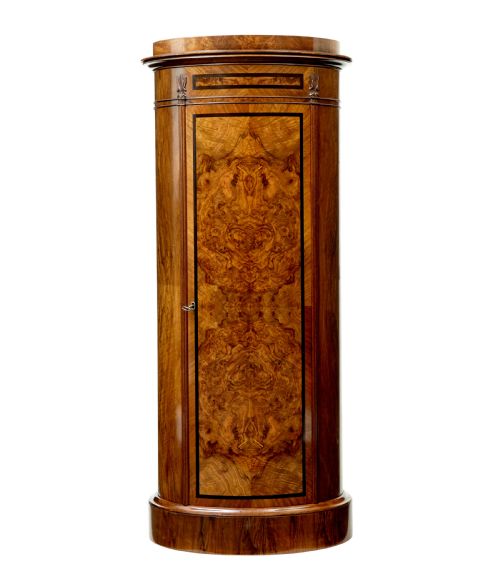


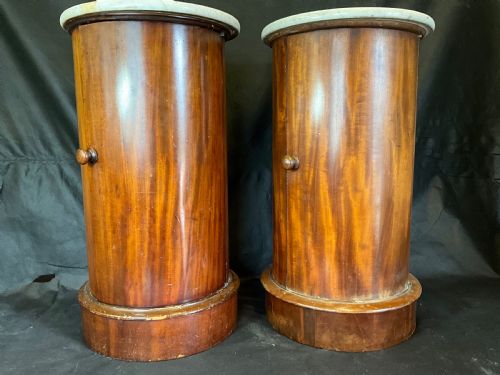


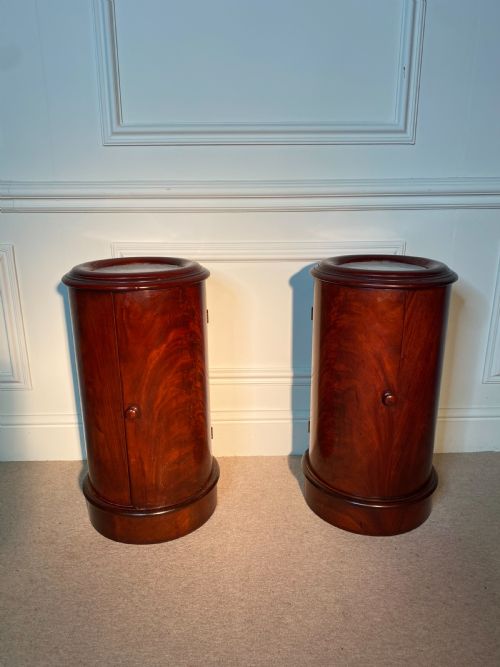


Cylindrical Bedside Cabinets
Cylindrical bedside cabinets are compact, round storage pieces that tuck neatly beside a bed while hiding nighttime essentials.
Cylindrical Bedside Cabinets
Cylindrical bedside cabinets provide a clever circular footprint that saves space in smaller bedrooms while offering a secure enclosed cupboard within arm's reach. These pieces take the form of round pedestals, pot cupboards, and drum-shaped stands designed to sit discreetly beside period beds.
The selections span the nineteenth century, touching on Victorian, Regency, and Biedermeier tastes. Mahogany and flame mahogany dominate the offerings, often topped with cool marble for a durable surface.
How they were made
Cabinet makers built these circular bodies using curved timbers, bentwood techniques, and solid veneers like burr walnut and flame mahogany over stable pine or oak carcases. Achieving a smooth, true cylinder required expert carpentry and careful timber selection to prevent warping along the grain.
Many examples incorporate fitted marble tops designed to resist water and staining from water jugs and lamps. Brass mounts and handles add functional detail, while faux marble finishes appear on select stands from around eighteen-forty.
Some nineteenth-century cylinder cabinets cleverly disguised their doors to follow the grain, making the cupboard look like a solid tree trunk.
What varies in quality
The distinction between standard utility pieces and finer examples lies in the choice of cabinet timbers and the fidelity of the circular form. Highly figured flame mahogany and richly patterned burr walnut denote a higher grade of craftsmanship.
The integration of the door into the curved body dictates the overall finish, where tight joints and well-hung hinges keep the silhouette completely unbroken. Original marble slabs and matching pairs further elevate the standing of a piece.
The Cylindrical Bedside Cabinets Glossary
- Flame mahogany
- A veneer cut from the fork of the mahogany tree to create a distinctive, flickering flame pattern. It was widely utilised on Regency and Victorian statement furniture.
- Pot cupboard
- A nineteenth-century term for a bedside cabinet specifically designed to house a chamber pot. These practical items soon evolved into general bedside storage.
- Biedermeier
- A Central European design style spanning the first half of the nineteenth century. It prioritises clean lines and domestic comfort over heavy ornamentation.
Cylindrical Bedside Cabinets: Frequently Asked Questions
What is a cylindrical bedside cabinet used for?
These round cabinets provide bedside storage with a small footprint, holding night lamps and personal items out of sight.
Inside the curved door, a shelf typically holds books, glasses, or a small water jug.
Are marble top bedside cabinets original?
Many nineteenth-century cabinets featured inset marble slabs to provide a durable, wipe-clean surface for water jugs and lamps.
These stone tops were fitted during original manufacture to protect the underlying timber from moisture.
How do I date a Victorian cylinder cabinet?
Dating relies on timber choice, construction methods, and secondary woods visible inside the carcase. Pieces from around eighteen-fifty often display heavier mahogany veneers, whilst later Victorian items may utilise walnut.
Do these cabinets come in pairs?
Matching pairs do appear among nineteenth-century listings, though many cylindrical cabinets survive as single pieces. Pairs are particularly sought after for balancing twin beds in larger bedrooms.