



Mahogany Pot Cupboard Pair
These mahogany pot cupboard pair selections offer matched bedside utility, spanning Georgian elegance to Edwardian refinement for your bedroom scheme.
Mahogany Pot Cupboard Pair
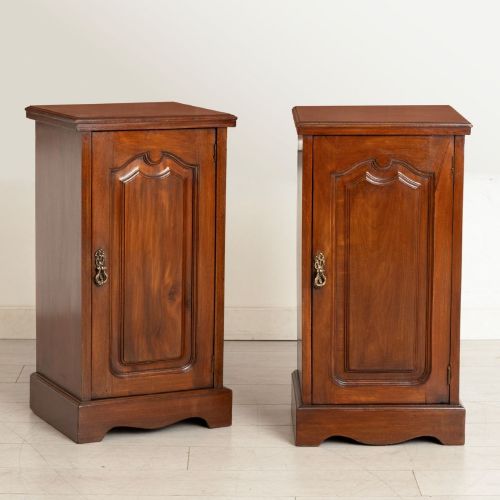
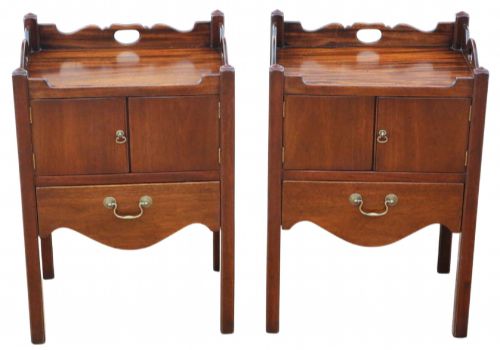
A mahogany pot cupboard pair comprises two matching small bedside cabinets or nightstands designed to sit beside a bed. These domestic pieces serve both practical storage needs and aesthetic symmetry in period interiors.
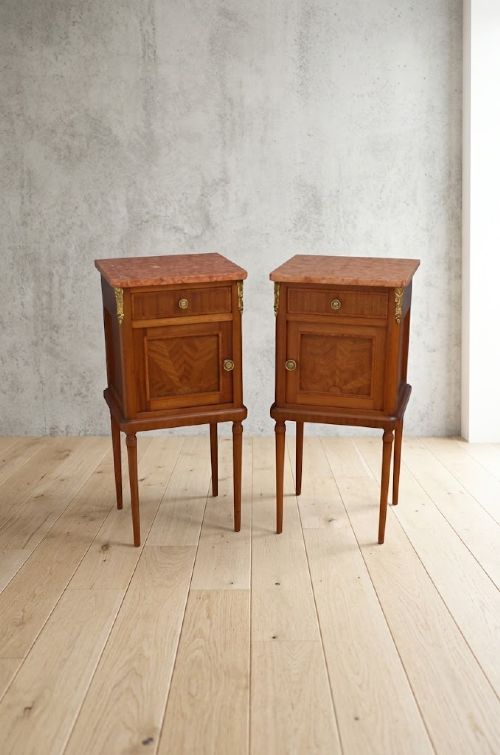
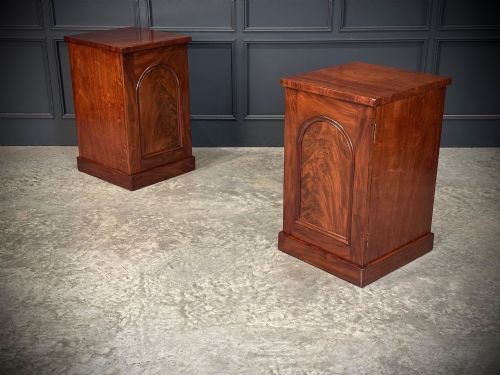
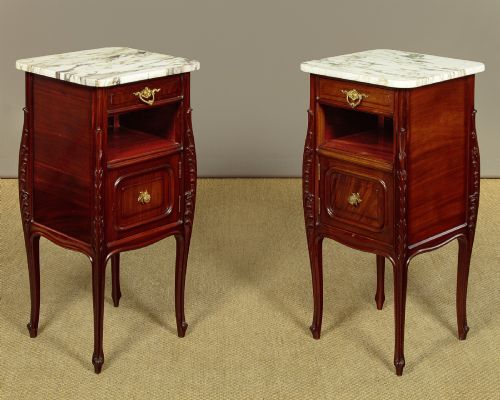
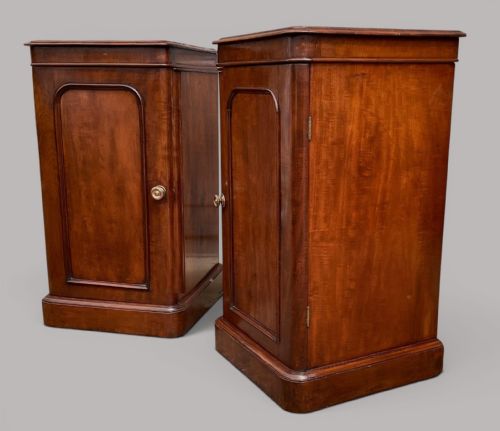
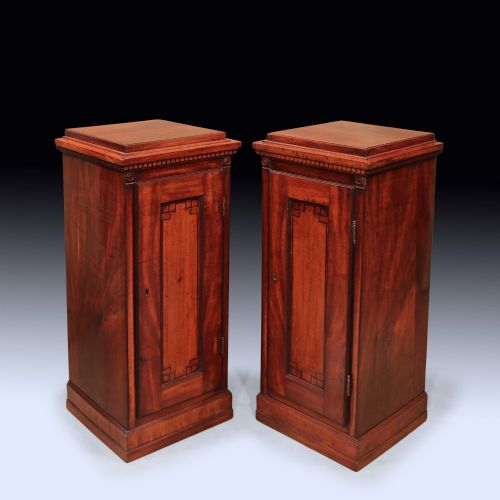
You will most frequently encounter Victorian and Edwardian examples on this page, alongside earlier Georgian forms and continental French variations. They appear as pedestals, cupboards, or small tables with enclosed storage.
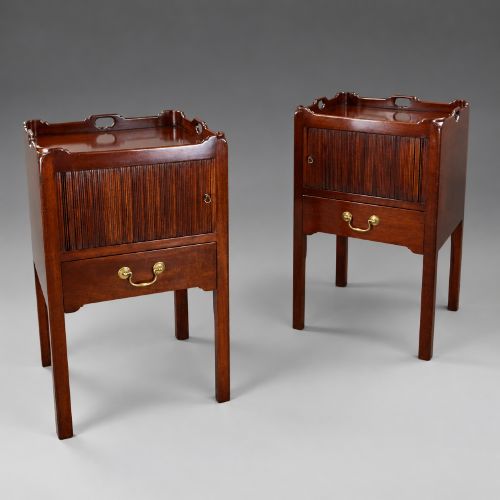
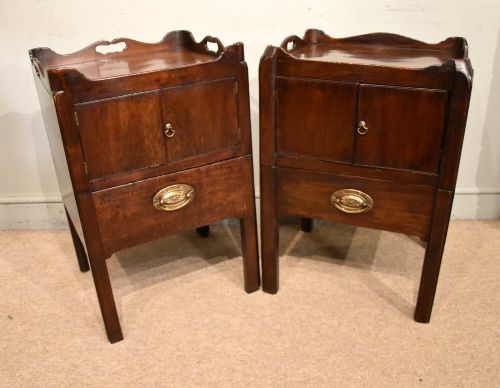
The selection ranges from simple functional storage dating to the early twentieth century up to finely proportioned eighteenth-century George III specimens. Buyers search for this specific pairing to achieve balanced bedside furnishing without mismatched pieces.
Materials and construction methods
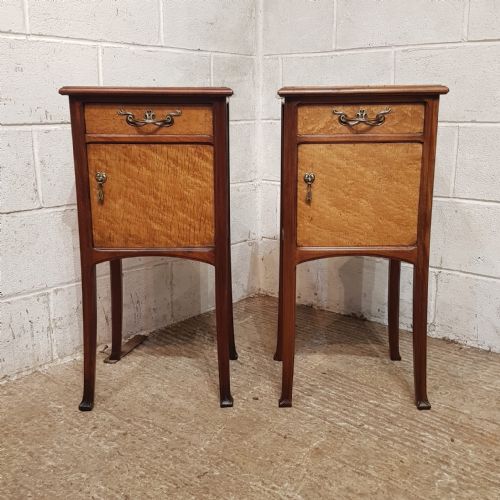
Cabinetmakers constructed these pieces primarily using solid mahogany and figured veneers such as flame mahogany, occasionally incorporating contrasting satinwood inlay or ebonised wood details. Many examples add polished marble tops for durability and decorative contrast.
Structural integrity relies on traditional joinery, with internal shelving and hinged cupboard doors or drawer boxes housed within sturdy timber carcases. Brass handles, knobs, and occasional gallery rails provide the functional metalwork.
Mahogany Pot Cupboard Pair Retail Price Guide 2026
Typical asking prices for mahogany pot cupboard pair among the pieces listed under this phrase on Sellingantiques today, from the lower quarter to the upper quarter. They describe what is for sale here now, not the wider market.
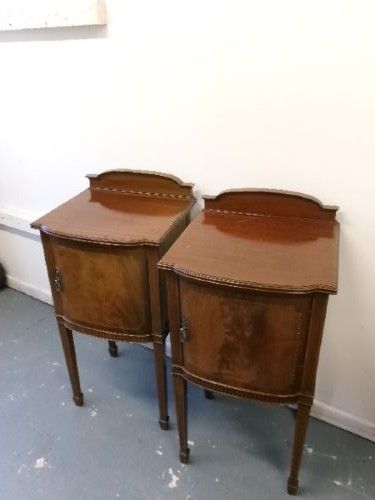
Form variations include cylindrical bedside cabinets, bow-fronted nightstands, and tall pedestal cupboards designed for compact spaces.
Distinctions in craftsmanship
Quality rests upon the selection of timber figures, where richly grained flame mahogany veneer or well-matched solid stock elevates a piece far above plain utility timber. Finer examples display meticulous attention to proportion, crisp edge moulding, and precise marquetry or stringing inlay.
The integrity of the structural joinery and the original state of the hardware, such as brass pulls and hinges, distinguish superior workshops from standard production. Maker attributions to prominent cabinetmakers further separate exceptional survivals from everyday domestic furniture.
Gillows·Holland & Sons
The Mahogany Pot Cupboard Pair Glossary
- Pot cupboard
- A small enclosed bedside cabinet historically designed to house a chamber pot. Modern buyers utilise them simply as practical bed storage.
- Pedestal cupboard
- A tall, narrow freestanding cabinet with a single door enclosing shelf space. These vertical forms save floor space beside high nineteenth-century beds.
- Bow front
- A convex curved cabinet front that projects outward in a smooth arc. This curved shaping demands advanced woodworking skill from the cabinetmaker.
- Sheraton Revival
- A late nineteenth and early twentieth-century design movement inspired by the neoclassical furniture of Thomas Sheraton. Pieces from this revival often incorporate delicate satinwood inlay and tapered legs.
Mahogany Pot Cupboard Pair: Frequently Asked Questions
How were pot cupboards originally used?
These cabinets served bedrooms as discrete housing for chamber pots before indoor plumbing became standard. Over time, their practical proportions transitioned into general bedside storage for night-time essentials.
Today, owners utilise the interior compartments to store books, lighting accessories, and personal items while maintaining a tidy bedside appearance.
Are these cabinets difficult to match?
Finding a true pair requires attention to timber grain, height, and overall proportions. Many listings feature matched or near-matched sets assembled by dealers to achieve symmetry.
Checking dimensions carefully ensures that both cabinets sit harmoniously at equal heights beside modern bed frames.
How do I distinguish Georgian from Edwardian pieces?
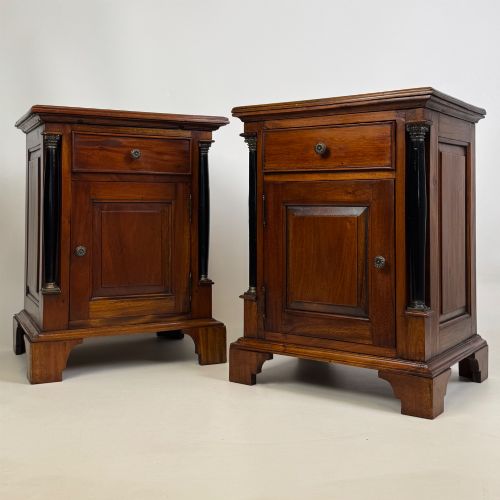
Georgian examples generally exhibit heavier architectural proportions, robust bracket feet, and simpler lines dating from the eighteenth or early nineteenth century. They rely on solid timber construction and restrained moulding rather than heavy ornamentation.
Edwardian interpretations tend to incorporate lighter frames, occasional decorative string inlay, and influences from earlier revival styles popular around nineteen hundred.
What maintenance do mahogany surfaces require?
Mahogany benefits from occasional dusting with a soft, dry cloth to prevent particulate accumulation on polished veneers. Avoiding direct sunlight and extreme humidity fluctuations protects the timber from fading and splitting.
Applying a quality traditional wax polish periodically nourishes the grain and preserves the warm lustre of the vintage finish.