



Brass Inlaid Nightstand
A brass inlaid nightstand brings useful surface space and refined detail to a bedroom, combining practical storage with decorative metalwork.
Brass Inlaid Nightstand
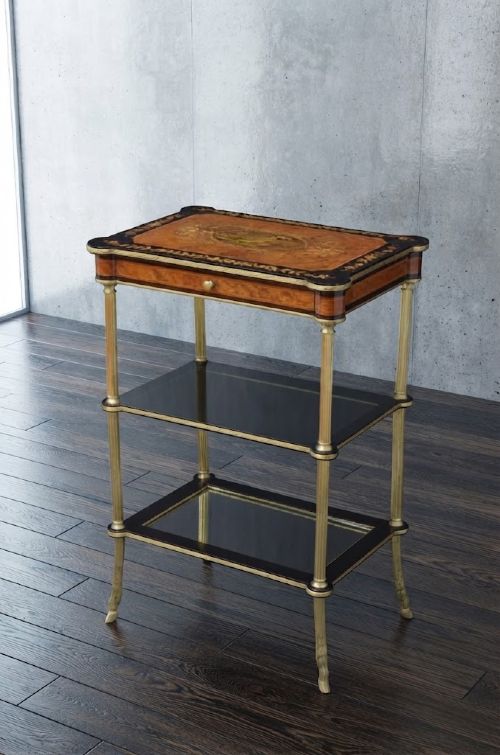
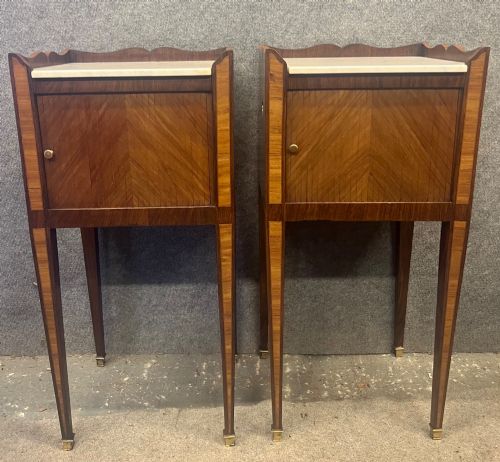
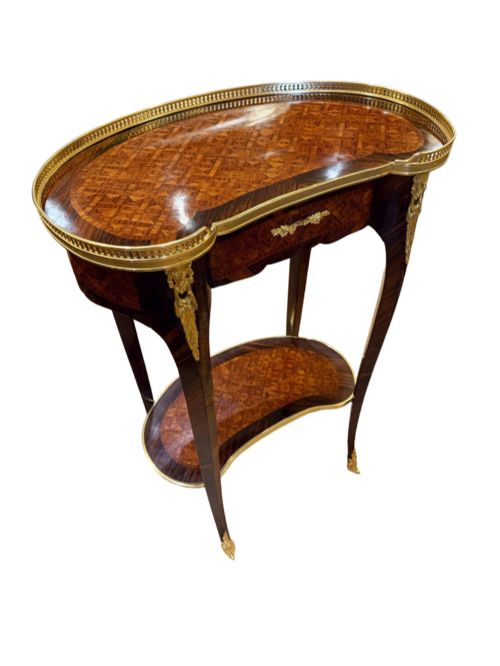
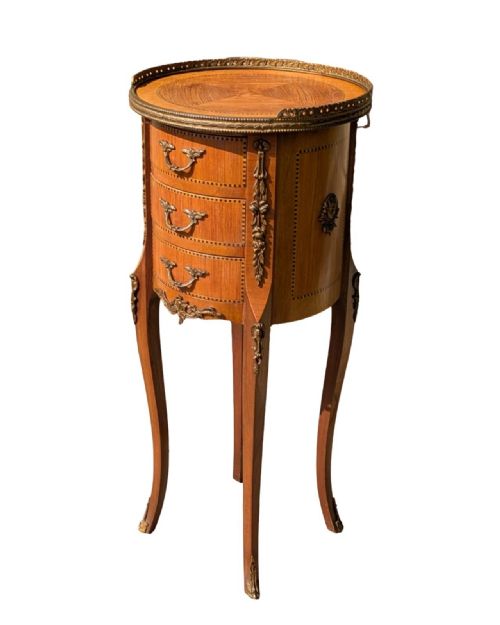
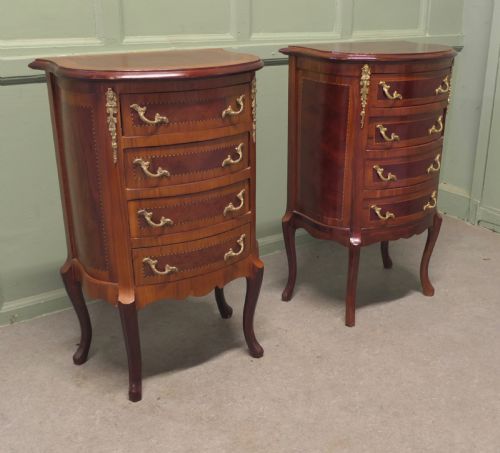
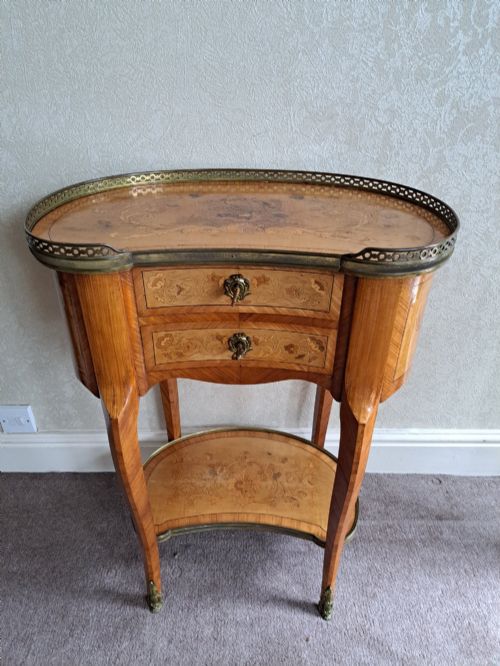
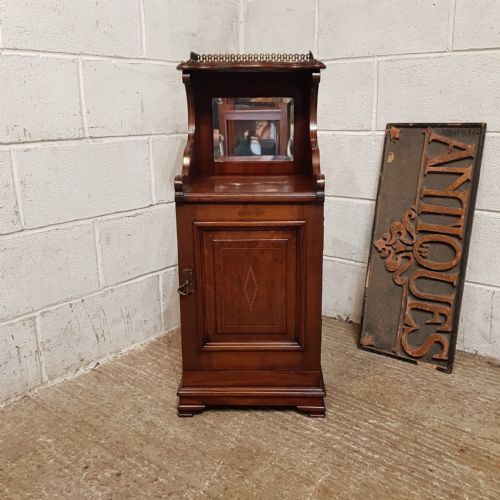
A brass inlaid nightstand serves as a compact bedside or side table designed to hold small lamps and nighttime essentials within arm reach. These pieces range from bedside cabinets with enclosed drawers to open occasional tables and tiered étagères.
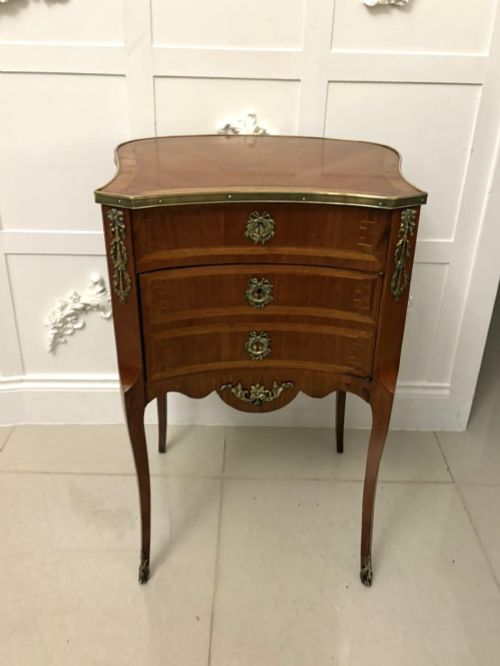
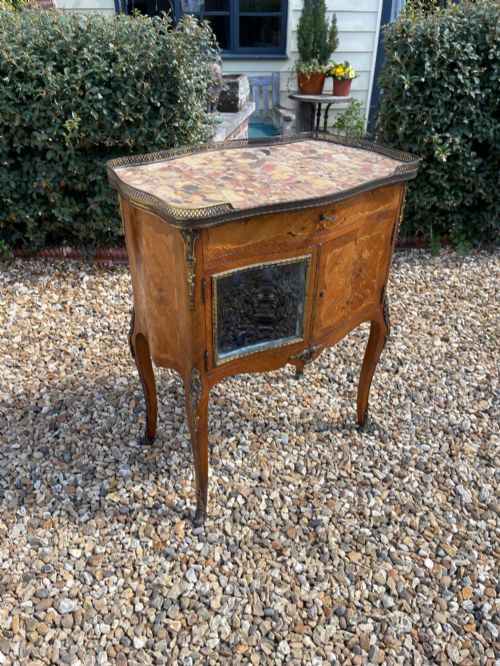
The selections found here lean heavily towards French aesthetic traditions, particularly the Louis XV and Louis XVI revival styles, alongside Georgian and Regency examples. You will frequently encounter forms described as bedside cabinets, side tables, and small chests originating from the nineteenth and early twentieth centuries.
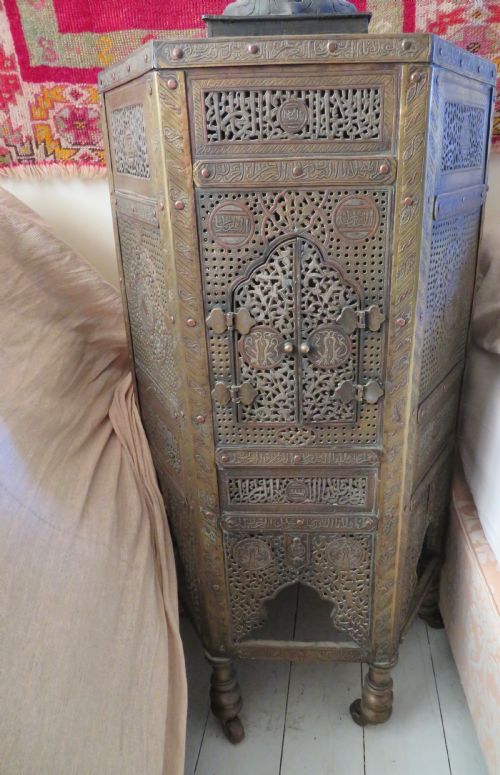
Makers and craftsmen of these periods utilised diverse forms, including kidney shapes, bow fronts, and hexagonal occasional tables. The primary function remains a small storage unit or display surface enhanced by metal embellishment.
How they were made
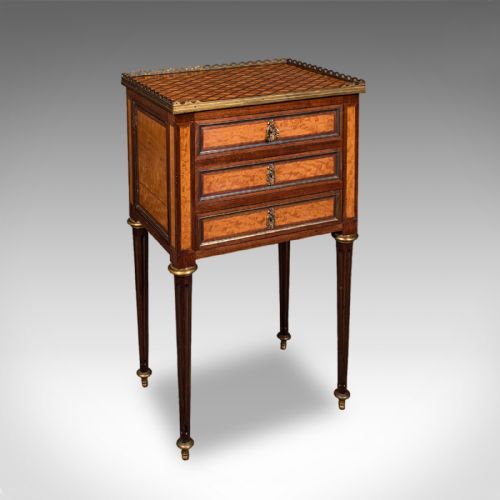
Carpenters constructed these tables using a foundation of solid woods such as mahogany, walnut, and rosewood, often applying finer veneers of kingwood or exotic timbers to the exterior surfaces. Marquetry and parquetry patterns created geometric or pictorial designs across the tops and sides.
Brass formed a key decorative component, appearing as fine stringing inlaid directly into the wood, cast handles, and detailed mounts or galleries. In some variations, white metal and copper supplemented the brass inlay to create contrasting surface patterns.
Periods represented span from the Georgian era through Victorian and Edwardian times, up to the revival styles of the 1920s and 1930s.
What varies in quality
The precision of the metal inlay and the complexity of the wood marquetry dictate the upper tier of craftsmanship. Finer pieces demonstrate tight joins between the brass wire and the surrounding veneer, with smooth, fluid movement in the drawers.
Material selection also separates standard production from superior examples, as dense timbers like kingwood and rosewood require greater skill to shape and finish than simpler softwoods or plain mahogany.
The Brass Inlaid Nightstand Glossary
- Marquetry
- Decorative veneer applied to furniture in patterns or pictures, utilising various woods, metals, or shells. This technique creates elaborate pictorial scenes across the surface of a tabletop or cabinet door.
- Parquetry
- Geometric wood inlay forming repeating patterns such as cubes or chequers. It provides a structured decorative border or central motif on furniture tops.
- Kingwood
- A dense, richly grained Brazilian timber prized in eighteenth and nineteenth-century cabinet making. Its dark violet-brown colour with lighter streaks makes it a favoured veneer for high-end tables.
- Étagère
- A piece of furniture consisting of open shelves for displaying small objects. These tiered tables often incorporate inlaid details and brass galleries.
- Table en chiffonière
- A small French occasional table, typically featuring multiple drawers and a slender profile. They frequently serve as bedside or sewing tables.
Brass Inlaid Nightstand: Frequently Asked Questions
How do I style a brass inlaid nightstand?
Pair the piece with simple lighting and minimal accessories to let the detailed metalwork and wood grain remain the focal point of the bedroom. The compact proportions work well beside lower bed frames or as independent side tables in a drawing room.
Ensure the surrounding furniture shares a similar scale so the nightstand does not appear lost against larger wardrobes or heavy bedheads.
How do I identify a revival style piece?
Revival pieces from the nineteenth and early twentieth centuries imitate the aesthetic signatures of earlier periods like the reigns of Louis XV and Louis XVI. Look for characteristic curved cabriole legs, Ormolu mounts, and complex floral marquetry executed with industrial-age precision.
Examining the interior secondary woods and construction methods helps distinguish a later revival item from an eighteenth-century original.
How do I care for brass inlay on antique wood?
Dust the surface regularly with a soft, dry cloth and avoid harsh chemical cleaners that can discolour the metal or lift the surrounding veneer. Maintaining a stable room temperature prevents the wood from expanding and loosening the delicate brass stringing.
Occasional application of appropriate wax preserves both the timber finish and the lustre of the metal inlay.