





Empire Style Nightstands
These empire style nightstands bring neoclassical proportion and rich timbers to the bedside.
Empire Style Nightstands
Empire style nightstands are foundational pieces of bedroom furniture that draw on classical antiquity and the Napoleonic era for their architectural silhouettes. When searching for empire style nightstands, a buyer encounters forms ranging from dedicated bedside cabinets to occasional side tables and lamp tables. The selection includes French and Italian variants alongside revival pieces from the nineteenth and early twentieth centuries.
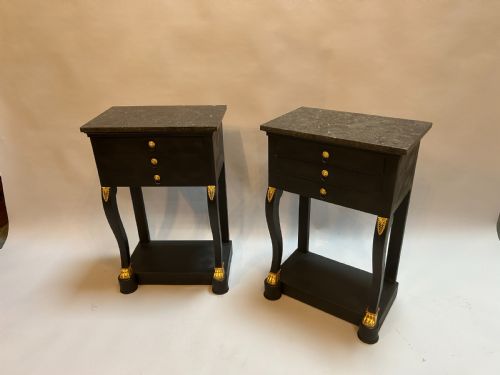
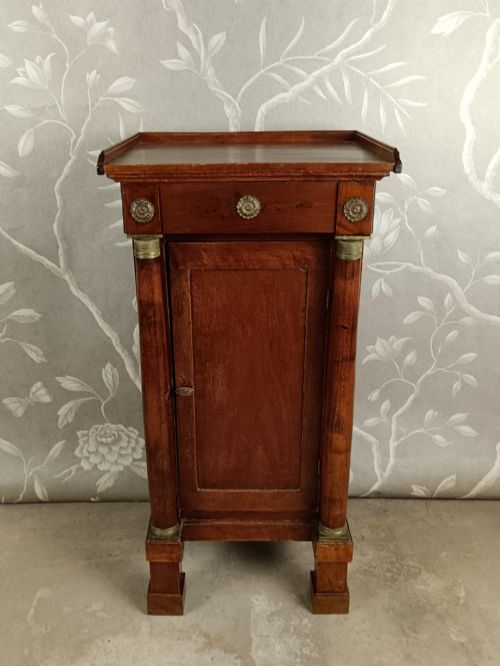
The pieces appearing on this page take the form of bedside chests, cabinets with marble tops, and paired tables dating from the nineteenth century up to the 1920s. Buyers frequently meet matched pairs of mahogany bedside cabinets or single marble-topped nightstands reflecting French and Italian Empire aesthetics. Walnut, ebonised wood, and maple also appear alongside the dominant mahogany forms.
Origins span continental workshops, particularly French and Italian makers, alongside Regency and Federal adaptations in Britain and America. A buyer is likely to find individual bedside cabinets or symmetrical pairs intended to flank a bed within a larger bedroom suite. The forms vary from simple column-supported lamp tables to enclosed cabinets with brass mounts.
How they were made
Cabinetmakers constructed these pieces using solid and veneered timbers including mahogany, walnut, and maple over robust carcases. Ebonised wood provides dark contrast on mouldings and structural elements, while contrasting grain patterns decorate drawer fronts and tabletops.
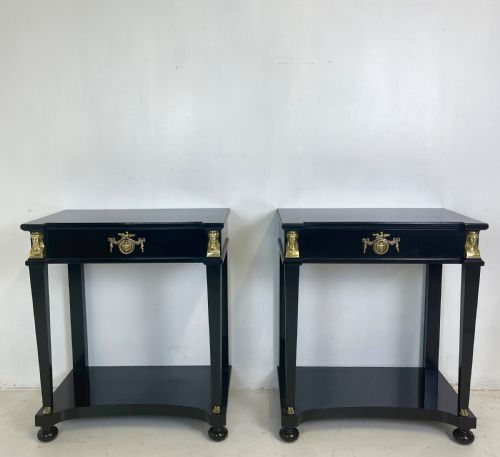
Surfaces frequently incorporate inset marble slabs, providing a durable and decorative top resistant to the practical demands of bedside use. Brass and gilt metal mounts, including cast or chased escutcheons and feet, accent the structural lines of the wood.
Joinery techniques reflect traditional cabinetmaking standards of the nineteenth and early twentieth centuries, ensuring structural stability across bedside chests and side tables. The application of French polish or traditional oil finishes brings out the natural depth and figure of the mahogany and walnut.
The listings show nineteenth-century and early twentieth-century pieces, including items from 1900, 1910, 1920, and Regency periods.
What varies in quality
Quality in these nightstands rests upon the selection of timber figures and the precision of the cabinet construction. Pieces utilising dense, well-figured mahogany or richly grained walnut demonstrate a higher grade of material sourcing than those with plain secondary woods.
The integration of decorative metalwork and marble creates a distinct tier in craftsmanship. Crisp casting on brass mounts and well-fitted marble tops that sit flush within the timber surrounds indicate superior workshop standards during assembly.
Proportion and decorative restraint separate standard production items from finer examples of French and Italian Empire design. Balanced classical proportions and clean architectural details elevate a bedside cabinet above simpler utilitarian tables.
The Empire Style Nightstands Glossary
- Empire Style
- A neoclassical design movement spanning the late eighteenth and early nineteenth centuries, characterised by motifs drawn from ancient Rome, Greece, and Egypt. It emphasises symmetry, heavy architectural forms, and classical ornamentation.
- Ebonised Wood
- Timber treated with a dark stain or finish to imitate ebony. Cabinetmakers utilised this technique to create sharp visual contrast against lighter veneers like maple or mahogany.
- Ormolu
- Gilded bronze mounts and decorative elements applied to furniture frames. While brass and gilt metal are common alternatives, high-status pieces utilised finely chased ormolu details.
- Work Table
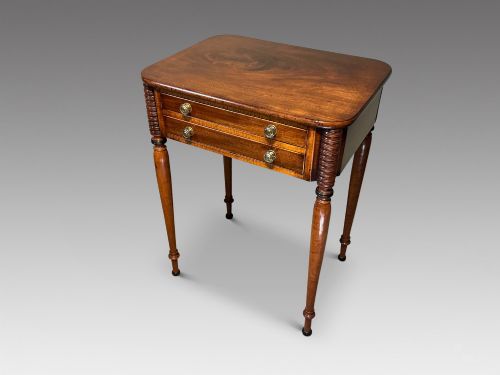
- A small multi-purpose table featuring storage such as drawers or compartments for sewing and needlework. These domestic pieces often double as bedside or occasional tables.
- Revival
- A later stylistic movement that revives historical aesthetics, such as the French Empire Revivals of the nineteenth and early twentieth centuries. These pieces reinterpret earlier forms using contemporary manufacturing methods.
Empire Style Nightstands: Frequently Asked Questions
Are empire style nightstands always sold in pairs?
While many examples on the market are offered as symmetrical pairs suitable for flanking a bed, single bedside cabinets and occasional tables also appear.
Buyers seeking balance often look specifically for matched pairs, though individual side tables serve well as standalone pieces.
What materials are common in empire style nightstands?
Mahogany and walnut form the primary wooden structures, frequently enhanced by maple veneer and ebonised wood details.
Surfaces often feature inset marble tops, complemented by brass or gilt metal mounts along the structural lines.
How do I distinguish nineteenth-century pieces from revival items?
Nineteenth-century examples display period-specific joinery techniques, timber maturation, and hand-chased metal mounts that reflect the original era of manufacture.
Revival pieces from the early twentieth century often utilise similar classical vocabulary but exhibit standardised internal construction methods and machine-cut elements.
How should I care for a marble-topped nightstand?
Marble surfaces require protection from acidic liquids and moisture to prevent staining or etching of the polished stone.
Regular dusting with a dry cloth maintains the finish, while timber elements benefit from appropriate wax or polish suited to antique wood.