


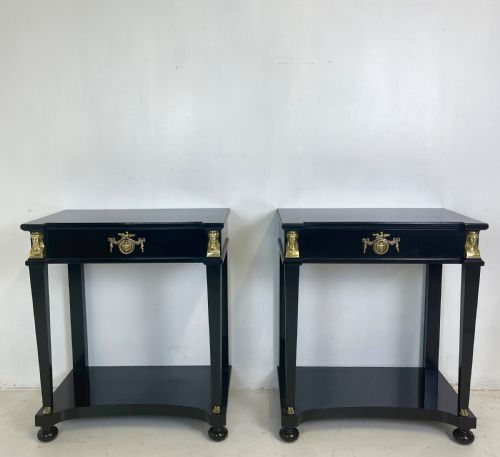

French Empire Bedside Tables
French empire bedside tables bring classical neoclassical symmetry, rich mahogany timber, and gilt bronze mounts to the bedroom.
French Empire Bedside Tables
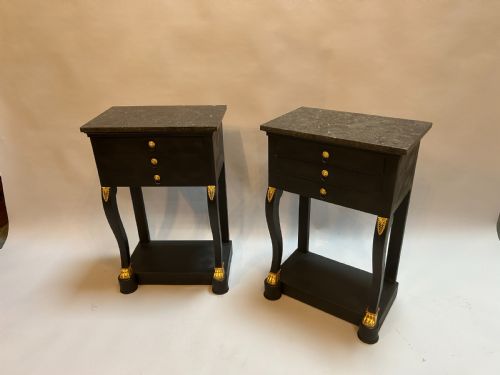
French empire bedside tables are formal bedroom pieces rooted in the classical vocabulary of the nineteenth century, often appearing as cylindrical pedestal cupboards, marble-topped nightstands, and side cabinets. These items reflect the heavy architectural influence of the French Empire and French Neoclassical styles, with later revival pieces emerging into the twentieth century alongside related forms like side tables and bedroom furniture suites.
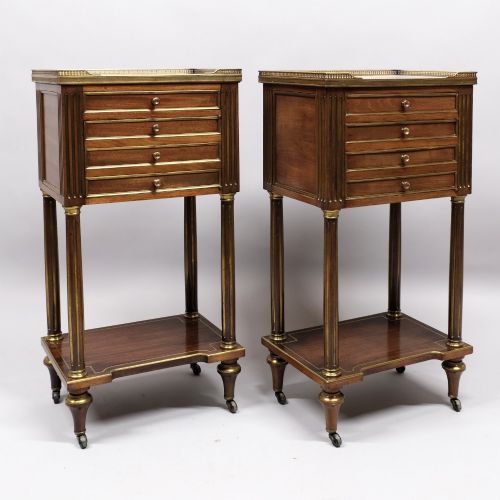
Buyers seeking french empire bedside tables encounter both authentic nineteenth-century examples dating from eighteen hundred onwards and later twentieth-century interpretations built in the same classical tradition. The forms range from simple circular mahogany bedside tables or vide-poches to grand pairs of ormolu-mounted bedside cabinets topped with fine marble.
Materials and construction
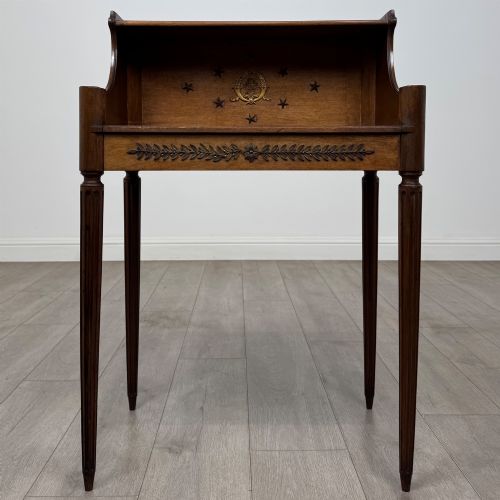
Construction relies heavily on dense mahogany timber, frequently selected for its warm flame grain, paired with solid marble tops that provide a durable and contrasting surface. Cabinet makers shaped these woods into cylindrical pedestals and rectangular chests designed to sit neatly beside a bed.
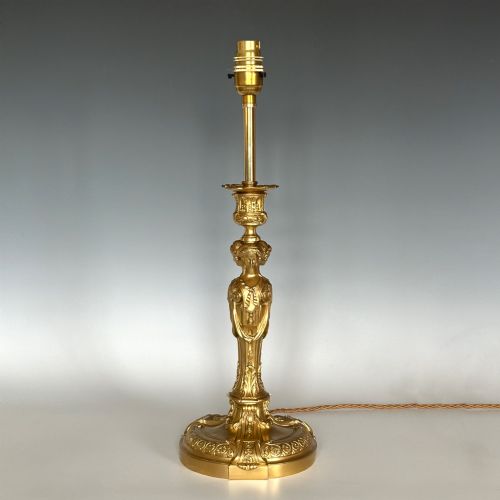
Decorative metalwork defines the aesthetic, utilising cast ormolu, gilt bronze, and brass mounts fixed to the mahogany carcase. These metallic details trace classical motifs, geometric borders, and sculptural accents that elevate the plain timber forms.
Judging the standard of execution
Quality rests on the crispness of the bronze or ormolu mounts and the depth of channelling in the brass work, where sharp, hand-finished detailing separates superior items from simpler castings. The weight and selection of the marble top also dictate grade, with thicker, finely veined stone marking a higher standard of production.
Joinery execution within the mahogany carcase reveals the maker's hand, particularly in the turning of cylindrical pedestal cupboards and the fit of small drawers or doors. Finer pieces demonstrate precise timber matching and solid structural integrity beneath the decorative veneers.
The French Empire Bedside Tables Glossary
- Ormolu
- A gilded bronze technique used extensively for furniture mounts and decorative fittings during the nineteenth century. The process gives brass and bronze surfaces a rich, gold-coloured finish.
- Vide-poche
- A small table or pocket emptier designed to hold personal items left beside the bed at night. These practical pieces frequently take circular forms in mahogany.
- Neoclassical
- A style reviving classical Roman and Greek motifs, geometry, and symmetry. It forms the core aesthetic of French empire furniture.
- Pedestal cupboard
- A freestanding, usually cylindrical cabinet standing on a single base or plinth. These enclosed bedside pieces hide storage behind a curved door.
French Empire Bedside Tables: Frequently Asked Questions
How do I identify a true period piece?
Examine the timber construction, interior drawer linings, and the hand-chased quality of the bronze mounts for signs of nineteenth-century handcrafting.
Compare the carcass joinery and marble thickness against known examples from the 1800s to verify its age and origin.
Are these cabinets practical for modern bedrooms?
Their compact footprints and flat marble tops make them ideal surfaces for bedside lamps and small nighttime essentials.
Enclosed cupboards provide discreet storage for books and personal items while maintaining a formal silhouette.
What maintenance do marble tops require?
Marble surfaces benefit from regular wiping with a soft, damp cloth to prevent staining from water or cosmetics.
Avoid acidic cleaners that can etch the polished stone surface over time.
How do empire and louis xvi styles differ?
Louis XVI pieces tend to show lighter, more restrained classical detailing with straighter tapered legs and delicate floral carvings.
Empire designs usually present a heavier, more monumental appearance with bolder bronze mounts and darker mahogany timbers.