




Nineteenth Century Nightstands
Nineteenth century nightstands are timber bedside cabinets and tables that bring period utility to a bedroom.
Nineteenth Century Nightstands
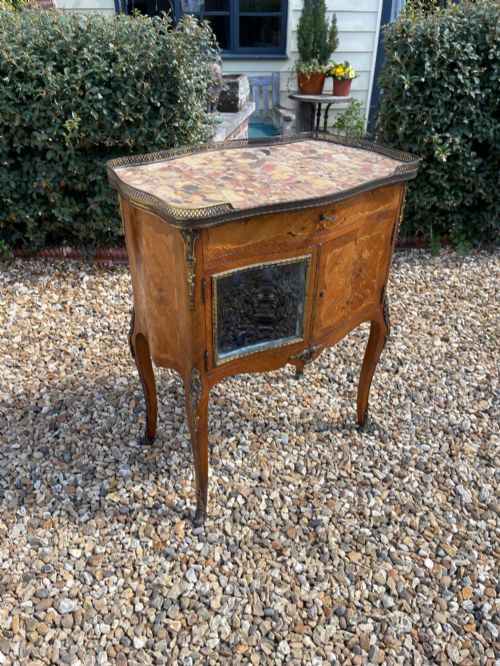
Nineteenth century nightstands encompass bedside cupboards, enclosed pot cupboards, and open lamp tables originating from the Georgian, Regency, and Victorian eras. These functional pieces range from architectural mahogany pedestals to ornate French marquetry cabinets finished with marble tops.
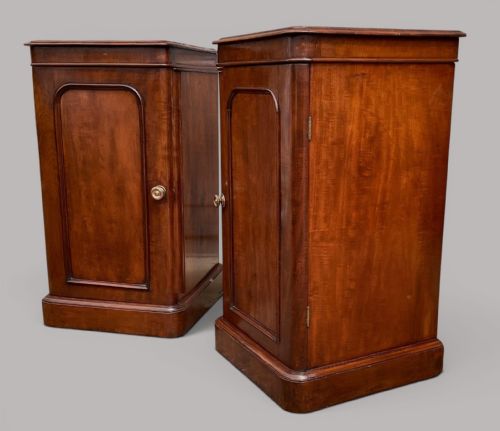
Buyers will most frequently encounter mahogany bedside cupboards and satin birch cabinets across these listings. They appear singly or in matched pairs, reflecting the domestic requirements of nineteenth century bedchambers.
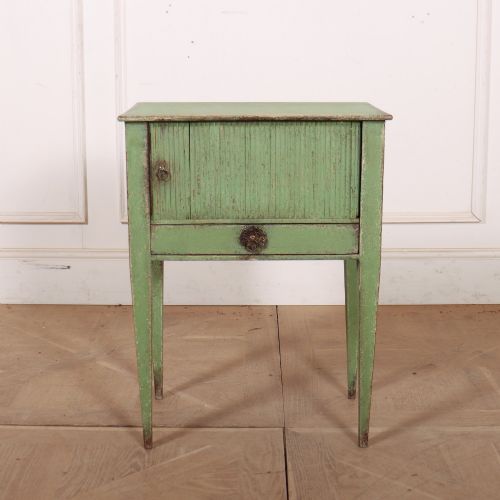
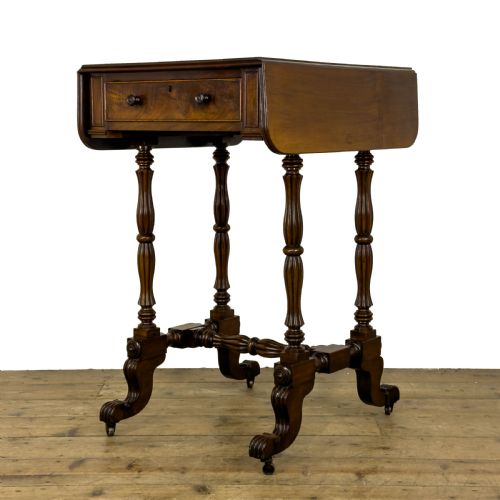
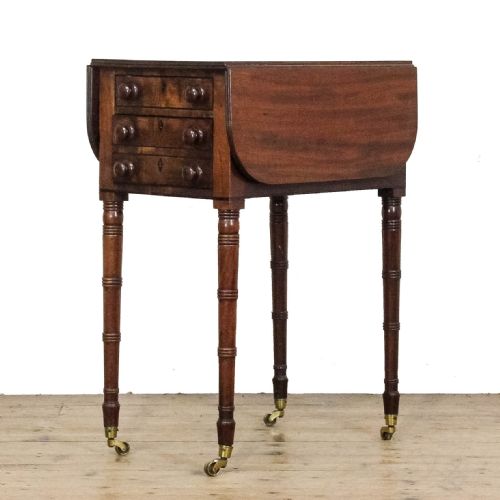
Forms extend beyond standard cupboards to incorporate drop leaf work tables, washstands, and occasional tables adapted for bedside use. Their origins span English cabinetmakers and continental workshops influenced by revival styles.
How they were made
Cabinetmakers utilised dense hardwoods including mahogany, walnut, and satin birch as the primary structural timbers. Exotic veneers such as kingwood and amboyna were frequently applied in decorative marquetry patterns.
Construction methods involved stable joinery combined with brass hardware, ormolu mounts, and inset marble slabs like Belgian Sainte-Anne. Surface finishes relied on traditional polishing techniques to highlight the natural grain of the wood.
Materials span plain mahogany and walnut to decorative satin birch, kingwood, ormolu, and Belgian marble.
What varies in quality
Quality separates ordinary utility pieces from works carrying attribution to notable makers or finer workshops. The distinction lies in the precision of the cabinetwork, the selection of figured veneers, and the execution of ormolu or brass mounts.
Design complexity also defines the tier of a piece, moving from plain functional mahogany pot cupboards to elaborate French revival tables featuring detailed marquetry and imported marble tops.
Holland & Sons·HOWARD & SONS·Francois Linke·Charles Topino
The Nineteenth Century Nightstands Glossary
- Pot cupboard
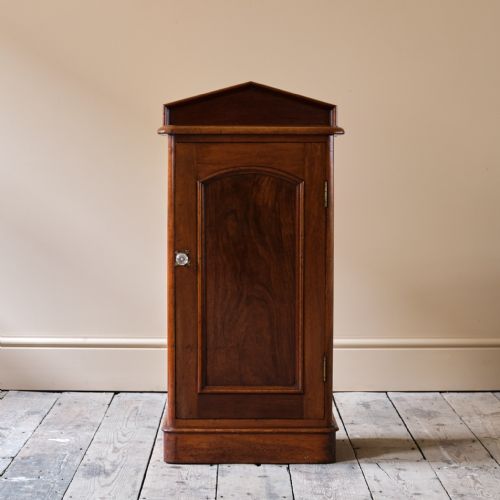
- A small bedside cabinet designed originally to house a chamber pot behind a single door. These pieces often feature an enclosed shelf space and a raised gallery top.
- Marquetry
- A decorative technique where thin slices of various coloured woods are assembled to form pictorial or geometric patterns on furniture surfaces. It appears frequently on continental tables from the later decades of the century.
- Ormolu
- Gilded bronze mounts cast and chased to ornament the corners, feet, or aprons of finer French cabinets. This material denotes pieces influenced by empire and rococo revival aesthetics.
- Pedestal bedside cupboard
- A tall, narrow cabinet supported on a plinth base, often constructed in mahogany during the Georgian and Regency periods. They display classical architectural proportions.
- Table en chiffonnière
- A small French bedside or occasional table fitted with multiple small drawers for personal items. These pieces frequently showcase marquetry inlays and delicate cabriole or tapered legs.
Nineteenth Century Nightstands: Frequently Asked Questions
What is a nineteenth century nightstand?
A nineteenth century nightstand is a small bedside table or enclosed pot cupboard made during the Georgian, Regency, or Victorian periods. These pieces served practical functions in period bedrooms before built-in furniture became common.
Today they function as bedside storage or lamp tables, offering compact timber construction and period character. Most examples are built from mahogany, walnut, or satin birch.
How do I identify a Victorian bedside cabinet?
Victorian bedside cabinets often display darker mahogany or lighter satin birch timbers with sturdy panelled doors and turned wooden knobs. They tend to follow heavier, more utilitarian proportions than their Georgian predecessors.
Look for interior shelving designed for chamber pots and enclosed drawer compartments. Many feature simple plinth bases or short bracket feet.
What is a French ormolu mounted nightstand?
A French ormolu mounted nightstand is a decorative bedside cabinet adorned with cast and gilded bronze details. These pieces frequently incorporate exotic woods like kingwood and amboyna arranged in marquetry patterns.
They often include imported marble tops, such as Belgian Sainte-Anne, adding weight and refined colour contrast to the design. These cabinets reflect continental revival styles from the second half of the century.
Were nightstands made in pairs during the nineteenth century?
Nightstands were occasionally made as matched pairs, though many survived individually as single bedside pieces. Matched pairs are particularly sought after for symmetrical bedroom layouts.
Pairs often appear in architectural mahogany forms or as matching satin birch drawers from the Victorian era. Finding a true matched pair from this period is less common than finding single cabinets.
How do I care for a antique mahogany nightstand?
Care for an antique mahogany nightstand by keeping it away from direct sunlight and household heat sources that dry out the timber. Regular dusting with a dry, soft cloth preserves the polished surface without damaging the aged wood.
Avoid placing damp items or unsealed glasses directly on the wooden top to prevent ring marks. Application of appropriate wax polish helps maintain the natural lustre of the finish over time.