





Gold Ormolu Bedside Tables
Gold ormolu bedside tables bring French chateau elegance and gleaming cast metal detail to a bedroom.
Gold Ormolu Bedside Tables
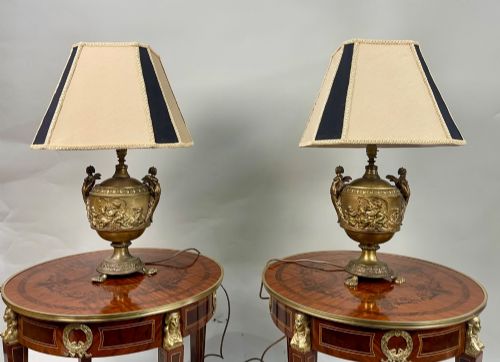
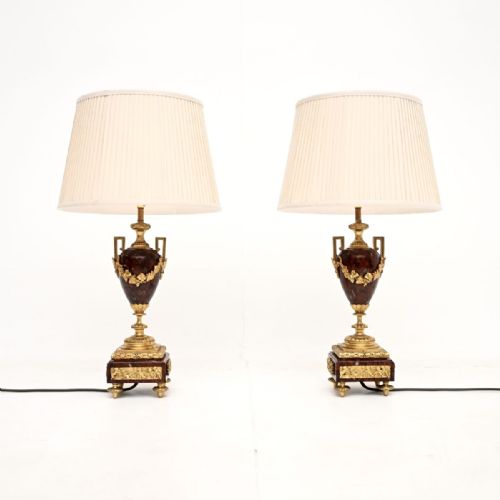
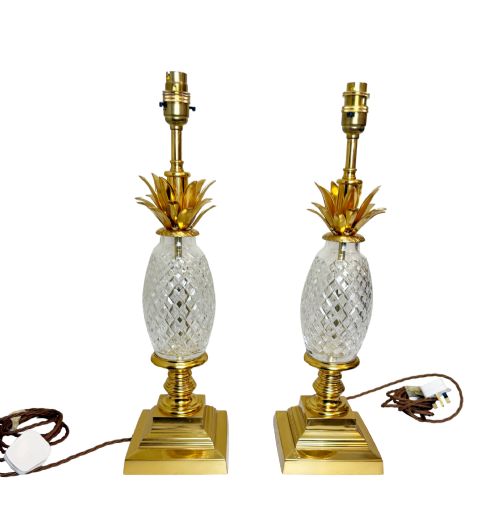
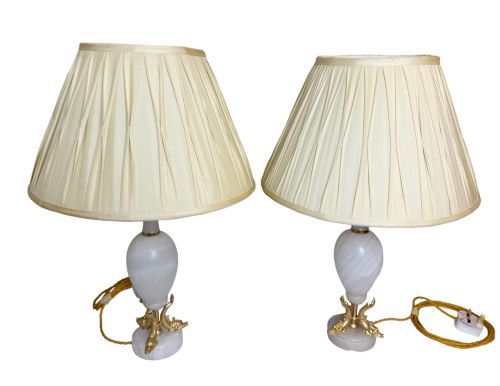
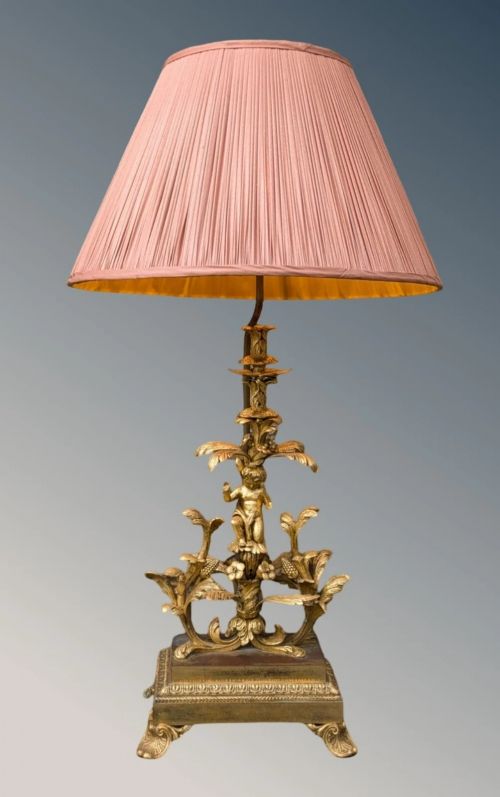
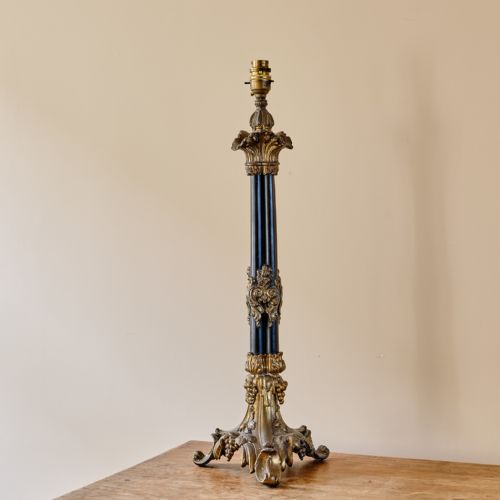
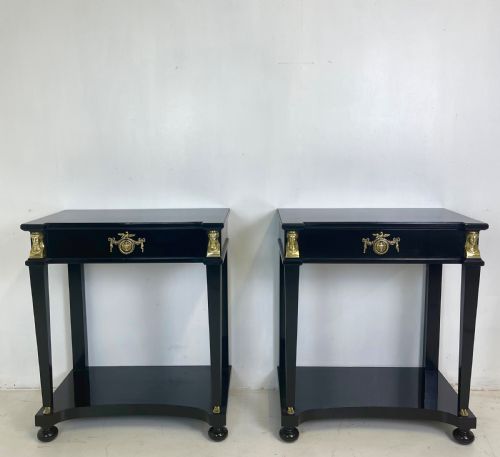
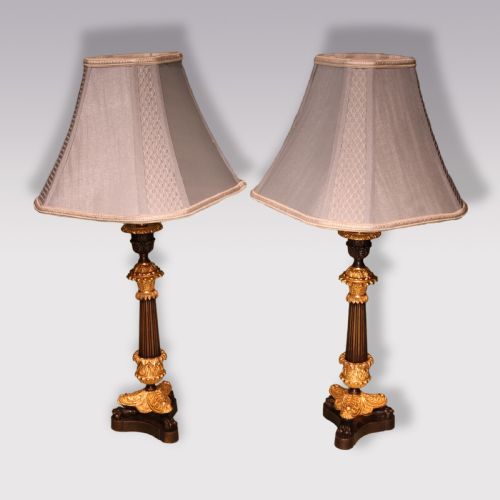
Gold ormolu bedside tables and associated mounted pieces unite functional furniture with decorative metalwork. Buyers searching for gold ormolu bedside tables encounter French cabinets, side tables, and companion lighting fixtures that incorporate gilded brass and bronze.
The selections span the nineteenth century through the early twentieth century, drawing on French Empire, Louis XVI, Rococo Revival, and Belle Epoque styles. While dedicated bedside tables and cabinets appear, lighting forms dominate the selection.
Originating largely from French workshops, these pieces frequently utilise contrasting materials such as marble, onyx, and cut crystal alongside cast metal mounts. The aesthetic relies on classical proportions, floral motifs, and gilded surfaces designed to catch candle or lamplight.
Materials and construction
Makers utilised brass, bronze, and applied ormolu, employing casting and chiselling techniques to achieve crisp surface detail. Gilded metal mounts were secured to hardwood carcases, marble slabs, or crystal columns using traditional fixings.
Secondary elements incorporate silk, fabric, and fitted clock movements or electrical wiring adaptations applied later in their working lives. The combination of heavy stone bases like marble and onyx provided stability for slender vertical lamp forms and mounted cabinetry.
Gold Ormolu Bedside Tables Retail Price Guide 2026
Typical asking prices for gold ormolu bedside tables among the pieces listed under this phrase on Sellingantiques today, from the lower quarter to the upper quarter. They describe what is for sale here now, not the wider market.
Listings feature periods spanning from eighteen hundred through nineteen thirty, with nineteenth-century examples forming the core of the selection.
Assessing quality and execution
The finesse of the metal chasing separates superior pieces from standard production, as sharper chisel work creates depth in foliage and figurative motifs. Heavier gauge bronze and brass indicate substantial casting rather than light pressed metal.
Integration of secondary materials such as matched marble slabs or unblemished cut crystal sections dictates the overall coherence of an object. The crispness of the mercury gilding or fire gilding retains a warm, deep lustre compared to later chemical treatments.
The Gold Ormolu Bedside Tables Glossary
- Ormolu
- Gilded bronze or brass created through a mercury amalgamation process or fire gilding. This surface treatment yields a durable, deep golden sheen characteristic of nineteenth-century French decorative arts.
- Empire style
- A neoclassical design movement originating in early nineteenth-century France. It draws heavily on ancient Roman and Greek motifs, favouring symmetry and military or classical symbols.
- Louis XVI style
- A French design vocabulary defined by straight lines, classical urns, and restrained floral swags. It marks a transition away from the asymmetric curves of earlier Rococo work.
- Brocade
- A rich shuttle-woven fabric featuring raised patterns, often utilised in historical lampshades paired with these metal bases. The heavy texture complements the reflective quality of polished bronze.
Gold Ormolu Bedside Tables: Frequently Asked Questions
What is the difference between ormolu and brass?
Ormolu specifically refers to gilded bronze or brass, where a layer of gold is applied to the base metal surface. Brass is a copper and zinc alloy that can be polished to a bright yellow, but lacks the specific warm lustre of historical fire gilding.
Many antique pieces use solid brass for internal structures while reserving fire-gilt ormolu for visible decorative mounts.
How do I date an ormolu piece?
Examine the construction methods of the underlying carcase, the style of the casting, and the type of fixings used on the metal mounts. Hand-cut screws and heavy bronze casting generally point towards the nineteenth century.
Stylistic cues such as Empire symmetry or Louis XVI foliate scrolls provide a broader period framework when maker marks are absent.
Are these lamps originally wired for electricity?
Most nineteenth-century lighting forms were originally adapted from candlesticks or designed for oil before receiving later electrical wiring. Rewiring is standard practice for safe modern use and is typically updated by specialists.
Original burners and wiring components are rarely intact on pieces dating from the eighteen-hundreds.