
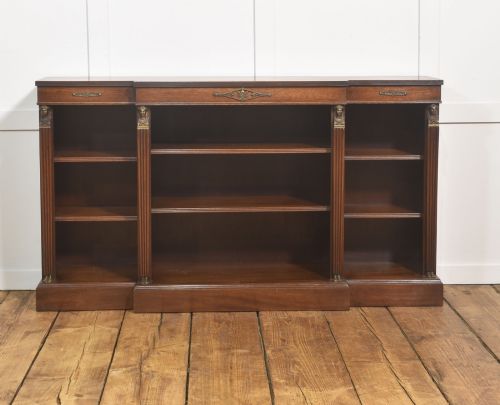
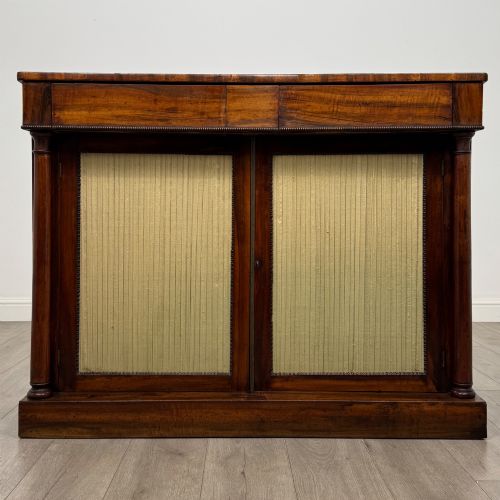
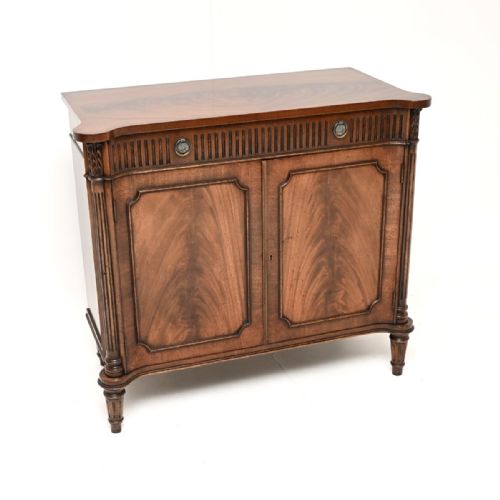
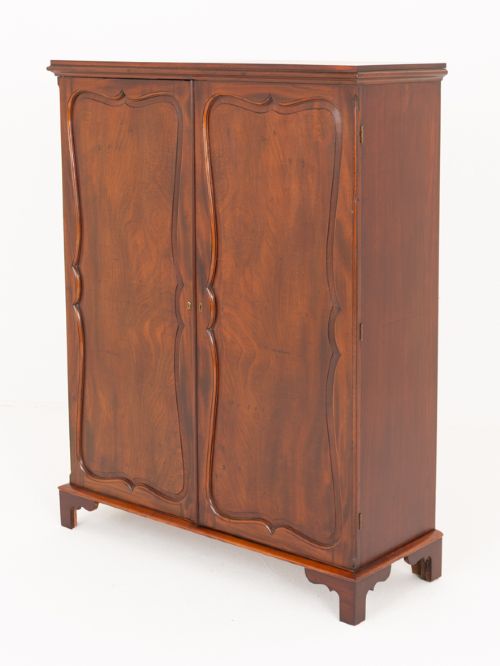
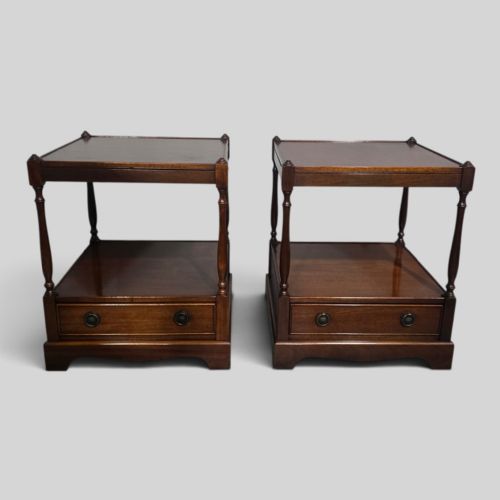
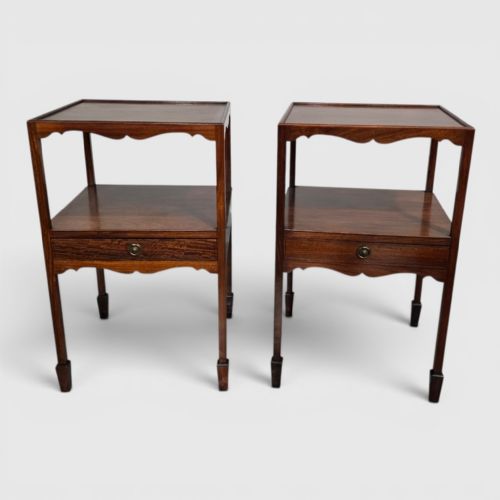
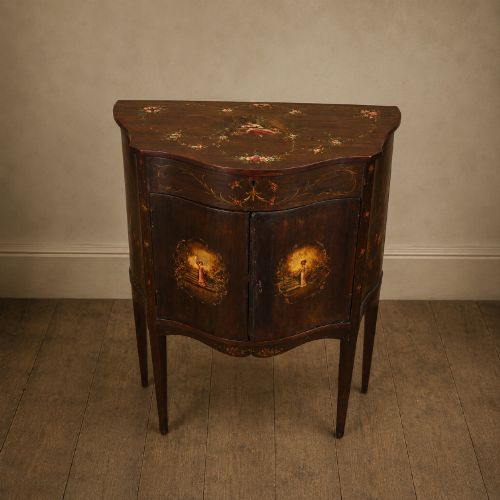

Dark Mahogany Side Cabinet
A dark mahogany side cabinet brings rich tone and functional storage to a room, drawing the eye with deep timber and classic proportions.
Dark Mahogany Side Cabinet
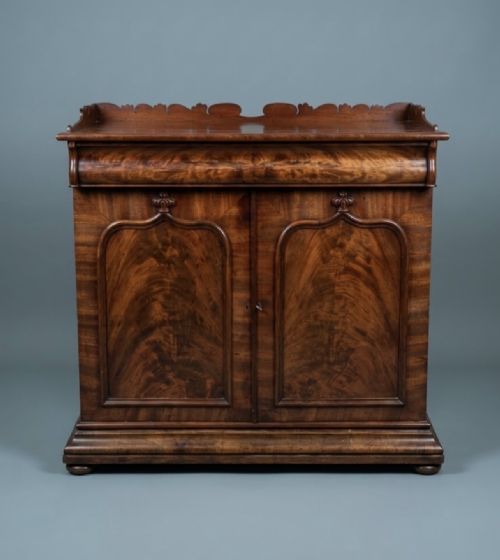
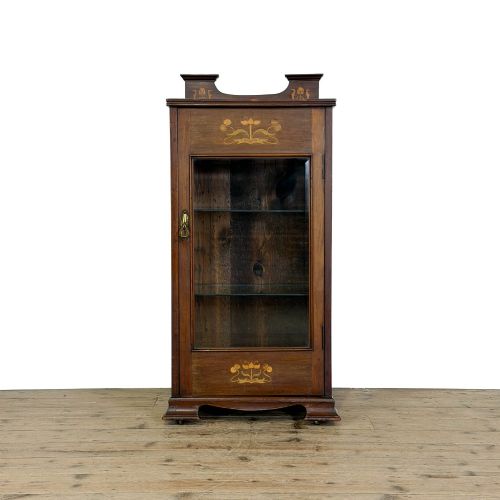
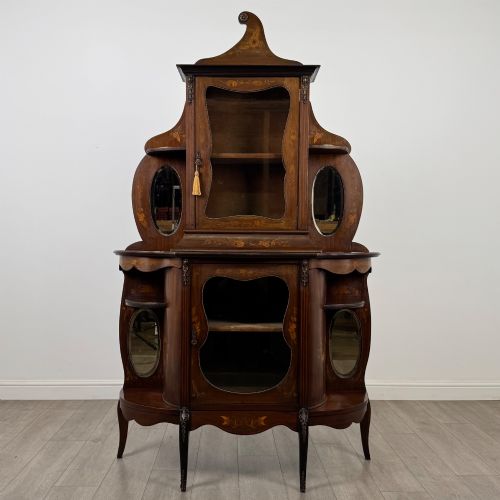
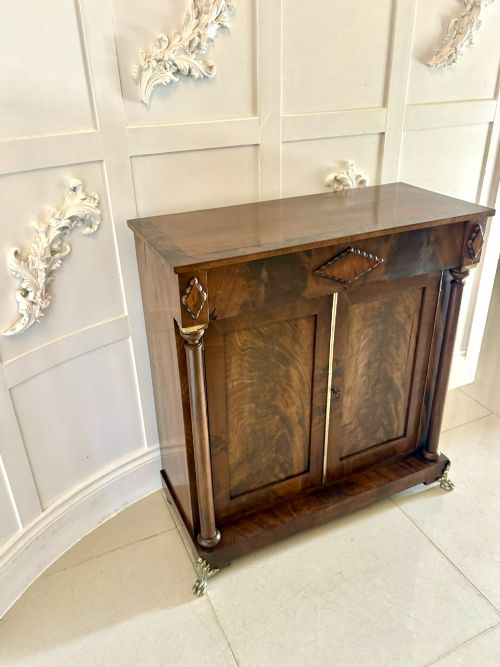
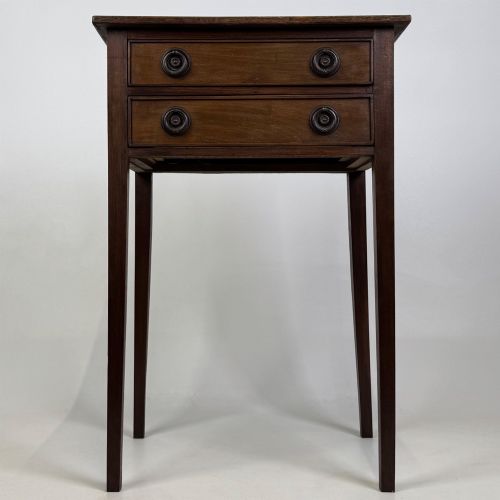
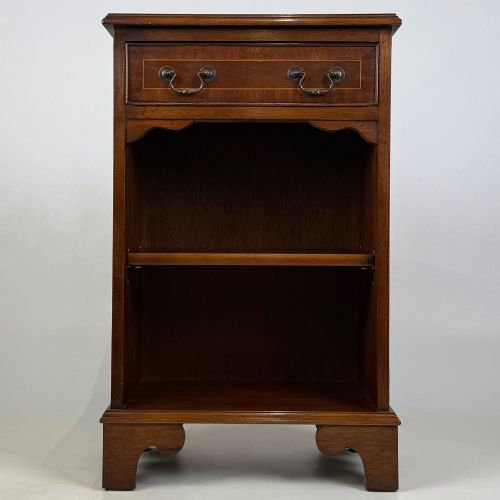
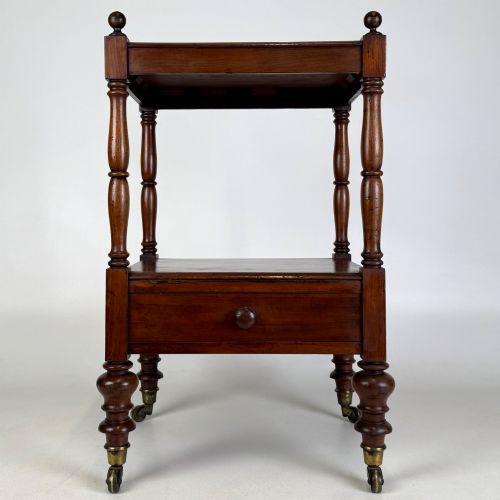
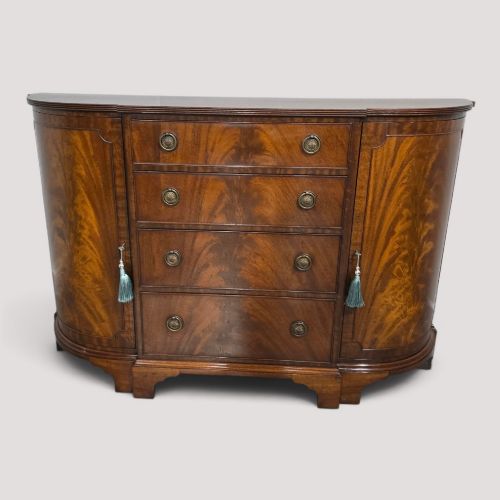
When you search for a dark mahogany side cabinet, you encounter pieces spanning from the Georgian and Regency eras through the Victorian and Edwardian periods. These forms range from low cupboards and chiffoniers to bedside lamp tables and display cabinets.
The versions most frequently met on this page combine rich mahogany timbers with practical storage solutions such as doors, shelves, and drawers. They serve varied functions around the home, acting as display surfaces or bedside companions.
How they were made
Cabinet makers utilised solid mahogany and flame mahogany veneer over secondary woods, often applying satinwood inlay or ebonised details for contrast. Brass fittings, grille work, and mirror-backs appear frequently in the construction of these pieces.
Construction techniques balanced structural joinery with decorative finishes, incorporating carved elements and hand-painted details on select Victorian and Edwardian examples.
Dark Mahogany Side Cabinet Retail Price Guide 2026
Typical asking prices for dark mahogany side cabinet among the pieces listed under this phrase on Sellingantiques today, from the lower quarter to the upper quarter. They describe what is for sale here now, not the wider market.
Listings feature mahogany, satinwood, and brass across pieces dating from the eighteenth century to the twentieth century.
What varies in quality
The depth and grain figure of the mahogany timber heavily influence the visual impact, with figured veneers and rich patination elevating certain pieces above plain stock. Selection of secondary woods and the crispness of brass mounts or carving also differentiate standard items from finer works.
Proportion and stylistic coherence define the upper tier, where period details such as brass grilles, satinwood inlay, or integrated mirror-backs are executed with greater refinement and balance.
Gillows·J A Mein Edinburgh Cabinet Maker
The Dark Mahogany Side Cabinet Glossary
- Chiffonier
- A low sideboard or cabinet featuring enclosed shelving below, popular during the Regency and Victorian periods. It typically provides compact storage for dining or living spaces.
- Flame mahogany
- A veneer cut from timber where the branches join the trunk, producing a distinctive flickering flame pattern. This decorative grain was highly prized for drawer fronts and cabinet doors.
- Satinwood
- A durable, yellowish-grey timber often used for contrasting inlay and stringing on mahogany furniture. It creates sharp visual borders on Edwardian and Georgian pieces.
- Ormolu
- Gilded bronze mounts applied as decorative ornaments to furniture, particularly seen on French Empire and nineteenth-century pieces. These metal accents add bright contrast to dark wood.
- Breakfront
- A cabinet or bookcase design where the central section projects forward from the flanking sides. This architectural arrangement creates depth and shadow across the front elevation.
Dark Mahogany Side Cabinet: Frequently Asked Questions
What is a dark mahogany side cabinet used for?
These pieces provide versatile surface space and enclosed storage for books, tableware, or bedside essentials. They fit easily into living rooms, dining areas, or bedrooms as functional focal points.
Their compact footprints allow them to sit neatly against walls while offering concealed compartments behind doors or drawers.
How do I tell a Georgian cabinet from a Victorian one?
Georgian pieces generally favour clean architectural lines, solid proportions, and understated classical ornamentation. Victorian examples often introduce heavier carvings, mirror-backs, and more elaborate revival styling.
Examining the internal construction methods, secondary timbers, and hardware styles also helps determine the exact period of manufacture.
Are these cabinets made from solid mahogany?
Many pieces combine solid mahogany frames with figured mahogany veneers applied to carcase panels and drawer fronts. Secondary woods were frequently used for internal drawer linings and backboards.
This method of construction prevented warping while displaying the most decorative grain figures on the exterior surfaces.
How do I care for mahogany furniture?
Keep mahogany pieces away from direct sunlight and heat sources to prevent the wood and veneer from drying out. Regular dusting with a soft, dry cloth maintains the natural lustre of the polish.
Avoid using silicone-based polishes, opting instead for traditional beeswax formulations when the timber requires nourishment.